
Recursos
Exploren una amplia gama de recursos valiosos en GCED para profundizar su comprensión y promover su búsqueda, incidencia, enseñanza y aprendizaje.
57 resultados encontrados
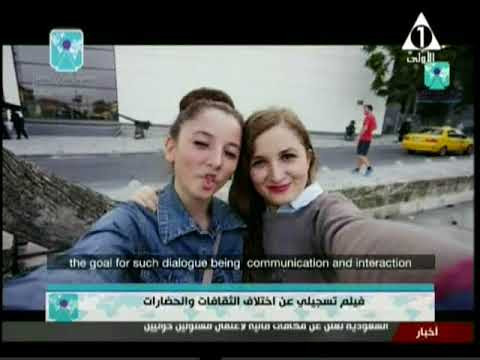 A Documentary about Different Cultures and Civilizations Año de publicación: 2017 Autor corporativo: Egypt News The documentary talks about the differences between cultures and civilizations. It talks about the importance of cross-fertilization between civilizations for a happy life and sustainable development.
 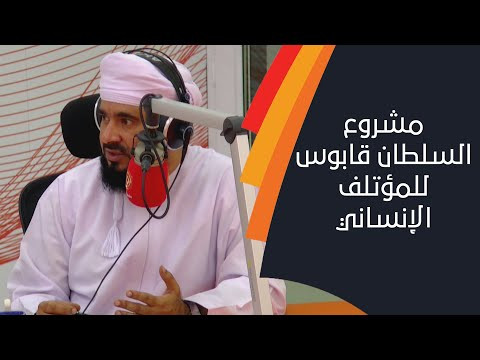 The Sultan Qaboos Project for the Humanitarian Año de publicación: 2019 Autor corporativo: Al Shabiba The program deals with the Human Recombinant Project, its importance and objectives. The project came with the blessing of the late Sultan in order to gather the efforts of nations to improve human lives, and to raise human awareness of the importance of a shared global ethics system.
  Landmarks of Mercy between Islam and Multiculturalism Año de publicación: 2016 Autor: Abdel Karim Osman Ali Autor corporativo: Nile Valley University Conference paper in which the researcher sought to: Explaining the greatness and comprehensiveness of the Allah’s path Disclosure of the features of mercy through the Qur’anic intentions to recognize and respect cultural diversity Show the distinction of Islam over the latest political theories in the West.
 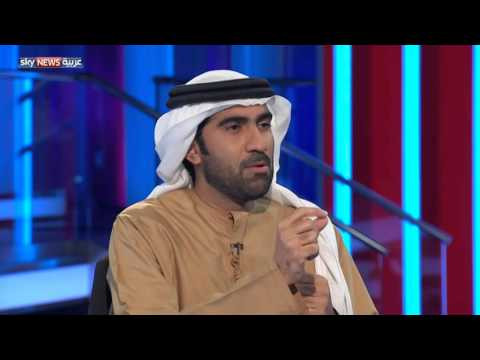 Gulf Society .. and the Multiplicity of Foreign Cultures Año de publicación: 2014 Autor corporativo: Sky News Arabia This video is a TV program discussing the case of multiculturalism in the Arab Gulf countries. The multiculturalism is brought to the Gulf by foreign workers. There program is having guests discussing the issue. What are the negative and positive effects of foreign cultures on local culture in the countries of the region? What are the ways to preserve the identity and values of society?
  Globalization and Education (Teacher Qualifications in the Era of Globalization) Año de publicación: 2014 Autor: Haidara Fatiha Education is, always, considered as the pillar of the development of every country, and without effective education, progress will be impeded and development will be delayed. This is because a society that does not take education as a priority will have an ambiguous future. In school, for example, the teacher is the model for his students. In this context, the influence of globalization on teaching and education is important especially with the changes that we receive daily. Despite these effects, we must adapt to these changes by training qualified teachers, ie "globalized" teachers who can keep their identity on the one hand, and know how to use science, knowledge and technology for the benefit of their teachers. children in school and consequently from their country on the other hand.
  The Ratio of the National and Universal in the Sphere of Spirituality (on the example of Central Asia) Año de publicación: 2015 Autor: Ranokhon Tursunova The ratio national and universal in the sphere (Central Asia)» on the spiritual revival in the region, the place of human values in the reforms. The transformation of national and universal values in Central Asia, which is represented by a wide range of multiculturalism, ethnic groups, religions, languages traditions and customs.
  Global Citizenship: Lessons from the Ancients (Curriculum on the Move Global, Thematic Notes No.5) Año de publicación: 2022 Autor: Conrad Hughes Autor corporativo: UNESCO International Bureau of Education (IBE) "Curriculum On The Move" is a new UNESCO-IBE Series aim at reflecting, debating, producing and disseminating knowledge and ways forward on emerging issues in curriculum-related aspects. The Series emerges from a bottom-up approach, with teachers and students providing their perspectives and experiences on the curriculum.The goal is to rethink the way curriculum is understood and practiced via Webinars, Concept Notes and Global Debates (via Blogs, Twitter, etc.) by involving in a participatory way youth and school practitioners.Right at the centre of the mission statement of many schools, universities and organisations is the phrase “global citizen”. But what does it mean to be a global citizen?
  The war in our minds: is global citizenship the answer? (Blue Dot issue 1) Año de publicación: 2015 Autor corporativo: Mahatma Gandhi Institute of Education for Peace and Sustainable Development (MGIEP) Feature Global Citizenship Education: A New Educational, Pedagogical and Political Narrative in the World System? (by Carlos A. Torres) In Pursuit of a Global Civics (by Hakan Altinay) Global Citizenship: Necessary and Possible (by Paul and Anne Ehrlich) Cover Story YOUth Speak for a better today and tomorrow (by Piyali Sarkar Debnath, UNESCO MGIEP) Essays Unlocking the Civic Sense of Young Minds (by Karthik Shankar) Shared Home, Shared Hopes and Shared Actions (by Trang T. Nguyen) Redesigning the Education System for Global Citizenship (by Ayodeji Ojo) Youth Voices Who is a global citizen? News What we have been up to UNESCO MGIEP Crossword Event Calendar
  Education for citizenship and democracy in a globalized world: a comparative perspective Año de publicación: 2005 Autor corporativo: Inter-American Development Bank The present document, Education for Citizenship and Democracy in a Globalized World: A Comparative Perspective, was developed in response to a request from the members of the Regional Policy Dialogue/Education Network. The studies in this document were presented and discussed during the VII Regional Policy Dialogue meeting held in January 2005 at the Inter-American Development Bank ’s headquarters in Washington, D.C. Within the general context of recent economic and political developments in Latin America and the Caribbean, experts regard free market and democracy as the fundamental economic and political paradigm leading to modernization and development in the global market. There is a concern in a number of democratic nation-states about levels of political engagement, particularly among the youths. This is cited as a reason for strengthening citizenship education.The studies presented in this document discuss Education for Citizenship and Democracy and the role of schools as systematic providers of the civic knowledge and the participatory practices that are the foundation of democracy. Among all of the institutions that facilitate the acquisition and development of skills for democratic participation, the school is the one that provide students with the competencies to effectively participate as citizens in a democracy. There has been an increasing interest in citizenship education both in the national and international contexts. At the national level, the aim is to pursue commitment and political participation, particularly from youth. In the international sphere, the objective is to find answers to the challenges such as immigration, global communications and trade across international borders and to a new level of awareness and appreciation for human rights. By providing a comprehensive overview of progress made by industrialized countries in the field of citizenship education, this study intents to share lessons learnt and effective practices which may be applied in the context of Latin America and the Caribbean. In addition, this study includes three experiences from Latin American countries (Chile, Colombia and Mexico) that were presented during the VII Regional Policy Dialogue. The three experiences show a practical and positive approach to the feasibility of introducing citizenship education in the schools of the Region. The cases present examples of reforms that evolved from the traditional civic education into an engaging education for citizenship and democracy. The Inter American Development Banks trusts that this publication will contribute to the discussions among member countries and create alternatives for the strengthening of democracy in the Region through education and citizenship.
  A New Era of Social Justice: International Labour Conference, 100th Session, 2011 Año de publicación: 2011 Autor corporativo: International Labour Organization (ILO) This report specifically presents to the conference what the Director believes are the fundamental problems the ILO faces as it oversees a century of its inception in 2019. These problems are the remnants of an ineffective growth pattern that has increased inequality around the world over the past 30 years. The mission of the organization is to continue to work together to develop effective responses to these challenges - within the ILO itself, with national bodies such as governments, employers and workers, and through ILO cooperation with others.