
Recursos
Exploren una amplia gama de recursos valiosos en GCED para profundizar su comprensión y promover su búsqueda, incidencia, enseñanza y aprendizaje.
76 resultados encontrados
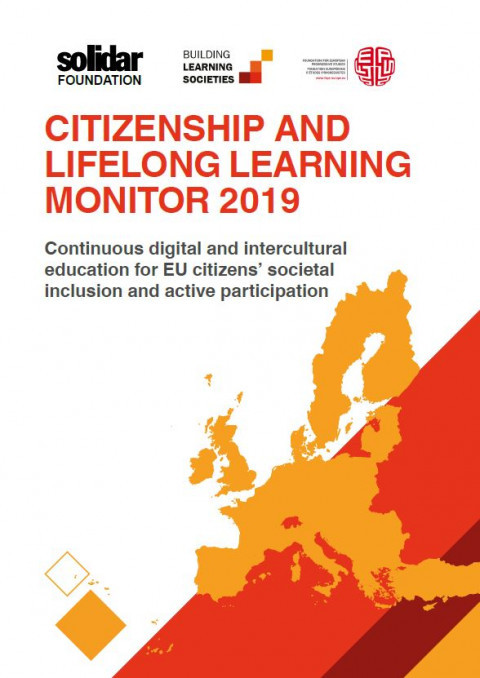 Citizenship and Lifelong Learning Monitor 2019: Continuous Digital and Intercultural Education for EU Citizens’ Societal Inclusion and Active Participation Año de publicación: 2020 Autor: Andrei Frank Autor corporativo: SOLIDAR Foundation | Foundation for European Progressive Studies (FEPS) The Citizenship and Lifelong Learning Monitor 2019 is a research report jointly released by SOLIDAR Foundation and FEPS, on the topic of policy developments in the field of attainment of skills, through lifelong learning, for active participation in society.The skills on which it focuses are:digital skillscivic competences andintercultural education competences.The document is composed of an analysis of the policies on the topic, and a presentation of best practices, coming from SOLIDAR Foundation member organisations.It culminates with recommendations, stemming from a comparative analysis of the 8 country reports conducted (featuring Austria, Croatia, Denmark, Germany, Italy, Serbia, Spain, and the UK as investigated countries).The online Conference “Civic responsibilities online and offline: Lifelong learning for digital and traditional citizenship education“, held together with FEPS, presented and discussed the outcomes of the Citizenship & Lifelong Learning Monitor.
 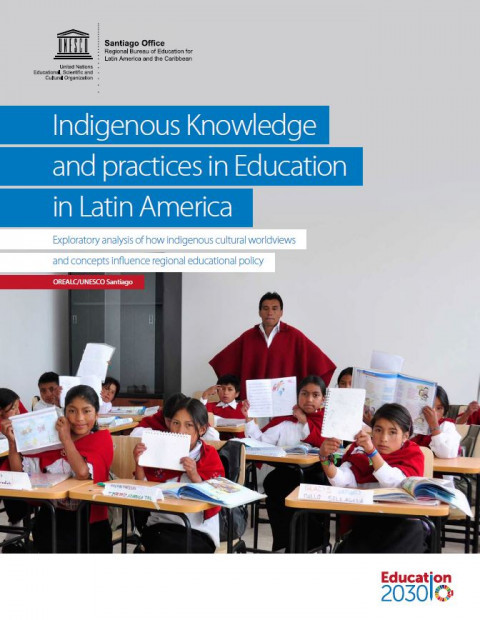 Indigenous Knowledge and practices in Education in Latin America: Exploratory Analysis of How Indigenous Cultural Worldviews and Concepts Influence Regional Educational Policy Año de publicación: 2017 Autor corporativo: UNESCO Santiago This study presents a preliminary exploration of the approaches, processes and tools through which indigenous worldviews and concepts of knowledge and well-being can and have influenced education policies in Latin America. First, it addresses the principal theoretical approaches used in the area of indigenous knowledge and education policies, taking into account the persistence of an “epistemic otherness” and the need for a dialogue between the predominant approaches. Second, it addresses the normative framework and intercultural educational policies, emphasizing how and to what extent the countries in the region take indigenous knowledge into consideration and include it in their education policies and practices. Third, it presents a number of “relevant practices” in terms of dialogue with indigenous knowledge in education policies, taking into account the factors that favour the relevance of education to indigenous views and cultural practices, facilitating their replicability and sustainability. Furthermore, these practices respond to key criteria like recognizing learners as ‘carriers’ and producers of culture, valuing the use of schools as centres of social and cultural activities and favouring the inclusive learning of indigenous and non-indigenous students. Finally, the study unveils challenges for the advancement of the dialogue between indigenous knowledge and education policies, at the same time proposing key concepts to be approached in depth. Conocimiento Indígena y Políticas Educativas en América Latina: Análisis exploratorio de cómo las cosmovisiones y conceptos culturales indígenas de conocimiento inciden, y pueden incidir, en la política educativa en la región Año de publicación: 2017 Autor corporativo: UNESCO Santiago El presente estudio explora la idea de una ‘alternativa epistémica’, construyendo desde el conocimiento y los valores que sustentan las prácticas sociales y educacionales indígenas de la región. En particular, explora cómo estos valores y formas de conocimiento han sido adoptados en las políticas educacionales de tres países de la región andina: Bolivia, Ecuador y Perú, que hace poco atravesaron reformas políticas y constitucionales con el fin de reconocer la composición de sus poblaciones multiculturales, multiétnicas y multilingüísticas. Esta publicación es una invitación a considerar el conocimiento indígena como una fuente legítima de inspiración para las políticas educacionales que puedan contribuir al bienestar de todos y a la sostenibilidad del planeta.
  Building Intercultural Citizenship through Education: A Human Rights Approach Año de publicación: 2008 Autor: Rodolfo Stavenhagen This article analyses the challenges posed by traditional ethnic and linguistic minorities in multicultural states and more specifically the problems faced by indigenous peoples and communities. Their educational and cultural needs and demands are increasingly being framed in the language of human rights, based on the expanding international legal and institutional human rights system. The United Nations World Conference on Human Rights, held in Vienna in 1993, endorsed a rights-based approach to development, human rights education is a growing field in educational practice, respect for cultural diversity is now enshrined in international and domestic laws, and the right of every person to education and to culture has become a mainstay of international human rights principles to which a majority of the world's states has subscribed.
  Inquiry into practice: learning and teaching global matters in local classrooms Año de publicación: 2014 Autor: David Montemurro | Mira Gambhir | Mark Evans | Kathryn Broad Autor corporativo: University of Toronto. Ontario Institute for Studies in Education This Inquiry into Practice publication, Learning and Teaching Global Matters in Local Classrooms, is the most recent addition to the series. It examines and shares varied perspectives, curricula, instructional practices, and resources intended to enhance student learning related to the infusion of global and international dimensions of education into classroom and schoolwide teaching and learning. It is organized in three sections: Educator Perspectives, Inquiry into Practice, and Resources. In this introduction, we briefly discuss how the text is organized, common themes that emerged across the sections, and concluding reflections.The first section, Educator Perspectives, provides insights from a range of university scholars and fieldbased leaders who, in multiple and distinct ways, have made learning and teaching about global matters in local classrooms a core feature of their work. Each was invited to comment on purposes, opportunities, and challenges related to infusing global and international dimensions into teaching and learning. Therefore, this section offers both contrasting conceptual perspectives and concrete suggestions that can impress the reader with a sense of urgency, critique, hope, and challenge when engaging in the complex and shifting work of teaching and learning about global matters.The second section, Inquiry into Practice, presents the 11 school-based and university-linked professional inquiries undertaken over a two-year period. The inquiries focus on a range of topics including critical global citizenship, the use of children’s literature to develop students’ understanding of sustainability in science education, and the refugee experience in personal and global understanding of “home.” The inquiries were carried out mostly with OISE partner schools and districts located in the city of Toronto and the GTA (regional municipalities including Durham, Halton, Peel, and York). This region of Canada provides a distinctly international, diverse context for this type of study. Local schools and districts linked with OISE’s Initial Teacher Education program have become sites of fascinating explorations into the possibilities of learning and teaching in pluralist contexts. The collection of inquiries in this publication speaks to the process of crossing borders demarcated by tangibles such as regions, nationalities, citizenship, and also by less tangible mindsets, identities, beliefs, and understandings. The voices across the project represent stakeholders in education: including voices of youth, beginning and experienced teachers, administrators, and researchers.The Resources section provides an annotated bibliography of print, media, and web resources to support those interested in teaching with global perspectives in mind. Recommended by project leaders and participants, by the authors, and by experts with various lenses, these resources are offered as a means to extend the exploration of the topics, ideas, and questions posed throughout the publication.
  In a good manner it is possible to take the untamed from the mountain III Año de publicación: 2014 Autor: María del Carmen Ararat Córdoba | Alexandra Riveros Rueda | Andrés Eduardo González | Arturo Grueso Bonilla | Ángela Patricia Valencia Salas Autor corporativo: Bogotá. Secretaría de Educación del Distrito (SED) These materials contribute with a variety of content and select activities to approach teachers to the study of the Afro-Colombian culture, helping to include this knowledge into their curricular plans. The first material is a book written by the teacher Maria del Carmen Ararat Córdoba, which studies Afro-Colombian identities in Colombia. The second one is called ethno science, a pedagogical perspective of the Afro-Colombian studies for the teaching process of natural sciences, which talks about a science that recognizes that each group of people that has inhabited our world has made a meaningful explanation to what is going on in their surroundings. The third one is called African Ethno mathematics, which seeks to recover the relation between mathematical knowledge and reality, making visible the human groups that made it possible and finding new pedagogical perspectives to make the experience of teaching mathematics as inclusive, intercultural and participative process. Bighorn mont III est retiré Avec une bonne façon Año de publicación: 2014 Autor: María del Carmen Ararat Córdoba | Alexandra Riveros Rueda | Andrés Eduardo González | Arturo Grueso Bonilla | Ángela Patricia Valencia Salas Autor corporativo: Bogotá. Secretaría de Educación del Distrito (SED) Ces matériaux contribuent avec le contenu et choisir des activités pour approcher les enseignants à l'étude de la culture afro-colombienne, en aidant à inclure ces connaissances dans leurs plans curriculaires. Le premier matériau est un livre écrit par le professeur Maria del Carmen Ararat Córdoba, qui étudie les identités afro-colombiennes en Colombie. La seconde est appelée la science ethno, une perspective pédagogique des études afro-colombiennes pour le processus d'enseignement des sciences naturelles, en ce qui soulève une science qui reconnaît que chaque groupe de personnes qui a habité notre monde a fait une explication significative de leur environnement . Le troisième est appelé mathématiques africaine Ethno, qui cherche à récupérer la relation entre la connaissance mathématique et la réalité, ce qui rend visible les groupes humains qui ont permis et de trouver de nouvelles perspectives pédagogiques pour faire l'expérience de l'enseignement des mathématiques comme processus inclusif, interculturel et participative. Con buen modo se saca el cimarrón del monte III Año de publicación: 2014 Autor: María del Carmen Ararat Córdoba | Alexandra Riveros Rueda | Andrés Eduardo González | Arturo Grueso Bonilla | Ángela Patricia Valencia Salas Autor corporativo: Bogotá. Secretaría de Educación del Distrito (SED) These materials contribute with a variety of content and select activities to approach teachers to the study of the Afro-Colombian culture, helping to include this knowledge into their curricular plans. The first material is a book written by the teacher Maria del Carmen Ararat Córdoba, which studies Afro-Colombian identities in Colombia. The second one is called ethno science, a pedagogical perspective of the Afro-Colombian studies for the teaching process of natural sciences, which talks about a science that recognizes that each group of people that has inhabited our world has made a meaningful explanation to what is going on in their surroundings. The third one is called African Ethno mathematics, which seeks to recover the relation between mathematical knowledge and reality, making visible the human groups that made it possible and finding new pedagogical perspectives to make the experience of teaching mathematics as inclusive, intercultural and participative process. Etnoscience Año de publicación: 2014 Autor: María del Carmen Ararat Córdoba | Alexandra Riveros Rueda | Andrés Eduardo González | Arturo Grueso Bonilla | Ángela Patricia Valencia Salas Autor corporativo: Bogotá. Secretaría de Educación del Distrito (SED) These materials contribute with contents and select activities to help teachers impart knowledge on the study of the Afro-Colombian culture, helping to include this knowledge into their curricular plans. The first material is a book written by the teacher Maria del Carmen Ararat Córdoba, which studies Afro-Colombian identities in Colombia. The second one is called ethno science, a pedagogical perspective of the Afro-Colombian studies for the teaching process of natural science, in which raises a science that recognizes that each group of people that have inhabited our world have made a meaningful explanation of their surroundings. The third one is called African Ethno mathematics, which seeks to recover the relation between mathematical knowledge and reality, making visible the human groups that made it possible and finding new pedagogical perspectives to make the experience of teaching mathematics as inclusive, intercultural and participative process. Ethnoscience Año de publicación: 2014 Autor: María del Carmen Ararat Córdoba | Alexandra Riveros Rueda | Andrés Eduardo González | Arturo Grueso Bonilla | Ángela Patricia Valencia Salas Autor corporativo: Bogotá. Secretaría de Educación del Distrito (SED) Ces matériaux contribuent avec le contenu et choisir des activités pour approcher les enseignants à l'étude de la culture afro-colombienne, en aidant à inclure ces connaissances dans leurs plans curriculaires. Le premier matériau est un livre écrit par le professeur Maria del Carmen Ararat Córdoba, qui étudie les identités afro-colombiennes en Colombie. La seconde est appelée la science ethno, une perspective pédagogique des études afro-colombiennes pour le processus d'enseignement des sciences naturelles, en ce qui soulève une science qui reconnaît que chaque groupe de personnes qui a habité notre monde a fait une explication significative de leur environnement. Le troisième est appelé mathématiques africaine Ethno, qui cherche à récupérer la relation entre la connaissance mathématique et la réalité, ce qui rend visible les groupes humains qui ont permis et de trouver de nouvelles perspectives pédagogiques pour faire l'expérience de l'enseignement des mathématiques comme processus inclusif, interculturel et participative.