
Recursos
Exploren una amplia gama de recursos valiosos en GCED para profundizar su comprensión y promover su búsqueda, incidencia, enseñanza y aprendizaje.
76 resultados encontrados
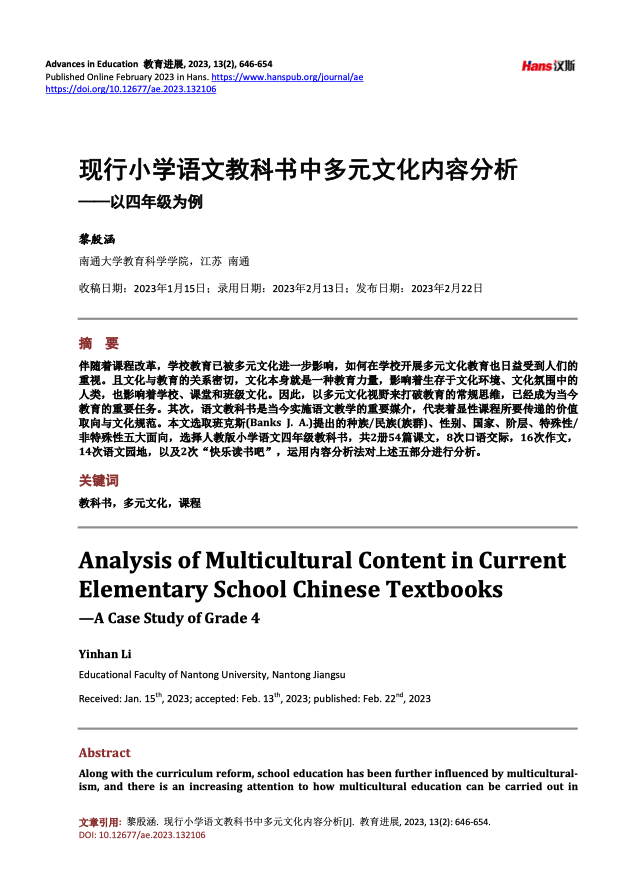 现行小学语文教科书中多元文化内容分析 : 以四年级为例 (教育进展 第13卷 第2期) Año de publicación: 2023 Autor: 黎殷涵 伴随着课程改革,学校教育已被多元文化进一步影响,如何在学校开展多元文化教育也日益受到人们的重视。且文化与教育的关系密切,文化本身就是一种教育力量,影响着生存于文化环境、文化氛围中的人类,也影响着学校、课堂和班级文化。因此,以多元文化视野来打破教育的常规思维,已经成为当今教育的重要任务。其次,语文教科书是当今实施语文教学的重要媒介,代表着显性课程所要传递的价值取向与文化规范。本文选取班克斯(Banks J. A.)提出的种族/民族(族群)、性别、国家、阶层、特殊性/非特殊性五大面向,选择人教版小学语文四年级教科书,共2册54篇课文,8次口语交际,16次作文,14次语文园地,以及2次“快乐读书吧”,运用内容分析法对上述五部分进行分析。
 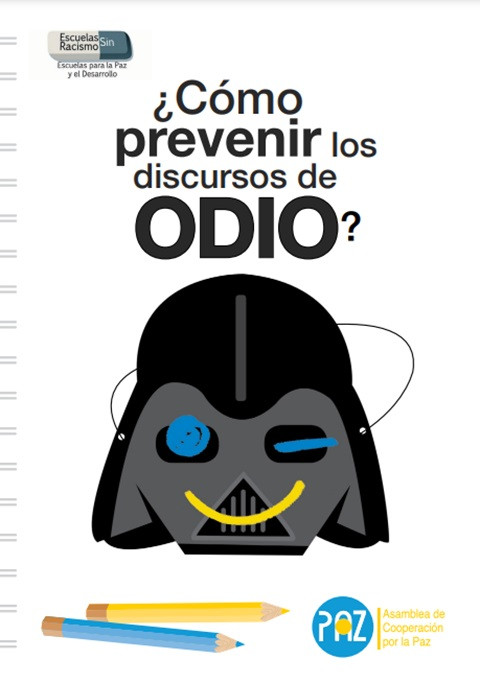 How to Prevent Hate Speech? Año de publicación: 2022 Autor: Adrián Vives Autor corporativo: Assembly of Cooperation for Peace The guide “How to prevent hate speech?” is aimed at teaching staff and aims to serve as a support document for working to eradicate hate speech in and through the classroom. In this guide we aim to offer some keys to working against hate speech in and through the educational field, understanding that prevention is essential to ending it. To do so, it is necessary to address it directly, as we do in the first block; but also through intercultural education that eliminates stereotypes and prejudices, as we explain in the second block; and through practical activities that we present in the last block. ¿Cómo prevenir los discursos de odio? Año de publicación: 2022 Autor: Adrián Vives Autor corporativo: Assembly of Cooperation for Peace La guía “¿Cómo prevenir los discursos de odio?” se dirige al personal docente y tiene el objetivo se servir como documento de apoyo para trabajar para erradicar los discursos de odio en y a través de las aulas. En esta guía pretendemos ofrecer algunas claves para trabajar contra los discursos de odio en y a través del ámbito educativo, entendiendo que la prevención es fundamental para acabar con ellos. Para ello es necesario abordarlos directamente, como hacemos en el primer bloque; pero también a través de una educación intercultural que vaya eliminando los estereotipos y prejuicios, tal y como explicamos en el segundo bloque; y a través de actividades prácticas que exponemos en el último bloque.
  Cultural Diversity and Interculturality in Higher Education. Experiences in Latin America Año de publicación: 2008 Autor: Daniel Mato Autor corporativo: UNESCO International Institute for Higher Education in Latin America and the Caribbean (IESALC) The work that we present below under the title Cultural Diversity and Interculturality in Higher Education. Experiences in Latin America offers a documented and novel analysis on the subject, accompanied by more than thirty studies on concrete experiences that allow to appreciate the richness and vitality that this field exhibits in Latin America, as well as the problems and challenges it faces. The volume brings together thirty-six studies of experiences of the types mentioned, each of which identifies achievements, obstacles and learning, and culminates in offering recommendations. This collection of texts is preceded by a study of regional scope that analyzes significant contextual elements, as well as salient aspects of the studied experiences, evaluates problems, challenges and opportunities, and offers a set of recommendations. Diversidad Cultural e Interculturalidad en Educación Superior. Experiencias en América Latina Año de publicación: 2008 Autor: Daniel Mato Autor corporativo: UNESCO International Institute for Higher Education in Latin America and the Caribbean (IESALC) La obra que a continuación presentamos bajo el título Diversidad Cultural e Interculturalidad en Educación Superior. Experiencias en América Latina ofrece un documentado y novedoso análisis sobre el tema, acompañado de más de treinta estudios sobre experiencias concretas que permiten apreciar la riqueza y vitalidad que este campo exhibe en América Latina, así como los problemas y desafíos que enfrenta. El volumen reúne treinta y seis estudios de experiencias de los tipos mencionados, cada uno de los cuales identifica logros, obstáculos y aprendizajes, y culmina ofreciendo recomendaciones. Esa colección de textos es precedida por un estudio de alcance regional que analiza elementos contextuales significativos, así como aspectos salientes de las experiencias estudiadas, evalúa problemas, retos y oportunidades, y ofrece un conjunto de recomendaciones.
 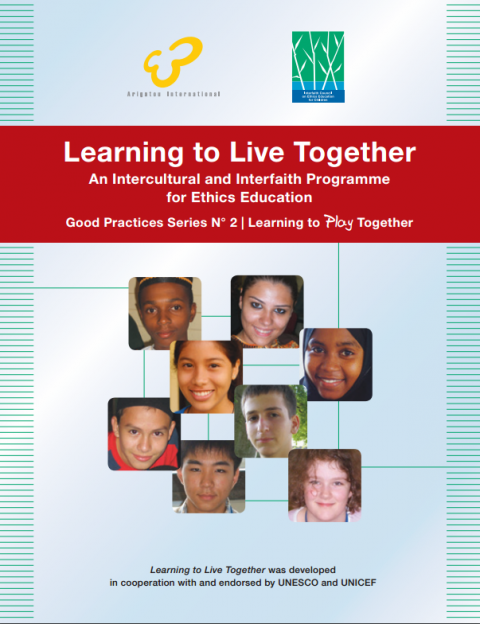 Learning to live together: an intercultural and interfaith programme for ethics education; Good Practices Series 2; Learning to Play Together Año de publicación: 2014 Autor corporativo: United Nations Children's Fund (UNICEF) | Interfaith Council on Ethics Education for Children | Arigatou Foundation Learning to live together: an intercultural and interfaith programme for ethics education; Good Practices Series 2; Learning to Play Together Aprender a vivir juntos Un programa intercultural e interreligioso para la educación ética: Series de Buenas Prácticas 2; Aprender a jugar juntos Año de publicación: 2014 Autor corporativo: United Nations Children's Fund (UNICEF) | Interfaith Council on Ethics Education for Children | Arigatou Foundation Aprender a vivir juntos Un programa intercultural e interreligioso para la educación ética: Series de Buenas Prácticas 2; Aprender a jugar juntos
  Learning to live together: an intercultural and interfaith programme for ethics education: Traning guides series 1; international train the trainers course; a report Año de publicación: 2012 Autor corporativo: United Nations Children's Fund (UNICEF) | Interfaith Council on Ethics Education for Children | Arigatou Foundation In 2010, Arigatou International offered an International Train the Trainers course designed to help those providing training programmes on the use of the Learning to Live Together. The University of Edinburgh helped develop and evaluate the Train the Trainers as a pilot project.
  Learning to live together: an intercultural and interfaith programme for ethics education: Executive Summary Año de publicación: 2015 Autor corporativo: United Nations Children's Fund (UNICEF) | Interfaith Council on Ethics Education for Children | Arigatou Foundation What is the Learning to Live Together? How was it developed? Where and how can it be used? In the Executive Summary you can find answers to all these questions, as well as information about outstanding projects that show the potential of the programme. Apprendre à vivre ensemble: Un programme interculturel et interreligieux pour l’enseignement de l’éthique: Résumé Año de publicación: 2015 Autor corporativo: United Nations Children's Fund (UNICEF) | Interfaith Council on Ethics Education for Children | Arigatou Foundation What is the Learning to Live Together? How was it developed? Where and how can it be used? In the Executive Summary you can find answers to all these questions, as well as information about outstanding projects that show the potential of the programme.