
Recursos
Exploren una amplia gama de recursos valiosos en GCED para profundizar su comprensión y promover su búsqueda, incidencia, enseñanza y aprendizaje.
19 resultados encontrados
 [개정판] 우리는 세계시민: 나눔을 위한 배움; 초등편 Año de publicación: 2021 Autor corporativo: 한국국제협력단 | 국제개발협력민간협의회 본 교재는 KOICA ODA 교육원의 연구용역으로 발간된 것으로 초등학생 대상의 세계시민과 개발교육을 위한 교안및 활용 가이드를 수록하였고 부록으로 교안 선택 활동과 교안 활용을 위한 교보재 등을 다루고 있다. 본 저작물은 국제개발협력민간협의회에서 2021년 작성하여 공공누리 제4유형으로 개방한 ‘우리는 세계시민: 초등편’을 이용하였으며 해당 저작물은 국제개발협력민간협의회 홈페이지 (www.ngokcoc.or.kr)에서 무료로 다운받으실 수 있습니다.
  [개정판] 우리는 세계시민: 나눔을 위한 배움; 중등편 Año de publicación: 2021 Autor corporativo: 한국국제협력단 | 국제개발협력민간협의회 본 교재는 KOICA ODA 교육원의 연구용역으로 발간된 것으로 중학생 대상의 세계시민과 개발교육을 위한 교안및 활용 가이드를 수록하였고 부록으로 교안 선택 활동과 교안 활용을 위한 교보재 등을 다루고 있다. 본 저작물은 국제개발협력민간협의회에서 2021년 작성하여 공공누리 제4유형으로 개방한 ‘우리는 세계시민: 중등편’을 이용하였으며 해당 저작물은 국제개발협력민간협의회 홈페이지 (www.ngokcoc.or.kr)에서 무료로 다운받으실 수 있습니다.
  [개정판] 우리는 세계시민: 나눔을 위한 배움; 고등편 Año de publicación: 2021 Autor corporativo: 한국국제협력단 | 국제개발협력민간협의회 본 교재는 KOICA ODA 교육원의 연구용역으로 발간된 것으로 고등학생 대상의 세계시민과 개발교육을 위한 교안및 활용 가이드를 수록하였고 부록으로 교안 선택 활동과 교안 활용을 위한 교보재 등을 다루고 있다. 본 저작물은 국제개발협력민간협의회에서 2021년 작성하여 공공누리 제4유형으로 개방한 ‘우리는 세계시민: 고등편’을 이용하였으며 해당 저작물은 국제개발협력민간협의회 홈페이지 (www.ngokcoc.or.kr)에서 무료로 다운받으실 수 있습니다.
 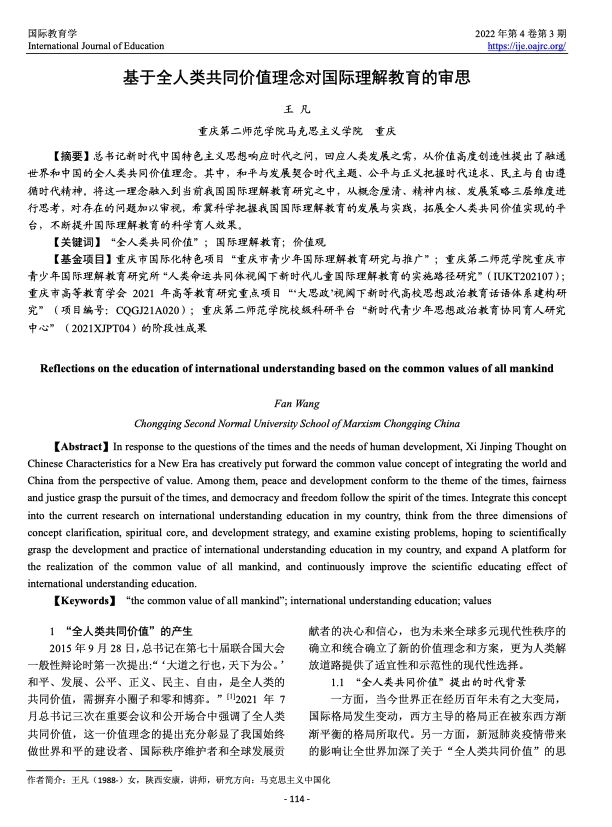 基于全人类共同价值理念对国际理解教育的审思 Año de publicación: 2022 Autor: 王凡 总书记新时代中国特色主义思想响应时代之问,回应人类发展之需,从价值高度创造性提出了融通世界和中国的全人类共同价值理念。其中,和平与发展契合时代主题、公平与正义把握时代追求、民主与自由遵循时代精神。将这一理念融入到当前我国国际理解教育研究之中,从概念厘清、精神内核、发展策略三层维度进行思考,对存在的问题加以审视,希冀科学把握我国国际理解教育的发展与实践,拓展全人类共同价值实现的平台,不断提升国际理解教育的科学育人效果。
 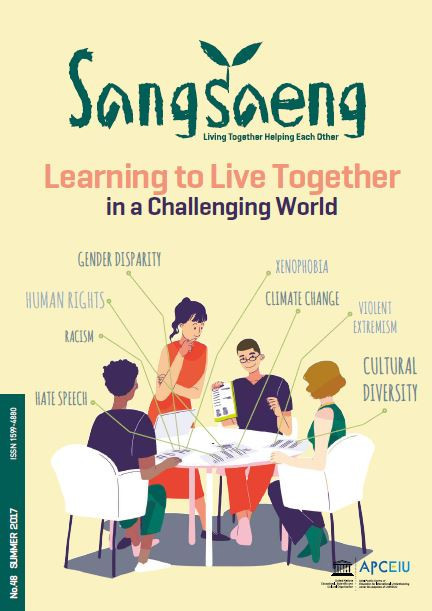 Learning to Live Together in a Challenging World (SangSaeng no. 48 summer 2017) Año de publicación: 2017 Autor corporativo: APCEIU The 48th issue of SangSaeng, “Learning to Live Together in a Challenging World,” has been published. With nationalism on the rise and support for populist perspectives, this edition of SangSaeng emphasizes the global community’s efforts for tolerance and learning to live together. It contains articles reminding us of the importance of empowering learners to assume active roles to face and resolve global challenges. 3 Director’s Message4 Special Column4 Education of Harmony, Peace and Happiness8 We Must Educate Global Citizens to Sustain Peace in the World11 Focus: Learning to Live Together in a Challenging World11 Access to Equitable Quality Education.14 How Business Helps People Learn to Live and Work Together17 Challenges in the Horn of Africa and Desire for Human Dignity20 Ethnic Identity in the Era of Minority Recognition 23 Special ReportShrinking Spaces: A Perspective from Iraq26 Best Practices26 Free2Choose-Create30 Strengthening Literacy Learning in Lesotho35 Youth NetworkGCED & Youth: An Open Forum in Jeju38 InterviewThe Power of Music: An Agent of Transformation42 Understanding the Asia-Pacific Region42 Naadam: A Celebration of Culture46 Bomena in Bhutan50 APCEIU in Action 더불어 살아가기 위한 교육이 직면한 도전 (상생 제48호 2017년 여름호) Año de publicación: 2017 Autor corporativo: APCEIU 48호 <상생>이 “더불어 살아가기 위한 교육이 직면한 도전”이라는 주제로 발간되었다. 이번 호는 국가이기주의와 포퓰리즘 등 도전적인 상황 속에서 관용과 더불어 살아가기 위한 교육(Learning to Live Together)을 지켜나가는 국제사회의 노력을 살펴보고, 학습자들이 도전적인 상황을 직면하고 적극적인 역할을 수행하도록 역량을 키우는 것이 얼마나 중요한지 일깨워준다. 3 발간사4 스페셜 칼럼4 공존과 평화, 행복을 위한 교육8 우리는 세계평화를 지속시키기 위해 세계시민교육을 해야 한다11 포커스: 더불어 살아가기 위한 교육이 직면한 도전11 질적 교육에 평등하게 접근하기14 비즈니스가 함께 살고 일하도록 가르치는 방법17 아프리카 북동부 지역의 인간존엄을 향한 열망과 도전20 소수자 인정 시대의 종족 정체성 23 스페셜 리포트축소되는 공간: 이라크의 관점26 국제이해교육 모범사례26 안네프랑크하우스 Free2Choose-Create30 레소토 리터러시 교육 강화35 유스네트워크세계시민교육과 청년: 제주포럼38 인터뷰음악의 힘: 변혁의 주체42 아시아태평양 지역 이해하기42 나담: 축하의 문화46 부탄 보메나50 교육원 활동
  Revision Process of the 1974 Recommendation concerning Education for International Understanding, Co-operation and Peace and Education relating to Human Rights and Fundamental Freedoms: Compilation of Member State Comments Año de publicación: 2023 Autor corporativo: UNESCO Adopted in 1974, the Recommendation concerning education for international understanding, co-operation and peace and education relating to human rights and fundamental freedoms is considered a landmark legal instrument that brings together for the first time peace, international understanding, human rights, fundamental freedoms and education. As per Circular letter 4401, the preliminary report and the first draft of the revised 1974 Recommendation were transmitted to Member States for their written comments and observations. These written comments were taken into consideration by the Director-General when preparing the revised second draft of the Recommendation to be discussed at the Intergovernmental Special Committee Meeting (Category II), in view of its submission to the 42nd session of the General Conference in November 2023 and eventual adoption.
  Revision Process of the 1974 Recommendation concerning Education for International Understanding, Co-operation and Peace and Education relating to Human Rights and Fundamental Freedoms: Comments from Observers to the Plenary Meetings of the International Expert Group (IEG) Año de publicación: 2023 Autor corporativo: UNESCO Adopted in 1974, the Recommendation concerning education for international understanding, co-operation and peace and education relating to human rights and fundamental freedoms is considered a landmark legal instrument that brings together for the first time peace, international understanding, human rights, fundamental freedoms and education. In line with the Resolution adopted at UNESCO’s General Conference at its 41st Session in November 2021 (41C/Resolution 17), UNESCO launched the revision of the Recommendation and convened an International Expert Group (IEG) to advise the Organization on the changes. The work of the IEG took place between May and June 2022. Though the meetings of the IEG were technical in nature (category VI), in order to ensure an open and transparent process, the Permanent Delegations were invited to listen-in to the deliberations of the IEG online, as observers, along with a select number of non-governmental organizations, intergovernmental organizations, and United Nations entities. At the end of each plenary meeting, observers to the IEG plenary meetings could submit written comments. This document compiles the comments received from observers during this process and submitted to the IEG members for their consideration.
 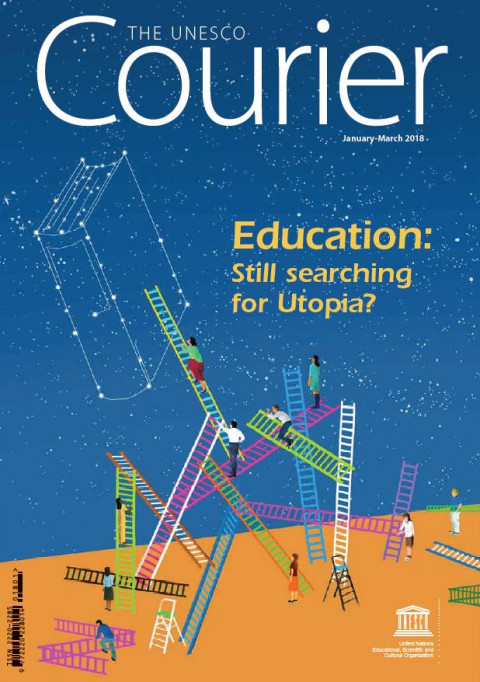 Education: Still Searching for Utopia? (The UNESCO Courier no. 1, January-March 2018) Año de publicación: 2018 Autor corporativo: UNESCO At a time of heightened global tension, when human rights, freedom of speech, peace and the future of the planet itself may seem challenged as never before, the transformational power of education is of critical importance.In Learning: The Treasure Within, the landmark Report to UNESCO by the International Commission on Education for the Twenty-first Century in 1996, Jacques Delors, then Chairman of the Commission (1992 to 1996), spoke of education as “the necessary Utopia” and “an indispensable asset in its attempt to attain the ideals of peace, freedom and social justice.”Education was held up as neither miracle nor magic, but rather the best means to foster a climate where humanity would be improved −. and where the rich potential for learning, inherent in every individual, would be tapped. Our humanity is confronted with a very strange paradox: the world’s population has never been better educated, and yet, according to the UNESCO Institute for Statistics, 263 million children and young people are out of school, 617 million children and adolescents worldwide do not meet the minimum threshold for literacy and mathematics, at least 750 million adults are illiterate, and girls remain more likely than boys to never set foot in a classroom. Yet education is still called upon to address inequalities, poverty, terrorism and conflict. It is seen as one of the keys to global citizenship and sustainable development, two of UNESCO’s fields of action. The Organization is also mandated to lead the Education 2030 global agenda with a special focus on ensuring that no one is left behind. Under the title, “Education: Still searching for Utopia?”, the UNESCO Courier evaluates the state of global education and explores how it responds to some of the main challenges we face. La Educación, una utopia necesaria (El Correo de la UNESCO no.1, Enero-Marzo 2018) Año de publicación: 2018 Autor corporativo: UNESCO El poderoso vector de transformación que es la educación reviste una importancia fundamental en estos tiempos en que parecen ponerse en tela de juicio más que nunca los derechos humanos, la libertad de expresión, la paz y el futuro de nuestro planeta.La educación es una “utopía necesaria” y “constituye un instrumento indispensable para que la humanidad pueda progresar hacia los ideales de paz, libertad y justicia social”, tal como se afirma en el histórico informe “La educación encierra un tesoro”, presentado a la UNESCO en 1996 por la Comisión Internacional sobre la Educación para el siglo XXI presidida por Jacques Delors.La educación, según ese informe, no es un remedio milagroso ni un mágico “ábrete sésamo”, sino una vía mejor que otras para lograr que la humanidad sea mejor.Nuestra época afronta una situación extremadamente paradójica. Mientras que el nivel de instrucción de la población mundial ha alcanzado su más alto nivel histórico, todavía quedan en el mundo 263 millones de niños y adolescentes sin escolarizar y otros 617 millones no logran alcanzar un nivel mínimo de competencia en lectura, escritura y matemáticas. Además, hay 750 millones de adultos analfabetos y actualmente la posibilidad de que las niñas y las jóvenes no pisen jamás una escuela es mucho más alta que en el caso de los varones. Ahora bien, la educación sigue siendo un instrumento indispensable para reducir las desigualdades, la pobreza, elterrorismo y los conflictos armados, así como un factor clave para la mentalización de las personas con vistas a que lleguen a “ciudadanos del mundo” y coadyuven a al desarrollo sostenible. La educación para la ciudadanía y para el desarrollo sostenible son dos ámbitos de acción de la UNESCO, que además tiene el mandato de liderar la agenda mundial Educación 2030, procurando en especial que los sistemas educativos no dejen a nadie atrás.Bajo el título “La educación, una utopía necesaria”, El Correo de la UNESCO traza una panorámica de determinados aspectos de la educación en el mundo, así como de la manera en que ésta puede responder a algunos de los grandes retos planteados a la humanidad.