
Recursos
Exploren una amplia gama de recursos valiosos en GCED para profundizar su comprensión y promover su búsqueda, incidencia, enseñanza y aprendizaje.
67 resultados encontrados
 Construyendo relaciones saludables con los medios de comunicación: Guía para los padres sobre la alfabetización mediática Año de publicación: 2020 Autor corporativo: National Association for Media Literacy Education (NAMLE) | Trend Micro Esta guía ofrece ejemplos de cómo incorporar en una conversación con sus hijos preguntas sobre los medios de comunicación y otros temas relacionados. Es vital que en conversaciones con sus hijos los padres sean modelos de curiosidad y precaución. Enseñar a la próxima generación de jóvenes a hacer preguntas y ser pensadores críticos les permite desarrollar esta importante habilidad para navegar la vida en un mundo digital.
  Citizenship and Lifelong Learning Monitor 2018 Año de publicación: 2019 Autor: Sara Gharsalli Autor corporativo: SOLIDAR Foundation Over the last couple of years, the world has witnessed the harsh impact of populist politics. In the European Union, this rise in nationalism and populism has translated into an old member state leaving the Union for good, and “illiberal” countries rising up against civil society which could bring a major overhaul in the European Parliament for the May 2019 elections. Struggling with how to deal with extremist parties and their leaders, the EU has nonetheless attempted to cautiously restrain possible conflicts by peaceful means and promotion of participation of its citizens to bring people together despite far-right challenges ahead of the next European Parliament elections in May 2019.To counter and prepare citizens to reinforce and strengthen core European democratic values, the Union has pledged to promote citizenship through education after ministers convened in Paris on March 2015 to set up common objectives. Having derived the 2017 report based on three thematic issues directly taken from the declaration’s objectives, this year the monitor aims to go further into understanding the processes and methods for the promotion and delivery of citizenship education in Europe by non-formal education providers.This Monitor is a contribution to further examine the relationship between citizenship and lifelong learning experiences and policy outcomes in and outside of the classroom in various European countries. Mapping the different approaches that SOLIDAR Foundation members have taken in promoting EU values in relation to citizenship education and lifelong learning for greater democratic participation of citizens, the outcomes will be disseminated towards European and national policy-makers and offers an array of best practices to collect, use and transfer among networks. The SOLIDAR Education and Lifelong Learning Forum will further work on the topic and develop a long term sustainable advocacy strategy for CSOs towards national and EU-wide authorities to influence the debate and revision of national curricula and education systems.
  Global Media and Information Literacy Assessment Framework: Country Readiness and Competencies Año de publicación: 2013 Autor corporativo: UNESCO The MIL Assessment Framework can foster lifelong learning initiatives by building on the relationship between information, media, digital, and ICT literacies, along with societal transformations, education, workforce, policy and decision making processes, economic growth and democracy. The overall goal of the publication is to guide UNESCO’s Member States throughout the assessment of country readiness and competencies regarding the media and information literacy of citizens, in particular teachers in service and in training. The document is particularly aimed at the following stakeholders: policy makers and decision makers; national officers responsible for statistical data collection and analysis; educational policy makers and planners working in formal and informal education settings; teacher training institutions and teachers. It is also of relevance to the professional information and communication community, and has wide applicability for civil society at large.
  Input for Report on Disinformation Año de publicación: 2021 Autor corporativo: International Federation of Library Associations and Institutions (IFLA) IFLA responded to a call for inputs about human rights impacts of measures against disinformation, issued by the United Nations Special Rapporteur on the promotion and protection of the right to freedom of opinion and expression. Concerns over – and dialogue about ways to address – the negative impacts of false and misleading information online have remained high on the agenda over the past months, particularly in light of prominent examples of health and electoral dis- and mis-information.Disinformation, uniquely challenging in the increasingly dense and complex digital information environment, interferes with individuals’ ability to make informed decisions and realise their essential human rights. However, the new call for inputs by the UN Special Rapporteur also draws attention to the concerns about human rights impacts of measures which different stakeholders – from states to online platforms, human rights organisations and others – take to combat disinformation.These include, of course, the impacts of broadly- or vaguely-defined “fake news” laws on freedom of expression and opinion; or internet shutdowns that bear a heavy cost on people’s access to information as a driver of development and rights.In light of this, IFLA’s submission highlights the potential of media and information literacy interventions to help address the challenges of mis- and dis-information. Drawing on the global library field’s experiences, it points to some possible good practices and insights from the ongoing work and research in this field – from targeted and tailored outreach initiatives that can help reach those who are not currently in formal education, to scalability and replicability of interventions.Of course, this is an emerging field. Our understanding of how media and information literacy interventions can be effectively leveraged against disinformation, pitfalls to avoid and ways to maximise impact, continues to evolve. That’s why the submission emphasises the need for more research and cross-stakeholder collaboration – and libraries can and do offer valuable practical and theoretical insights for this ongoing discussion.
 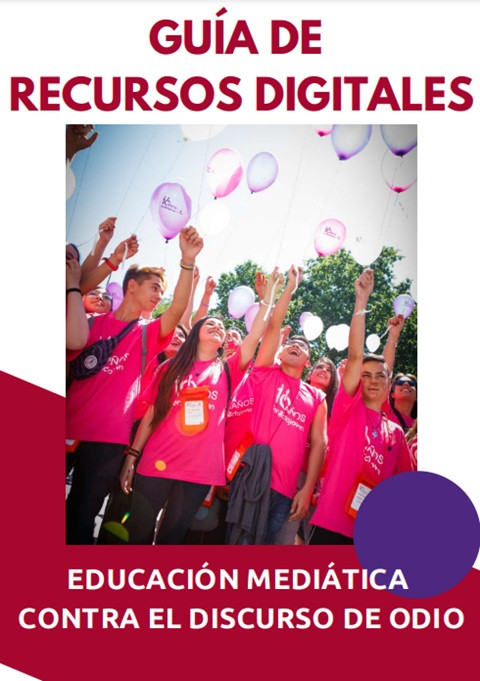 Digital Resource Guide: Media Education Against Hate Speech Año de publicación: 2022 Autor corporativo: Esplai Foundation We could define hate speech as the set of communicative actions aimed at defending, promoting or instigating hatred, humiliation or contempt of a person or group of people. Although hate speech is not something exclusive to the Internet, but is part of the reality beyond the networks, it is true that the potential of the networks facilitates the movement of communication flows, because it facilitates both the production and the creation of messages. Hate speech has also benefited from this and, in addition, has found in the networks other characteristics such as anonymity, brevity, free messaging services or legitimacy granted by the number of followers. With this guide we want to provide digital tools for the creation of this counter-discourse that allows for the creation of messages that offer a positive alternative to extremist propaganda. Guía de recursos digitales: Educación mediática contra el discurso de odio Año de publicación: 2022 Autor corporativo: Esplai Foundation Podríamos definir el discurso de odio como el conjunto de acciones comunicativas orientadas a la defensa, promoción o instigación al odio, la humillación o el menosprecio de una persona o grupo de personas. Si bien el discurso de odio no es algo exclusivo de Internet, sino que es parte de la realidad más allá de las redes, es cierto que el potencial de las redes facilita el movimiento de los flujos comunicativos, porque facilita tanto la producción como la creación de mensajes. Los discursos de odio también se han visto beneficiados por esto y, además, han encontrado en las redes otras características como el anonimato, la brevedad, los servicios gratuitos de mensajería o la legitimidad otorgada por número de seguidores. Con esta guía queremos aportar herramientas digitales para la creación de ese contradiscurso que permita realizar mensajes que ofrecen una alternativa positiva a la propaganda extremista.
  다문화 이주여성 미디어교육 프로그램 개발 연구 Año de publicación: 2022 Autor: 김지혜 | 박소영 | 최인숙 Autor corporativo: 시청자미디어재단 이 연구의 목적은 다문화 이주여성 대상 미디어 교육 프로그램을 개발하는 것이다. 이민과 이주의 시대, 대한민국의 문화적 다양성은 더욱 커지고 있다. 사회 구성원의 문화적 기반이 다채로워진 지금의 시대에 무엇보다도 강조되어야 할 것은 상호 이해와 존중을 기반으로 사회 통합을 추진하고 전체 구성원의 상생과 공존을 가능하게 하는 ‘지속 가능한 발전 전략’을 모색하는 것이다.
 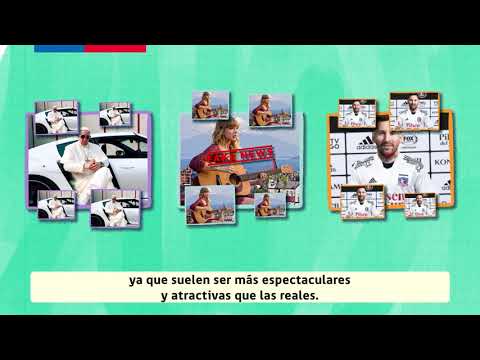 Chapter 4: What Is Disinformation and How Do We Deal With It? Año de publicación: 2024 Autor corporativo: Chile. Ministry of the General Secretariat of Government Why have fake news become so popular? How can we avoid them when doing homework, assignments and getting informed about what is happening in the country and the world? In this capsule, aimed at parents, guardians and tutors, we will learn what disinformation is, more popularly known as the phenomenon of fake news, along with advice on how to confront it and not continue its spread. This capsule was produced by the Ministry of the General Secretariat of Government in collaboration with Mineduc, within the framework of the Citizenship and Digital Literacy Plan. Capítulo 4: ¿Qué es y cómo enfrentamos la desinformación? Año de publicación: 2024 Autor corporativo: Chile. Ministry of the General Secretariat of Government ¿Por qué se han hecho tan populares las noticias falsas? ¿Cómo podemos evitarlas al momento de hacer tareas, trabajos e informarnos de lo que sucede en el país y en el mundo? En esta cápsula, dirigida a padres, madres, apoderadas y apoderados conoceremos lo que es la desinformación, más popularmente conocida como el fenómeno de las fake news, junto con consejos para enfrentarla y no continuar su propagación. Esta cápsula fue realizada por el Ministerio Secretaría General de Gobierno en colaboración con Mineduc, en el marco del Plan Ciudadanía y Alfabetización Digital.
  미래의 위험에 대처하기 위한 인문사회적 상상력의 필요성: 코로나 판데믹과 미래 문해력을 중심으로 (Future Horizon Plus 제45권 제2호) Año de publicación: 2020 Autor: 최항섭 Autor corporativo: 과학기술정책연구원 미래문해력은 자신이 현재의 생존문제를 해결하는 것 때문에 전체 사회의 생존에 있어 미래의 변화에 대한 필요성을 잘 인식하지 못하는 개인 혹은 조직에게 필요한 역량이다.또한 미래문해력은 조직 구성원들로부터 얻는 현재의 인기와 명성보다는 전체 사회가 미래에 지속가능한 발전을 이룩할 수 있도록 하는 정책과 전략을 제시해야 하는 국가리더들에게도 가치가 있다. 국민들이 당장은 불편함을 호소해도 이러한 방법이 미래의 지속성을 위해서 필요하다고 믿게 하는 능력이 요구되기 때문이다.인문사회적 상상력은 미래에 대해서도 단순히 ‘밝은 미래-어두운 미래’라는 이분법으로 문제에 접근하는 것을 극복하게 한다. 인간과 자연의 공존, 개인과 공동체의 상생이라는 가치를 중심으로 하는 인문사회적 상상력은 나의 행위가 어떻게 타인의 행위로 이어지며, 이것이 전체 공동체의 미래에 어떠한 영향을 주어 결국 나의 삶에 어떠한 영향을 줄 것이라는 것을 그리게 해준다.