
Recursos
Exploren una amplia gama de recursos valiosos en GCED para profundizar su comprensión y promover su búsqueda, incidencia, enseñanza y aprendizaje.
117 resultados encontrados
 Address by Irina Bokova, Director-General of UNESCO on the occasion of the Event on Education for Preventing Violent Extremism; Brussels, 21 March 2017 Año de publicación: 2017 Autor corporativo: UNESCO. Director-General, 2009-2017 (Bokova, I.G.) This address was delivered by Irina Bokova, Director-General of UNESCO on the occasion of the Event on Education for Preventing Violent Extremism.
  Address by Irina Bokova, Director-General of UNESCO, on the occasion of the event organized by Albania, Jordan and the Holy See: Fighting radicalization and extremism through Education; United Nations General Assembly 2016; New York, 20 September 2016 Año de publicación: 2016 Autor corporativo: UNESCO. Director-General, 2009-2017 (Bokova, I.G.) This address was presented by Irina Bokova, Director-General of UNESCO, on the occasion of the event organized by Albania, Jordan and the Holy See.
  Message from Irina Bokova, Director-General of UNESCO on the occasion of the International Day of Peace, 21 September 2013 Año de publicación: 2013 Autor corporativo: UNESCO. Director-General, 2009-2017 (Bokova, I.G.) This is the message from Irina Bokova, Director-General of UNESCO on the occasion of the International Day of Peace, 21 September 2013.
  Address by Irina Bokova, Director-General of UNESCO, on the occasion of the lecture: Preventing violent-extremism in the 21st century: fostering a new generation of global citizens at the Center for Conflict Resolution; Salisbury University, 4 April 2017 Año de publicación: 2017 Autor corporativo: UNESCO. Director-General, 2009-2017 (Bokova, I.G.) This address was given by Irina Bokova, Director-General of UNESCO on the occasion of the lecture “Preventing violent-extremism in the 21st century: fostering a new generation of global citizens” at the Center for Conflict Resolution.
 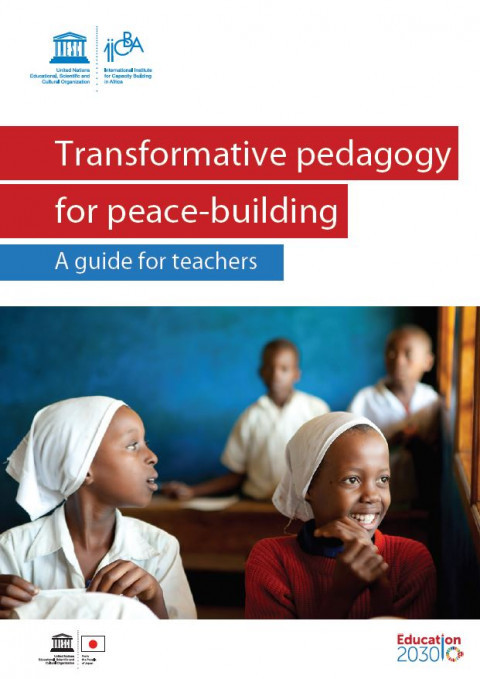 Transformative Pedagogy for Peace-building: A Guide for Teachers Año de publicación: 2017 Autor corporativo: UNESCO International Institute for Capacity-Building in Africa (IICBA) This publication is a guide for teachers and teacher trainers on transformative pedagogy so that they are able to empower youth with peace-building knowledge, skills and competencies necessary to develop into advocates and actors of peace.The guide particularly aims to introduce teachers to the foundation of conflict analysis and peace-building and to equip them with a learner-centered approach to peace education and community engagement.This guide is a resource for educators to engage and support youth in their journey to becoming active peace-builders and fostering transformation in the Horn of Africa and Surrounding Countries.
 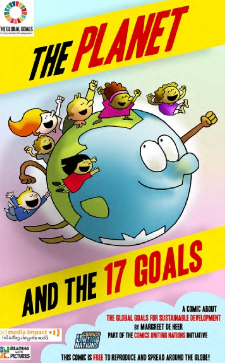 The Planet and the 17 Goals Autor: Margreet De Heer Autor corporativo: United Nations Children's Fund (UNICEF) UNICEF has teamed up with the Comics UnitingNations initiative to use the creative and exciting medium of comics to bring the messages of sustainable development to comics fans globally! Comics have been developed by world renown illustrators, writers and comics developers from around the world.Dutch illustrator Margreet de Heer has lent her talents to the Comics United Nations project to help inform children and youth about the new global goals.
 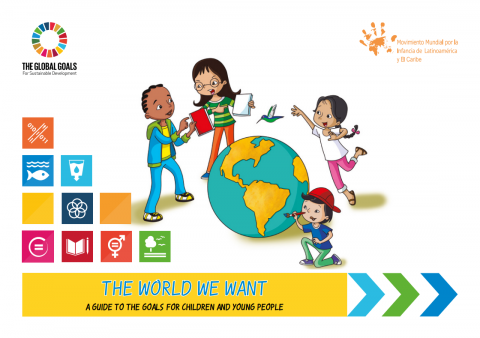 The World We Want: A Guide to the Goals for Children and Young People Año de publicación: 2015 Autor: Dora Bardales | Paola Arenas Autor corporativo: Global Movement for Children of Latin America and Caribbean | United Nations Children's Fund (UNICEF) The purpose of this guide is to help children and young people understand the Sustainable Development Goals, how they impact their life and what they can do every day to help their government achieve the Goals.
  The Road to the SDGs: A discussion with students Año de publicación: 2015 Autor corporativo: United Nations Children's Fund (UNICEF) Animated video to help children learn about important concepts for people and planet as covered in the Sustainable Development Goals (SDGs)
  Address by Irina Bokova, Director-General of UNESCO, on the occasion of the Conference: Victims of ethnic and religious violence in the Middle East, Protecting and promoting plurality and diversity; Madrid, 24 May 2017 Año de publicación: 2017 Autor corporativo: UNESCO. Director-General, 2009-2017 (Bokova, I.G.) This address was presented by Irina Bokova, Director-General of UNESCO, on the occasion of the Victims of Ethnic and Religious Violence conference in the Middle East for protecting and promoting plurality and diversity
 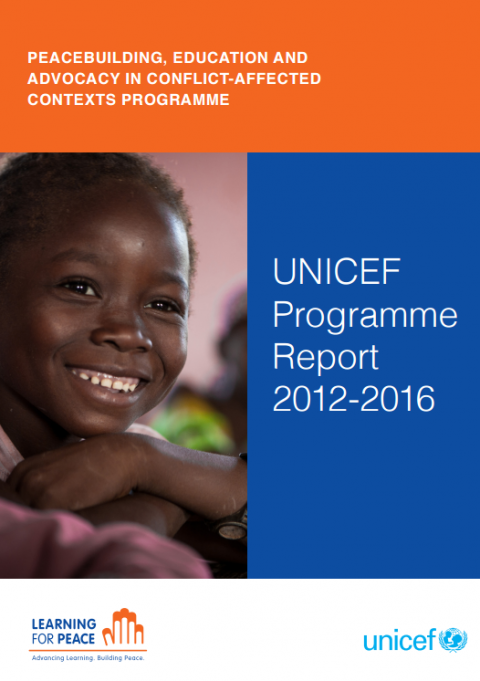 Peacebuilding, education and advocacy in conflict-affected contexts programme; UNICEF Programme Report 2012-2016 Año de publicación: 2016 Autor corporativo: United Nations Children's Fund (UNICEF) UNICEF’s Programme Report 2012–2016 is organized into two parts. Part 1 provides evidence of what works and does not work in peacebuilding efforts, situating the Learning for Peace programme as a case study within the larger global discussion around peace and security. Part 2 accounts for the activities implemented and results emerging from the programme against its results framework and financial input, and includes a description of support for gender-sensitive, responsive and transformative programmatic approaches.