
Recursos
Exploren una amplia gama de recursos valiosos en GCED para profundizar su comprensión y promover su búsqueda, incidencia, enseñanza y aprendizaje.
31 resultados encontrados
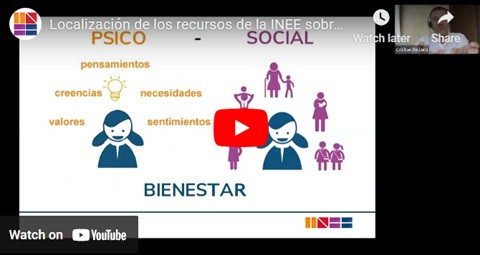 Location of INEE Resources on PSS-SEL Año de publicación: 2024 Autor corporativo: Harvard Graduate School of Education (HGSE) | Inter-agency Network for Education in Emergencies (INEE) In these workshops, participants learned how to locate INEE PSS-SEL resources, including the INEE Background Document on Psychosocial Support and Psychoeducation for Children and Youth in Emergencies, the INEE Guidance Note on PSS, the PSS-SEL Toolkit, and the Guidance Note on Teacher Well-Being in Emergencies, and how to effectively adapt them to different contexts.
  Guidelines for Implementing SEL in Schools Año de publicación: 2022 Autor corporativo: Mahatma Gandhi Institute of Education for Peace and Sustainable Development (MGIEP) Schools that promote SEL help in their students’ academic and global learning. It enables learners to live peacefully with others in heterogeneous societies and build ‘tolerance’ and ethics in behaviour in terms of universal human traits that go beyond social, cultural and gender differences. SEL cultivates children’s wellbeing, and because schools are mirrors or microcosms of our larger and dynamic societies, it is vital that personal and social learning be mainstreamed in schools. The purpose of these guidelines is to share the latest research with policymakers, school leaders, and teachers looking to integrate SEL into school practices and present scientific evidence on creating school environments and recommending practices that are key to building peaceful and sustainable societies.
 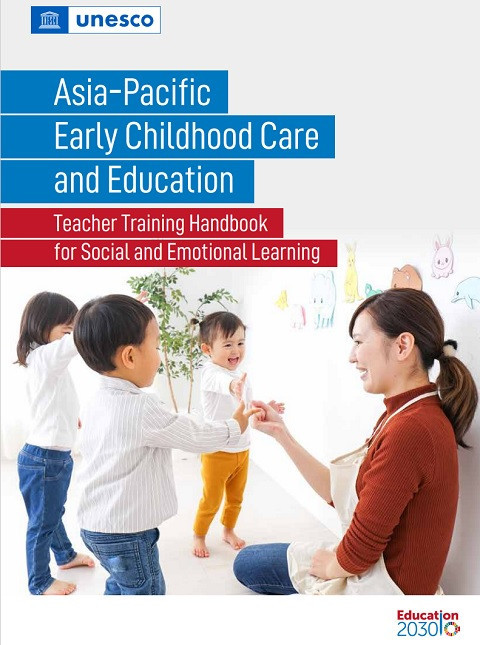 Asia-Pacific Early Childhood Care and Education: Teacher Training Handbook for Social and Emotional Learning Año de publicación: 2022 Autor: Monisha Singh Diwan Autor corporativo: UNESCO Bangkok The handbook was initiated by UNESCO Bangkok. This effort is in response to the widespread recognition of social and emotional learning (SEL)’s importance and the lack of robust and more contextually relevant and culturally sensitive SEL programme for teachers to effectively deliver SEL. With this, UNESCO Bangkok aims to support the Member States in the Asia-Pacific to equip their early childhood care and education (ECCE) teachers with SEL knowledge and skills, and to ensure that children develop pro-social and emotional skills and positive relationships within the early stage of the learning process, particularly in enhancing (1) knowledge about student SEL and classroom management; (2) strategies to apply in the classroom; and (3) teachers’ own social and emotional competence.The handbook provides the context and foundation for the programme. The background of the initiative that led to the regional handbook and training modules (Chapter 1), the introduction of the purpose and use of the handbook (Chapter 2), an overview of ECCE (Chapter 3), SEL (Chapter 4), teachers’ professional education, learning and development (Chapter 5), and APETT-SEL conceptual framework followed by an overview of the four themes and ten modules (Chapter 6). The Glossary provides definitions and/or explanations of key educational terminologies used to provide greater clarity. The ten comprehensive training modules aim to build capacity of pre-primary and early primary teachers, both pre- and in-service, across four themes. The first theme focuses on teachers and their well-being; the second equips teachers in building pro-social and responsive classrooms; the third focuses on diversity, inclusion, cultural responsiveness, and equity; and the fourth focuses on SEL measurement and assessment. Each training module consists of scripted sessions and activities, as well as reference materials included as handouts and additional readings.
 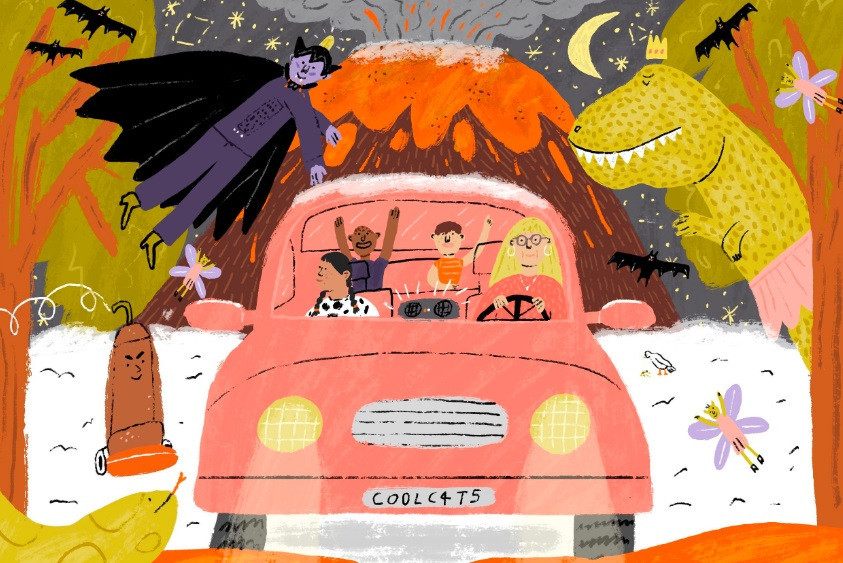 How an SEL Podcast Saved My Carpool Año de publicación: 2023 Autor: Laura Wheatman Hill Autor corporativo: Medicinal Media | Committee for Children The Imagine Neighborhood Podcasthttps://www.imagineneighborhood.org/ The Imagine Neighborhood™ podcast helps children and grown-ups grow their social-emotional skills, and talk about the things that matter with the people that matter most.Has your child ever been so angry that they wanted to smoosh something? Have they ever been scared of the babysitter? Have they ever had a hard time calming down? The Imagine Neighborhood is the show for your family. Each episode tells a story that’s amazing, fantastical, and maybe a little bananas, while it tackles the big feelings that come with growing up. And The Imagine Neighborhood gives you and your kids fun activities to do at home, in the car, or anywhere you talk to each other. How an SEL podcast saved my carpool 25 May 2023 (by Laura Wheatman Hill) My kids’ school is 15-20 minutes from our house and there is no bus.I drive my two kids, ages six and nine, and a neighbor, eight, to and from school three days a week and I let them rotate who picks what we listen to every ride. After I had to veto their picks several days in a row because they were testing the limits of what’s appropriate for all parties, even with a “radio edit” version (I’m sorry, but no Eminem for the kindergartner), I found a kid’s podcast that teaches social emotional learning (SEL) called The Imagine Neighborhood.After the first listen, which featured characters like a vampire robot vacuum and a princess dinosaur, and a world containing dangers such as lava, pixies, and an evil hamster, my kindergartner declared, “This is the greatest podcast of all time!” We proceeded to listen to every single episode available over the next few weeks and now play a new episode the minute it drops. Why teach social emotional learning in a podcast?According to Committee for Children, which helps create programs to assist children in developing life skills, including The Imagine Neighborhood, SEL is “the process of developing the self-awareness, self-control, and interpersonal skills that are vital for school, work, and life success.” Research over time shows that kids who have access to SEL interventions have positive developments both academically and socially in the short and long term. However, teaching these skills in a classroom or at home in an academic, abstract way isn’t shown to work to help your child integrate them into their lives. “You need to use stories for social emotional learning because it’s how a child can see another person’s point of view,” says Dr. Cindy Hovington, a neurologist who created Curious Neuron, a community for parents who want to learn more SEL tools, and co- founder of Wondergrade, an app that supports SEL in young children. She says empathy is much easier to convey in a story rather than a lesson because of the back and forth aspect of dialogue and character. “Someone else in the story has a consequence. Through a narrative, the child will understand both sides, how a certain event or action made a character feel and how it made the other person in the story feel,” she says. When it happens to someone else, a child can see it play out without the heightened emotion of being involved, and the empathy piece is easier to identify. The narratives are the magic of The Imagine Neighborhood. They have tapped into the problems of little kids in such a way that addresses many common issues kids face without being too overt, which would cause many nine-year-olds to roll their eyes and beg for Daft Punk. Mia Doces is the vice president of the Committee for Children. Doces says they have designed this balance of story and lesson very carefully. She explains, “Every episode has wild situations, very unique characters, and humor that ranges from slapstick to cultural references to your basic fart joke — all of which keep listeners hooked to the story. But our writers make sure that no matter how crazy things appear on the surface, the story is rooted in universal human experiences and the everyday social-emotional skills we use to navigate our emotions and cope with challenges.” Some episodes that resonated with my carpool, myself included, have been about big worries, boredom, disappointment, and loss. The parents are in on itThe host of the podcast frequently speaks directly to the parents and asks them to tell the child listeners about a time something happened to them like what is happening in the story. My carpool of sassy, smart kids usually avoids listening to what I have to say, but they actually lean in when Scotty asks me to contribute. Parental participation is also an intentional part of the design. Even if schools are teaching SEL skills, Doces says, “school-based SEL works best when kids are also learning these life skills at home with their families.” According to Hovington, “There is a misconception that SEL learning happens on the playground. SEL skill-building happens with the parent. Practice happens on the playground.” She says the best opportunities to learn new SEL skills are not in times of crisis or when problem solving, but on calm car rides home from school or before bed — the exact times we listen to The Imagine Neighborhood. In the future, Hovington says, “When a child comes back from school with a problem, that’s an opportunity for a parent to recreate or recall the story.” This resonates with audiences of The Imagine Neighborhood. Doces says, “We get letters from parents who tell us they refer to certain characters or use certain SEL-based catchphrases from the show as shorthand to help their kids draw parallels between something that’s happening to them in real time and a tool that a character learned on the show.”I haven’t sent a letter (yet), but I quote the show frequently. SEL is good for all of usTurns out, The Imagine Neighborhood, and the skills it teaches isn’t only for kids. SEL wasn’t taught in schools when most of us were kids and Doces says, “when adults listen along with the children, they’re also picking up the SEL techniques we’re sharing, and learning positive phrasing and other tools to empower them to have these family discussions in impactful ways.” Since the kids do have SEL in school, these stories provide a good segue for the students to become the teacher, and to tell us how they talk about their feelings. Parents can use the shared SEL language from curriculums and narratives like The Imagine Neighborhood as a vehicle to foster better communication in the family. Doces says parents don’t have to be masters of SEL, but “when they help children name and process their feelings, and acknowledge and support children’s positive behaviors, they’re teaching their family SEL and building a stronger, kinder future for their families.” We know positive reinforcement is successful and the message of The Imagine Neighborhood is one we can all agree on: be kind to those around you.We were driving a third-grader home from a playdate one day and The Imagine Neighborhood was playing. I heard the friend from the backseat ask, “What is this? Because I like it!” Got another one!
  Bolstering Adolescent Social, Emotional, and Mental Health with Dr. Kathleen Ethier of the CDC Año de publicación: 2023 Autor corporativo: Committee for Children 26 Oct 2023 The Grow Kinder® podcast / Committee for Childrenhttps://soundcloud.com/grow-kinder-podcast/bolstering-adolescent-social-emotional-and-mental-health-with-dr-kathleen-ethier-of-the-cdc?utm_source=www.cfchildren.org&utm_campaign=wtshare&utm_medium=widget&utm_content=https%253A%252F%252Fsoundcloud.com%252Fgrow-kinder-podcast%252Fbolstering-adolescent-social-emotional-and-mental-health-with-dr-kathleen-ethier-of-the-cdc Show NotesIn this episode of the Grow Kinder® podcast, host Andrea Lovanhill speaks with Dr. Kathleen Ethier, the director of the Division of Adolescent and School Health at the Centers for Disease Control and Prevention (CDC).In this enlightening conversation, Andrea and Kathleen dive deep into the pressing issues surrounding the mental health of today’s teenagers.We take a closer look at the CDC’s recent Youth Risk Behavior Survey and the startling findings related to the mental health of teenage girls.We discover the initiatives undertaken by the CDC to help schools address these mental health challenges.In addition, Kathleen offers advice for concerned parents on how they can actively support their children’s social-emotional well-being and development.To learn more about the CDC’s work with schools, click here. To sign up with Committee for Children to advocate for children’s social-emotional well-being, click here.Stay tuned for more episodes on our thought-provoking journey throughout this new season.You can catch us on your favorite podcast platforms such as Apple Podcasts, Spotify, SoundCloud, and more. For additional information, visit GrowKinderPodcast.org.
 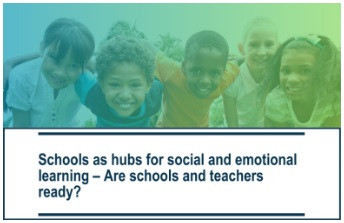 Schools as Hubs for Social and Emotional Learning Año de publicación: 2023 Autor corporativo: Organisation for Economic Co-operation and Development (OECD) Schools are perfect hubs for social and emotional learning, but are they ready for this task? To address this question, this Spotlight reports previously unpublished findings from the OECD’s Survey on Social and Emotional Skills (SSES) and discusses their implications for education policy and practice. Both an active promotion in schools and extensive learning opportunities for teachers on relevant topics provide a fertile ground for an effective social and emotional education. They boost teachers’ self-efficacy and use of active learning pedagogies, as well as quality relationships at school. The Spotlight also points to important differences for teachers of 10- vs. 15-year-old students that can explain higher skills at a younger age. Younger students benefit more often from key elements of an effective social and emotional education in school, i.e. the evaluation of their social and emotional skills and teachers teaming up with parents to reinforce skill promotion. Teachers of 10-year-olds are also more intensively trained and requested to promote social and emotional learning in their work.
  Why SEL is the foundation of Future Schools Año de publicación: 2023 Autor: Kevin Hogan Autor corporativo: eSchool News https://www.eschoolnews.com/podcast/why-sel-is-the-foundation-of-future-schools/ One of many post-pandemic truths exposed and emphasized is that learning outcomes suffer without proper student mental health measures.In this episode of Innovations in education host Kevin Hogan has a conversation with Sonny Thadani, CEO of Robin, to explore how SEL can be integrated into district policies and school curricula. The key? Get everyone involved. Author: Kevin HoganKevin is a forward-thinking media executive with more than 25 years of experience building brands and audiences online, in print, and face to face. He is an acclaimed writer, editor, and commentator covering the intersection of society and technology, especially education technology. You can reach Kevin at KevinHogan@eschoolnews.com © Copyright 2023 eSchoolMedia & eSchool News.
  Social-Emotional Learning in Authentic Ways: Generating Solutions for the Early Childhood Program Año de publicación: 2023 Autor: Nicole Nesheim Autor corporativo: Hatch Early Learning In the post-pandemic field of education, the inclusion of social-emotional learning into early childhood education has been stressed as highly important. But what is social-emotional learning, exactly, and why is it so important now? Social-emotional learning is the practice of teaching the whole child, not simply core subjects and the arts.
 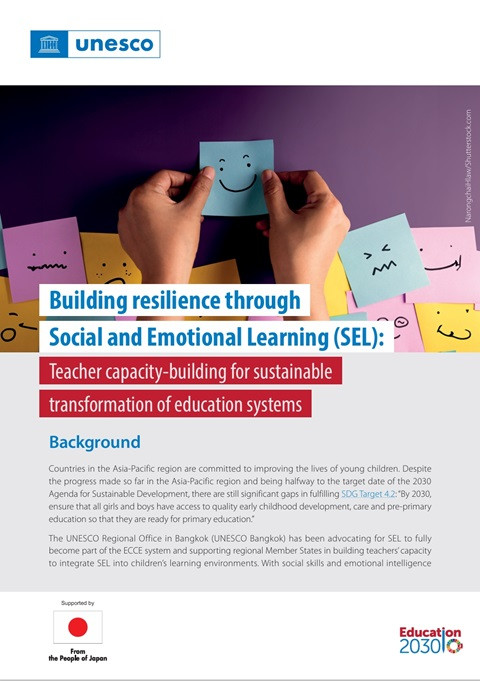 Building Resilience Through Social and Emotional Learning (SEL): Teacher Capacity-building for Sustainable Transformation of Education Systems Año de publicación: 2024 Autor corporativo: UNESCO Bangkok Countries in the Asia-Pacific region are committed to improving the lives of young children. Despite the progress made so far in the Asia-Pacific region and being halfway to the target date of the 2030 Agenda for Sustainable Development, there are still significant gaps in fulfilling SDG Target 4.2: 'By 2030, ensure that all girls and boys have access to quality early childhood development, care and pre-primary education so that they are ready for primary education.' The UNESCO Regional Office in Bangkok (UNESCO Bangkok) has been advocating for SEL to fully become part of the ECCE system and supporting regional Member States in building teachers’ capacity to integrate SEL into children’s learning environments. With social skills and emotional intelligence taught in schools early, children will gain knowledge, skills, and attitudes to develop healthy identities, manage emotions, and achieve personal and collective goals. This can positively contribute to society and transformative resilience through enhancing civic engagement.
  تعزيز رفاه الشباب عبر الصحة والتعليم: رؤى وفرص Año de publicación: 2019 Autor: Wing Yi Chan | Jennifer Sloan | Anita Chandra Autor corporativo: RAND Corporation أضحى الرفاه، باعتباره ركيزة أساسية في عمليات التخطيط وصناعة السياسات وتخصيص الموارد، ضرورةً لا غنى عنها لتنمية المجتمعات والدول التي تسير في درب الازدهار، مما دفعنا في هذا التقرير لدراسة المؤلفات الأكاديمية وغير الأكاديمية وثيقة الصلة بالموضوع لتحديد الأطر النظرية التي تحقق التكامل بين الصحة والتعليم داخل منظومة واحدة.