
Recursos
Exploren una amplia gama de recursos valiosos en GCED para profundizar su comprensión y promover su búsqueda, incidencia, enseñanza y aprendizaje.
133 resultados encontrados
 Justice in Matters Involving Children in Conflict with the Law: Model Law on Juvenile Justice and Related Commentary Año de publicación: 2013 Autor corporativo: UN. Office on Drugs and Crime (UNODC) This Model Law and the related Commentary are designed to provide legal guidance to States in the process of juvenile justice reform and assist them in drafting juvenile justice legislation. It translates compelling international juvenile justice standards and norms into a national context and aims at harmonizing national legislation with international requirements. International standards and norms in the area of juvenile justice are detailed. Правосудие: Вопросы, Касающиеся Детей, Находящихся в Конфликте с Законом Año de publicación: 2013 Autor corporativo: UN. Office on Drugs and Crime (UNODC) Данный Типовой Закон и соответствующие комментарии являются руководством для проведения реформы правосудия по делам несовершеннолетних в различных странах и призван помочь в создании законодательства по делам несовершеннолетних. Данный Типовой Закон объединяет международные нормы и стандарты законодательства по делам несовершеннолетних, которые необходимо привести в соответствие с национальным законодательством с тем, чтобы гармонизировать национальное и международное законодательства. Данная работа детально описывает международные стандарты и нормы законодательства по делам несовершеннолетних.
  PREVENT: creating “radicals” to strengthen anti-Muslim narratives Año de publicación: 2015 Autor: Asim Qureshi Autor corporativo: Critical Studies on Terrorism The use of de-radicalization narratives in schools, universities and hospitals has led to the criminalization of large sections of the various Muslim communities in the UK. Based on different experiences we hope to present a view of how an aggressive anti-Muslim narrative that is based on assumptions subverts the political expression/identity of individuals by turning them into potential threats. By understanding the everyday interactions with PREVENT, a picture can be formed of the way that a false presentation of narratives can lead to a person becoming an “extremist” or “terrorist”, while the truth may lie in a completely alternative place. PREVENT: creating “radicals” to strengthen anti-Muslim narratives Año de publicación: 2015 Autor: Asim Qureshi Autor corporativo: Critical Studies on Terrorism L'utilisation des récits de déradicalisation dans les écoles, les universités et les hôpitaux a conduit à la criminalisation d’une fraction importante des différentes communautés musulmanes au Royaume-Uni. En se basant sur des expériences différentes, nous espérons montrer comment un récit agressif antimusulman qui se fonde sur des hypothèses bouleverse les opinions /l’identité des individus et les transforment en des menaces potentielles. Chercher à comprendre comment se font les interactions quotidiennes avec PREVENT permet de saisir comment une présentation erronée des récits de vie peut conduire à présenter une personne comme un « extrémiste » ou un « terroriste », alors que la réalité est tout à fait différente.
  Values Education through Sport Año de publicación: 2016 Autor corporativo: UNESCO Innovative education for developmentEducation in the 21st century increasingly recognizes the role of values and social skills in tackling global challenges, such as inactivity, obesity, unemployment, and conflict. This approach is at the core of the Sustainable Development Goal 4 on quality education, which advocates for inclusive lifelong learning opportunities and innovative content delivery. Dynamic forms of values-based education using sport can be introduced in schools to support teachers deliver curricula actively and cooperatively.What are sport values?Sport can teach values such as fairness, teambuilding, equality, discipline, inclusion, perseverance and respect. Sport has the power to provide a universal framework for learning values, thus contributing to the development of soft skills needed for responsible citizenship.What can Values Education through Sport offer?Values Education through Sport (VETS) programmes support active learning, complement cognitive skills and give students increasing amounts of responsibility, and enhance their level of concentration and participation. VETS programmes are flexible and have a strong cross-curricular potential: they can reinforce existing curricula and can be streamed across different subjects, including physical education, civic and moral education, nutrition, biology, arts. Ultimately, these programmes help students to transfer and put values into action outside the school environment, by getting engaged in their communities, making informed decisions, being sensitive and respecting the others and the environment. VETS contributes to the development of self-confidence, active and healthy lifestyle choices, and an understanding of rights, supporting the delicate transition to the independence of adulthood. Éducation aux Valeurs par le Sport Año de publicación: 2016 Autor corporativo: UNESCO Éducation innovante pour le développementL'éducation au 21e siècle reconnaît de plus en plus le rôle des valeurs et des compétences sociales pour relever les défis mondiaux, tels que l'inactivité, l'obésité, le chômage et les conflits. Cette approche est au cœur de l'objectif de développement durable 4 sur l'éducation de qualité, qui milite pour des possibilités d'apprentissage inclusifs et la livraison de contenu innovant. Les formulaires dynamiques de l'éducation fondée sur les valeurs en utilisant le sport peuvent être introduits dans les écoles pour aider les enseignants offrent des programmes activement et en collaboration.Quelles sont les valeurs du sport?Le sport peut enseigner des valeurs telles que l'équité, teambuilding, l'égalité, la discipline, l'inclusion, la persévérance et le respect. Le sport a le pouvoir de fournir un cadre universel pour les valeurs d'apprentissage, contribuant ainsi au développement des compétences générales nécessaires à la citoyenneté responsable. Que peut l'éducation aux valeurs par offre de Sport?Valeurs éducation par le sport (VEPS) programmes appuient l'apprentissage actif, compléter les compétences cognitives et donner aux étudiants les montants de responsabilité de plus en plus, et d'améliorer leur niveau de concentration et de participation. programmes VEPS sont flexibles et ont un fort potentiel transdisciplinaire: ils peuvent renforcer les programmes existants et peuvent être écoutés sur différents sujets, y compris l'éducation physique, l'éducation civique et morale, la nutrition, la biologie, les arts. En fin de compte, ces programmes aident les élèves à transférer et de mettre les valeurs en action en dehors du milieu scolaire, en s'engagés dans leurs communautés, prendre des décisions éclairées, étant sensible et en respectant les autres et l'environnement. VEPS contribue au développement de la confiance en soi, des choix de vie sains et actifs, et une compréhension des droits, soutenir la transition délicate à l'indépendance de l'âge adulte.
  World social science report, 2016: Challenging inequalities; pathways to a just world Año de publicación: 2016 Autor corporativo: UNESCO Never before has inequality been so high on the agenda of policy-makers worldwide, or such a hot topic for social science research. More journal articles are being published on the topic of inequality and social justice today than ever before. This Report draws on the insights of over 100 social scientists and other thought leaders from all over the world, across various disciplines, to emphasize transformative responses to inequality at all levels, from the grass roots to global governance. Too many countries are investing too little in researching the long-term impact of inequality on the sustainability of their economies, societies and communities. Unless we address this urgently, inequalities will make the cross-cutting ambition of the Sustainable Development Goals (SDGs) to ‘leave no one behind’ by 2030 an empty slogan.
  Curriculum in the Education 2030 Agenda: Latin America and the Caribbean Año de publicación: 2017 Autor: Renato Opertti Autor corporativo: UNESCO International Bureau of Education (IBE) “Curriculum in the Education 2030 Agenda: Latin America and the Caribbean”1 discusses the importance of rethinking the curriculum in light of a transformational, humanistic and holistic vision of education. The Education 2030 Agenda, which emerged from the World Education Forum (WEF) 2015 held in Incheon, Republic of Korea, positions curriculum as a powerful education policy tool leading the way to effective, relevant and sustainable learning opportunities, processes and outcomes. Curricula have a positive effect as levers for the sustainable, inclusive, fair and cohesive development of a country. They reflect and help to construct the type of society envisioned. The article provides recommendations to strengthen the positioning of curriculum toward an inclusive and equitable quality education in Latin America and the Caribbean. It therefore addresses the following questions: 1) How is curriculum currently conceived?; 2) What role does it play in the reforms aimed at improving equity and quality of the learning processes?; 3) What are the main regional challenges in relation to curriculum development?; and 4) How could countries align their curricula with their development needs?
 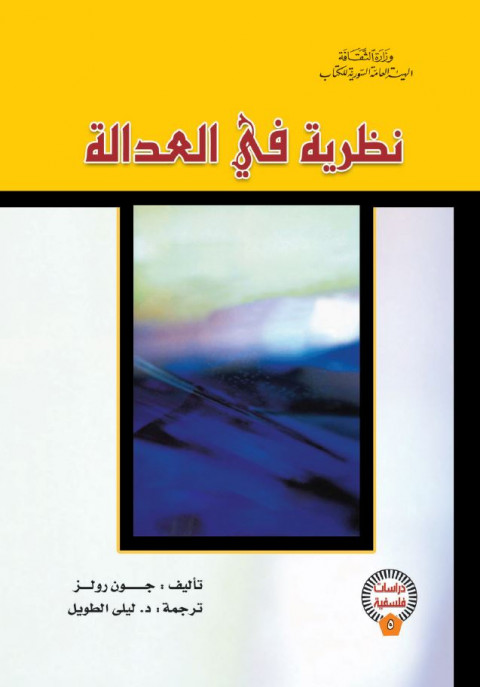 نظرية في العدالة Año de publicación: 2011 Autor: John Rawls Autor corporativo: Syria. Ministry of Culture هذا كتاب مترجم للامريكي جون رولز، والذي استعرض فيه العدالة من خلال تطرقه للمؤسسات والقوانين التي تحكمها. يؤكد جون أن العدالة مكون رئيسي من هذا الكون ولا يمكن تجاهلها بأي حال، أو تجاوزها حتى لصالح رفاهية المجتمع. يمثل هذا الكتاب المترجم مرجعا في الوطن العربي لفهم العدالة. A Theory of Justice (Arabic Edition) Año de publicación: 2011 Autor: John Rawls Autor corporativo: Syria. Ministry of Culture This is a book translated by Laila Al Taweel for the American author John Rawls, in which he reviewed justice by examining the institutions and laws that govern it. John asserts that justice is a major component of this universe and cannot be ignored in any way, or even surpassed even in the interests of society's well-being. This translated book is a reference in the Arab world for understanding justice.