
Recursos
Exploren una amplia gama de recursos valiosos en GCED para profundizar su comprensión y promover su búsqueda, incidencia, enseñanza y aprendizaje.
340 resultados encontrados
 Promouvoir le développement durable au Nigéria: via l'éducation civique (Revue d'éducation et de pratique, vol. 5, n ° 34) Año de publicación: 2014 Autor: Ajibola A. Lukman | Habida Audu Autor corporativo: International Institute for Science, Technology and Education Rien dans ce monde n'est aussi puissant qu'une idée dont le temps est venu. Face à la connaissance éthique, la disposition des compétences et le développement durable au Nigeria, l'éducation civique a pris une position centrale. Idée de l'éducation civique dans le curriculum nigérian est si puissant dans la mesure où chaque jeune nigérian mérite ses connaissances. Sur cette base, cet article décrit l'éducation civique comme un facteur de base pour le développement individuel et social de notre nation. Le papier analyse le tissu entre l'éducation civique et le développement social vers le mélange et l'interfaçage de la sagesse locale avec le monde des connaissances, des valeurs et des compétences, qui développera le jeune Nigérian pour devenir un citoyen de ce pays ainsi qu'un citoyen du village global. Le document souligne que l'éducation civique est essentielle pour façonner les attitudes et les interactions sociales et que les deux sont essentiels pour aborder les questions entourant le développement durable. À cette fin, le document conclut que le développement durable exige des connaissances civiques, des compétences civiques et une disposition civique. Il est donc recommandé que l'éducation civique soit considérée comme un moteur du développement dans lequel les États, les individus, les collectivités et les entreprises participent au développement durable.
 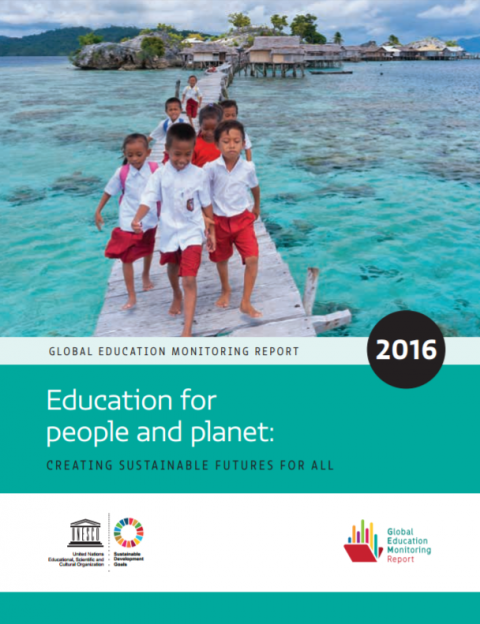 التقرير العالمي لرصد التعليم ٢٠١٦ - التعليم من أجل الناس والكوكب: بناء مستقبل مستدام للجميع Año de publicación: 2016 Autor corporativo: UNESCO | Global Education Monitoring Report Team يستند هذا التقرير العالمي لرصد التعليم الذي أصدرته اليونسكو إلى تجربة وخبرة التقارير العالمية السابقة لرصد التعليم للجميع، كما تناط به مهمة جديدة وهي تقييم التقدم الذي يحرزه التعليم في إطار جدول أعمال 2030. وهذا التقرير العالمي لرصد التعليم لعام 2016، وهو الأول من هذه السلسلة التي ستتواصل على مدى 15 عاماً، يستكشف العلاقة المعقدة بين التعليم والجوانب الأخرى للتنمية المستدامة، إلى جانب رصد الآثار المترتبة على الهدف 4 للتنمية المستدامة. ويبين أن التعليم لن يجود بكامل إمكاناته لدفع العالم إلى الأمام ما لم تتحسن معدلات الالتحاق بالمدارس تحسُّناً كبيراً، ويصبح التعلم عملية متواصلة مدى الحياة، وتتماهى نُظم التعليم تماماً مع التنمية المستدامة.
 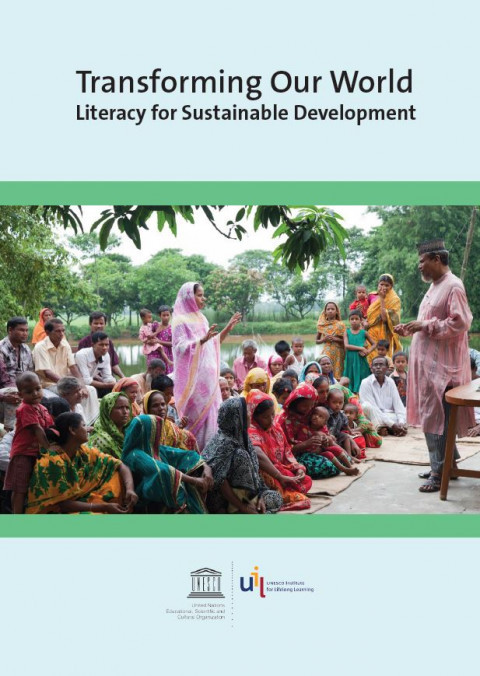 Transforming our world: literacy for sustainable development Año de publicación: 2015 Autor: Ulrike Hanemann | Cassandra Scarpino Autor corporativo: UNESCO Institute for Lifelong Learning (UIL) This compilation offers global examples of innovative and promising literacy and numeracy programmes that link the teaching and learning of literacy to sustainable development challenges such as health, social equality, economic empowerment and environmental sustainability. This publication is a timely contribution to the 2030 Agenda for Sustainable Development, which promotes the engagement of stakeholders to ‘ensure inclusive and equitable quality education and promote lifelong learning opportunities for all.’ Transformer notre monde: l'alphabétisation au service du développement durable Año de publicación: 2015 Autor: Ulrike Hanemann | Cassandra Scarpino Autor corporativo: UNESCO Institute for Lifelong Learning (UIL) This compilation offers global examples of innovative and promising literacy and numeracy programmes that link the teaching and learning of literacy to sustainable development challenges such as health, social equality, economic empowerment and environmental sustainability. This publication is a timely contribution to the 2030 Agenda for Sustainable Development, which promotes the engagement of stakeholders to ‘ensure inclusive and equitable quality education and promote lifelong learning opportunities for all.’
 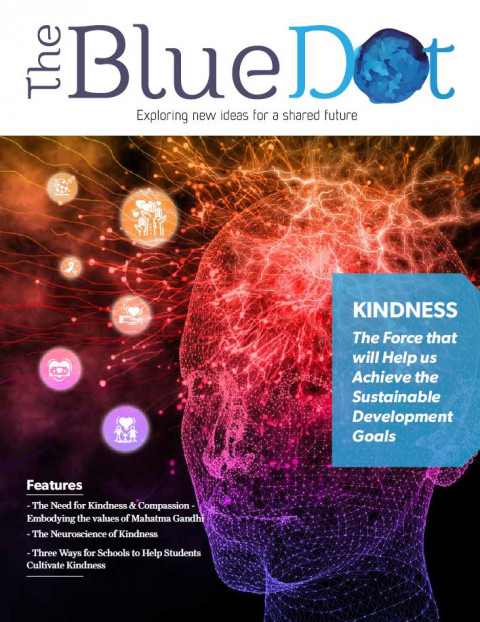 Kindness: The Force That Will Help Us Achieve the Sustainable Development Goals (The Blue Dot Issue 11, 2020) Año de publicación: 2020 Autor corporativo: Mahatma Gandhi Institute of Education for Peace and Sustainable Development (MGIEP) In the eleventh issue of The Blue Dot, we focus on ‘Kindness’ – as the force that will help us achieve the Sustainable Development Goals, towards making the world more peaceful and sustainable – a better place to live in the future for our children. We hear from Ramesh Pokhriyal ‘Nishank’, Minister of Human Resource Development, Government of India on ‘The Need for Kindness and Compassion – Embodying the values of Mahatma Gandhi’, experts such as Zoran Josipovic on the neuroscience behind kindness; Michael Karlin and Brendran Ozawa-De Silve on the science and theory behind kindness, and from educators (Vicki Zakrzewski and John-Tyler Binfet) on how kindness can be practiced in our classrooms.Our cover story on ‘Kindness – the force to Achieve the Sustainable Development Goals’ discusses the biology of kindness, how kindness can help us achieve the SDGs and Kindness and SDGs and the Youth. Further, we have a hand-picked collection of youth stories on kindness, extracted from the 7,300+ stories we have from 120 countries around the world as part of UNESCO MGIEP’s #KindnessMatters for the SDGs youth campaign.
  [Video] Second UNESCO Forum on Global Citizenship Education Año de publicación: 2015 Autor corporativo: UNESCO Highlights of the Second UNESCO Forum on Global Citizenship Education (GCED) Building peaceful and sustainable societies: preparing for post-2015 (28-30 January 2015,UNESCO HQ, Paris). The Forum was organized by the Division for Teaching, Learning and Content, Education Sector, UNESCO, with the support of Austria, the Sultanate of Oman and the Republic of Korea, and the UN Secretary-General’s Global Education First Initiative (GEFI). Repositionnement et reconceptualiser le programme d'études pour l'utilisation Efficace du Développement Durable Objectif Quatre, pour le développement holistique et modes de vie durables Año de publicación: 2015 Autor corporativo: UNESCO International Bureau of Education (IBE) Le but de ce document de travail est double, il est de repositionner curriculum au centre national et le dialogue mondial du développement et de mettre en évidence son pouvoir pour donner effet aux nationaux et aux états ambitieux mondiaux sur le rôle de l'éducation dans le développement holistique . Quand bien conçu et efficacement adopté, le curriculum détermine la qualité, l'inclusion et le développement-pertinence de l'éducation. Deuxièmement, il faut reconceptualiser programme comme une force fondamentale de l'intégration des systèmes d'éducation et comme un outil opérationnel pour donner effet aux politiques sur l'apprentissage continu. Curriculum conduit tous les aspects essentiels de l'éducation qui sont connus pour déterminer la qualité, l'inclusion et la pertinence tels que le contenu, l'apprentissage, l'enseignement, l'évaluation et l'enseignement et des environnements d'apprentissage entre autres. Son articulation horizontale et verticale, ainsi que son articulation dans tous les milieux d'apprentissage est ce qui donne effet aux politiques d'apprentissage continu. Ce document vise donc à repositionner programme comme un outil indispensable pour donner effet à ODD Objectif 4.
  Re|shaping cultural policies: a decade promoting the diversity of cultural expressions for development Año de publicación: 2015 Autor corporativo: UNESCO This Report presents the work of fourteen independent experts, as well as the Secretary of the Convention and the Principal Editor, who have analysed the implementation of the Convention on the Protection and Promotion of the Diversity of Cultural Expressions. Its purpose is to move forward the process of monitoring the Convention’s implementation that was put in place by a mechanism of Quadrennial Periodic Reports (QPRs) approved by the Convention’s Conference of Parties in 2011. The contributors have consulted the 71 reports submitted by Parties, but have also used data derived from other, non-official sources and have drawn upon their own expert experience. Re|pensar las politicas culturales: 10 anos de promocion de la diversidad de las expresiones culturales para el desarrollo Año de publicación: 2015 Autor corporativo: UNESCO This Report presents the work of fourteen independent experts, as well as the Secretary of the Convention and the Principal Editor, who have analysed the implementation of the Convention on the Protection and Promotion of the Diversity of Cultural Expressions. Its purpose is to move forward the process of monitoring the Convention’s implementation that was put in place by a mechanism of Quadrennial Periodic Reports (QPRs) approved by the Convention’s Conference of Parties in 2011. The contributors have consulted the 71 reports submitted by Parties, but have also used data derived from other, non-official sources and have drawn upon their own expert experience. Re|penser les politiques culturelles: 10 ans de promotion de la diversité des expressions culturelles pour le développement Año de publicación: 2015 Autor corporativo: UNESCO This Report presents the work of fourteen independent experts, as well as the Secretary of the Convention and the Principal Editor, who have analysed the implementation of the Convention on the Protection and Promotion of the Diversity of Cultural Expressions. Its purpose is to move forward the process of monitoring the Convention’s implementation that was put in place by a mechanism of Quadrennial Periodic Reports (QPRs) approved by the Convention’s Conference of Parties in 2011. The contributors have consulted the 71 reports submitted by Parties, but have also used data derived from other, non-official sources and have drawn upon their own expert experience.