
Recursos
Exploren una amplia gama de recursos valiosos en GCED para profundizar su comprensión y promover su búsqueda, incidencia, enseñanza y aprendizaje.
153 resultados encontrados
 Challenging Common Conceptions: Seeing The Bigger Picture - Lesson 1 Autor corporativo: United Nations Children's Fund (UNICEF) World’s Largest Lesson is a collaborative education project to support the announcement of the United Nations Global Goals for Sustainable Development. Learning outcomes of the project: • To understand that environmental issues can be intrinsically linked to economic issues • To critique the flaws inherent in some common approaches to environmental education • To begin to investigate a different way of approaching environmental, social and economic issues
  Clean Water for All Autor corporativo: United Nations Children's Fund (UNICEF) World’s Largest Lesson is a collaborative education project to support the announcement of the United Nations Global Goals for Sustainable Development. Learning outcome of the project: • Define water pollution • State or outline some of the causes of water pollution • Describe the global inequality of access to clean water
  Natural disaster preparedness and education for sustainable development Año de publicación: 2007 Autor corporativo: UNESCO Bangkok Natural Disaster Preparedness and Education for Sustainable Development provides details of the development of culturally appropriate and locally relevant educational material for natural disaster preparedness that targets key stakeholder groups and integrates Education for Sustainable Development (ESD) principles and strategies. It is expected to develop and strengthen a regional network to implement and further ESD initiatives throughout the region by promoting education for natural disaster preparedness as well as ESD. This will underpin an identified key area of the Hyogo Framework for Action 2005-2015: Building the Resilience of Nations and Communities to Disasters. The publication articulates the lessons learned by the four in-country project teams (i.e., the Maldives, Thailand, Indonesia and India) and two collaborating organizations (i.e., Asia/Pacific Cultural Centre for UNESCO and Bangladesh Red Crescent Society) in developing materials in collaboration with community groups in the Asia-Pacific region. It provides insights into effective techniques to develop locally relevant educational materials, and highlights some of the challenges in that field.
  Citizenship Education: Human Rights, History and Memory 50 Years After the 1973 Coup Año de publicación: 2023 Autor corporativo: Chile. Ministry of Education Educational material that proposes a series of activities regarding the commemoration of the 50 years of the coup d'état, a topic that brings together the country through various channels and constitutes a great opportunity to contextualize the learning objectives linked to memory, democracy and human rights. Educación en ciudadanía derechos humanos historia y memoria: A 50 años del golpe de estado de 1973 Año de publicación: 2023 Autor corporativo: Chile. Ministry of Education Material educativo que propone una serie de actividades a propósito de la conmemoración de los 50 años del golpe de Estado, tema que convoca al país a través de diversos canales y se constituye como una gran oportunidad para contextualizar los objetivos de aprendizaje vinculados a memoria, democracia y derechos humanos.
  Educación para la ciudadanía y la convivencia: jóvenes por el empoderamiento y la transformación; ciclo cinco (décimo, undécimo, duodécimo) Año de publicación: 2014 Autor corporativo: Secretaría de Educación del Distrito (SED) | Fe y Alegría These twelve modules make reference to a series of activities that focus on how children from all the educative grades understand and live citizenship, strengthening and facilitating the learning processes based on autonomy. This educative materials, which are aimed at being implemented inside the classrooms, attempt to serve as input resources for educators and other agents that work on or are interested in working with citizenship education and coexistence. The overall objective is to provide quality education.
 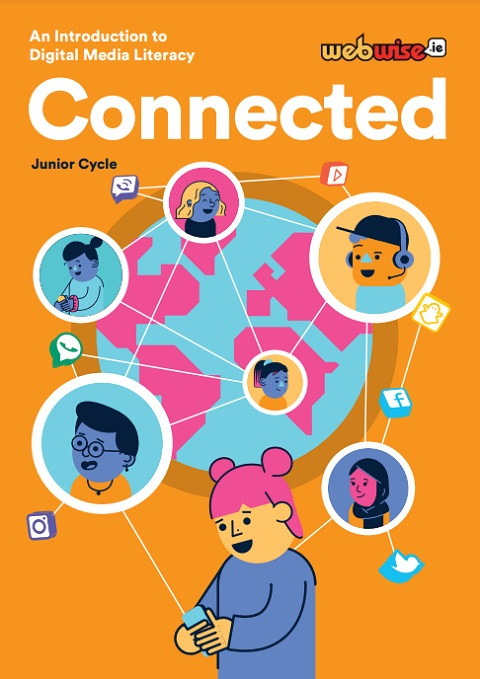 Connected: An Introduction to Digital Media Literacy Año de publicación: 2020 Autor corporativo: Webwise | Professional Development Service for Teachers (PDST) Connected comprises five modules exploring young people’s rights and responsibilities online, emerging digital technologies and topics including big data and the data economy, deep fakes, false information and online wellbeing. The five modules are:1. My Online Wellbeing2. News, Information and Problems of False Information3. Big Data & the Data Economy4. My Rights Online5. Publishing Online - Group ProjectThe programme is mapped to the Junior Cycle Digital Media Literacy Short Course and will give students an understanding of the role of digital technologies and will help students develop key digital media literacy skills to responsibly navigate the online environment.
  Media Literacy: Implementation Toolkit Año de publicación: 2019 Autor corporativo: Regional Educational Media Center (REMC) Association of Michigan This toolkit has been designed to support educators as they introduce students to the process of finding, organizing, using, producing, evaluating, and distributing information in a variety of media formats.The toolkit contains resources organized into six sections:Organizations Supporting Media Literacy EducationEducator ToolkitsCurriculum ResourcesInteractive Student Apps, Experiences, and ChallengesProfessional Development for Media LiteracyTools to Support Media Literacy
 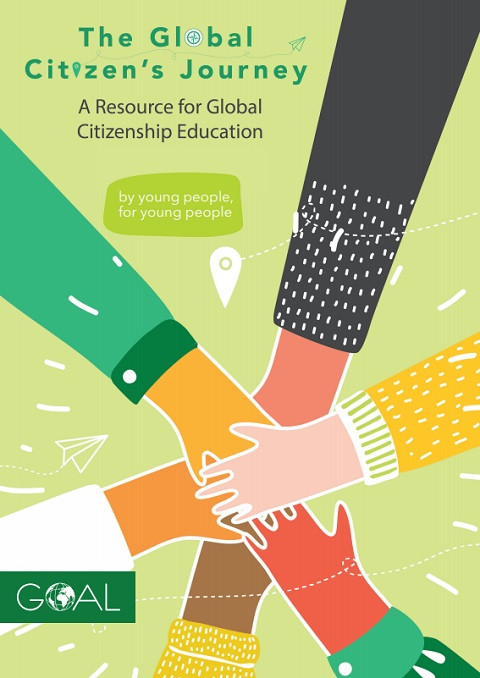 The Global Citizen's Journey: A Resource for Global Citizenship Education Año de publicación: 2021 Autor corporativo: GOAL Global This resource for Global Citizenship Education is designed by our Global Youth Programme for educators and leaders of 14–18-year-olds all over the world. Centring on the themes of interconnectedness, development, power and inequality this free, downloadable booklet of activities encourages critical thinking, reflection, and empower the pursuit of positive change.To find out more, watch our introductory video here.
 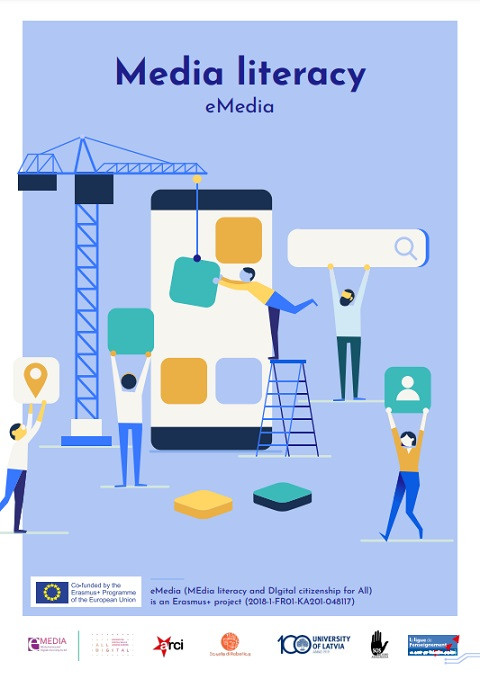 Media Literacy: eMedia Año de publicación: 2021 Autor corporativo: e-Media project Consortium The eMedia: Media Literacy and Digital Citizenship for All project aims to promote education for all by producing educational guidelines (handbooks) related to digital practices. These handbooks support possibilities for a new and innovative way of teaching different subjects at school. They address educators who are interested in developing their digital competence and improving their understanding of educational robotics as a pedagogical approach in formal or non-formal education.The handbooks are devoted to three aspects of digital competence:Educational robotics: to develop computational thinking with hands-on activities.Media literacy: to understand the power and the risks of online social media.Online Expression: to promote a more responsible use of social media, blogs, web radios and web TVs.In addition to the printed manuals, their electronic versions are also available, with additional information on the topic in question. Free online courses have been created on the Moodle platform.The handbook on Media Literacy gives an insight on the influence of media on young people development and the role of of new information technology in manipulating reality. It is intended to be used as a guideline and source for inspiration for teachers who are willing to expand their knowledge thanks to the practical examples that the handbook provides in order to deal with media literacy in class. The handbook:explains in brief the influence of media on young people developmentgives technical considerations on what media literacy isprovides an overview of the legislative frame, licenses and media ownershipgives practical examples to deal with media literacy in class.