
Recursos
Exploren una amplia gama de recursos valiosos en GCED para profundizar su comprensión y promover su búsqueda, incidencia, enseñanza y aprendizaje.
43 resultados encontrados
 Teachers' guide for education for sustainable development in the Caribbean Año de publicación: 2008 Autor: Gillian Cambers | Grace Chapman | Paul Diamond | Lorna Down | Anthony D. Griffith | Winthrop Wiltshire Autor corporativo: UNESCO Santiago The publication “Teachers’ Guide for Education for Sustainable Development in the Caribbean” is geared towards regional teacher-trainers and teachers active at every level of education. Its purpose is two-fold: contribute to the integration of education for sustainable development into teaching practices through education initiatives, originally implemented in the Caribbean that may be feasible to replicate in the various classrooms, schools and communities; promote reflection, discussion and creation of innovative practices that involve all teachers in Decade activities and contribute to the making of sustainable societies. This document illustrates how different wills can come together moved by a desire to materialise common projects. Thus, this effort represents the work of regional specialists working in close cooperation with UNESCO Regional Bureau for Education in Latin America and the Caribbean, as well as the financial support of the Government of Japan. Guide pédagogique pour l'éducation pour le développement durable dans les Caraïbes Año de publicación: 2008 Autor: Gillian Cambers | Grace Chapman | Paul Diamond | Lorna Down | Anthony D. Griffith | Winthrop Wiltshire Autor corporativo: UNESCO Santiago La publication «Guide des enseignants pour l'éducation pour le développement durable dans les Caraïbes» s'adresse aux formateurs et enseignants régionaux actifs à tous les niveaux de l'enseignement. Son objectif est double: contribuer à l'intégration de l'éducation pour le développement durable dans les pratiques d'enseignement à travers des initiatives éducatives, initialement mises en œuvre dans les Caraïbes, qui peuvent être répliquées dans les différentes classes, écoles et communautés; Promouvoir la réflexion, le débat et la création de pratiques novatrices qui impliquent tous les enseignants dans les activités de la Décennie et contribuent à la création de sociétés durables. Ce document illustre la façon dont des volontés différentes peuvent se rencontrer par le désir de concrétiser des projets communs. Cet effort représente donc le travail de spécialistes régionaux travaillant en étroite coopération avec le Bureau régional de l'UNESCO pour l'éducation en Amérique latine et dans les Caraïbes, ainsi que le soutien financier du Gouvernement japonais. Mudança climática em sala de aula: curso da UNESCO para professores secundários (fundamental II e ensino médio) sobre educação em mudança climática e desenvolvimento sustentável (EMCDS) Año de publicación: 2014 Autor: David Selby | Fumiyo Kagawa Autor corporativo: UNESCO Brasilia This course has been created with the goal of bringing climate change education outside the science classroom into the many other subject areas upon which climate change now has an impact, or will impact in the future, such as ethics, social studies, economics, political science, among others. The course materials are organized into four parts: 1. Course Framework and Overview, 2. Teachers’ Education Course daily materials, 3. Regional Resource Packs, 4. Daily Classroom Materials for teachers. These materials are all described in more detail and can be accessed from the Start Menu found on the following pages. This course is designed to enable teachers at the secondary level from diverse subject areas to introduce climate change education for sustainable development (CCESD) across the curriculum. UNESCO has identified the professional development of teachers in education for sustainable development as the top priority in recognition of the transformative role that teachers and teacher educators need to play in re-orienting education to help realize a sustainable future (UNESCO, 2005, p. 19). But good intentions for the professional development of teachers have fallen short in practice. Although taken up by enthusiasts, teacher education for sustainable development has rarely been mainstreamed, and, where there are courses, is often approached within a disciplinary as opposed to an interdisciplinary frame (Wals, A., 2009). If professional development in education for sustainable development is at an adolescent stage, teacher education in climate change education for sustainable development is in its infancy. For instance, according to a 2009 international comparative study on climate change education and sustainable development in ten countries, climate change education has peripheral status in educational research and practice, and when it is addressed it is only within science education (Læssøe,J. Schnack, K., Breiting, S. & Rolls, S., 2009). There is a clear and present need to respond to climate change challenges through systematic teacher education programmes that are not restricted to a single subject area. This teacher education course is an attempt to fill the current gap and is in line with one of UNESCO’s key objectives for climate change education for sustainable development, that is, to support teacher training on climate change for sustainable development (UNESCO, 2010, p. 9). The programme has four distinctive features: 1. It helps teachers to understand the causes, dynamics and impacts of climate change through a holistic approach. 2. Teachers are exposed to, and experience, a range of pedagogical approaches and techniques, that they can use in their own school environment. This includes engagement of themselves and their students in whole school and school-in-community approaches. 3. Teachers will develop their capacities to facilitate students’ community based learning. 4. Teachers will develop future-oriented and transformative capacities in facilitating climate change mitigation, adaptation, and disaster risk reduction learning.
  Teaching Students How to Learn: Setting the Stage for Lifelong Learning (Educational Practices Series No. 33) Año de publicación: 2021 Autor: Stella Vosniadou | Michael J. Lawson | Helen Stephenson | Erin Bodner Autor corporativo: UNESCO International Bureau of Education (IBE) | International Academy of Education In this Teaching How to Learn booklet, teachers can find information about some of the cognitive, metacognitive, emotional, and motivational capabilities that characterise self-regulated learners, and some of the actions that teachers can take to promote self-regulated learning in their students. These include giving students time to engage in constructive tasks independently or in collaboration with their peers and providing them with the knowledge and strategies that they can use to manage their learning and control their motivation and emotions while they complete these tasks successfully.
  Educating for global competence: preparing our youth to engage the world Año de publicación: 2011 Autor: Veronica Boix Mansilla | Anthony Jackson Autor corporativo: Asia Society | Council of Chief State School Officers (CCSSO) Contemporary societies are marked by new global trends - economic, cultural, technological, and environmental shifts that are part of a rapid and uneven wave of globalization. The growing global interdependence that characterizes our time calls for a generation of individuals who can engage in effective global problem solving and participate simultaneously in local, national, and global civic life. Put simply, preparing our students to participate fully in today's and tomorrow's world demands that we nurture their global competence.This document introduces a definition of global competence developed by the Global Competence Task Force - a group of state education agency leaders, education scholars, and practitioners - under the auspices of the Council of Chief State School Officers EdSteps initiative (CCSSO-EdSteps) and the Asia Society Partnership for Global Learning (see page (iv) for task force participants). The definition builds on seminal work within the states and a broad range of organizations working to advance global knowledge and critical thinking skills. A process of careful articulation and vetting yielded the definition of global competence here proposed:Global competence is the capacity and disposition to understand and act on issues of global significance.Globally competent individuals are aware, curious, and interested in learning about the world and how it works. They can use the big ideas, tools, methods, and languages that are central to any discipline (mathematics, literature, history, science, and the arts) to engage the pressing issues of our time. They deploy and develop this expertise as they investigate such issues, recognize multiple perspectives, communicating their views effectively, and taking action to improve conditions.Educating for Global Competence: Preparing Our Youth to Engage the World is intended for classroom teachers, administrators, informal educators, policymakers, community leaders, researchers, parents, students, and all other stakeholders interested in preparing our youth for the 21st century. Becoming better at education for global competence involves rethinking practices and recognizing that there are no simple recipes for success. As such, this book is meant to be used flexibly - browse, make connections, and concentrate on the chapters that you find most pertinent to your work. Experiment with ideas, challenge concepts, and share with colleagues. Ultimately this book must work for you. It is meant to be read in the way that best meets your needs, inspires your curiosity, and proves fruitful in the classroom.Chapter one offers a rational for global education in our nation and worldwide. Chapter two introduces a conceptual framework for global competence and explains the key role of disciplinary and interdisciplinary foundations in student learning. Chapter three, four, five and six focus, respectively, on four core capacities associated with global competence: investigating the world, recognizing perspectives, communicating ideas, and taking action. Chapter seven considers core principles of instruction for teaching global competence. Chapter eight looks at what students and education institutions can do to promote global competence - and how they might create a culture of global competence for youth and adults. Finally, chapter nine places global competence in the larger framework of public education systems in and beyond the United States. Eduquer pour compétence globale: préparer nos jeunes à engager le monde Año de publicación: 2011 Autor: Veronica Boix Mansilla | Anthony Jackson Autor corporativo: Asia Society | Council of Chief State School Officers (CCSSO) Les sociétés contemporaines sont marquées par de nouvelles tendances mondiales - changements économiques, culturels, technologiques et environnementaux qui font partie d'une vague rapide et inégal de la mondialisation. L'interdépendance mondiale croissante qui caractérise notre temps appelle à une génération de personnes qui peuvent se livrer à la résolution de problème mondial efficace et participer simultanément à la vie civique locale, nationale et mondiale. Simplement, la préparation de nos étudiants de participer pleinement au monde les exigences d'aujourd'hui et de demain que nous entretenons leur compétence mondiale. Ce document présente une définition de la compétence globale développée par le Groupe de travail mondial Compétence - un groupe de chefs d'Etat de l'agence de l'éducation, spécialistes de l'éducation, et les praticiens - sous les auspices du Conseil de l'école Chief State initiative des officiers de EdSteps (CCSSO-EdSteps) et la Asia Partnership Society for global Learning (voir page (iv) pour les participants du groupe de travail). La définition se fonde sur le travail séminal dans les états et un large éventail d'organisations de travail pour faire avancer les connaissances mondiales et de la pensée critique. Un processus d'articulation minutieuse et vetting a abouti à la définition de la compétence globale proposée ici: la compétence globale est la capacité et la disposition pour comprendre et agir sur les questions d'importance mondiale. Globalement les personnes compétentes sont au courant, curieux et intéressés à en apprendre sur le monde et comment il fonctionne. Ils peuvent utiliser les grandes idées, des outils, des méthodes et des langues qui sont au cœur de toutes les disciplines (mathématiques, la littérature, l'histoire, la science et les arts) pour engager les questions pressantes de notre temps. Ils déploient et développer cette expertise comme ils enquêtent sur ces questions, reconnaissent de multiples points de vue, de communiquer leurs points de vue de manière efficace, et prendre des mesures pour améliorer les conditions. Eduquer pour Global Competence: Préparer les jeunes d'engager le monde est destiné aux enseignants, administrateurs, éducateurs informels, les décideurs, les leaders communautaires, les chercheurs, les parents, les étudiants et toutes les autres parties intéressées à préparer nos jeunes pour le 21e siècle. Devenir meilleur à l'éducation pour la compétence globale implique de repenser les pratiques et en reconnaissant qu'il n'y a pas de recettes simples pour le succès. En tant que tel, ce livre est destiné à être utilisé avec souplesse - parcourir, faire des liens, et de se concentrer sur les chapitres que vous trouverez les plus pertinents pour votre travail. Expérience avec des idées, des concepts de défi, et de partager avec des collègues. En fin de compte ce livre doit travailler pour vous. Il est destiné à être lu de la manière qui répond le mieux à vos besoins, inspire votre curiosité, et prouve fructueuse dans la salle de classe. Le premier chapitre offre un rationnel pour l'éducation mondiale dans notre pays et dans le monde. Le deuxième chapitre présente un cadre conceptuel pour la compétence globale et explique le rôle clé des fondations disciplinaires et interdisciplinaires dans l'apprentissage des élèves. Chapitre trois, quatre, cinq et six focus, respectivement, sur quatre capacités essentielles associées à la compétence mondiale: enquête dans le monde, reconnaissant les perspectives, communiquer des idées, et de prendre des mesures. Le chapitre sept considère les principes de base de l'enseignement pour l'enseignement de la compétence globale. Chapitre huit examine ce que les étudiants et les établissements d'enseignement peuvent faire pour promouvoir la compétence globale - et comment ils pourraient créer une culture de compétence globale pour les jeunes et les adultes. Enfin, le chapitre neuf places compétence globale dans le cadre plus large des systèmes d'éducation du public dans et au-delà des États-Unis.
  Sub-regional Policy Review on Teachers, Teaching and the Teaching Profession to Accelerate Achieving SDG4 in Southeast Asian Countries Año de publicación: 2022 Autor: Azlina Abdul Aziz | Kamisah Osman | Khairul Farhah Khairuddin | Meeyoung Choi Autor corporativo: UNESCO Jakarta The objectives of this report are to analyse existing national policies related to Teachers, Teaching and the Teaching Profession and examine their implementation in the five UNESCO cluster countries, namely Brunei, Indonesia, Malaysia, the Philippines and Timor-Leste. Eight themes have emerged from the systematic review of literature and they are i) Teacher Standard Competence, ii) Teacher professional Development, iii) Teacher Support, iv) Teaching Quality, v) Formative and Summative Assessment Framework on Teaching, vi) Showcasing and Rewarding Best Teaching Practices, vii) Teacher Professionalism and finally viii) Teacher Career Development.
 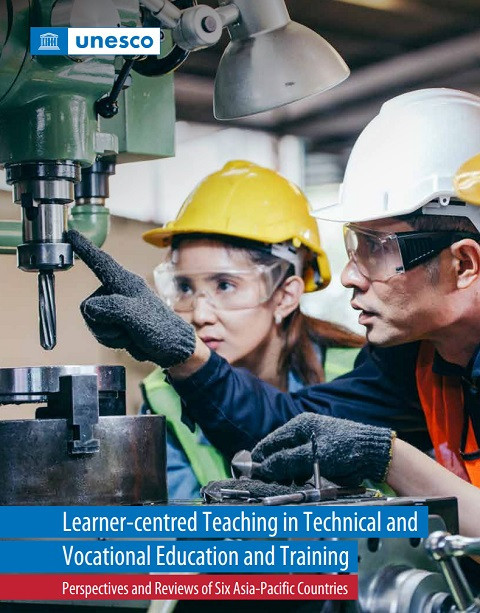 Learner-Centred Teaching in Technical and Vocational Education and Training: Perspectives and Reviews of Six Asia-Pacific Countries Año de publicación: 2023 Autor corporativo: UNESCO Bangkok Learner-centred Teaching in Technical and Vocational Education and Training: Perspectives and Reviews of Six Asia-Pacific Countries A learner-centred approach to teaching in Technical and Vocational Education and Training (TVET) is based on learner engagement, autonomy and outcome-based activities to support professional development. This report analyses the status of learner-centred TVET teaching in six selected countries across Asia and the Pacific, including China, Republic of Korea, Samoa, Sri Lanka, Thailand, and Uzbekistan. The countries were selected because of their geographic diversity, access to national experts, and potential around learner-centred TVET.The first part of the study is a review of the theoretical background on the learner-centred approach and TVET teaching with an international scope. A total of 25 indicators were used to assess three components of TVET teaching in the region. The analysis includes 17 examples corresponding to the selected indicators. The findings showcase lessons learned and recommendations for countries to self-assess their TVET teaching strategies. These examples will help to inform future projects and capacity building in each sub-region of Asia-Pacific.As a result, seven proposals are identified and discussed to promote the development of learner-centred TVET teaching in the region. These proposals include: 1) supporting national reform of the pedagogy based on the results of pilot projects; 2) increasing two-way communication between students and teachers; 3) producing learning materials adapted to learner-centred methods; 4) using technology in the learning process; 5) implementing competency-based learning to support the learner-centred pedagogy; 6) integrating transversal and core skills; and 7) developing teachers’ capacities by employing a learner-centred approach. These proposals (on reform, teaching method, use of materials, etc.) also address gender dimensions throughout the planning, implementation and review process. Conclusions from the study provide lessons learned as well as proposals for further research and implementation of learner-centred TVET teaching in Asia-Pacific.
 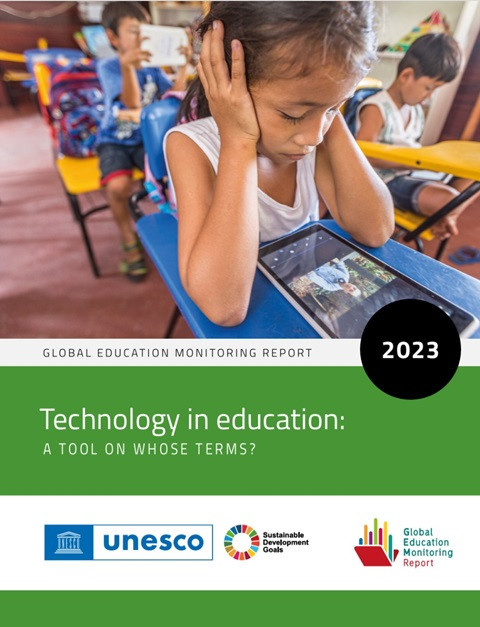 Global Education Monitoring Report 2023: Technology in Education; A Tool on Whose Terms? Año de publicación: 2023 Autor corporativo: UNESCO | Global Education Monitoring Report Team This report recommends that technology should be introduced into education on the basis of evidence showing that it would be appropriate, equitable, scalable and sustainable. In other words, its use should be in learners’ best interests and should complement face-to-face interaction with teachers. It should be seen as a tool to be used on these terms. Midway to the deadline, the 2023 Global Education Monitoring Report assesses the distance still to go to reach the 2030 education targets. Education is the key to unlocking the achievement of other development objectives, not least the goal of technological progress.
  Mainstreaming Social and Emotional Learning in Education Systems: Policy Guide Año de publicación: 2024 Autor corporativo: UNESCO Why social and emotional learning is key to transform education Since 2015, there has been significant progress towards reimagining education for wider societal transformation in support of peace, justice, inclusion, equality and sustainability. Yet, the existing challenges have intensified, and new ones have emerged. The world is witnessing a resurgence of multiple forms of conflict and violence, from racism and discrimination, to hate speech and armed conflict. Our efforts to build sustainable peace through education are falling short. Some 250 million children are still out of school, and those in school are not acquiring the necessary knowledge and skills they need. This guide makes the case for integrating Social and Emotional Learning (SEL) in collective efforts to transform education. It highlights the impact of SEL in improving academic achievement, reducing drop- out rates, and improving overall mental health and well-being, and importantly, in strengthening emotional and relational dynamics of classrooms, schools, communities, and societies. The guide synthesizes the latest research and practice from the world, including case studies of concrete SEL implementation. It provides policy-makers with preliminary guidance to facilitate their conceptualization and integration of SEL in all facets of their education systems to build long-lasting peace and sustainable development.