
Recursos
Exploren una amplia gama de recursos valiosos en GCED para profundizar su comprensión y promover su búsqueda, incidencia, enseñanza y aprendizaje.
16 resultados encontrados
 Climate Risk Informed Decision Analysis (CRIDA): Collaborative Water Resources Planning for an Uncertain Future Año de publicación: 2024 Autor corporativo: UNESCO Intergovernmental Hydrological Programme (IHP) | International Center for Integrated Water Resources Management (ICIWaRM) | Alliance for Global Water Adaptation (AGWA) | Deltares The importance of integrating climate change considerations into water resources planning is recognized on a global scale. Various frameworks, such as the Sendai Framework for Disaster Risk Reduction, the United Nations Sustainable Development Goals, and the Paris Agreement, emphasize the need for proper planning, policy-making, and adaptation strategies. The Climate Risk Informed Decision Analysis (CRIDA) methodology was launched in 2018 as a response to these international agendas, bridging the gap between climate change uncertainty and water resource planning.
  ESCWA Water Development Report 8: The Water-related Sustainable Development Goals in the Arab Region Año de publicación: 2019 Autor corporativo: UN. Economic and Social Commission for Western Asia (UN. ESCWA) Water-related SDGs have a central role in achieving the 2030 Agenda for Sustainable Development and its interlinked Sustainable Development Goals (SDGs) and targets. While the dedicated goal on water (SDG6) aims to ensure availability and the sustainable management of water and sanitation for all, pursing this goal supports the achievement many other goals. Regional monitoring and reporting of the water-related SDGs thus supports a better understanding of water across the sustainable development agenda and provides insights on the progress and challenges facing the Arab region as it aims to achieve the SDGs and associated national targets under conditions of water scarcity and increasing water stress. This eighth issue of the Water Development Report of the Economic and Social Commission for Western Asia (ESCWA) examines the water-related SDGs from the perspective of water security and scarcity in the Arab region. It identifies ways to assess and address present and projected water scarcity at the regional and national levels for various climate change scenarios. It reviews regional and national water strategies and action plans coherency with global water-related goals and targets. The study analyses how the water-related SDG targets and indicators can guide the development of policy measures to tackle water challenges in the Arab region. Proposed policy interventions include measures to conserve and protect water resources and generate additional nonconventional water resources. Selected policy options are quantified and analysed for two climate scenarios for the future period 2030-2050 in view of informing sustainable planning and appropriate decision support systems to optimize and rationalize water use. The report also provides insights on institutional mechanisms in place for monitoring and implementing water-related SDGs at various scales. تقرير المياه والتنمية الثامن: أهداف التنمية المستدامة المتعلقة بالمياه في المنطقة العربية Año de publicación: 2019 Autor corporativo: UN. Economic and Social Commission for Western Asia (UN. ESCWA) لأهداف التنمية المستدامة ذات الصلة بالمياه دور رئيسي في تحقيق خطة التنمية المستدامة لعام 2030 وأهداف التنمية المستدامة الأخرى ومقاصدها. ويسعى الهدف المكرّس للمياه (الهدف 6) إلى ضمان توفر المياه وإتاحة خدمات الصرف الصحي للجميع وإدارتهما بشكل مستدام. وفي العمل على بلوغه ما يدعم تحقيق العديد من الأهداف الأخرى. ويساهم رصد أهداف التنمية المستدامة ذات الصلة بالمياه والإبلاغ عنها على الصعيد الإقليمي في فهم أفضل لموقع المياه في خطة التنمية المستدامة، ويعطي فكرة عما حققته المنطقة العربية من تقدم وما واجهته من تحديات في سعيها إلى تحقيق أهداف التنمية المستدامة والغايات الوطنية المرتبطة بها، في ظل ندرة المياه وزيادة الإجهاد المائي. ويبحث العدد الثامن من تقرير اللجنة الاقتصادية والاجتماعية لغربي آسيا (الإسكوا) حول تنمية المياه في أهداف التنمية المستدامة ذات الصلة بالمياه من منظور الأمن المائي وندرة المياه في المنطقة العربية. ويحدّد طرقاً لتقييم ومعالجة ندرة المياه الحالية والمتوقعة على المستويين الإقليمي والوطني على ضوء سيناريوهات مختلفة لتغيُّر المناخ. ويستعرض مدى اتساق الاستراتيجيات وخطط العمل المائية الإقليمية والوطنية مع الأهداف والمقاصد العالمية ذات الصلة بالمياه. وتبيّن الدراسة كيف يمكن الاسترشاد بمقاصد ومؤشرات أهداف التنمية المستدامة ذات الصلة بالمياه في وضع تدابير في السياسة العامة لمواجهة تحديات المياه في المنطقة العربية. وتشمل التدخلات المقترحة على صعيد السياسات العامة تدابير للحفاظ على موارد المياه وحمايتها، وتوليد موارد مائية إضافية غير تقليدية. ويتم تقدير السياسات العامة المختارة وتحليلها ضمن سيناريوهين مناخيين للفترة المستقبلية 2030-2050 بهدف توجيه التخطيط المستدام والنُظُم الداعمة لعمليات اتخاذ القرارات بما يؤدي إلى تحسين استخدام المياه وترشيده. ويستعرض التقرير الآليات المؤسسية القائمة لرصد أهداف التنمية المستدامة ذات الصلة بالمياه وتنفيذها على مستويات مختلفة.
  The United Nations World Water Development Report 2020: Water and Climate Change Año de publicación: 2020 Autor corporativo: UNESCO World Water Assessment Programme (WWAP) The 2020 edition of the UN World Water Development Report addresses the critical linkages between water and climate change in the context of sustainable development. It also serves as a guide for concrete actions to address these challenges. It outlines actions, supported by examples from across the world, in three areas: first, enabling people to adapt to the impacts of climate change; second, improving the resilience of livelihoods; and, third, reducing the drivers of climate change. Critically, measures to improve the efficiency of water use in agriculture is inextricably linked to multiple SDGs. These include those related to zero hunger (SDG 2), availability and access to water (SDG 6), climate action (SDG 13), and promoting the sustainable use of ecosystem services (SDG 15).The Report concludes that reducing both the impacts and drivers of climate change will require substantial changes in the way we use and reuse the Earth’s limited water resources. The experience and expertise needed to achieve this goal are brought together in the Report through UN-Water’s Members and Partners. It will support policy makers in tackling the challenges of climate change by harnessing the wide-ranging opportunities that improved water management offers for adaptation, mitigation and resilience in a rapidly changing world. Rapport mondial des Nations Unies sur la mise en valeur des ressources en eau 2020: l'eau et les changements climatiques Año de publicación: 2020 Autor corporativo: UNESCO World Water Assessment Programme (WWAP) L’édition 2020 du Rapport mondial sur la mise en valeur des ressources en eau montre les liens essentiels entre l’eau et les changements climatiques dans le cadre du développement durable. Le rapport sert également de guide pour prendre des mesures concrètes et relever ces défis. Il présente des actions, illustrées par des exemples provenant du monde entier, liées à trois domaines : premièrement, permettre aux personnes de s’adapter aux effets des changements climatiques ; deuxièmement, renforcer la résilience des moyens de subsistance ; enfin, réduire les moteurs des changements climatiques. Les mesures visant à accroître l’efficacité de l’utilisation de l’eau dans le domaine agricole – tout en garantissant l’accès à l’eau de groupes vulnérables tels que les petits exploitants agricoles – sont incontestablement liées à de multiples ODD. Il s’agit de ceux liés à l’objectif zéro faim (ODD 2), à la disponibilité et l’accès à l’eau (ODD 6), à l’action climatique (ODD 13) et à la promotion de l’utilisation durable des services écosystémiques (ODD 15).Le rapport conclut sur le fait que réduire tant les effets que les facteurs des changements climatiques exigera des transformations importantes dans la manière dont nous utilisons et réutilisons les ressources en eau limitées de la planète. L’expérience et l’expertise nécessaires pour atteindre cet objectif sont rassemblées dans ce rapport par les membres et partenaires d’ONU-Eau. Il contribuera à aider les dirigeants à lutter contre les difficultés liées aux changements climatiques en saisissant les vastes opportunités qu’offrent l’amélioration de la gestion de l’eau pour l’adaptation, la mitigation et la résilience dans un monde en rapide évolution.
 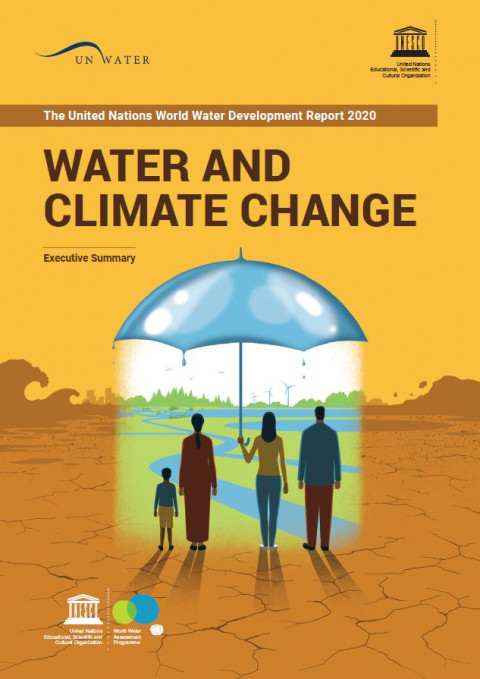 [Summary] The United Nations World Water Development Report 2020: Water and Climate Change; Executive Summary Año de publicación: 2020 Autor corporativo: UNESCO World Water Assessment Programme (WWAP) The 2020 edition of the United Nations World Water Development Report (WWDR) addresses the critical linkages between water and climate change in the context of the broader sustainable development agenda. The report is not meant to be a purely technical examination of the impacts of climate change on the hydrological cycle. Rather, the report focuses on the challenges, opportunities and potential responses to climate change – in terms of adaptation, mitigation and improved resilience – that can be addressed through improving how water resources are management and used, while providing water supply and sanitation services for all in a sustainable manner. In doing so, the report tackles two of the most critical crises the world will continue facing over the next several decades: Water (in)security and climate change. [Résumé] Rapport mondial des Nations Unies sur la mise en valeur des ressources en eau 2020: l'eau et les changements climatiques; résumé Año de publicación: 2020 Autor corporativo: UNESCO World Water Assessment Programme (WWAP) L’édition 2020 du Rapport mondial sur la mise en valeur des ressources en eau (WWDR) montre les liens essentiels entre l’eau et les changements climatiques dans le cadre plus large du programme de développement durable. Le rapport n’est pas un examen purement technique des effets des changements climatiques sur le cycle de l’eau. Il s’agit plutôt d’énoncer les difficultés, les possibilités et les réponses potentielles aux changements climatiques – adaptation, atténuation et résilience renforcée – pouvant être abordées en améliorant la gestion et l’utilisation des ressources en eau et en offrant des services d’approvisionnement en eau et d’assainissement pour tous et de manière durable. Ce faisant, le rapport s’adresse à deux des plus graves crises que le monde continuera de subir au cours des prochaines décennies : la sécurité (ou insécurité) de l’eau et les changements climatiques. [Резюме] Всемирный доклад Организации Объединенных Наций о состоянии водных ресурсов, 2020 г.: водные ресурсы и изменение климата, Рабочее резюме Año de publicación: 2020 Autor corporativo: UNESCO World Water Assessment Programme (WWAP) В Докладе Организации Объединенных Наций о состоянии водных ресурсов мира (WWDR) за 2020 год рассматриваются критически важные связи между водными ресурсами и изменением климата в контексте более широкой повестки дня в области устойчивого развития. Отчет не предназначен для чисто технического изучения воздействия изменения климата на гидрологический цикл. Скорее, в докладе основное внимание уделяется проблемам, возможностям и потенциальным ответным мерам на изменение климата — с точки зрения адаптации, смягчения последствий и повышения устойчивости, — которые можно решить путем улучшения управления и использования водных ресурсов при обеспечении услуг водоснабжения и санитарии для всех. устойчивым образом. При этом в отчете рассматриваются два наиболее серьезных кризиса, с которыми мир будет сталкиваться в течение следующих нескольких десятилетий: водная (не)безопасность и изменение климата.
 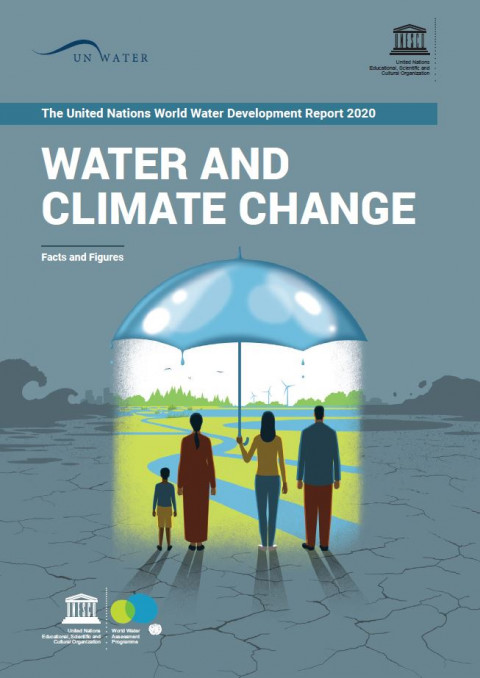 [Facts and Figures] The United Nations World Water Development Report 2020: Water and Climate Change; Facts and Figures Año de publicación: 2020 Autor: Engin Koncagül | Michael Tran | Richard Connor Autor corporativo: UNESCO World Water Assessment Programme (WWAP) Since the mid-20th century, changes in the intensity and frequency of extreme weather and climate events have been observed, including a decrease in cold temperature extremes, an increase in warm temperature extremes, an increase in extremely high sea levels and an increase in the number of heavy precipitation events in a number of regions (Min et al., 2011).Climate projections indicate with high confidence that extreme precipitation events will become more intense and frequent in many regions, but also that heatwaves will occur more often and last longer. The former will increase global flood risk (Hirabayashi et al., 2013), while the latter is expected to make droughts more intense (Trenberth et al., 2014). These risks are unevenly distributed geographically, and are generally larger for vulnerable people and communities in countries at all levels of development (IPCC, 2014a). Figure 1. Global water withdrawals throughout the previous centuryFigure 2. Climate change scenario trends in water availabilityFigure 3. Annual baseline water stressFigure 4. Seasonal variabilityFigure 5. World weather-related natural catastrophes by peril, 1980–2018Figure 6. Spatial distribution of water-related disasters (droughts, floods, landslides and storms), 2001–2018Figure 7. Spatial distribution of floods, 2001–2018Figure 8. Spatial distribution of droughts, 2001–2018Figure 9. Electricity consumption in the water sector by process, 2014–2040Figure 10. Number of people living under water stress under the Baseline Scenario [Faits et chiffres] Rapport mondial des Nations Unies sur la mise en valeur des ressources en eau 2020: l'eau et les changements climatiques, faits et chiffres Año de publicación: 2020 Autor: Engin Koncagül | Michael Tran | Richard Connor Autor corporativo: UNESCO World Water Assessment Programme (WWAP) Depuis le milieu du 20e siècle, on a observé des changements dans l’intensité et la fréquence des phénomènes météorologiques et climatiques extrêmes, notamment une diminution des extrêmes de température froide et une augmentation des extrêmes de température chaude, des niveaux de mer extrêmement élevés et du nombre de fortes précipitations dans un certain nombre de régions (Min et al., 2011).Les projections climatiques indiquent avec une grande confiance que les précipitations extrêmes deviendront plus intenses et plus fréquentes dans de nombreuses régions, mais aussi que les vagues de chaleur seront plus fréquentes et dureront plus longtemps. Les premières augmenteront le risque d’inondation au niveau mondiale (Hirabayashi et al., 2013), tandis que les dernières devraient rendre les sécheresses plus intenses (Trenberth et al., 2014). Ces risques sont répartis géographiquement de façon inégale et ils sont généralement plus importants pour les personnes et les communautés vulnérables dans les pays à tous les niveaux de développement (GIEC, 2014a). Figure 1. Préèements d’eau dans le monde au cours du 20e sièleFigure 2. Tendances des scéarios de changement climatique en matièe de disponibilitéde l’eauFigure 3. Stress hydrique annuel de référenceFigure 4. VariabilitésaisonnièeFigure 5. Catastrophes naturelles mondiales liées au climat, par risque et par nombre d’événements pertinents,1980–2018Figure 6. Réartition spatiale des catastrophes liés àl’eau (séheresses, inondations, glissements de terrain et tempêes) 2001–2018Figure 7. Répartition spatiale des inondations, 2001–2018Figure 8. Répartition spatiale de sécheresses, 2001–2018Figure 9. Consommation d’électricité dans le secteur de l’eau, par procédé, 2014–2040Figure 10. Nombre de personnes en situation de stress hydrique selon le scénario de référence