
Recursos
Exploren una amplia gama de recursos valiosos en GCED para profundizar su comprensión y promover su búsqueda, incidencia, enseñanza y aprendizaje.
6 resultados encontrados
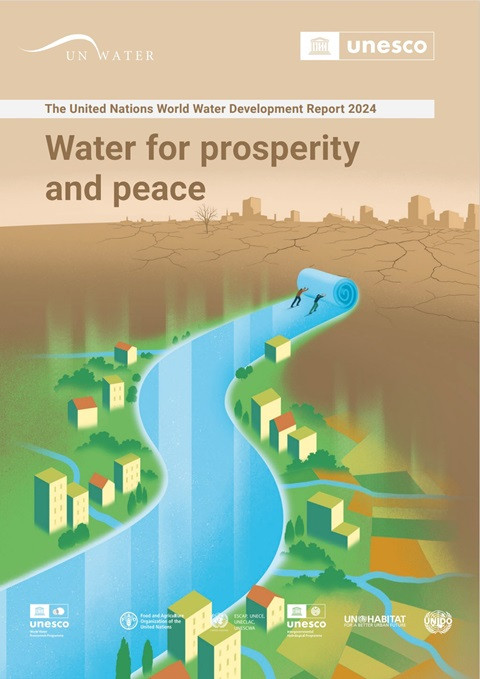 The United Nations World Water Development Report 2024: Water for Prosperity and Peace Año de publicación: 2024 Autor corporativo: UNESCO World Water Assessment Programme (WWAP) Developing and maintaining a secure and equitable water future underpins prosperity and peace for all. The relationship also works in the opposite direction, as poverty and inequality, social tensions, and conflict can amplify water insecurity. The 2024 edition of the United Nations World Water Development Report (UN WWDR) calls attention to the complex and interlinked relationships between water, prosperity and peace, describing how progress in one dimension can have positive, often essential, repercussions on the others.
  [Executive Summary] The United Nations World Water Development Report 2024: Water for Prosperity and Peace Año de publicación: 2024 Autor: Richard Connor Autor corporativo: UNESCO World Water Assessment Programme (WWAP) This is the executive summary of the 2024 edition of the United Nations World Water Development Report (UN WWDR). [요약보고서] 2024년 유엔 세계물개발보고서: 번영과 평화를 위한 물 Año de publicación: 2024 Autor: Richard Connor Autor corporativo: UNESCO World Water Assessment Programme (WWAP) 누구나 안전하고 공평하게 물을 이용할 수 있도록 개발하고 관리하는 것은, 번영과 평화를 위한 초석이다. 그러나 빈곤과 불평등, 사회적 긴장과 갈등으로 인해 물 안보가 저해됨에 따라 번영과 평화가 약화되는 부작용이 초래되기도 한다. 본 보고서는 지속가능한 물 관리와 번영, 평화 간의 복잡한 상호관계에 주목하여, 어느 한 부문에서의 진보과정이 다른 부문들에게 어떻게 긍정적이고, 때로는 필수적인 영향을 미치는지에 대해 설명하고자 한다.
  مدخل االرتباط الحضري البيئي لتحقيق اإلدارة المستدامة للعمران المصري Año de publicación: 2022 Autor: Marwa Sebawy Hamed, Mohamed Fareed Mohamed Abd-Elaziz التوجه الأحادي للتعامل مع تلك القضايا وعدم وجود خطط متكاملة تعمل الحفاظ على الموارد بشكل عام وتحقيق أهداف التنمية المستدامة. لذا يهدف البحث إلى صياغة إطار منهجي لتحقيق الإدارة المستدامة للعمران المصري عن طريق تطبيق مدخل الإرتباط الحضري البيئي بالتجمعات العمرانية المصرية، لتحقيق أهداف التنمية المستدامة وتوفير متطلبات النمو السكاني. حيث يتناول البحث دراسة مفاهيم الإدارة المستدامة للعمران في ضوء تطبيق مدخل الإرتباط الحضري البيئي Urban- Environmental Nexus Approach، ودوره في تحقيق أبعاد الإدارة المستدامة والتركيز على المبادئ الأساسية لاستدامة المياه والطاقة والغذاء في التجمعات العمرانية. الأمر الذي يتطلب تحديد الأسس والمعايير الخاصة بتحقيق الإدارة المستدامة القائمة على الترابط والتشابك الخطط القطاعية والمتكاملة وذلك لمواجهة التحديات والضغوطات الحالية والمحتملة. كما يتناول البحث العديد من التجارب العالمية المختلفة لفهم العلاقات التشابكية المتكاملة بين قطاعات المياه والطاقة والغذاء مع الوضع في الاعتبار خصوصية الحالة المصرية. وذلك للوصول إلى إطار منهجي مبدئي لتحقيق الإدارة المستدامة للعمران المصري، حيث يتم تدقيق هذا الإطار بالعرض على الخبراء والمتخصصين في المجال للوصول إلى الإطار المنهجي النهائي لتحقيق الإدارة المستدامة للعمران المصري. Urban-Environmental Nexus Approach To achieve sustainable management of Egyptian urbanization Año de publicación: 2022 Autor: Marwa Sebawy Hamed, Mohamed Fareed Mohamed Abd-Elaziz In view of the high rates of population growth witnessed by urban communities, and the resulting continuous increase in pressures on water, energy and food resources, which generates some issues facing societies such as economic turmoil, issues related to climate change and other urgent issues that need intervention. This is to try to achieve the principles and goals of sustainable development for these communities, as one of the most important reasons for these issues is the unilateral sectoral decisions and plans to deal with these issues and the lack of integrated plans that preserve resources in general and achieve the goals of sustainable development. Therefore, the research aims to formulate a methodological framework to achieve sustainable management of the Egyptian urbanization by applying the approach of the urban environmental link with the Egyptian urban agglomerations, to achieve the goals of sustainable development and provide the requirements of population growth. Where the research studies the concepts of sustainable urban management in the light of applying the urban-environmental nexus approach, and its role in achieving the dimensions of sustainable management and focusing on the basic principles of water, energy and food sustainability in urban agglomerations. This requires defining the foundations and criteria for achieving sustainable management based on the interdependence and interdependence of sectoral and integrated plans in order to meet current and potential challenges and pressures. The research also deals with many different international experiences to understand the integrated interrelationships between the water, energy and food sectors, taking into account the specificity of the Egyptian case. In order to reach an initial methodological framework for achieving sustainable management of the Egyptian urbanization, this framework is reviewed by presenting it to experts and specialists in the field in order to reach the final methodological framework for achieving sustainable management of the Egyptian urbanization.
 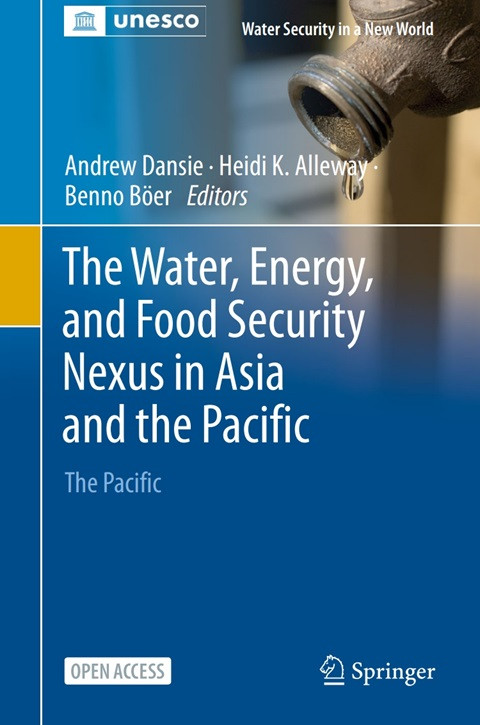 The Water, Energy, and Food Security Nexus in Asia and the Pacific: The Pacific Año de publicación: 2024 Autor corporativo: UNESCO | UNESCO Bangkok | UNESCO Jakarta Global climate targets and the call to action from the Pacific must be heeded while major environmental, societal and economical progress is needed in the region. Leadership from Pacific Island Countries and Territories needs to be supported with action and resourcing to meet both global net zero goals and regional SDGs. This volume applies the water, energy, and food security nexus approach solely in a Pacific context for the first time, bringing together the region’s 17 countries and 7 Territories. This approach improves the security of each sector and supports regional climate and environmental priorities. Effective intersectoral solutions exist with connectivity between the water-food and water-energy sectors of particular benefit. Traditional knowledge and crop production have historically and will continue to play a major role in food security and water resources management in the region. Increased energy demand needs to be met with increased renewables installation as well as new technologies that encompass storage and transport considerations.