
Recursos
Exploren una amplia gama de recursos valiosos en GCED para profundizar su comprensión y promover su búsqueda, incidencia, enseñanza y aprendizaje.
24 resultados encontrados
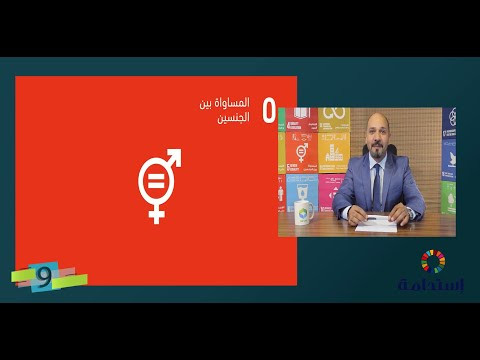 Sustainability: Gender Equality Año de publicación: 2019 Autor corporativo: CSR Egypt This video deals with the concept of the fifth goal of the sustainable development goals (gender equality) and that women have a fundamental role to achieve the goals of sustainable development, and that is why they must be given the opportunity and support to obtain all their rights and effective participation in the advancement of Arab societies. الاستدامة: المساواة بين الجنسين Año de publicación: 2019 Autor corporativo: CSR Egypt الفيديو يتطرق لمفهوم الهدف الخامس من اهداف التنمية المستدامة (المساواة بين الجنسين) و ان المرأة لها دور اساسى لتحقيق اهداف التنمية المستدامة و لذلك يجب ان يتم اتاحة الفرصة لها و دعمها للحصول على كافة حقوقها و مشاركتها الفعاله للنهوض بالمجتمعات العربية.
  Generation Equality Accountability Report 2022 Año de publicación: 2022 Autor corporativo: United Nations Entity for Gender Equality and the Empowerment of Women (UN Women) In the UN Decade for Action on Gender Equality, people around the world have pledged to move from rhetoric to action and to work together to drive lasting change, starting now. Through the 2021 Generation Equality Forum in Mexico and France, world leaders and partners committed to eliminating gender inequalities and to financing and implementing laws, policies, and programmes to meet priority actions and targets in a Global Acceleration Plan for Gender Equality. The aim is simple but profound: deliver irreversible, quantifiable results for women and girls in all their diversity.Together, commitment makers and signatories of a series of Action Coalitions, along with the Compact for Women, Peace and Security and Humanitarian Action have begun to build an ambitious global movement. It unites diverse partners committed to collective accountability for women and girls. This accountability is the driving force of this report, which takes stock of the bold commitments made at the Forum one year into implementation. Through a survey of commitment-makers, the report sheds light on the nature of the commitments and assesses measurable progress. It highlights trends and notes where more work is needed.Generation Equality was born from the idea that the world could make catalytic progress on gender equality if a wide range of stakeholders united around a transformative vision and worked together to achieve it. These preliminary findings demonstrate that, while more remains to be done, collective action is powerful in making commitments real in the lives of women and girls.
  Progress on the Sustainable Development Goals: The Gender Snapshot 2022 Año de publicación: 2022 Autor: Ginette Azcona | Antra Bhatt | Julia Brauchle | Guillem Fortuny Fillo | Yongyi Min | Heather Page | Yuxi Zhang Autor corporativo: United Nations Entity for Gender Equality and the Empowerment of Women (UN Women) | UN. Department of Economic and Social Affairs (UN. DESA) The latest available Sustainable Development Goal (SDG) 5 data show that the world is not on track to achieve gender equality by 2030. COVID-19 and the backlash against women’s sexual and reproductive health and rights are further diminishing the outlook for gender equality. Violence against women remains high; global health, climate, and humanitarian crises have further increased risks of violence, especially for the most vulnerable women and girls; and women feel more unsafe than they did before the pandemic. Women’s representation in positions of power and decision-making remains below parity. Only 47 per cent of data required to track progress on SDG 5 are currently available, rendering women and girls effectively invisible.Nearly halfway to the 2030 endpoint for the SDGs, the time to act and invest in women and girls is now.“Progress on the Sustainable Development Goals: The gender snapshot 2022” presents the latest evidence on gender equality across all 17 Goals, calling out the long road ahead to achieve gender equality. It emphasizes the interlinkages among the goals, the pivotal force gender equality plays in driving progress across the SDGs, and women and girls’ central role in leading the way forward.
  SDG Pulse 2024: The Pulse of Progress Towards the Sustainable Development Goals Año de publicación: 2024 Autor corporativo: United Nations Conference on Trade and Development (UNCTAD) The SDG Pulse reveals progress in various areas, but setbacks continue to undermine momentum. Economic and social distress, particularly for those most in need, is exacerbated by the war in Ukraine, and in Gaza, leading to longer and more expensive trade routes, increased hunger and food insecurity, and rising CO2 emissions, impacting developing countries’ ability to meet the SDGs, and the need for reliable information becomes even more critical. SDG Pulse serves three main purposes: firstly, to update on the evolution of selected official SDG indicators and complementary data and statistics; second, to report on progress in developing new concepts and methodologies for SDG indicators for which UNCTAD is a global custodian; and third, to showcase UNCTAD’s support to member States in implementing the 2030 Agenda. Building on the previous edition, SDG Pulse continues to track progress according to four transformations identified at UNCTAD’s intergovernmental meeting in Bridgetown (UNCTAD, 2021). The report also delves into thematic issues relevant to the 2030 Agenda bringing to the forefront key messages related to trade and multilateralism, development finance, economic diversification, and sustainability and resilience. This year’s In-Focus topic explores gender equality in trade. Despite global advancements, gender inequality persists, affecting women's lives through economic participation, education, health, and political empowerment worldwide. UNCTAD’s new gender equality in trade indicator set helps illuminate gender gaps in trade to inform effective policy actions and accelerate just and equal development. This overview provides a glance at recent developments and analysis related to sustainable development.
 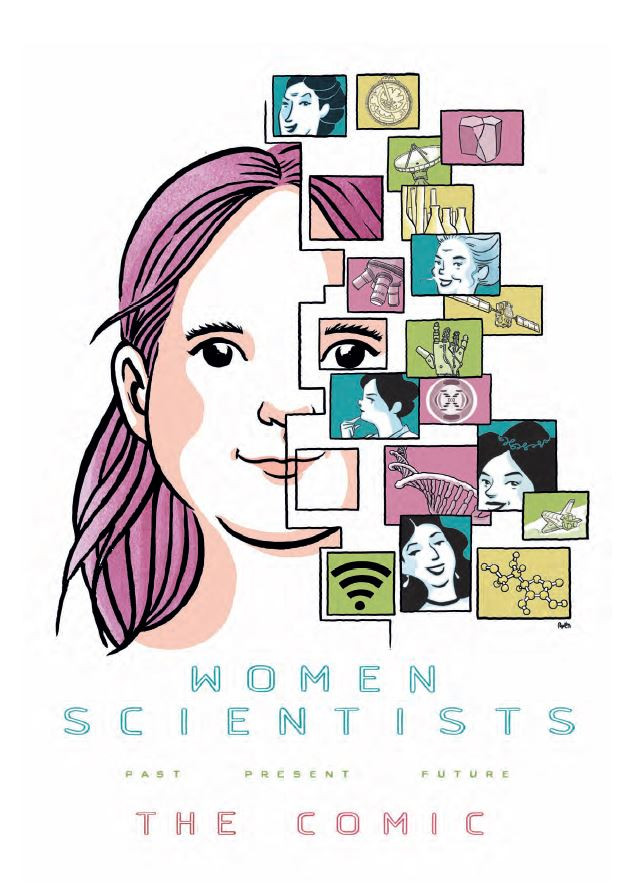 Women Scientists: Past, Present and Future Año de publicación: 2019 Autor: Raquel Gu | Francisco Vega Narváez Autor corporativo: ONCE Foundation This comic is the adaptation of the play Women scientists: past, present and future, an original idea by Francisco Vega Narváez with an original script by Isabel Fernández Delgado, Clara Grima Ruiz, maría José Jiménez Rodríguez, Adela muñoz Páez, maría del Carmen Romero Ternero and Francisco Vega Narváez. Both in the play and in the comic, female references are presented in the world of science so that girls do not feel that something is foreign to them simply because they are women and also so that boys have those same references. Achievements in science are made by people, it doesn't matter if they are women or men, their age, nationality... Científicas: pasado, presente y futuro Año de publicación: 2019 Autor: Raquel Gu | Francisco Vega Narváez Autor corporativo: ONCE Foundation Este cómic es la Adaptación de la obra de teatro Científicas: pasado, presente y futuro, una Idea original de Francisco Vega Narváez con Guion original de Isabel Fernández Delgado, Clara Grima Ruiz, maría José Jiménez Rodríguez, Adela muñoz Páez, maría del Carmen Romero Ternero y Francisco Vega Narváez. Tanto en la obra como en el cómic se presentan referentes femeninos en el mundo de la ciencia para que las niñas no sientan que algo les es ajeno por el mero hecho de ser mujeres y también para que los niños tengan esos mismos referentes. Los logros en ciencia los hacen personas, da igual que sean mujeres u hombres, su edad, nacionalidad..
 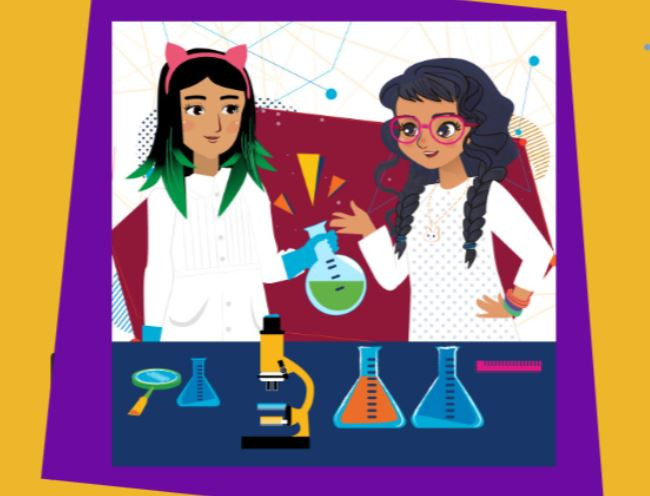 International Day of Women and Girls in Science Autor corporativo: Global Citizenship (Buenos Aires) Regarding the International Day of Women and Girls in Science, this infographic presents relevant information about the gaps in female participation in research and work on scientific topics. Includes links to support materials. Día Internacional de la mujer y la niña en la ciencia Autor corporativo: Global Citizenship (Buenos Aires) A propósito del día internacional de la mujer y la niña en la cencia, esta infografía presenta información relevante sobre las brechas de participación femenina en investigación y trabajos en temas científicos. Incluye vínculos a materiales de apoyo.
  Gender and Recovery Toolkit: Advancing Gender Equality and Women’s Empowerment in Crisis and Recovery Settings; Updated 2024 Año de publicación: 2024 Autor corporativo: United Nations Development Programme (UNDP) The Gender and Recovery toolkit is a practical resource in the hands of UNDP personnel to help government, civil society and other partners put gender equality at the core of immediate and long-term recovery processes. It shows how to incorporate gender perspectives and women’s participation throughout the recovery programme cycle – from assessment, strategic planning and framing of results to budgeting and implementation, and monitoring and evaluation.The toolkit emphasizes the need to address the root causes of gender inequality and fragility by transforming power dynamics. It advocates for approaches that go beyond increasing women’s representation, focusing on tackling masculinities and reshaping institutions, behaviors, and norms. It underscores the importance of holistic strategies to address the interconnected challenges of climate change, peacebuilding, and gender equality in crisis contexts, highlighting the role of technology and innovative programming in empowering women. The seven guidance notes and tip sheets incorporate recent updates to global policy frameworks with updated indicators and robust data sources. While primarily designed for UNDP practitioners, this resource is valuable for all partners in crisis and recovery settings.