
Recursos
Exploren una amplia gama de recursos valiosos en GCED para profundizar su comprensión y promover su búsqueda, incidencia, enseñanza y aprendizaje.
14 resultados encontrados
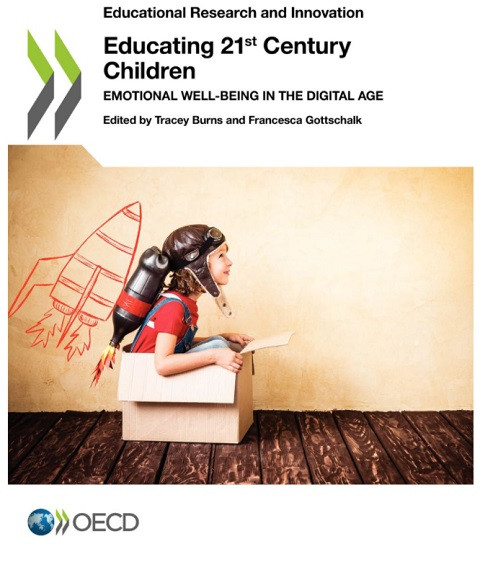 Education 21st Century Children: Emotional Well-being in the Digital Age (Educational Research and Innovation) Año de publicación: 2019 Autor corporativo: Organisation for Economic Co-operation and Development (OECD) This report examines modern childhood, looking specifically at the intersection between emotional well-being and new technologies. It explores how parenting and friendships have changed in the digital age. It examines children as digital citizens, and how best to take advantage of online opportunities while minimising the risks. The volume ends with a look at how to foster digital literacy and resilience, highlighting the role of partnerships, policy and protection.
 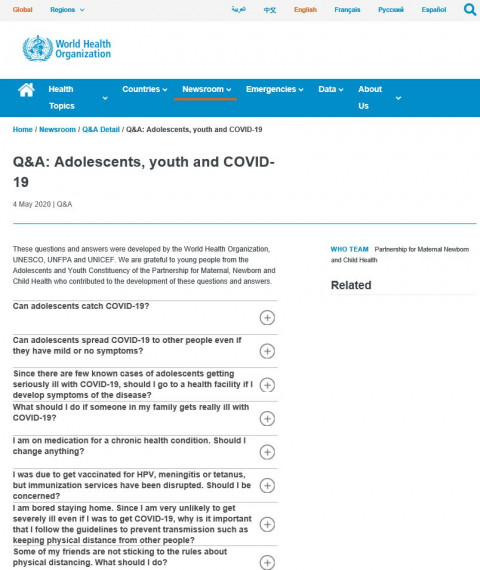 Q&A: Adolescents, Youth and COVID-19 Año de publicación: 2020 Autor corporativo: World Health Organization (WHO) | UNESCO | United Nations Population Fund (UNFPA) | United Nations Children's Fund (UNICEF) As part of UNESCO’s work in promoting better health and well-being for all children and young people, it has contributed to the development of a practical guide in a ‘questions and answers’ (Q&A) format on children and adolescents and COVID-19. This work was led by the World Health Organization, in collaboration with the Adolescents and Youth Constituency of the Partnership for Maternal, Newborn and Child Health, UNESCO, UNFPA, and UNICEF.The Q&A provide children and adolescents with accurate, non-judgmental information and advice around COVID-19, including how to help stop the spread of the virus, what to do if they develop symptoms of the disease, and how to best manage their health and well-being during the confinement period and after. It considers children and young people as critical actors in the response to COVID-19, not as passive beneficiaries.
 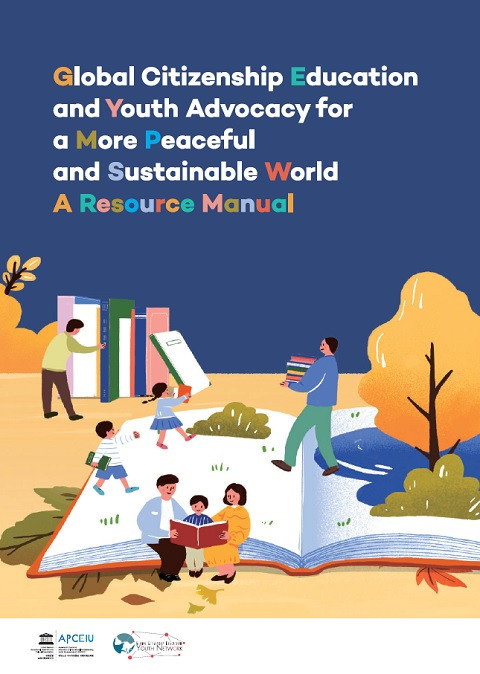 Global Citizenship Education and Youth Advocacy for a More Peaceful and Sustainable World: A Resource Manual Año de publicación: 2020 Autor: Dylan Wray | Lisa Van Wyk | Rigoberto D. Banta Jr. | Roy Hellenberg | Anna Susarenco | Diego Manrique | Guranda Bursulaia | Noora Elkenawi | Shawgi Ahmed | Tshering Zangmo | Valeriia Moroz Autor corporativo: APCEIU Since 2016 the Global Citizenship Education (GCED) Youth Network and UNESCO Asia-Pacific Centre of Education for International Understanding(APCEIU) have been working together to support young people to take action to make their communities and the world a better place.This manual, which is the outcome of a joint initiative by the GCED Youth Network and APCEIU, is intended to provide a useful resource for those who teach GCED, for youth organisations that are engaged in advocacy on themes that relate to global citizenship, and those who are supporting youth advocacy.The manual is organized in three main sections: Section 1 focuses on GCED and the teaching of history as a strategy for building a peaceful world.Section 2 provides step by step practical guidelines and ideas for youth advocacy organisations to help them plan advocacy initiatives.Section 3 includes background information and practical ideas for youth advocacy on a series of themes that are relevant to GCED, including empowerment of vulnerable communities, media literacy and peace building. It also considers the role of GCED, and young people, in global crises, using the example of the COVID-19 pandemic, and provides suggestions to help youth advocacy and other organisations to prepare for and respond to such crises
 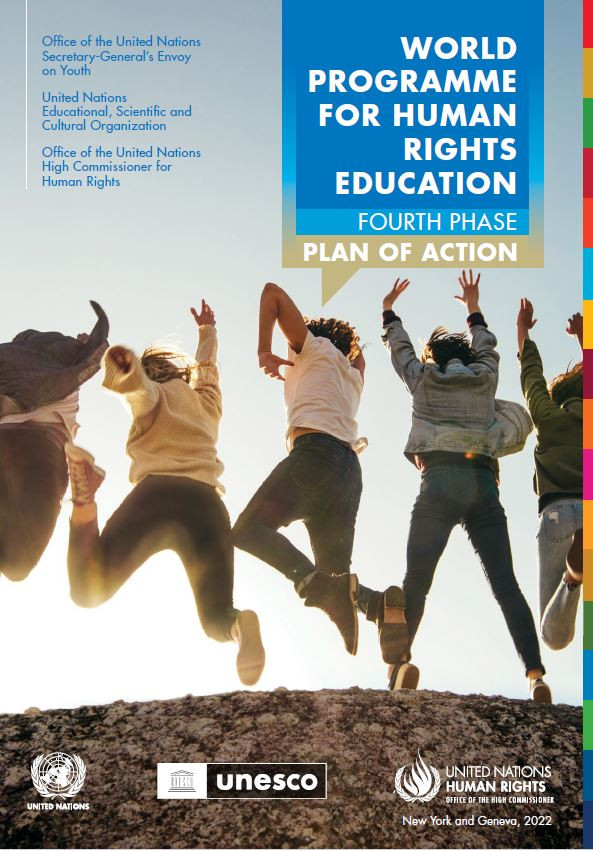 World Programme for Human Rights Education, Fourth Phase: Plan of Action Año de publicación: 2022 Autor corporativo: Organización de las Naciones Unidas para la Educación, la Ciencia y la Cultura (UNESCO) | UN. Office of the Secretary-General’s Envoy on Youth | UN. Office of the United Nations High Commissioner for Human Rights (UN. OHCHR) Human rights education for youth, in both formal and non-formal settings, promotes a shared sense of humanity and fosters a common understanding that all human beings are equally deserving of dignity, respect and justice. It empowers youth to fulfil their role as active citizens, to take action and uphold their human rights and those of others, and to participate meaningfully in public affairs and democratic decision-making processes.In recognition of this, the United Nations Member States launched the fourth phase (2020–2024) of the World Programme for Human Rights Education to advance human rights education programming for youth at the national level. This focus also contributes to the achievement of the 2030 Agenda for Sustainable Development, particularly Goal 4 on Education and target 4.7, which touches upon the aims of education.