
Recursos
Exploren una amplia gama de recursos valiosos en GCED para profundizar su comprensión y promover su búsqueda, incidencia, enseñanza y aprendizaje.
1,329 resultados encontrados
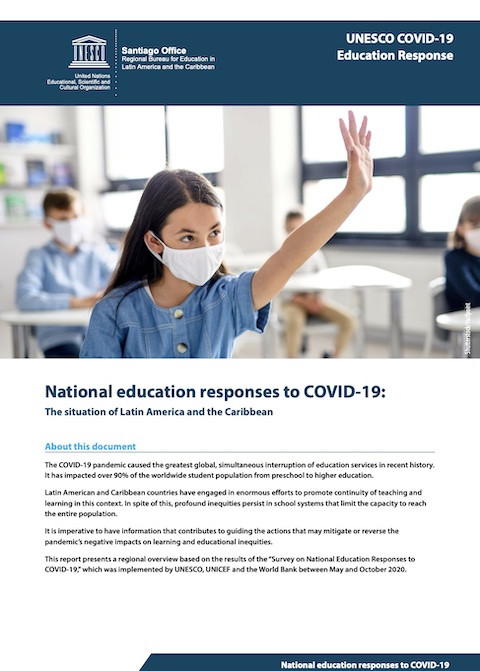 National Education Responses to COVID-19: The Situation of Latin America and the Caribbean Año de publicación: 2021 Autor corporativo: UNESCO The COVID-19 pandemic caused the greatest global, simultaneous interruption of education services in recent history. It has impacted over 90% of the worldwide student population from preschool to higher education.Latin American and Caribbean countries have engaged in enormous efforts to promote continuity of teaching and learning in this context. In spite of this, profound inequities persist in school systems that limit the capacity to reach the entire population.It is imperative to have information that contributes to guiding the actions that may mitigate or reverse the pandemic’s negative impacts on learning and educational inequities.This report presents a regional overview based on the results of the “Survey on National Education Responses to COVID-19,” which was implemented by UNESCO, UNICEF and the World Bank between May and October 2020. Las respuestas educativas nacionales frente a la COVID-19: El panorama de América Latina y el Caribe Año de publicación: 2021 Autor corporativo: UNESCO La pandemia de la COVID-19 provocó la mayor interrupción de servicios educativos, de forma global y simultánea, de la historia reciente y ha afectado a más del 90% de la población mundial de estudiantes, desde la educación preprimaria hasta la educación superior.Los países de América Latina y el Caribe han llevado adelante enormes esfuerzos para promover la continuidad de la enseñanza y el aprendizaje en este contexto. A pesar de ello, persisten en los sistemas escolares profundas inequidades que limitan la capacidad de alcanzar a toda la población.Es imperativo contar con información que contribuya a orientar las acciones que permitan atenuar o revertir los impactos negativos que ha provocado la pandemia en los aprendizajes y en las desigualdades educativas.Para ello este reporte presenta un panorama regional a partir de los resultados de la “Encuesta sobre las respuestas nacionales en materia de educación frente a la COVID-19", implementada por la UNESCO, UNICEF y el Banco Mundial entre mayo y octubre de 2020.
 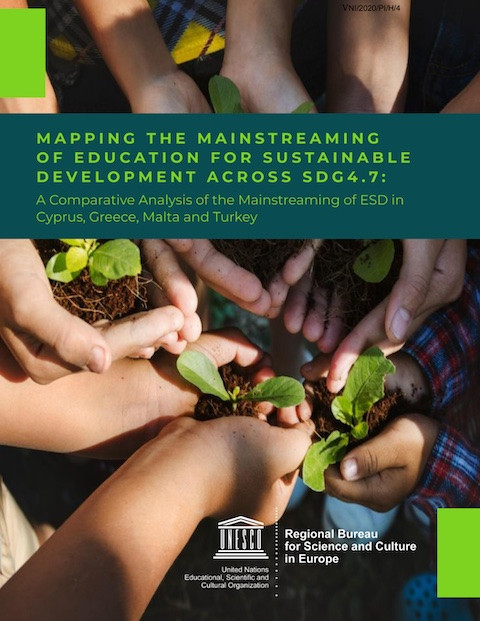 Mapping the Mainstreaming of Education for Sustainable Development Across SDG 4.7: A Comparative Analysis of the Mainstreaming of ESD in Cyprus, Greece, Malta and Turkey Año de publicación: 2020 Autor: Devonne Goad Autor corporativo: UNESCO The objective of the present report is to summarize the state of ESD implementation in Cyprus, Greece, Malta and Turkey. This report summarizes and shares the successes and challenges highlighted within National Implementation Reports, as such a summary could be an important contribution to UNESCO, as the organization is currently facilitating dialogues to establish the direction of the new global programme for ESD. For that reason, these four countries within the regional scope of the UNESCO Regional Bureau in Venice, Italy, were chosen for the preliminary study. For the purpose of this study, the binary data contained within the National Implementation reports of Cyprus, Greece, Malta and Turkey were extracted to summarize the state of ESD implementation.
 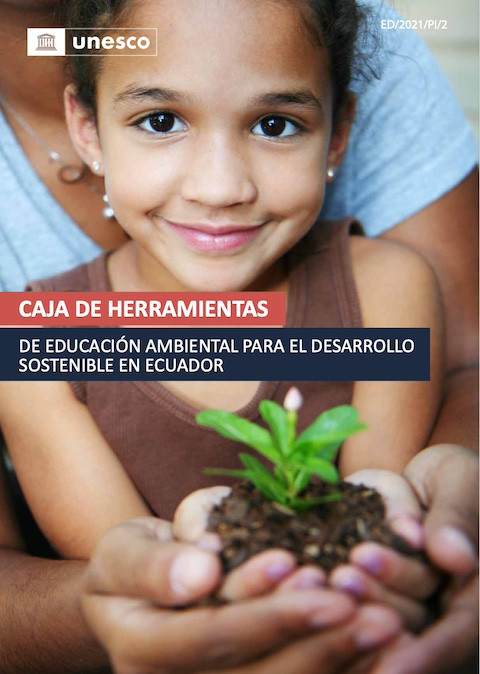 Caja de herramientas de educación ambiental para el desarrollo sostenible en Ecuador Año de publicación: 2021 Autor: Queenny López Alvarado | Sandy Paulette López Autor corporativo: Organización de las Naciones Unidas para la Educación, la Ciencia y la Cultura (UNESCO) El presente documento tiene como base conceptual los principios de la Educación para la Sostenibilidad formulados por organismos internacionales y los principios de Educación Ambiental contemplados en documentos nacionales. La Caja de herramientas de EADS en Ecuador es un instrumento complementario al amplio material que han desa- rrollado distintas instituciones; es, como su nombre lo indica, una guía de herramientas pedagógicas que busca incorporar los principios de conservación ambiental a todos los niveles de educación básica. Su elaboración se realizó a través de un proceso participativo de diálogo con varias instituciones y organizaciones del sector público y privado, la sociedad civil y organismos de cooperación.Este documento enfatiza temáticas sobre cambio climático, economía circular y estilos de vida sostenibles, que pueden ser trabajadas por niños, niñas y adolescentes entre tres y catorce años, mediante la aplicación de activi- dades que despierten y guíen su proceso de concienciación y sensibilización ambiental, no solo como parte del currículo académico, sino como una nueva forma de transformar su realidad, al convertirse en protagonistas de la nueva generación que protege y trabaja por el bien del planeta y de quienes lo habitamos.
  COVID 19, Technology-Based Education and Disability: The Case of Bangladesh; Emerging Practices in Inclusive Digital Learning for Students With Disabilities Año de publicación: 2021 Autor: Vashkar Bhattacharjee | Shahriar Mohammad Shiblee Autor corporativo: UNESCO This study sheds light on Bangladesh’s initiatives in the area of disability-inclusive education. The particu- lar focus is on the role of its Accessible Reading Materials (ARM) initiative and how this has contributed to ensuring disability-inclusive and accessible education during the COVID-19 pandemic in Bangladesh. ARM is a government-led initiative that was launched in 2014 by the then Access to Information (a2i) programme of the Prime Minister’s Office, now the Aspire to Innovate Programme of the Information and Communica- tion Technology (ICT) Division of the Government of Bangladesh. It was launched in recognition of the need for solutions to ensure virtual, as well as regular reading access for all students, including children and young people with barriers to reading. ARM is aimed at satisfying the educational needs of all students including students with print and learning disabilities.
 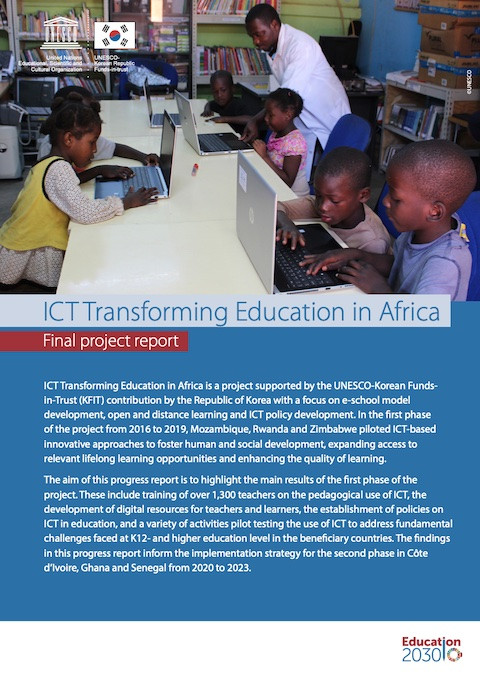 ICT Transforming Education in Africa: Final Project Report Año de publicación: 2020 Autor corporativo: UNESCO ICT Transforming Education in Africa is a project supported by the UNESCO-Korean Funds- in-Trust (KFIT) contribution by the Republic of Korea with a focus on e-school model development, open and distance learning and ICT policy development. In the first phase of the project from 2016 to 2019, Mozambique, Rwanda and Zimbabwe piloted ICT-based innovative approaches to foster human and social development, expanding access to relevant lifelong learning opportunities and enhancing the quality of learning.The aim of this progress report is to highlight the main results of the first phase of the project. These include training of over 1,300 teachers on the pedagogical use of ICT, the development of digital resources for teachers and learners, the establishment of policies on ICT in education, and a variety of activities pilot testing the use of ICT to address fundamental challenges faced at K12- and higher education level in the beneficiary countries. The findings in this progress report inform the implementation strategy for the second phase in Côte d’Ivoire, Ghana and Senegal from 2020 to 2023.
 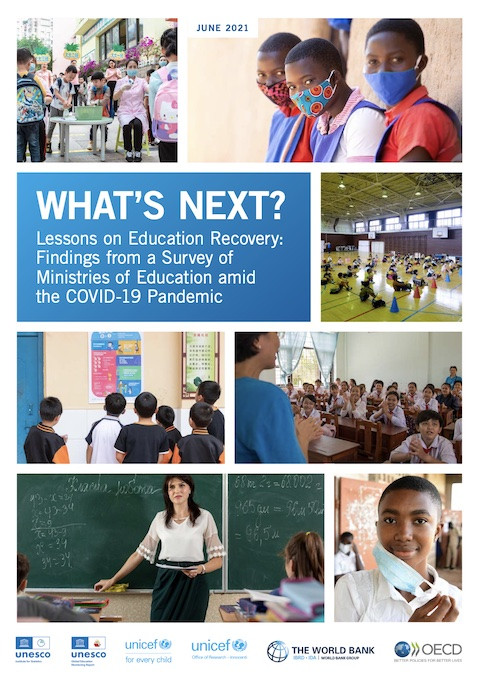 What’s Next? Lessons on Education Recovery: Findings From a Survey of Ministries of Education Amid the COVID-19 Pandemic Año de publicación: 2021 Autor corporativo: UNESCO | United Nations Children's Fund (UNICEF) | World Bank | Organisation for Economic Co-operation and Development (OECD) United Nations Educational, Scientific and Cultural Organization (UNESCO), the United Nations Children’s Fund (UNICEF), the World Bank and the Organisation for Economic Co-operation and Development (OECD) have collaborated in the third round of the Survey on National Education Responses to COVID-19 School Closures, administered by the UNESCO Institute for Statistics (UIS) and OECD to Ministry of Education officials. The questions covered four levels of education: preprimary, primary, lower secondary and upper secondary. While the first two rounds of the survey were implemented during the periods May–June and July–October 2020, respectively, the third round was implemented during the period February–June 2021. In total, 143 countries responded to the questionnaire. Thirty-one countries submitted responses to the OECD (“OECD survey”) and 112 countries responded to the UIS (“UIS survey”). Seven countries responded to both surveys. In these instances, the more complete set responses were used in analysis.
 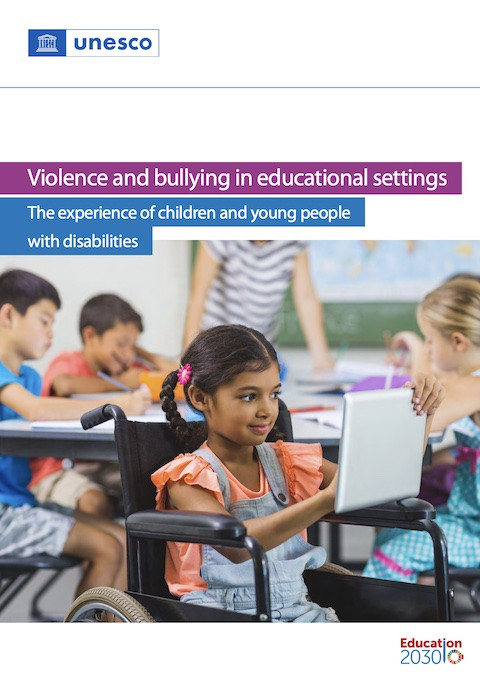 教育环境中的暴力和欺凌 : 残障儿童和青年的经历 Año de publicación: 2021 Autor corporativo: 联合国教科文组织 (UNESCO) 本文是联合国教科文组织关于校园暴力和欺凌的系列技术简报之一,重点关注残障学生的经历。本文首次汇集了关于教育环境中残障学生遭受暴力和欺凌的规模和性质的证据,旨在提高对该问题的认识,鼓励采取行动确保残障儿童和青年能够获得安全的学习环境。本文主要面向教育政策制定者和规划者、学校管理者、校长、教师和其他学校工作人员。
  Roadmap for Integrating Global Citizenship and Liberation History in Teaching and Learning in SADC Member States Año de publicación: 2021 Autor corporativo: UNESCO The Roadmap for integrating GCED and SALH in teaching and learning in SADC member states is grounded in two visions: Identify common values and learning outcomes that can be advanced by GCED and SALH, with a view of promoting the sense of belonging, solidarity, and regional identity and integration. Guide education planners and practitioners to mobilize the GCED and SALH contents to contribute to the SADC vision of reconciliation, social cohesion, resilience, peace, solidarity, development, and freedom for future generations through promoting an education that equips young people with skills, values, knowledge, behaviours, and attitudes that critically and creatively address today’s local, national, regional, and global challenges through an inclusive lens. The objectives of this Roadmap are to: Provide general guidance and steps for the integration of SALH and GCED in curricula and teaching and learning practices in SADC member states; Provide articulations between the regional and local philosophical concepts and the GCED core values, such as ubuntu, to support a contextualized teaching of GCED values; Support countries to identify priority topics and steps towards integrating GCED and SALH in education policies in a manner that highlights the regional dimensions of liberation history, as well as universal values; Propose learning outcomes and competencies as well as teaching and learning approaches for GCED and SALH; Provide guidance on integration of GCED and SALH in teacher education programmes, as well as possible assessment methods.
 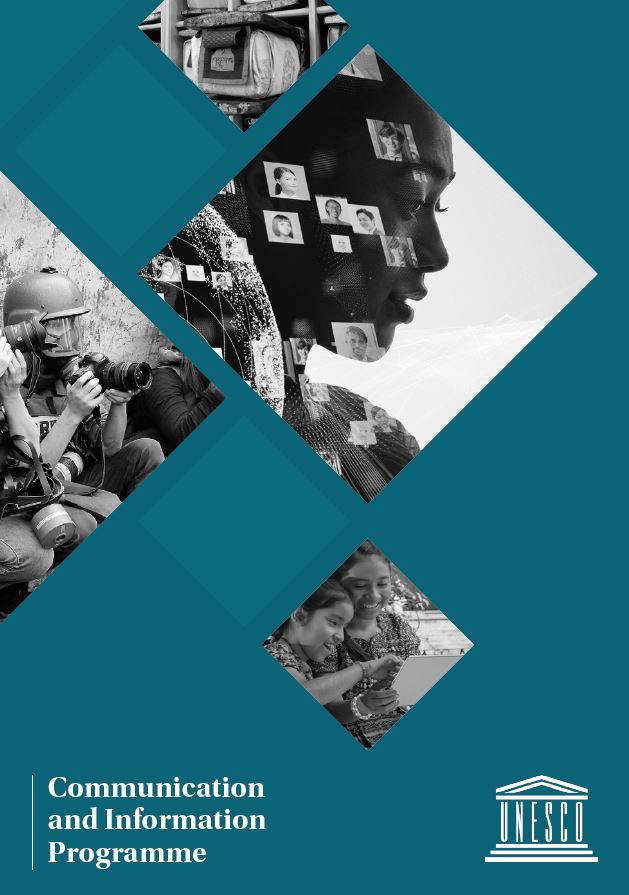 Communication and Information Programme Año de publicación: 2021 Autor corporativo: UNESCO UNESCO is the UN specialized agency building peace in the minds of people through education, the sciences, culture, communication and information. Our mission is to foster intercultural dialogue and sustainable development, by promoting the free flow of ideas.By adopting a multi-disciplinary and inclusive approach, UNESCO works with both duty-bearers and rights-holders across the world to develop and implement targeted actions that are born out of local needs, which ensures a holistic and results-based approach for sustainable change.In the field of communication and information, UNESCO defends and promotes freedom of expression, media independence and pluralism, and the building of inclusive knowledge societies underpinned by universal access to information and the innovative use of digital technologies.Through capacity-building, policy advice, international cooperation, monitoring and foresight in the fields of freedom of expression, access to information, and digital transformation, UNESCO will continue to empower key actors with a view to ensuring that fundamental freedoms are guaranteed online and offline, in line with international standards.This is all the more relevant to ensure the ethical development and use of emerging technologies, which have a growing impact on all aspects of the world’s societies. Citizens will also be empowered to enjoy these fundamental freedoms through the development of 21st century skills and the fostering of enabling environments for media pluralism and diversity.