
Recursos
Exploren una amplia gama de recursos valiosos en GCED para profundizar su comprensión y promover su búsqueda, incidencia, enseñanza y aprendizaje.
1,329 resultados encontrados
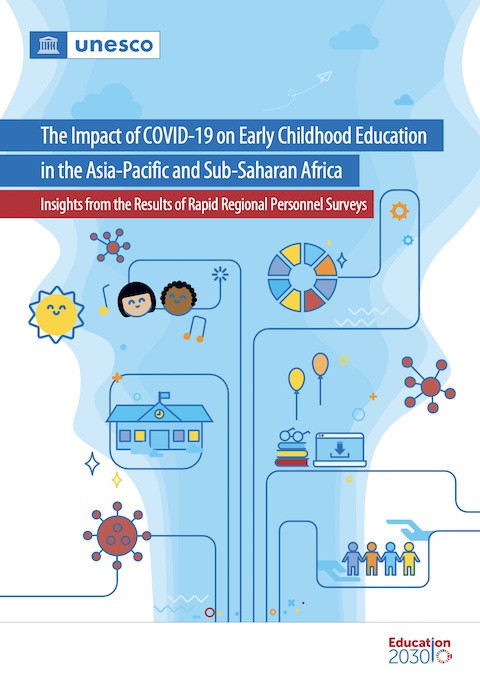 The Impact of COVID-19 on Early Childhood Education in the Asia-Pacific and Sub-Saharan Africa: Insights From the Results of Rapid Regional Personnel Survey Año de publicación: 2021 Autor: Yoshie Kaga | Kyungah Bang Autor corporativo: UNESCO Bangkok Declared a global pandemic on 11 March 2020 by the World Health Organization (WHO), COVID-19 has had far-reaching impacts on every facet of life around the world, exacerbating pre-existing inequalities and negatively impacting on vulnerable and disadvantaged populations the most. Learning continuity has been disrupted by school closures, generating an unprecedented situation worldwide. According to UNESCO Institute for Statistics (UIS) data collated in July 2020, over 18.6 million children in pre-primary education in forty-eight Sub-Saharan African countries and 4.4 million pre-primary teachers – eighty- five per cent of whom were women – in twenty-four countries in the Asia-Pacific region were affected by school or centre closures. Recognizing the possible severe and detrimental impact that COVID-19 might have on ECE personnel and their practices, UNESCO Bangkok and Dakar teamed up with several partners to undertake regional surveys in the Asia-Pacific and Sub-Saharan Africa from April to July 2020. Based on the regional surveys, this report features eight key findings and three key messages to better understand ECE personnel’s needs and to identify possible responses to support them.
 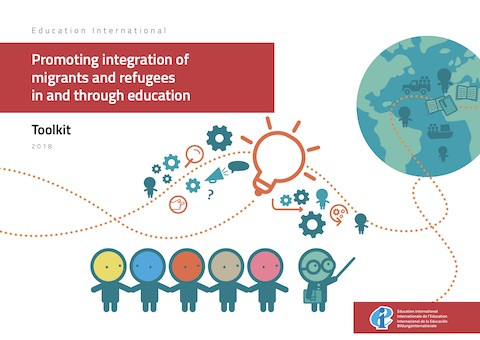 Promoting Integration of Migrants and Refugees in and Through Education: Toolkit Año de publicación: 2018 Autor corporativo: Education International (EI) The past years have seen large numbers of refugees moving to Europe. This, and the rise of populist movements in Europe and North America, has led unions to develop activities engaging schools, local communities, authorities, etc. to promote the rights of migrants and build inclusive schools and communities.With the support of Education International (EI), exchange visits, information sharing and peer-learning activities allowed education unions to inspire each other and explore synergies across borders. This toolkit aims to build on these experiences and facilitate education unions to develop their work in this area. It also assists unions by exploring the issues around integrating migrants and refugees in education and sharing what others have been doing in this domain. Promouvoir l'intégration des personnes migrantes et réfugiées dans et à travers l'éducation: Boite à outils Año de publicación: 2018 Autor corporativo: Education International (EI) Beaucoup de personnes réfugiées se sont installées en Europe ces dernières années. Ceci et la montée des mouvements populistes en Europe et en Amérique du Nord ont conduit les syndicats à développer des activités engageant les écoles, les communautés locales, les autorités, etc. pour promouvoir les droits des migrant.e.s et développer des écoles et communautés inclusives.Avec le soutien de l’Internationale de l’Education (IE), les visites d’échange, le partage d’informations et les activités d’apprentissage avec leurs pairs ont permis aux syndicats de l’éducation de s’inspirer mutuellement et d’explorer les synergies transfrontalières. Cette boite à outils vise à tirer parti de ces expériences et à aider les syndicats de l’éducation à amplifier leur travail dans ce domaine. Elle aide également les syndicats en explorant les questions liées à l’intégration des personnes migrantes et réfugiées dans l’éducation et en partageant ce que les autres ont fait sur cette thématique.
 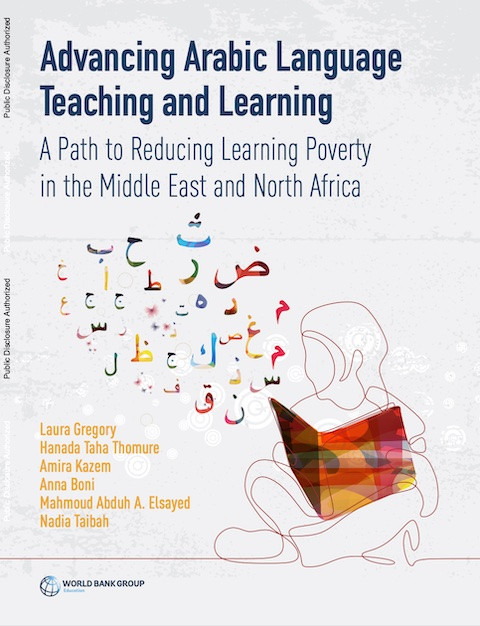 Advancing Arabic Language Teaching and Learning: A Path to Reducing Learning Poverty in the Middle East and North Africa Año de publicación: 2021 Autor: Laura Gregory | Hanada Taha Thomure | Amira Kazem | Anna Boni | Mahmoud Abduh A. Elsayed | Nadia Taibah Autor corporativo: World Bank The purpose of the present report is to identify and explore the evidence on factors that are leading to high rates of learning poverty in MENA countries. In addition, the report proposes a path for countries of the region to make the teaching and learning of the Arabic language—which are critical foundations for children in Arabic-speaking countries—more effective. The intended audience of the report is education stakeholders in the MENA region, including officials in ministries of education across the region, those responsible for education decision-making, teachers, academics, education administrators, parents, and nongovernmental organizations, as well as World Bank and partner organization staff tasked with supporting countries in their efforts to raise learning and human capital.The intention of the report is not to provide an Arabic literacy strategy for each country since countries of the region differ and each would need to have their own national dialogue. Instead, the report collates the relevant literature from the region and beyond, as well as local and regional initiatives, and offers guidance to countries to advance the teaching and learning of MSA. As such, the report does not focus on the broader issues of language use within each country. As part of the process of developing the report, a summary of the emerging evidence and recommendations was shared with a small group of teachers from two countries across the region in advance of a focus group discussion to explore local views. Unanimous agreement on the key findings and recommendations were expressed by these teachers. Further discussions on the topics raised in this report are expected to take place during the dissemination of this report and in the months and years to come, leading to greater consensus across stakeholders on the best ways to advance Arabic language teaching and learning.The report is structured in a way that first explores the incidence of learning poverty in the MENA region, followed by international evidence on the science of learning to read, and factors that are influencing Arabic language learning outcomes. The report then looks at some of the national strategies, policies, and initiatives already in place for Arabic language education, and proposes a path for advancing Arabic language teaching and learning, along with suggestions for regional collaboration efforts that could further support MENA countries.
  Children's Rights Are They Necessary? Año de publicación: 2017 Autor corporativo: CuriosaMente This video rises the question about the need for children´s rights. It describes the historical perspectives of childhood and how their rights were developed, stressing their importance. Los derechos de los niños, ¿son necesarios? Año de publicación: 2017 Autor corporativo: CuriosaMente Este video hace la pregunta sobre la necesidad de los derechos de los niños. Realiza una descripción de la perspectiva historica de los niños y como a medida que pasó el tiempo los derechos fueron desarrollándose y mostrando su importancia.
 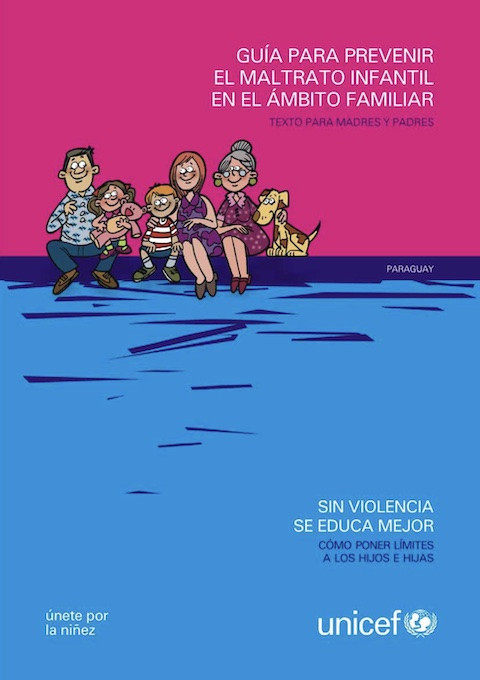 Guide to Prevent Child Abuse in the Family Año de publicación: 2010 Autor: Cecilia Sirtori Autor corporativo: United Nations Children's Fund (UNICEF) This guide seeks to point out a path that leads to cultural change, in which it is possible to replace the deep tradition of using physical and verbal violence for the purpose of setting limits to boys and girls by others methods of discipline. This guide is based upon the principle that humiliating treatment does not educate. Guía para prevenir el maltrato infantil en el ambito familiar Año de publicación: 2010 Autor: Cecilia Sirtori Autor corporativo: United Nations Children's Fund (UNICEF) Está guía busca señalar un camino que conduzca a un cambio cultural en el cual sea posible reemplazar la profunda tradición de usar la violencia física y verbal con el proposito de poner límites a los niños y niñas por otros métodos de disciplina. Está guía sustenta que los tratos humillantes no educan.
  Media Education and Citizenship: An Analysis of the Quebec Preschool and Elementary Education Program (No. 80) Año de publicación: 2018 Autor: Normand Landry | Chantal Roussel Autor corporativo: Lien social et Politiques In Canada, the limited level of knowledge on media education content that is conveyed by academic curricula hinders its critical evaluation. This article presents the ways in which media education is introduced in the Quebec Education Program (QEP) at the preschool and elementary level. More specifically, it highlights the connections at work between media education, childhood and citizenship in the program. Our method tracks and extracts a set of statements related to information and communications technologies (ICTs) and the media, then conducts their automated classification into four principal categories: speech, verbs used that reflect the actions undertaken by categories of actors (school, pupils, teachers), learning objectives and suggestions. A subsequent classification allows for the emergence of verbs and learning objectives associated to the notion of citizenship. The latter are then subject to speech analysis. Our analysis intends to demonstrate the message conveyed by the QEP on media and ICTs. It highlights the roles, tasks and responsibilities of its various actors in relation to the acquisition of knowledge and skill development. In addition, it features the actions taken by these actors to operationalize the academic goals of the program. Our conclusion indicates a low subject implementation of the statements associated to media education and citizenship, relevant content, although thematically limited, along with the conception of students as capable of a reflection and critical thinking process. Articuler éducation aux médias et citoyenneté : Une analyse du Programme de formation de l’école québécoise préscolaire-primaire (nº 80) Año de publicación: 2018 Autor: Normand Landry | Chantal Roussel Autor corporativo: Lien social et Politiques Au Canada, le faible niveau de connaissance des contenus en éducation aux médias véhiculés par les curricula scolaires proscrit leur évaluation critique. Cet article présente les façons selon lesquelles l’éducation aux médias est introduite dans le Programme de formation de l’école québécoise (PFEQ) des niveaux préscolaire et primaire. Plus spécifiquement, il témoigne des articulations entre éducation aux médias, enfance et citoyenneté. La méthode utilisée procède au repérage et à l’extraction d’énoncés associés aux technologies de l’information et de la communication (TIC) et aux médias, puis à leur classement en quatre catégories principales : discours, verbes témoignant des actions de chaque catégorie d’acteurs (école, élève, enseignant), objets d’apprentissage et suggestions d’utilisation des TIC. Une classification permet de faire émerger les verbes et les objets d’apprentissage référant à la notion de citoyenneté en utilisant la définition et les composantes associées. Ces derniers sont ensuite soumis à une analyse de discours. Notre analyse fait émerger les discours véhiculés par le PFEQ sur les médias et les TIC. Elle met en exergue les rôles, les tâches et les responsabilités des différents acteurs en lien avec l’acquisition de connaissances et le développement de compétences. En outre, elle présente les actions menées par ces acteurs afin d’opérationnaliser les intentions pédagogiques du programme. La conclusion montre un faible ancrage disciplinaire des énoncés traitant de l’éducation aux médias et à la citoyenneté, des contenus pertinents, mais limités thématiquement, ainsi qu’une représentation de l’élève en tant qu’individu capable de réflexion et de pensée critique.