
Recursos
Exploren una amplia gama de recursos valiosos en GCED para profundizar su comprensión y promover su búsqueda, incidencia, enseñanza y aprendizaje.
1,329 resultados encontrados
 UNESCO Women for Ethical AI: Outlook Study on Artificial Intelligence and Gender Año de publicación: 2024 Autor corporativo: UNESCO The gender chapter of the UNESCO Recommendation on the Ethics of AI is a concrete commitment by 194 Member States to advance gender equality in the AI ecosystem. To track progress in the implementation of the gender provisions of UNESCO’s Recommendation, and to assess the impacts of AI on gender equality, the UNESCO Women for Ethical AI (W4EAI) Platform has been established. This report advances the workstream through evidence-based insights in three critical areas: women’s participation in AI development and deployment, the inclusion of gender equality concerns in AI governance and the impact of AI on gender equality. It highlights the significant underrepresentation of women in AI, the lack of gender-disaggregated data, and the compounded challenges women face in the field. The report also addresses the neglect of gender dimensions in AI policy, the risks posed by AI systems to women, and the need for responsible and ethical AI governance to promote gender equality. Finally, it outlines actionable recommendations to enhance gender equality through and in AI, emphasizing the importance of comprehensive data collection, targeted interventions, and inclusive policy-making.
  Fostering Women's Leadership Año de publicación: 2024 Autor: Mariagrazia Squicciarini | Anna Rita Manca | Garance Sarlat Autor corporativo: UNESCO No (leadership) share no gain (for societies and economies)! Leveraging UNESCO’s unique Gender-Based Resilience Framework, this report explores the role of women in leadership positions in both decision-making and high-tech, including in artificial intelligence-related innovations. It further highlights progress towards the G20 Brisbane Target, aimed to accelerate progress on gender equality by reducing the gender gap in labour market participation rates by 25% by 2025. Women remain underrepresented in decision-making, holding only about 26% of seats in national parliaments worldwide on average. In the world of work, female labour participation continues to lag behind men’s, at 47% for women against 72% for men on average. Despite progress by G20 members towards the Brisbane Target, a 2% average gap in absolute terms remained to be filled in 2022. In the high-tech world, women make up only 30% of AI professionals, and even less of leaders. Female inventors in AI account for about 37% of patents filed in 2022-23.
  환경 시민과 함께하는 2022 대한민국 환경교육 Año de publicación: 2022 Autor corporativo: 대한민국 환경부 이 발행물은 국민들에게 환경교육 정책과 사업을 알리고 정책의 발전을 함께 고민하고자 하는 목적으로 발행한 홍보물로 대한민국 환경교육 현황과 주요 국가의 초·중·고등학교와 일반인을 대상으로 하는 환경교육 사업을 조사하여 설명하고 있습니다.
  교사가 실천하는 지속가능발전교육: 미래 세대와 동행하기 Año de publicación: 2011 Autor: 최돈형 | 조성화 | 안재정 | 홍현진 | 정국초 Autor corporativo: 서울특별시교육청 | 유네스코한국위원회 이 책은 21세기 환경교육이 지향해야 할 지속가능발전교육(ESD)을 수행할 수 있는 환경교육 분야의 전문가를 양성하고자 국제적으로 활용되고 있는 유네스코 TLSF 프로그램의 27개 모듈을 한국어로 번안하고, 여기에 한국적 맥락의 사례를 추가해 한국 상황에서의 적합성 및 활용 가능성을 제고했다. 이 책은 27개의 모듈을 교육과정 이론(Curriculum Rationale), 교육과정에서의 지속가능발전(Sustainable Development Across the Curriculum), 현시대 쟁점들(Contemporary Issues), 교수 ․ 학습 전략(Teaching and Learning Strategies) 등 4개의 영역으로 분류, 약 120시간 분량으로 구성되어 있다.
  Guardians of Planet Earth: Gamification in Early Childhood Education Año de publicación: 2020 Autor corporativo: Instituto Nacional de Tecnologías Educativas y de Formación del Profesorado (INTEF) The project "Inspiring Educational Experiences" is part of the Educational Digital Transformation Plan launched by INTEF, specifically "Guardians of planet Earth" whose main objective is the internalization by students of the importance of caring for our planet around three fundamental axes: recycling and treatment of waste, care of flora and fauna. With this, it intends to impregnate the students and their families with solid values that are internalized and endure over time and for this it uses different methodologies and active and participatory teaching strategies, in turn, favors the development of creativity and imagination in all activity of the project and explains how ICTs are a transversal element, offering the youngest population a variety of opportunities to use and enjoy technology. Guardian@s del planeta Tierra: Gamificación en Educación Infantil Año de publicación: 2020 Autor corporativo: Instituto Nacional de Tecnologías Educativas y de Formación del Profesorado (INTEF) The project "Inspiring Educational Experiences" is part of the Educational Digital Transformation Plan launched by INTEF, specifically "Guardians of planet Earth" whose main objective is the internalization by students of the importance of caring for our planet around three fundamental axes: recycling and treatment of waste, care of flora and fauna. With this, it intends to impregnate the students and their families with solid values that are internalized and endure over time and for this it uses different methodologies and active and participatory teaching strategies, in turn, favors the development of creativity and imagination in all activity of the project and explains how ICTs are a transversal element, offering the youngest population a variety of opportunities to use and enjoy technology.
  풀무원재단 환경교육 가이드라인 Año de publicación: 2023 Autor: 풀무원재단 이 가이드라인은 환경교육 프로그램을 통해 유아, 초등 학습자의 환경 소양(environmental literacy)을 증진시키고자 할 때 참고할 수 있는 안내서입니다.
 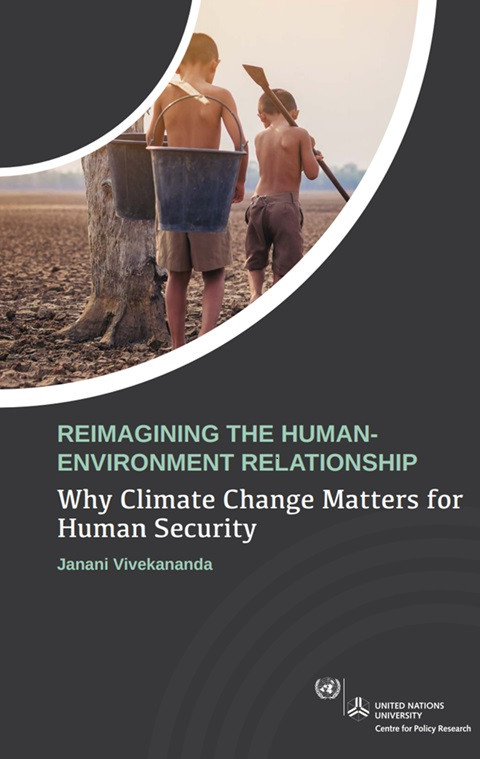 Why Climate Change Matters for Human Security Año de publicación: 2022 Autor: Janani Vivekananda Autor corporativo: United Nations University | United Nations Environment Programme (UNEP) This paper outlines the state of knowledge regarding security risks related to climate change, synthesizing the existing scientific evidence to set out five broad pathways of risk. Climate change itself is rarely a direct cause of conflict. Yet, there is ample evidence that its effects exacerbate important drivers and contextual factors of conflict and fragility, thereby challenging the stability of states and societies. Climate change impacts such as coral bleaching, diversity loss, and erratic rainfall can stress livelihoods and drive displacement, increase resource conflicts, and challenge the security and stability of people and states worldwide. Managing these security risks requires action across the entire impact chain: work to mitigate climate change; reducing its consequences on ecosystems; adapting socioeconomic systems; better management of climate-induced heightened resource competition; and strengthening governance and conflict management institutions. And every dimension of the response must be conflict-sensitive and climate proof. Without the right responses, climate change will mean more fragility, less peace and less security. But this paper sets out illustrative examples of how, with a greater understanding of how climate change interacts with social, political, economic and environmental drivers of conflict and fragility, we will be better placed to make the kind of risk-informed decisions is integral to achieving international peace and security.
 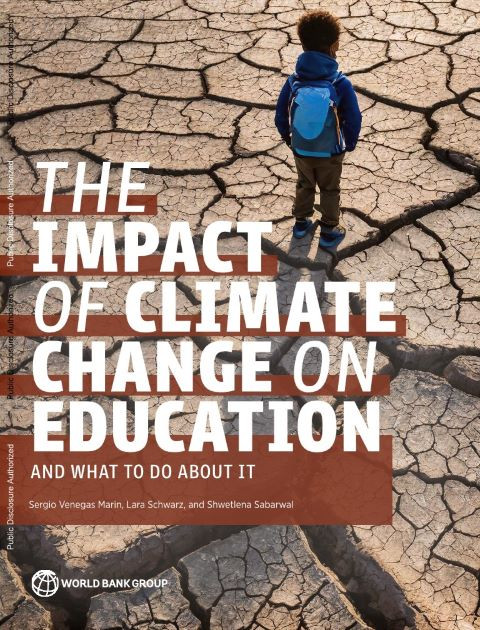 The Impact of Climate Change on Education and What to Do about It Año de publicación: 2024 Autor: Sergio Venegas Marin | Lara Schwarz | Shwetlena Sabarwal Autor corporativo: International Bank for Reconstruction and Development | World Bank Education can be the key to ending poverty in a livable planet, but governments must act now to protect it. Climate change is increasing the frequency and intensity of extreme weather events such as cyclones, floods, droughts, heatwaves and wildfires. These extreme weather events are in turn disrupting schooling; precipitating learning losses, dropouts, and long-term impacts. Even if the most drastic climate mitigation strategies were implemented, extreme weather events will continue to have detrimental impacts on education outcomes.
 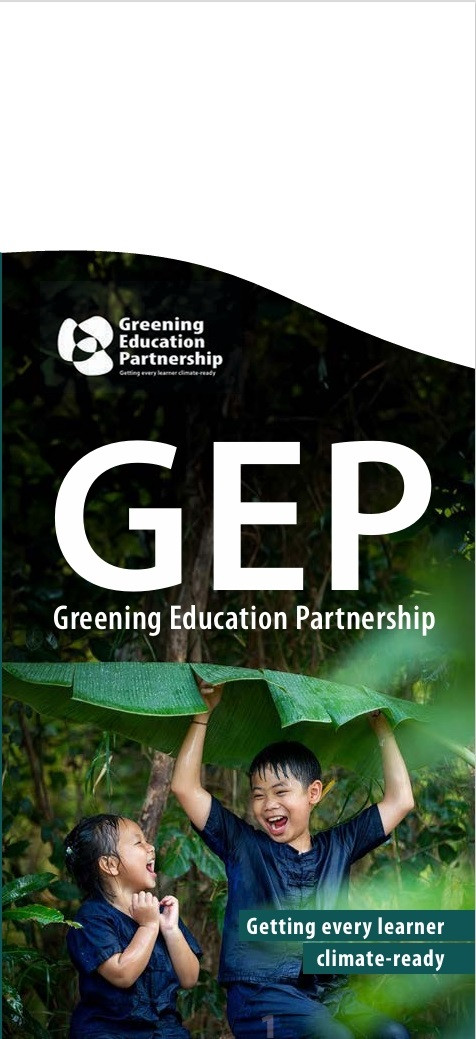 Greening Education Partnership: Getting Every Learner Climate-Ready Año de publicación: 2024 Autor corporativo: UNESCO Bangkok The UN Secretary-General calls the climate crisis ‘a battle for our lives’, as we still struggle to transform our societies to reach the 1.5°C-degree path recommended by the Paris Agreement. Rapid and radical transformation at all levels and in many aspects of our life is required, with education as a central and powerful means to support the adaptation and strengthening of the resilience of learners and societies. It is also important to ensure that education systems become more resilient to climate change to create safe and climate-proof schools. Building off of the knowledge and practice accumulated in Education for Sustainable Development (ESD), a new Greening Education Partnership aims to deliver strong, coordinated and comprehensive action which will prepare every learner to acquire the knowledge, skills, values, and attitudes to tackle climate change and to promote sustainable development.