
Recursos
Exploren una amplia gama de recursos valiosos en GCED para profundizar su comprensión y promover su búsqueda, incidencia, enseñanza y aprendizaje.
1,330 resultados encontrados
 Un Mundo en Igualdad Año de publicación: 2019 Autor corporativo: Fundación Entreculturas “Un Mundo en Igualdad” es el primer ejemplar de una serie de recopilaciones de recursos educativos diseñados por Entreculturas para trabajar distintas temáticas globales con grupos de niños, niñas y jóvenes.En esta ocasión, esta publicación recoge una serie de recursos educativos para trabajar sobre la promoción de la igualdad de género, con el objetivo de desarrollar conocimientos, valores y competencias sociales y ciudadanas para promover que los grupos aprendan que la igualdad está en sus manos y que pueden ser protagonistas de los cambios necesarios para alcanzar una sociedad igualitaria.La publicación ofrece propuestas didácticas divididas en cuatro bloques de edad. Cada bloque recoge un itinerario adaptado con distintas actividades de menor a mayor grado de complejidad para trabajar con grupos de niñas, niños y jóvenes, tanto en el ámbito formal como en el no formal, de 4 a 18 años.
  Human Rights Stories: Tales of Human Rights Defenders for Primary Schools Año de publicación: 2012 Autor: Claire Glavey | Fiona O’Shea | Valeria Navarro Autor corporativo: Amnesty International Ireland | Irish Aid This resource pack has been developed by Amnesty International Ireland in consultation with an advisory and piloting group of primary school teachers. The concept for the resource pack originated with primary school teachers who identified storytelling as a powerful medium through which a range of concepts and topics can be introduced in the classroom. Human rights issues can appear daunting, distant and theoretical. Through the familiar medium of storytelling, human rights situations can be explored on a level at which children can encounter the real life impact of human rights in practice. Engaging with stories through discussion, creative thinking and character exploration develops the skill of empathy. This brings about the realisation that human rights belong to everyone and that we all have a role to play in ensuring that human rights are protected locally and globally.
  Metodologías para la educación transformadora y la ciudadanía global Año de publicación: 2018 Autor: Rubén Gallego Autor corporativo: InteRed | Agencia Vasca de Cooperación al Desarrollo | Diputación Foral de Bizkaia La Pedagogía de los cuidados hace necesaria buscar metodologías que sean coherentes con lo que busca, y por ello, diferentes de la tradicional forma enseñanza – aprendizaje. Necesitamos una metodología que haga primero vivenciar las cosas, sentirlas, para teorizarlas después; una metodología que rescate el valor pedagógico del juego, del encuentro, que apueste por el impacto terapéutico del afecto. Es necesario estar convencidos de que una sola vivencia, una experiencia, puede más que miles de palabras. Por ello, en este módulo, presentamos tres grupos de metodologías, con dos propuestas metodológicas cada una: Las metodologías lúdicas: juego cooperativo y Ludopedagogía Las metodologías artísticas: técnicas ludicoteatrales y Arteterapia. Las metodologías experienciales: Aprendizaje-Servicio con enfoque de derechos y Aprendizaje Basado en Proyectos transformadores con mirada global.
  Learning Must Go On: Recommendations for Keeping Children Safe and Learning, During and After the COVID-19 Crisis Año de publicación: 2020 Autor corporativo: Save the Children | United Nations Children's Fund (UNICEF) | The Inter-agency Network for Education in Emergencies (INEE) This brief highlights some of the potential impacts of school closures on children, with a focus on the most marginalised, including those already living in crisis and conflict contexts. It provides recommendations for governments and donors, together with partners, to ensure that safe, quality and inclusive learning reaches all children and that education systems are strengthened ready for the return to school.A comprehensive curation of free and accessible resources to support the response during the COVID-19 is available on INEE’s website.
 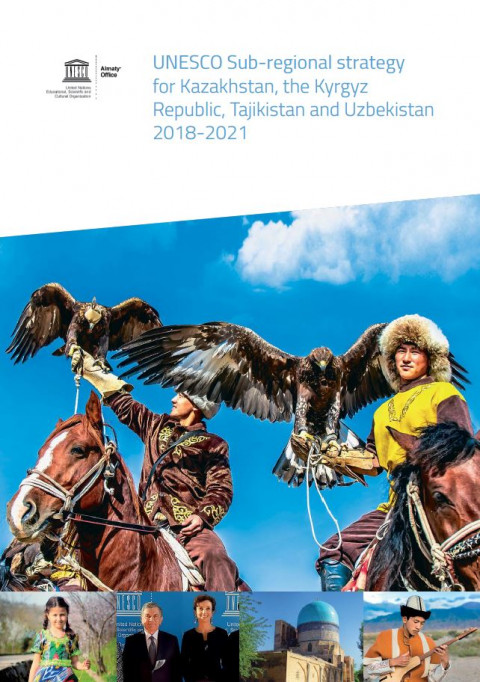 UNESCO Sub-regional Strategy for Kazakhstan, the Kyrgyz Republic, Tajikistan and Uzbekistan 2018-2021 Año de publicación: 2019 Autor corporativo: UNESCO Almaty This document represents the strategic framework for UNESCO’s interaction with the governments and civil societies of Kazakhstan, the Kyrgyz Republic, Tajikistan and Uzbekistan, with other UN agencies and development partners aimed at responding most effectively to the development needs, priorities and aspirations of countries. Субрегиональная стратегия ЮНЕСКО для Казахстана, Кыргызской Республики, Таджикистана и Узбекистана на 2018-2021 гг. Año de publicación: 2019 Autor corporativo: UNESCO Almaty Настоящий документ представляет собой стратегические рамки взаимодействия ЮНЕСКО с правительствами и гражданским обществом Казахстана, Кыргызской Республики, Таджикистана и Узбекистана, с другими учреждениями ООН и партнерами в области развития, направленного на наиболее эффективное реагирование на потребности, приоритеты и устремления стран в области развития.
 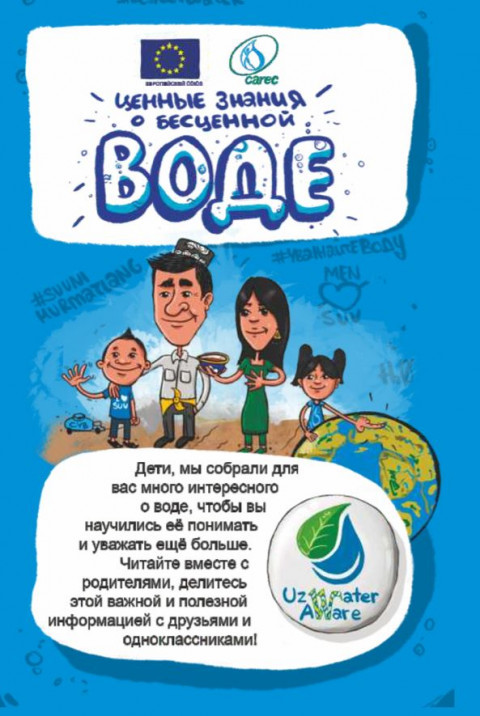 Valuable Knowledge on Invaluable Water Año de publicación: 2020 Autor corporativo: Regional Environmental Centre for Central Asia (CAREC) UzWaterAware Water Awareness Children's Learning Book “Valuable knowledge about invaluable water” is an illustrated children's collection on the respectful and respectful attitude to water resources, prepared as part of the UzWaterAware project. The project is implemented by CAREC with financial support from the European Union. National partner: Ministry of Water Resources of the Republic of Uzbekistan.The publication was prepared in the framework of the project’s cooperation with the only children’s eco-magazine “Rodnichok” (Uzbek. “Buloqcha”) of the Ecological Movement of Uzbekistan in Uzbekistan.The book, in a language accessible to children and in a fascinating, colorful format, provides information on the world’s water reserves, the main waterways of Uzbekistan, tells what “virtual water” is, water-saving technologies, and also provides many interesting facts, experiments with water, riddles, crosswords, etc. Ценные знания о бесценной воде Año de publicación: 2020 Autor corporativo: Regional Environmental Centre for Central Asia (CAREC) Детская познавательная книжка проекта UzWaterAware по водной осведомленности «Ценные знания о бесценной воде» - это иллюстрированный детский сборник о бережном и уважительном отношении к водным ресурсам, подготовленный в рамках проекта UzWaterAware. Проект реализуется РЭЦЦА при финансовой поддержке Европейского Союза. Национальный партнер: Министерство водного хозяйства РУ.Издание подготовлено в рамках сотрудничества проекта с единственным в Узбекистане детским эко-журналом «Родничок» (узб. «Buloqcha») Экологического движения Узбекистана.В книжке на доступном для детей языке и в увлекательном, красочном формате представлена информация о мировых запасах воды, основных водных артериях Узбекистана, рассказывается, что такое «виртуальная вода», водосберегающие технологии, а также приводится множество интересных фактов, опытов с водой, загадок, кроссвордов и т.д.
  Critical Understanding on Global Citizenship Education in Post 2015 Context (Theory and Research in Citizenship Education; Vol. 57, No. 1) Año de publicación: 2015 Autor: Jinhee Kim Autor corporativo: Korea Association of Social Education It is notable that global citizenship education has recently gained prominence in Post 2015 context. This study attempted to explore diverse discourses of global citizenship education in theoretical dimension and it also analyzed the current status of global citizenship education as a new global education agenda. Major findings displayed issues and challenges; de-contextualization against local dimension; vague conceptualization of global citizenship education; limitation of transformative pedagogy and learning discourse; indicator development and monitoring issues; a paradigm shift for global citizenship education engaging with lifelong learning. Eventually, this study argues that comprehensive vision and long term road-map should be established to enhance global citizenship education. Lifelong learning approach is crucial to reshape global citizenship education while interacting with life-world context and life experience, which can promote an epistemology of learning to live together. Post 2015 맥락의 세계시민교육 담론 동향과 쟁점 분석 (시민교육연구; Vol. 57, No. 1) Año de publicación: 2015 Autor: 김진희 Autor corporativo: 한국사회과교육학회 최근 국제사회가 2015년 이후 새로운 교육의제를 설정하고 있는 가운데, 세계시민교육이 글로벌 교육의제로 처음으로 상정되고 있기에 주목을 받고 있다. 세계간 상호연관성이 질적으로 증대된 오늘날, 국제사회의 세계시민교육 담론과 실천적 움직임은 한국에서 세계시민교육을 어떤 방식으로 인식하고 교육적으로 담아 낼 것인가라는 이론적, 실제적 고민을 수반한다. 본 연구에는 ‘Post 2015’ 맥락에서 세계시민교육 담론 동향을 비판적으로 고찰하고 그것을 둘러싼 쟁점을 분석함으로써, 세계시민교육이 트렌드적 접근 방식으로 파편화되는 것을 극복하기 위한 교육적 방향을 성찰하였다. 연구 결과, 본 연구는 세계시민교육의 지역성과 특수성에 대한 탈맥락화라는 쟁점을 확인하였고, 세계시민교육의 모호한 정체성과 실천의 한계는 탈정치성으로 인한 딜레마를 나타나는 지점임을 보여주었다. 또한 현재의 세계시민교육은 페다고지의 한계와 학습담론의 소외를 직면하고 있으며, 앞으로 세계시민교육의 적절한 지표를 개발하고 모니터링하는 과제가 남아 있음을 분석하였다. 마지막으로 본 연구는 평생학습으로서의 세계시민교육 패러다임 전환이 요청되고 있음을 역설하였다.