
Recursos
Exploren una amplia gama de recursos valiosos en GCED para profundizar su comprensión y promover su búsqueda, incidencia, enseñanza y aprendizaje.
1,330 resultados encontrados
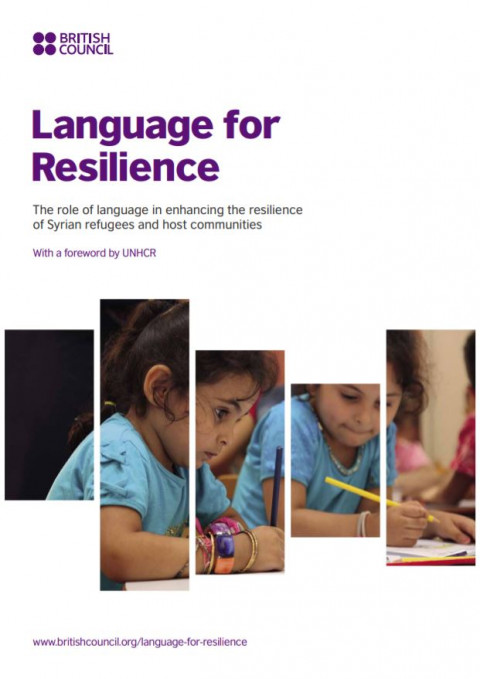 اللغة لتعزيز القدرة على مواجهة الأزمات: فهم الدور الذي تؤديه اللغة في تعزيز قدرة اللاجئين السوريين والمجتمعات المستضيفة لهم على مواجهة الأزمات Año de publicación: 2018 Autor: Tony Capstick | Marie Delaney Autor corporativo: British Council | UN. Office of the United Nations High Commissioner for Refugees (UNHCR) يستند التقرير الى دروس مستفادة من برامج اللغة الانجليزية التي يقدمها المجلس الثقافي البريطاني، ويستخدم كمرجع في تطوير البرامج المستقبلية الخاصة بتعليم اللغات للمتأثرين بالأزمة السورية. Language for Resilience: The Role of Language in Enhancing the Resilience of Syrian Refugees and Host Communities Año de publicación: 2018 Autor: Tony Capstick | Marie Delaney Autor corporativo: British Council | UN. Office of the United Nations High Commissioner for Refugees (UNHCR) The Language for Resilience report examines the impact of language on refugees and host communities affected by the Syrian crisis, identifying the different ways that language skills enhance resilience and providing suggestions for programme responses that address key needs.The report shows that for children and young people attending schools or post-school education, and for educators in host communities handling influxes of refugee students, quality language learning improves attainment and attendance and builds safer and more inclusive classrooms. It also illustrates how creative approaches to language education can support the development of life skills and help meet psycho-social needs.
  Audacious Education Purposes: How Governments Transform the Goals of Education Systems Año de publicación: 2020 Autor: Fernando Reimers This open access book offers a comparative study of eight ambitious national reforms that sought to create opportunities for students to gain the necessary breath of skills to thrive in a rapidly changing world. It examines how national governments transform education systems to provide students opportunities to develop such skills. It analyses comprehensive education reforms in Brazil, Finland, Japan, Mexico, Peru, Poland, Portugal and Russia and yields original and important insights on the process of educational change. The analysis of these 21st century skills reforms shows that reformers followed approaches which are based on the five perspectives: cultural, psychological, professional, institutional and political. Most reforms relied on institutional and political perspectives. They highlight the systemic nature of the process of educational change, and the need for alignment and coherence among the various elements of the system in order. They underscore the importance of addressing the interests of various stakeholders of the education system in obtaining the necessary impetus to initiate and sustain change. In contrast, as the book shows, the use of a cultural and psychological frame proved rarer, missing important opportunities to draw on systematic analysis of emerging demands for schools and on cognitive science to inform the changes in the organization of instruction. Drawing on a rich array of sources and evidence the book provides a careful account of how education reform works in practice.
 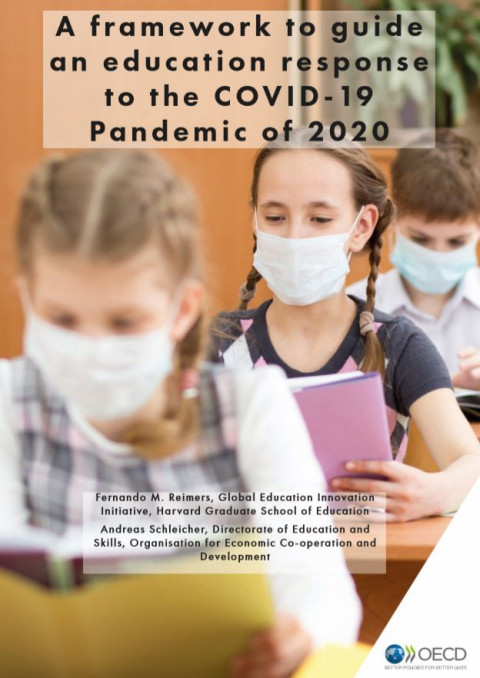 A Framework to Guide an Education Response to the COVID-19 Pandemic of 2020 Año de publicación: 2020 Autor: Fernando Reimers | Andreas Schleicher Autor corporativo: Organisation for Economic Co-operation and Development (OECD) This report aims at supporting education decision making to develop and implement effective education responses to the COVID-19 Pandemic. The report explains why the necessary social isolation measures will disrupt school-based education for several months in most countries around the world. Absent an intentional and effective strategy to protect opportunity to learn during this period, this disruption will cause severe learning losses for students.The report proposes that leaders of education systems and organizations develop plans for the continuation of education through alternate modalities, during the period of necessary social isolation. It offers a framework of areas to be covered by such plans. Un cadre pour guider une réponse éducative à la Covid-19 en cas de pandémie de 2020 Año de publicación: 2020 Autor: Fernando Reimers | Andreas Schleicher Autor corporativo: Organisation for Economic Co-operation and Development (OECD) Ce rapport vise à appuyer la décision de l'éducation faisant de développer et mettre en œuvre des réponses éducatives efficaces au Covid-19 en cas de pandémie. Le rapport explique pourquoi les mesures d'isolement social nécessaires perturberont l'éducation en milieu scolaire pendant plusieurs mois dans la plupart des pays à travers le monde. En l'absence d'une stratégie délibérée et efficace pour protéger l'occasion d'apprendre au cours de cette période, cette perturbation entraîne des pertes sévères d'apprentissage pour les étudiants.Le rapport propose que les dirigeants des systèmes d'éducation et les organisations à élaborer des plans pour la poursuite de l'éducation des modalités alternatives, au cours de la période d'isolement social nécessaire. Il offre un cadre de zones à couvrir par ces plans.
 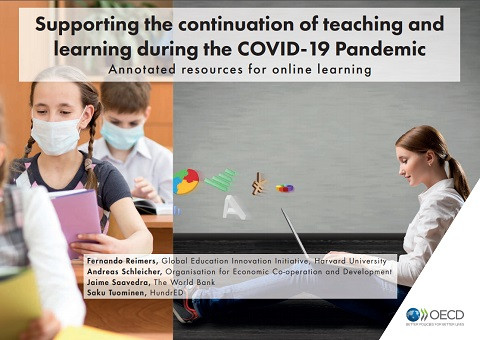 Supporting the Continuation of Teaching and Learning during the COVID-19 Pandemic: Annotated Resources for Online Learning Año de publicación: 2020 Autor: Fernando Reimers | Andreas Schleicher | Jaime Saavedra | Saku Tuominen Autor corporativo: Organisation for Economic Co-operation and Development (OECD) | Global Education Innovation Initiative | HundrED This resource discusses the second module of a series which presents the results of a comparative analysis of emerging educational needs and responses as the pandemic unfolds across countries around the world. The overall goal of this series is to facilitate the rapid design process and implementation of adaptive responses to the emerging education challenges, and to protect young people’s educational opportunities during and following the pandemic. This second module presents a first set of online educational resources to support the continuity of teaching and learning during the 2019-20 COVID-19 Pandemic with education leaders around the world. The resources were compiled from responses to the same survey used to produce the first module: A framework to guide an education response to the COVID-19 Pandemic, and additional online sources were included to enhance the list in order to support the continuity of learning for students who have access to the internet and digital devices.
  Rethinking Learning: A Review of Social and Emotional Learning for Education Systems Año de publicación: 2020 Autor: Nandini Chatterjee Singh | Anantha Duraiappah Autor corporativo: Mahatma Gandhi Institute of Education for Peace and Sustainable Development (MGIEP) This publication titled ‘Rethinking Learning: A Review of Social and Emotional Learning for Education Systems’, published by the UNESCO Mahatma Gandhi Institute of Education for Peace and Sustainable Development (MGIEP) reviews the latest research on Social and Emotional Learning (SEL), its impact on student health and school climate and its transformative role in building happier classrooms. It seeks to inform and impress upon Member States the urgent need to mainstream social and emotional learning in education systems.
 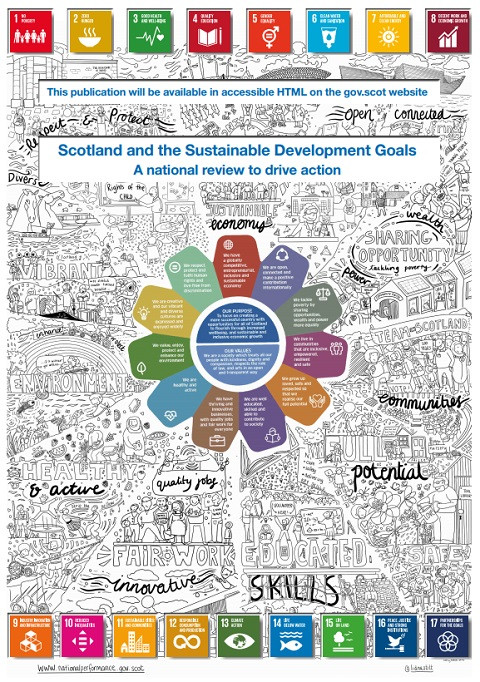 Scotland and the Sustainable Development Goals: A National Review to Drive Action Año de publicación: 2020 Autor corporativo: Government of Scotland The 2030 Agenda for Sustainable Development provides a shared blueprint for peace and prosperity for people and the planet, now and into the future. As part of this, the Sustainable Development Goals (SDGs) are a universal call to action. Scotland signed up to the SDGs in 2015 and this review brings together evidence, actions and stories of how we are making progress to meet the Goals. It contains inspirational examples of how people across Scotland are taking action to make us a more successful country and to ensure we are at the forefront of this international agenda. It also highlights some of the challenges we face. This review, a collaborative effort between the SDG Network Scotland, Scottish Government and the Convention of Scottish Local Authorities (COSLA), scratches the surface of the depth of activity across Scotland. This review provides an overall picture of activity and performance based on the evidence currently available.
  When Feeling and Action Come Together in Educational Practice. Relations Between Development Education and Learning Service for a Global Citizenship Año de publicación: 2016 Autor: Yolanda Fernández Carrión | Mª Jesús Martínez Usarralde The difficulties based on the development are a usual topic in education. After emphasizing the relevance of the development education as an essential element for the construction of the global citizenship, the challenge stands out by its innovative intention of trying to implicate it with service learning. This one tries to be an explorative and interpretative theoretic analyses about the potentialities which can be provided by service learning in the achievement of the objectives planned by the development education. This correlation not only affects the substantial improvement of both practices by building positive synergies but also its universalization forms a clear positive influence in the endogenous development of the village people, carrying out the real empowerment of the critical, sensible and global citizenship. The possibility of giving the main role as a human developmental engine to education is within our reach and the union between development education and service learning teaches us the keys. Cuando sentimiento y acción confluyen en la práctica educativa. Alianzas entre educación para el desarrollo y aprendizaje servicio para una ciudadanía global Año de publicación: 2016 Autor: Yolanda Fernández Carrión | Mª Jesús Martínez Usarralde Las problemáticas basadas en el desarrollo constituyen un tema recurrente en educación. Tras resaltar la relevancia de la Educación para el Desarrollo (EpD) como elemento fundamental en la construcción de una ciudadanía global, el objetivo de este artículo consiste en relacionarla con una cultura educativa, el Aprendizaje Servicio (ApS). Éste pretende ser, así, un análisis teórico exploratorio e interpretativo sobre las potencialidades que puede aportar el ApS en la consecución de las metas planteadas por la EpD. Esta vinculación no sólo repercute en la mejora substancial de la práctica de ambas creando sinergias positivas, sino que su universalización constituye una clara incidencia positiva en el desarrollo endógeno de los pueblos, llevando a la práctica el empoderamiento real de la ciudadanía crítica, reflexiva y global. La posibilidad de otorgar el papel relevante que posee la educación como motor de desarrollo humano está a nuestro alcance: la alianza entre EpD y APS nos muestran las claves.