
Recursos
Exploren una amplia gama de recursos valiosos en GCED para profundizar su comprensión y promover su búsqueda, incidencia, enseñanza y aprendizaje.
3,158 resultados encontrados
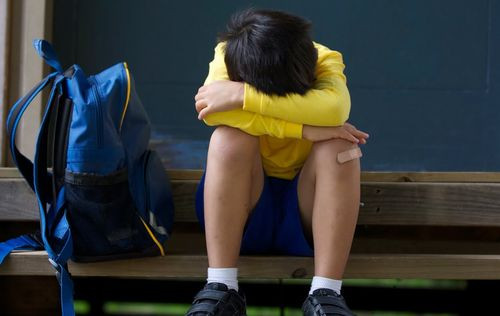 Анализ Правил профилактики травли (буллинга) ребенка, утвержденных Приказом Министра просвещения Республики Казахстан от 21 декабря 2022 года № 506 Año de publicación: 2022 Autor: Шайдуллина Венера Камилевна Autor corporativo: Кадыр-касиет Фокус настоящего документа – оценка потенциальной эффективности предусмотренных Правилами мер по противодействию травле ребенка. Проведенный анализ позволил сформулировать ряд практических рекомендаций по совершенствованию законодательства в рассматриваемой сфере.
  The World's Largest Flower: Resource Guide Año de publicación: 2023 Autor corporativo: Organization of Ibero-American States for Education, Science and Culture (OEI) The creation of a pedagogical resource for Education for Global Citizenship, based on the story “The Largest Flower in the World”, written by José Saramago, arose on the occasion of the Commemorations of the Centennial of the Birth of José Saramago 2021-2022, as part of the activities of the Organization of Ibero-American States (OEI) in Portugal and was promoted by the José Saramago Foundation (FJS) and the General Directorate of Education (DGE). To carry out the project, an alliance was made with Help Images, which produced the four videos that accompany the proposal. The activities aim to support the work of teachers, educators and animators within the framework of formal and non-formal education, in the construction of learning for a committed, coherent, supportive and respectful global citizenship of human rights, crossing the experiences of the students with the themes and contents presented in this proposal. La flor más grande del mundo: Guía de recurso Año de publicación: 2023 Autor corporativo: Organización de Estados Iberoamericanos para la Educación, la Ciencia y la Cultura (OEI) The creation of a pedagogical resource for Education for Global Citizenship, based on the story “The Largest Flower in the World”, written by José Saramago, arose on the occasion of the Commemorations of the Centennial of the Birth of José Saramago 2021-2022, as part of the activities of the Organization of Ibero-American States (OEI) in Portugal and was promoted by the José Saramago Foundation (FJS) and the General Directorate of Education (DGE). To carry out the project, an alliance was made with Help Images, which produced the four videos that accompany the proposal. The activities aim to support the work of teachers, educators and animators within the framework of formal and non-formal education, in the construction of learning for a committed, coherent, supportive and respectful global citizenship of human rights, crossing the experiences of the students with the themes and contents presented in this proposal.
  Education for Global Citizenship: Promoting Democracy Año de publicación: 2019 Autor: Manuela Mesa Autor corporativo: Autonomous University of Madrid | Red Iberoamericana de Investigación sobre Cambio y Eficacia Escolar (RINACE) This paper makes a reflection on the role of education in the current international context, marked by profound changes and by a situation of uncertainty and instability and reverse in rights. It discusses the various interpretative frameworks that explain the current world and that are articulated around the global-local axis and ethnic-national identities and multiple identities. In a world characterized by the complexity and speed of changes, it is very important to overcome the the compartmentalization of knowledge in areas such as mathematics, social, language, etc and look for global approaches. Education as a transformative practice cannot be outside of the major challenges facing humanity at the national and multilateral. The 2030 Agenda and the Sustainable Development Goals gives opportunities for the consolidation of the Education for Global Citizenship. La Educación para la ciudadanía global: Una apuesta por la democracia Año de publicación: 2019 Autor: Manuela Mesa Autor corporativo: Autonomous University of Madrid | Red Iberoamericana de Investigación sobre Cambio y Eficacia Escolar (RINACE) En este artículo se hace una reflexión sobre el papel de la educación en el actual contexto internacional, marcado por profundos cambios y por una situación de incertidumbre e inestabilidad y de retroceso en derechos. Se abordan los diversos marcos interpretativos que explican el mundo actual y que se articulan en torno al eje global-local y al eje identitario. En un mundo caracterizado por la complejidad y la rapidez de cambios es muy importante superar la compartimentalización del conocimiento en áreas estanco (matemáticas, sociales, lengua, etc.) para abordarlo de manera global. La educación como práctica transformadora no puede estar al margen de los grandes retos que enfrenta la humanidad en el ámbito nacional y multilateral. La Agenda 2030 y los Objetivos de Desarrollo Sostenible abre oportunidades para consolidar la educación para la ciudadanía global.
  Violence in Schools: Thematic Report Año de publicación: 2023 Autor corporativo: Higher Council for Education, Training, and Scientific Research (CSEFRS) | United Nations Children's Fund (UNICEF) This report presents the results of an assessment of violence in school settings conducted by the Higher Council for Education, Training and Scientific Research, through the National Evaluation Authority, in partnership with UNICEF. This report highlights the importance of a safe, violence-free school environment to ensure quality education.The main objective of this evaluation is to provide a detailed diagnosis of the situation of violence in the school environment in Morocco. Accordingly, the study focuses on measuring the extent of the spread of this phenomenon and identifying its various forms and manifestations in the school environment, as well as the actors involved in it. It does not only target the perpetrators of violence, but also its victims, including students and educational staff. La violence en Milieu scolaire: Rapport Thématique Año de publicación: 2023 Autor corporativo: Higher Council for Education, Training, and Scientific Research (CSEFRS) | United Nations Children's Fund (UNICEF) Ce rapport présente les résultats de l’évaluation de la violence en milieu scolaire réalisée par le Conseil Supérieur de l’Éducation, de la Formation et de la Recherche Scientifique à travers l’Instance Nationale d’Évaluation en partenariat avec l’UNICEF. Il met en évidence l’importance d’un environnement scolaire sûr et sans violence pour garantir une éducation de qualité. L’objectif principal de cette évaluation est d’apporter un diagnostic détaillé sur la situation de la violence en milieu scolaire au Maroc. Elle vise ainsi à en mesurer la prévalence et à identifier les différentes formes et manifestations de celle-ci, ainsi que les acteurs impliqués, en ciblant, non seulement les auteurs de violence, mais également les victimes parmi les élèves et le personnel éducatif. Cette évaluation repose sur les résultats d’une enquête quantitative réalisée à la fin du premier trimestre de l’année scolaire 2021-2022, auprès de 260 établissements représentatifs à l’échelle nationale, avec la participation de 13 884 élèves représentant les trois cycles de l’enseignement (primaire, secondaire collégial et qualifiant), ainsi qu’une enquête qualitative menée dans 27 établissements. العنف في الوسط المدرسي:تقرير موضوعاتي Año de publicación: 2023 Autor corporativo: Higher Council for Education, Training, and Scientific Research (CSEFRS) | United Nations Children's Fund (UNICEF) يقدم هذا التقرير نتائج تقييم العنف في الوسط المدرسي الذي أجراه المجلس الأعلى للتربية والتكوين والبحث العلمي، من خلال الهيئة الوطنية للتقييم، بشراكة مع منظمة اليونيسيف. ويسلط هذا التقرير الضوء على أهمية وجود بيئة مدرسية آمنة وخالية من العنف لضمان تعليم ذي جودة.الهدف الرئيسي لهذا التقييم يكمن في تقديم تشخيص مفصل لوضع العنـف في الوسط المدرسي في المغرب. وعليـه، تركــز الدراســة عـلـى قيــاس مــدى انتشــار هــذه الظاهــرة وتحديــد أشــكالها وتجلياتها المختلفة في الوســط المدرسي، وكــذا الفاعلـيـن المعنين بهــا، وهــي لا تســتهدف مرتكبــي العنــف فقــط، بــل أيضــا ضحايــاه مــن تلامذة وأطر تربوية.
  Education for Sustainable Development Guidance: Executive Summary Año de publicación: 2021 Autor corporativo: Quality Assurance Agency for Higher Education (QAA) | Advance HE How was the guidance developed?In March 2021, QAA and Advance HE launched revised guidance intended to help UK higher education institutions incorporate ESD within their curricula, following on from the first edition in 2014.QAA and Advance HE brought together a group of experts representing academic, business and student communities, with the aim of supporting all students to acquire the skills necessary to develop values and take actions to transition society towards a sustainable future. The guidance gives advice and support on curriculum design, as well as teaching, learning and assessment approaches.Who is the guidance for?This guidance is primarily aimed at staff involved in curriculum design and course management and delivery, to support them in designing ESD into their courses. However, it is also likely to be of value to senior management teams, those with responsibility for quality assurance and enhancement, and staff involved in directing teaching and learning. It may also prove useful to staff responsible for extracurricular activities.How to access the guidanceAn Executive Summary provides an overview of the content, with the full guidance available for any staff member or student at a QAA Member institution on our Membership Resources Site. Also available for members is a resource to support students in engaging with their institution about ESD.
  Living with Controversy: Teaching Controversial Issues through Education for Democratic Citizenship and Human Rights (EDC/HRE); Training Pack for Teachers Año de publicación: 2015 Autor corporativo: Council of Europe Learning how to engage in dialogue with people whose values are different from one’s own and to respect them is central to the democratic process and essential for the protection and strengthening of democracy and fostering a culture of human rights. Yet in Europe young people do not often have an opportunity to discuss controversial issues in school because they are seen as too challenging to teach, e.g., issues to do with extremism, gender violence, child abuse, or sexual orientation. Unable to voice their concerns, unaware of how others feel or left to rely on friends and social media for their information, young people can be frustrated or confused about some of the major issues which affect their communities and European society today. In the absence of help from school, they might have no reliable means of dealing with these issues constructively and no one to guide them. The idea for this Pack came out of a call from policy-makers and practitioners in a number of European countries for more effective training for teachers in the teaching of controversial issues.