
Recursos
Exploren una amplia gama de recursos valiosos en GCED para profundizar su comprensión y promover su búsqueda, incidencia, enseñanza y aprendizaje.
3,158 resultados encontrados
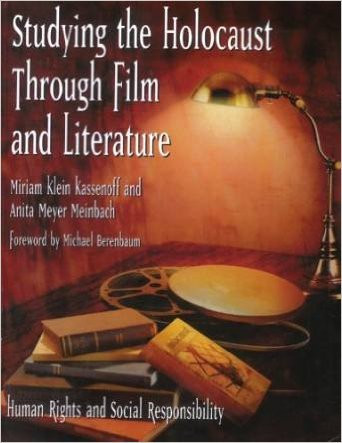 Studying the Holocaust Through Film and Literature: Human Rights and Social Responsibility Through film and literature, this book shows students the moral and ethical lessons that have evolved from the Holocaust so they can connect them with the moral dilemmas they face in their own lives. The authors focus on 3 main lessons of the Holocaust ‒ thou shalt not be a victim, thou shalt not be a perpetrator and thou shalt not be a bystander ‒ and address the issues of courage, compassion, character and civility. (By the author)
  Toolkit on the Holocaust and Human Rights Education in the EU Responding to a practical need expressed by teachers and students with a view toward examining the connections between Holocaust and Human Rights Education, the Fundamental Rights Agency (FRA) and Yad Vashem have developed this Toolkit to provide first insights into Holocaust and Human Rights Education content and methodologies, which can be used for teaching about and from the Holocaust and human rights. The Toolkit is a practical guide for teachers and educators who wish to develop teaching projects, by linking Holocaust and human rights. In addition, some examples of teaching projects and learning activities of Holocaust Education and Human Rights Education are provided in the Toolkit.
 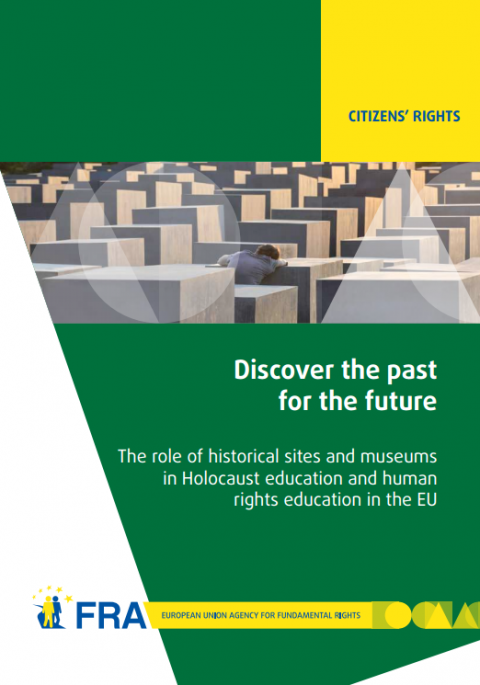 Discover the past for the future: The role of historical sites and museums in Holocaust education and human rights education in the EU The Holocaust has rightfully become an integral part of the collective cultural memory of Europe and the world. This report outlines the findings of the first EU-wide research on the role of Holocaust-related sites and exhibitions in educating young Europeans about the Holocaust and human rights. With this research, the European Union Agency for Fundamental Rights (FRA) brings the two fields of Holocaust education and human rights education together and suggests how the merging of the two could develop into a new knowledge of past and present. The report highlights that attempts to expand knowledge of human rights and to establish links between Holocaust education and human rights education need a broader focus than the memorial sites or museums can offer. Much of the work on linking Holocaust education and human rights education needs to be accomplished in schools. This requires teachers to have opportunities to gain a better understanding of human rights education, and human rights education to be better integrated into school curricula in the EU. Visits to memorial sites and museums can stimulate, support and supplement such work. (By the publisher) The Holocaust and Education for Citizenship: the teaching of history, religion and human rights in England The importance of the Holocaust is undeniable. It seems that this truism has long been accepted by teachers and education policy makers. A superficial prediction would be that the Holocaust will continue to have both a high profile and a high status in the schools and colleges of England and Wales. However, on the basis of small‐scale work using data from teachers’ perceptions, we draw attention to certain problems in learning about the Holocaust and begin to suggest issues which should be investigated further. The issues which need further investigation are related to the possibilities that there may be too little time devoted to teaching about the Holocaust; the events of the Holocaust may sometimes be used as a mere context for understanding World War Two; teachers may not perceive the Holocaust as being significantly unique; teachers may not collaborate effectively; there may be a lack of clarity about the nature of the affective and cognitive aims of such work. (By the author)
  Inequidad de género en los logros de aprendizaje en educación primaria ¿Qué nos puede decir TERCE?; resumen ejecutivo Año de publicación: 2016 Autor: Denisse Gelber, Ernesto Treviño, Pamela Inostroza Autor corporativo: UNESCO Santiago This premise of work clearly establishes that promoting learning opportunities for all will be one of the priorities in the Education 2030. Within this framework, UNESCO Santiago has its own instrument that allows delivering diagnosis and analysis in depth about the learning inequality within the region; the Thrid Regional Comparative and Explanatory Study, TERCE - carried out by the Latin American Laboratory for Assessment of the Quality of Education, LLECE, body bringing together 15 countries and coordinated by our Office.
 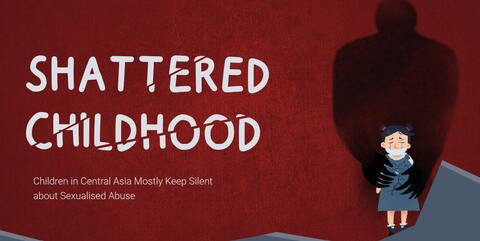 Shattered Childhood: Children in Central Asia Mostly Keep Silent about Sexualised Abuse Autor: Katerina Afanasieva | Aleksandra Vasilkova | Mazkhab Dzhumaev | Aida Dzhaksybaeva Autor corporativo: Central Asian Bureau for Analytical Reporting (CABAR) No one really knows the scope of sexualised abuse of children in Central Asia. According to estimates of human rights activists, only one case of 10 goes reported to law enforcement bodies at best. Once it is reported, the investigation and courts often cause another trauma to children, while proceedings may take years.
  Singapore’s educational reforms toward holistic outcomes: (Un)intended consequences of policy layering Año de publicación: 2023 Autor: Dennis Kwek | Jeanne Ho | Hwei Ming Wong Autor corporativo: Center for Universal Education at Brookings In the transition from economic imperatives to holistic drivers, there has been a gradual move over five policy phases (from 1965 to 2022 and beyond) toward curriculum and school diversification to cater to different students, with more autonomy given to schools to innovate their pedagogy and improve instructional quality to meet their students’ unique needs. Importantly, there has been a shift in policy rhetoric from focusing on educational structures to focusing on pedagogy and instructional quality. To shift pedagogy from being mainly didactic in nature—with emphasis on preparing students for national examination—the Singapore government recognized the need to focus on school leaders’ and teachers’ capacity building to enable new curricula and teaching practices. The school cluster structure was initiated in 1997 to enable collaboration and learning among school leaders, key personnel, and teachers. Opportunities for collaborative teacher learning are provided at different ecological levels: professional learning communities (PLCs) within schools and networked learning communities (NLCs) across schools. Beyond the education system, the Singapore government works with other ministries and community organizations, such as ethnic self-help organizations, to tackle educational equity issues. Ultimately, even though the official policy narrative post-1997 has been a de-emphasis on examination results and educational infrastructure to help improve the instructional quality in schools toward holistic outcomes and improved student well-being have been developed, education systems building co-exists with an alternative underlying shadow education system valued by parents who continue to chase narrow academic outcomes. Tuition and enrichment centers in Singapore constitute the shadow education system.
  The Comprehensive Learning Diagnosis: Chile’s approach to assess socio-emotional learning in schools Año de publicación: 2023 Autor: José Weinstein | Juan Bravo Autor corporativo: Center for Universal Education at Brookings Education in Chile has important challenges of quality, equity, and social integration. For decades, policies tried to respond to these concerns with a high-stakes accountability institutional framework, which has not had success. The underlying vision of educational quality was limited. The assessment system in place privileged cognitive and academic dimensions of educational results. Socio-emotional learning had been neglected or considered secondary, without an infrastructure of assessment tools that allowed teachers and principals to diagnosis students’ situations and monitor their progress. The COVID-19 crisis was an opportunity for change: Students’ socioemotional needs were a main concern for schools and society, and the regular accountability system based on standardized tests was interrupted. Subsequently, the Comprehensive Learning Diagnosis (DIA) was launched by the Education Quality Agency. The DIA is a voluntary assessment tool made available to all Chilean schools. The DIA promotes the comprehensive development of students, providing timely information and guidance to internally monitor students’ learning in the academic and socio-emotional domains at several points during the school year. Specifically, with respect to socio-emotional learning, three areas were considered: personal, community, and citizenship. In each of these areas, a set of socioemotional skills were defined, operationalized, and became possible to monitor by school communities. The DIA also collects students’ opinions of school management practices regarding socio-emotional skills. The DIA has received a wide acceptance in school communities. Despite being voluntary, an ample majority of schools decided to participate. The information collected from the DIA allows for practical use by principals and teachers. Moreover, the DIA provides the opportunity for students to inform school management. The new Chilean government has decided to strengthen DIA as an important component in a four-year national plan for reactivating academic and socio-emotional learning in schools. The previous high-stakes accountability system, which involved external assessments, has been suspended and is under discussion. The DIA experience has shown that critical social and educational situations can provide fertile ground to motivate deep and rapid transformation, if an educational actor (in this case the Education Quality Agency) is capable of enacting a pertinent, timely, and practical response to school needs. The DIA is not only an example of productive uses of students´ assessment by schools, but also a demonstration that it is possible to build an institutional arrangement among local, intermediate, and national levels of school systems, where a vertical hierarchy is changed by a collaborative relationship based on local agency, mutual trust, and differentiated technical contributions.
  교사. 인권교육. 하다: 교사를 위한 학교 인권교육 안내서 Año de publicación: 2021 Autor corporativo: 국가인권위원회 이 자료는 「초·중등 학교 인권교육 내용 체계화 및 개정 교육과정 적용 방안 연구」 보고서 내용을 바탕으로, 교육 현장에서 인권교육을 실천하고 있거나 해보려는 많은 교사를 위해 학교 인권교육에 관한 이해를 높이고 실천 방법에 대한 유용한 정보를 제공하기 위해 만든 발간물로서 인권 과목의 지향점 및 교육과정 내용 체계 등을 간명하게 보여 줌으로써, 인권 과목을 통한 인권교육을 구체화할 수 있도록 했다. 또한 인권교육을 처음 시도하는 교사들이 부담 없이 접근할 수 있도록 읽을거리, 볼거리, 생각할 거리 등 다양한 자료를 제공한다. Осколки детства: В Центральной Азии дети чаще всего молчат о сексуализированном насилии Autor: Katerina Afanasieva | Aleksandra Vasilkova | Mazkhab Dzhumaev | Aida Dzhaksybaeva Autor corporativo: Central Asian Bureau for Analytical Reporting (CABAR) Никто не знает реальные масштабы сексуализированного насилия в отношении детей в Центральной Азии. По оценке правозащитников, в лучшем случае только 1 кейс из 10 доходит до правоохранительных органов. А если это и происходит, то недружественное к детям следствие и суды часто наносят повторную травму, а дела длятся порой годами.