
Recursos
Exploren una amplia gama de recursos valiosos en GCED para profundizar su comprensión y promover su búsqueda, incidencia, enseñanza y aprendizaje.
3,158 resultados encontrados
 Media Literacy Education to Counter Truth Decay: An Implementation and Evaluation Framework Año de publicación: 2021 Autor: Alice Huguet | John F. Pane | Garrett Baker | Laura S. Hamilton | Susannah Faxon-Mills Autor corporativo: RAND Corporation Media literacy (ML) education has emerged as a promising approach to slowing the spread of Truth Decay, described as the diminishing role that facts, data, and analysis play in political and civil discourse. Several factors contribute to Truth Decay, including a rapidly evolving information ecosystem and overburdened educational institutions. Many teachers believe their students lack the complex skills that are necessary to navigate today’s information- saturated world. This gap—between students’ existing competencies and those required to engage responsibly in a fast-paced media environment— could lead to negative consequences for individuals and society writ large.However, teachers report a lack of guidance around promoting ML education in their practice, and rigorous research about what kinds of ML educationwork best, and in what conditions, remains limited. This report presents a framework for implementing and evaluating ML educational efforts. Following an introduction to the framework, the authors discuss six steps of ML implementation and evaluation: setting ML learning expectations; identifying conditions that can influence ML instructional efforts; exploring instructional resources; identifying measures of ML competencies; monitoring progress; and finally, measuring the summative impacts of ML education on student learning. By bringing this information together for implementors—such as district decisionmakers and teachers—as well as evaluators, the authors emphasize the important connections between these too often separate groups.
  School Closures and Regional Policies to Mitigate Learning Loss due to COVID-19: A Focus on the Asia-Pacific Año de publicación: 2021 Autor corporativo: UNESCO Institute for Statistics (UIS) Global school closures as a result of COVID-19 have caused learning losses for millions of children despite efforts to deploy remote learning options. Greater economic insecurity among families may also affect school enrolment as many struggle to pay school fees, or require children to work to supplement family income. Ultimately, this will lead to rising dropout rates, estimated to be as much as 4% in a region where 128 million children and young people were already out of school before COVID-19. The largest number of learners at risk reside in South and West Asia.Together, the education and economic fallout from the pandemic threaten progress toward the Sustainable Development Goal for education (SDG 4). Even prior to the COVID-19 disruptions, progress towards SDG 4 was lagging in many countries in the Asia-Pacific and without significant contributions to education finance, the pandemic threatens to push the region even further behind.This report breaks down the effects of school closures. It considers, for example, how many schools were closed, and when, across the Asia-Pacific, and the effects on different levels of education from early childhood education, through to primary and secondary school. The report analyses country efforts to implement remote learning, and strategies to mitigate learning losses as the proportion of students expected to fall below minimum proficiency levels is expected to rise.To achieve SDG 4, all children and young people, and especially those in marginalized groups, need support to get the education they need and deserve.
  Social and Emotional Learning Teacher's Manual Año de publicación: 2020 Autor corporativo: China. Ministry of Education | United Nations Children's Fund (UNICEF) This material provides an overview and guidance for teachers to carry out social and emotional learning. It discusses the role of teachers in social and emotional learning, and it also covers methods and tools that teachers can use to implement social and emotional learning. 社会情感学习教师指导手册 Año de publicación: 2020 Autor corporativo: China. Ministry of Education | United Nations Children's Fund (UNICEF) 该手册专门为教师开展社会情感学习提供指导,介绍了教师需要承担的角色,以及实施社会情感学习的方法、途径及可借鉴的案例与操作工具。
  Social and Emotional Learning Principle's Manual Año de publicación: 2020 Autor corporativo: China. Ministry of Education | United Nations Children's Fund (UNICEF) This manual is for principals who are key person in implementing social and emotional learning. It includes suggestions on school development planning, management system improvement, teachers' professional development and home-school cooperation etc. 社会情感学习校长指导手册 Año de publicación: 2020 Autor corporativo: China. Ministry of Education | United Nations Children's Fund (UNICEF) 该手册专门为校长开发,为校长推进社会情感学习提供指导建议,包括学校发展规划、管理制度建设、教师教学改进、家校社区合作等方面。旨提升校长管理能力。
 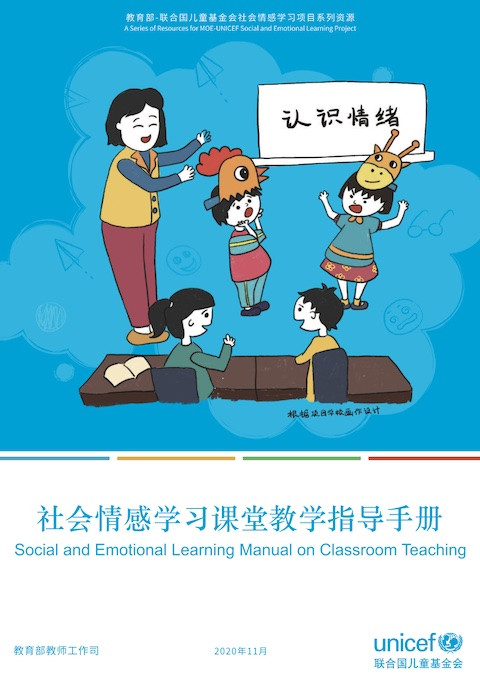 Social and Emotional Learning Manual for Classroom Teaching Año de publicación: 2020 Autor corporativo: China. Ministry of Education | United Nations Children's Fund (UNICEF) This manual provides specific suggestions for teachers for classroom teaching. It aims to resolve teachers' confusion and challenge during teaching practice of social and emotional learning, such as how to effectively achieve the expected learning outcome, promote students' participation and improve student-teacher interaction etc. 社会情感学习课堂教学指导手册 Año de publicación: 2020 Autor corporativo: China. Ministry of Education | United Nations Children's Fund (UNICEF) 该手册是用于为教师开展社会情感学习的课堂教学提供指导,包括如何达到教学目标、如何组织教学环节、如何改进师生互动、如何提升学生学习体验等,旨在帮助教师解决教学中的困惑与挑战。
 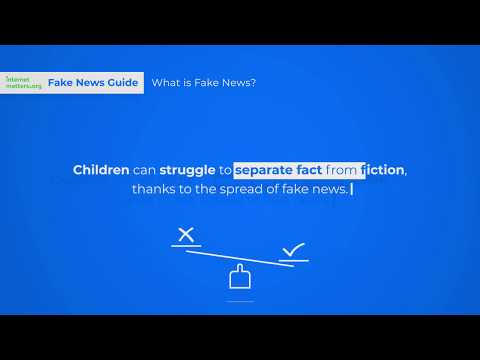 How to Help Kids Spot Fake News and Misinformation Año de publicación: 2020 Autor corporativo: Internet Matters This video gives practical tips on how to help children spot fake news and avoid being misled into believing something that might impact their wellbeing.
  Online Media Literacy Strategy Año de publicación: 2021 Autor corporativo: Government of the United Kingdom The Online Harms White Paper set out a commitment to develop an Online Media Literacy Strategy ahead of the implementation of the online harms regulator. The aim of the strategy is to educate and empower internet users across the UK to manage their online safety. Over 170 organisations are currently involved in delivering media literacy education in the UK. The Media Literacy Strategy sets out the government’s multi-year plan to bring coordination to the media literacy landscape and outlines a Media Literacy Framework of best practice principles to inform the content and delivery of media literacy education.