
Recursos
Exploren una amplia gama de recursos valiosos en GCED para profundizar su comprensión y promover su búsqueda, incidencia, enseñanza y aprendizaje.
3,559 resultados encontrados
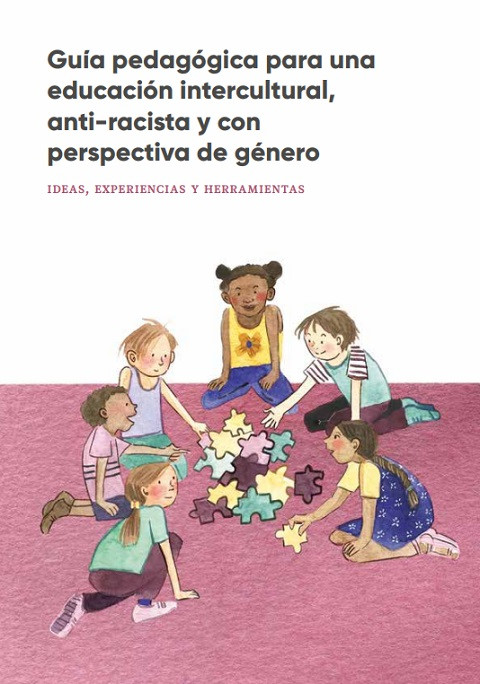 Guía pedagógica para una educación intercultural, anti-racista y con perspectiva de género: Ideas, experiencias y herramientas Año de publicación: 2017 Autor corporativo: Programa Interdisciplinario de Estudios Migratorios (PRIEM) | Fundación Superación de la Pobreza (FSP) | Embajada de Canadá en Chile El libro trata sobre la educación interculural, anti-racista y de género y contiene tanto herramientas de trabajo teóricas como prácticas, así como experiencias internacionales y dinámicas para el trabajo en espacios educativos.
 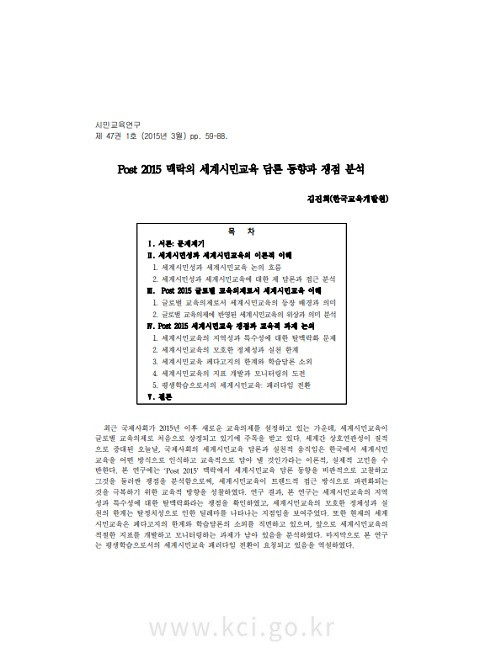 Critical Understanding on Global Citizenship Education in Post 2015 Context (Theory and Research in Citizenship Education; Vol. 57, No. 1) Año de publicación: 2015 Autor: Jinhee Kim Autor corporativo: Korea Association of Social Education It is notable that global citizenship education has recently gained prominence in Post 2015 context. This study attempted to explore diverse discourses of global citizenship education in theoretical dimension and it also analyzed the current status of global citizenship education as a new global education agenda. Major findings displayed issues and challenges; de-contextualization against local dimension; vague conceptualization of global citizenship education; limitation of transformative pedagogy and learning discourse; indicator development and monitoring issues; a paradigm shift for global citizenship education engaging with lifelong learning. Eventually, this study argues that comprehensive vision and long term road-map should be established to enhance global citizenship education. Lifelong learning approach is crucial to reshape global citizenship education while interacting with life-world context and life experience, which can promote an epistemology of learning to live together.
 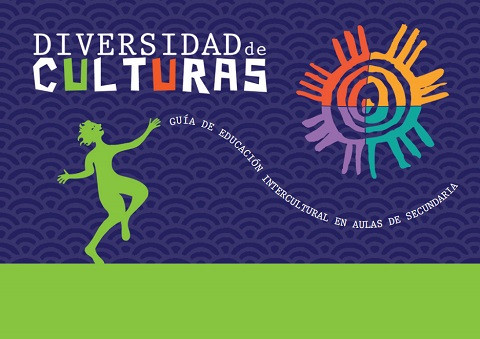 Culture Diversity: Intercultural Education Guide in Secondary Classrooms Autor corporativo: Federación de la Enseñanza de UGT Extremadura Pedagogical material that accompanies the campaign carried out by the FETE-UGT so that, in all the centers of Extremadura, the fight against racism and intercultural education are a strategy to achieve equal opportunities and world citizenship education, preventing violent, racist, homophobic or intolerant behavior. It is aimed at young people between 12 and 16 years old and includes games and activities to do with young people. Diversidad de Culturas: Guía de Educación Intercultural en las Aulas de Secundaria Autor corporativo: Federación de la Enseñanza de UGT Extremadura Material pedagógico que acompaña la campaña realizada por la FETE-UGT para que, en todos los centros de Extremadura, la interculturalidad y la lucha contra el racismo sean una estrategia para conseguir la igualdad de oportunidades y la formación en la ciudadanía mundial, previniendo conductas violentas, racistas, homófobas o intolerantes. Esta dirigido a jóvenes entre 12 y 16 años e incluye juegos y actividades para realizar con los jóvenes.
  La relación entre la cultura del cuidado y la ciudadanía global Año de publicación: 2020 Autor: Bernardo Toro | José Laguna | Zenovia Gamarra | Jackson Almonte Autor corporativo: Grupo SM En este video se explora la relación entre la cultura del cuidado y la educación para la ciudadanía globla con referencias a la educación católica.
 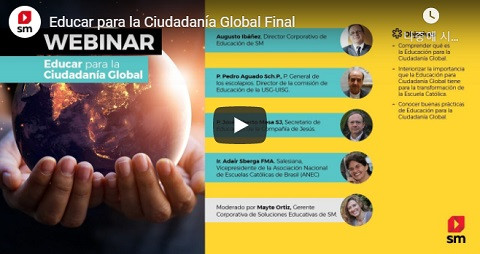 Educate for Global Citizenship Año de publicación: 2020 Autor: Augusto Ibañez | Pedro Aguado | José Alberto Mesa | Adair Sberga Autor corporativo: Grupo SM This video seeks to understand the concept of global citizenship and its importance for the transformation of Catholic education, as well as to present good practices in education for global citizenship. Educar para la Ciudadanía Global Año de publicación: 2020 Autor: Augusto Ibañez | Pedro Aguado | José Alberto Mesa | Adair Sberga Autor corporativo: Grupo SM En este video se busca comprender del concepto de ciudadanía global y su importancia para la transformación de la educación católica, así como conocer buenas prácticas en educación para la ciudadanía global.
  Global Citizenship Education Starts With Curricular Reform and Active Student Learning (Journal of Global Citizenship & Equity Education; Vol. 7, No. 1) Año de publicación: 2020 Autor: Evan Saperstein Autor corporativo: Centennial College In this new age of globalization, the concept of global citizenship has taken root and become the subject of increasing scholarly attention and analysis. While the study of global citizenship has become part of high school curricula in several countries across the globe, it has not to the same degree in the United States. To expand upon the existing literature and advance the study of global citizenship in the United States, this qualitative, interpretivist case study evaluates the perceptions and experiences of an administrator, two teachers, and six students of a global studies course at an urban high school in New Jersey. The study included interviews of the participants, as well as analysis of the course curriculum, syllabus, and student assignments.This study advances three primary findings. First, the need for continued curriculum development and design of global studies related courses and content in U.S. high schools. Second, the importance of experiential learning, among other forms of pedagogy and instructional practices, in furthering the goals of global citizenship education. Third, the need for class projects, international education programs, and other experiential learning opportunities (such as fieldwork, service-learning, or community programs) to cultivate student interest in global citizenship. Based on these findings and the prevailing literature, this study is proposing that U.S. high schools offer an elective course on global citizenship with ten units: 1) Introduction to Global Citizenship; 2) Sustainable Development; 3) Poverty and World Hunger; 4) Global Health Issues; 5) Child Mortality; 6) Peace and Conflict; 7) Human Rights and Gender Equality; 8) Universal Education; 9) Liberal Democratic Governance and Rights; 10) Global Citizenship Action Plan.
 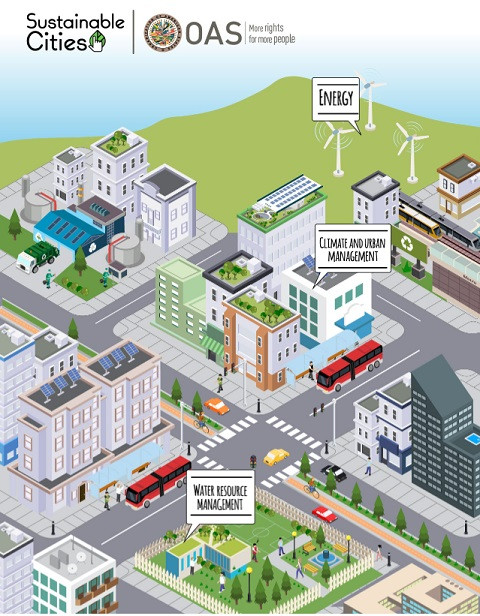 Sustainable Cities Año de publicación: 2017 Autor corporativo: Organization of American States (OAS) Portal with multimedia content about six fundamental components of a sustainable city, proposed by the Sustainable Cities program of the OAS: - Alternative energy sources - Sustainable urban transport - Resilience to natural disasters - Waste management - Management of water resources - Climate and urban management. Ciudades sostenibles Año de publicación: 2017 Autor corporativo: Organization of American States (OAS) Portal con contenido multimedia en el que se hace un acercamiento a seis componentes fundamentales de una urbe sostenible, planteados desde el programa Ciudades Sostenibles de la OEA: - Fuentes de energía alternativa - Transporte urbano sostenible - Resiliencia a desastres naturales - Gestión de residuos - Gestión del recurso hídrico - Clima y gestión urbana.