
Recursos
Exploren una amplia gama de recursos valiosos en GCED para profundizar su comprensión y promover su búsqueda, incidencia, enseñanza y aprendizaje.
3,530 resultados encontrados
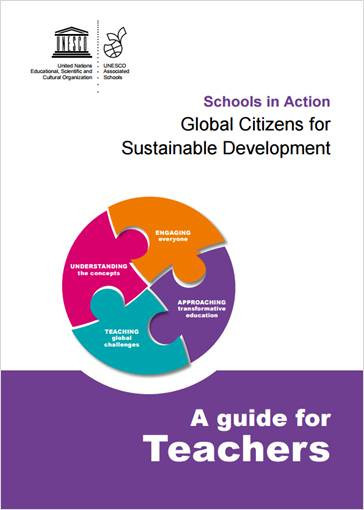 Escuelas en acción, ciudadanos del mundo para el desarrollo sostenible: guía para el profesorado Año de publicación: 2016 Autor corporativo: Organización de las Naciones Unidas para la Educación, la Ciencia y la Cultura (UNESCO) The Global Citizens for Sustainable Development Teachers’ guide aims to introduce teachers to Global Citizenship Education (GCED) and Education for Sustainable Development (ESD). It provides secondary school teachers with ideas and activities to help students become global citizens and sustainable development actors. The Teachers’ guide draws on the discussions and activities of almost 1,100 participants from 104 countries, including ASPnet National Coordinators, school principals, teachers, students and experts who contributed to the Online Collaborative Platform ASPnet in Action: Global Citizens Connected for Sustainable Development in 2014 and 2015 [http://en.unesco. org/aspnet/globalcitizens] with associated activities and initiatives. The Teachers’ guide provides: An overview of what it means for learners to become global citizens and of how learners can contribute to sustainable development. Ideas for classroom activities that can help secondary school students to develop knowledge, skills, values, attitudes and behaviours that promote GCED and ESD. Selected activities on GCED and ESD from ASPnet schools around the world.
  How Does Education About the Holocaust Advance Global Citizenship Education? Año de publicación: 2018 Autor: E. Doyle Stevick Autor corporativo: UNESCO Can education about past genocides shape our understanding of how violence occur in today’s world? Can it foster a sense of belonging to a common humanity and empower young people to become active citizens who work globally for peace and human rights? How does learning about such crimes, which profoundly affect the core dignity of human beings, support the objectives of Global Citizenship Education (GCED), a priority of the 2030 Education Agenda?This paper, commissioned by UNESCO, offers an overview of empirical research on teaching and learning about the Holocaust and how such education may impact leaners’ cognitive, socio-emotional and behavioural skills and competencies. It provides insights for educators on how effective lessons about the Holocaust can meet some of the key expected outcomes of Global Citizenship Education (GCED), such as critical thinking skills, attitudes of empathy and solidarity, and motivation to take action to prevent human rights abuses.
 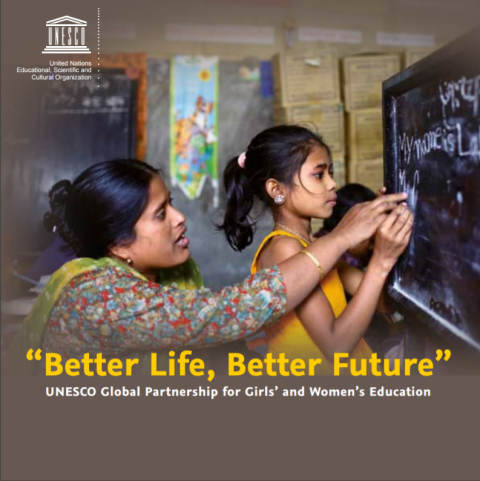 Better Life, Better Future: UNESCO Global Partnership for Girl's and Women's Education Año de publicación: 2011 Autor corporativo: UNESCO “Better Life, Better Future”, UNESCO’s global partnership for girls’ and women’s education, addresses two main areas requiring increased attention – secondary education and adult literacy. It will seek to introduce programmes aimed at stemming the dropout of adolescent girls in the transition from primary to secondary education and in lower secondary schools, as well as focus on scaling up women’s literacy programmes through stronger advocacy and partnerships. As a first step, and in complement to other United Nations initiatives, UNESCO has recently concluded several dynamic public and private partnerships, which stand to benefit marginalized girls and women in Africa and Asia.
  Education aux médias et à l'information: programme de formation pour les enseignants Año de publicación: 2011 Autor: Carolyn Wilson | Alton Grizzle | Ramon Tuazon | Kwame Akyempong | Chi Kim Cheung Autor corporativo: Organisation des Nations Unies pour l'éducation, la science et la culture (UNESCO) Nous vivons dans un monde où la qualité de l’information que nous recevons détermine largement nos choix et nos actions et en particulier, notre capacité à pro ter des libertés fondamentales et notre possibilité d’autodétermination et de développement. Ce programme d’éducation aux médias et à l’information pour les enseignants est une ressource importante pour les États membres de l’UNESCO et une publication expérimentale. Elle est prospective et s’efforce de réaliser la convergence de la radio, la télévision, l’Internet, les journaux, les livres, les archives numériques et les bibliothèques sur une même plate-forme. Elle est aussi spécialement conçue pour permettre l’intégration de ce programme dans le système formel de formation des enseignants. L’UNESCO croit que ce programme sera une étape importante d’innovation et de progrès pour tous les niveaux d’éducation. Медийная и информационная грамотность: программа обучения педагогов Año de publicación: 2011 Autor: Carolyn Wilson | Alton Grizzle | Ramon Tuazon | Kwame Akyempong | Chi Kim Cheung Autor corporativo: Организация Объединенных Наций по вопросам образования, науки и культуры (UNESCO) Данная программа обучения педагогов медийной и информационной грамотности — важный источник информации для государств-членов ЮНЕСКО, призванный содействовать их усилиям по достижению целей, сформулированных в Грюнвальдской декларации (1982 г.), Александрийской декларации (2005 г.) и Парижской повесткой дня (2007 г.), имеющих прямое отношение к медийной и информационной грамотности (МИГ). Данное издание состоит из двух частей. Часть 1 содержит описание программы обучения и системы компетенций МИГ. В ней описываются логика, структура и основные темы програм-мы. Она дополняет «Структуру ИКТ-компетентности учителей» (ICTs Competency Framework for Teachers), подготовленную ЮНЕСКО в 2008 г. Часть 2 включает в себя подробное описание базовых и дополнительных модулей учебной программы. Программа обучения учителей медийной и информационной грамотности переведена на арабский, французский, русский и испанский языки.
 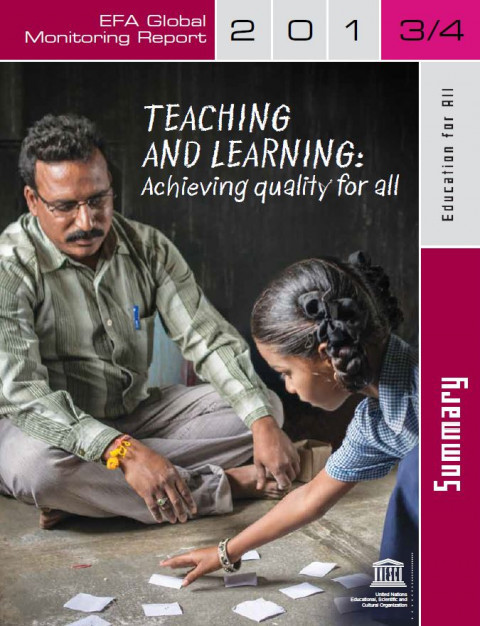 Teaching and Learning: Achieving Quality for All (EFA Global Monitoring Report, 2013-2014; Summary) Año de publicación: 2014 Autor corporativo: UNESCO This Report is an independent publication commissioned by UNESCO on behalf of the international community. It is the product of a collaborative effort involving members of the Report Team and many other people, agencies, institutions and governments. This 11th EFA Global Monitoring Report provides a timely update on progress that countries are making towards the global education goals that were agreed in 2000. It also makes a powerful case for placing education at the heart of the global development agenda after 2015.An education system is only as good as its teachers. Unlocking their potential is essential to enhancing the quality of learning. Evidence shows that education quality improves when teachers are supported – it deteriorates if they are not, contributing to the shocking levels of youth illiteracy captured in this Report. This Report identifies four strategies to provide the best teachers to reach all children with a good quality education. The Report shows also that teachers can only shine in the right context, with well-designed curricula and assessment strategies to improve teaching and learning. This Report’s evidence clearly shows that education provides sustainability to progress against all development goals. Educate mothers, and you empower women and save children’s lives. Educate communities, and you transform societies and grow economies. This is the message of this EFA Global Monitoring Report. Преподавание и обучение: Обеспечение качества для всех Año de publicación: 2014 Autor corporativo: Организация Объединенных Наций по вопросам образования, науки и культуры (UNESCO) Настоящий доклад представляет собой независимую публикацию, подготовленную по заказу ЮНЕСКО для международного сообщества. Он является результатом совместной работы, в которой участвовали члены Группы по подготовке Всемирного доклада по мониторингу "Образование для всех" (ОДВ), а также многие другие специалисты, учреждения, институты и правительства.Настоящий 11-й Всемирный доклад по мониторингу ОДВ представляет обновленную информацию о прогрессе стран на пути к достижению глобальных целей в области образования, согласованных в 2000 г. В докладе также приводятся серьезные доводы в пользу обеспечения приоритетного внимания вопросам образования в рамках глобальной повестки дня в области развития на период после 2015 г.Система образования напрямую зависит от учителей. Раскрытие их потенциала играет ключевую роль для повышения качества обучения. Факты говорят о том, что качество образования повышается при оказании поддержки учителям и понижается при ее отсутствии, что влияет на шокирующий уровень неграмотности молодежи, отраженный в настоящем докладе.В данном докладе представлены четыре стратегии по обеспечению школ лучшими учителями в целях предоставления всем детям качественного образования. В докладе также отмечается, что учителя могут действительно добиваться успеха только в благоприятных условиях при использовании хорошо разработанных стратегий в области учебных программ и процедур оценки, направленных на повышение уровня преподавания и обучения. В настоящем докладе представлены четкие доказательства того, что образование обеспечивает устойчивые условия для достижения всех целей в области развития. Просвещение матерей позволяет не только расширить права и возможности женщин, но и сохранить жизни детей. Просвещение общин способствует преобразованию обществ и развитию экономики. В этом и заключается главная идея настоящего Всемирного доклада по мониторингу ОДВ.
 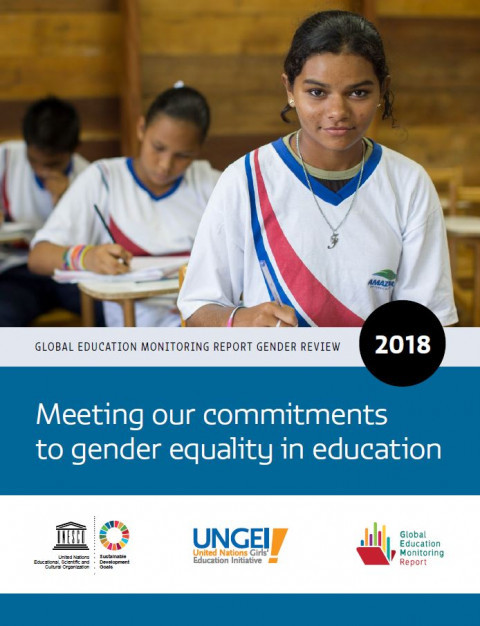 Meeting Our Commitments to Gender Equality in Education: Global Education Monitoring Report Gender Review 2018 Año de publicación: 2018 Autor corporativo: UNESCO The Education 2030 Framework for Action, a tool aimed at helping the international community achieve SDG 4 on education, explicitly recognizes gender equality as a guiding principle linked to the realization of the right to education. It states clearly that girls and boys, women and men, must be equally empowered ‘in and through education’.In this sixth Gender Review, in a series that began in 2011, the Global Education Monitoring Report team maintains the focus on a broad conception of gender equality that extends beyond counting boys and girls in classrooms. The review’s first part examines disparities in participation and skills, in education and political leadership positions, and in selected aspects of infrastructure and curricula. It also examines gender issues in professional development by exploring the role of education in three other SDGs: those concerning agriculture, health, and water and sanitation.The second part of the review analyses institutions, laws and policies to explore ways to determine and enforce accountability for gender equality in education. Tenir nos engagements en faveur de l'égalité des genres dans l'éducation: Rapport mondial de suivi sur l'éducation, résumé sur l'égalité des genres 2018 Año de publicación: 2018 Autor corporativo: Organisation des Nations Unies pour l'éducation, la science et la culture (UNESCO) Le Cadre d’action Éducation 2030, outil qui vise à aider la communauté internationale à atteindre l’ODD 4 sur l’éducation, reconnaît explicitement l’égalité des genres comme principe directeur lié à la réalisation du droit à l’éducation. Il stipule clairement que les filles et les garçons, les femmes et les hommes, doivent bénéficier des mêmes possibilités « dans et par l’éducation ».Dans ce sixième résumé sur l’égalité des genres, qui fait partie d’une série qui a commencé en 2011, l’équipe du Rapport mondial de suivi sur l’éducation reste concentrée sur une large conception de l’égalité des genres, qui va au-delà du simple comptage du nombre de filles et de garçons dans les classes. La première partie du résumé examine les disparités en matière de participation et de compétences, aux postes à responsabilité des secteurs éducatif et politique et dans certains aspects des infrastructures et des programmes scolaires. Elle examine également les questions liées au genre dans le cadre de la formation professionnelle, en explorant le rôle de l’éducation dans trois autres ODD concernant l’agriculture, la santé, et l’eau et l’assainissement.La deuxième partie du résumé analyse les institutions, les lois et les politiques afin d’explorer des manières de déterminer et de faire appliquer le principe de responsabilité pour l’égalité des genres dans l’éducation. Cumplir nuestros compromisos de igualdad de género en la educación: Resumen sobre género del informe de seguimiento de la educación en el mundo 2018 Año de publicación: 2018 Autor corporativo: Organización de las Naciones Unidas para la Educación, la Ciencia y la Cultura (UNESCO) El Marco de Acción para la Educación 2030, que es una herramienta encaminada a contribuir a que la comunidad internacional alcance el ODS 4 relativo a la educación, reconoce explícitamente la igualdad de género como un principio rector para la realización del derecho a la educación para todos. Dice claramente que las niñas y los niños, las mujeres y los hombres, deben adquirir las mismas competencias “en la educación y mediante ella”.En este sexto Resumen sobre Género de una serie que se inició en 2011, los autores del Informe de Seguimiento de la Educación en el Mundo siguen centrándose en un concepto amplio de la igualdad de género que va más allá del simple recuento del número de niños y niñas en las aulas.En la primera parte del documento se examinan las disparidades en materia de participación y de competencias, de puestos de dirección de alto nivel en el ámbito educativo y político, y en determinados aspectos de las infraestructuras y los programas de enseñanza. Se examinan asimismo las cuestiones de género en el desarrollo profesional, estudiando el papel de la educación en otros tres ODS, los relativos a la agricultura, la salud, y el agua y saneamiento.En la segunda parte se analizan las instituciones, leyes y políticas, con miras a explorar modalidades que permitan determinar y aplicar la rendición de cuentas en materia de igualdad de género en la educación.