
Recursos
Exploren una amplia gama de recursos valiosos en GCED para profundizar su comprensión y promover su búsqueda, incidencia, enseñanza y aprendizaje.
3,530 resultados encontrados
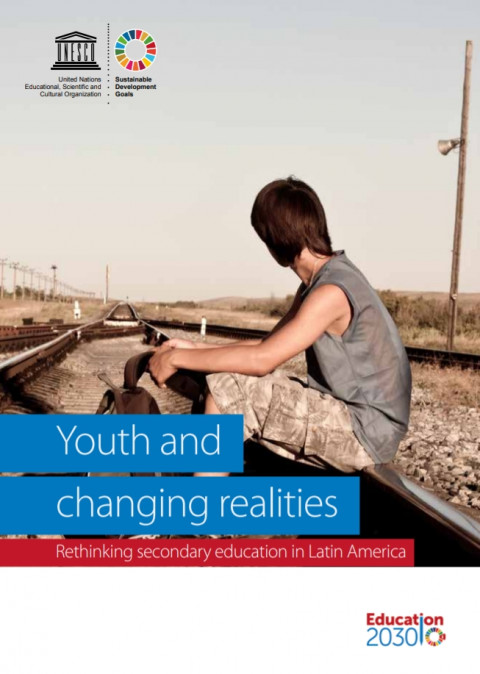 Youth and changing realities: rethinking secondary education in Latin America Año de publicación: 2017 Autor: López.Néstor, Opertti.Renato, Vargas Tamez.Carlos Autor corporativo: UNESCO International Bureau of Education (IBE) | UNESCO IIEP Office for Latin America and the Caribbean Youth are central to UNESCO’s mandate. The more than one billion youth and adolescents in the world today hold the key to our shared future and to global sustainable development. With a focus on Latin America, this publication addresses the need to regain young learners’ trust in education and to arrive at more positive social constructions of youth among educators, parents and education authorities. In so doing, this study looks at educational experiences as meaning makers that shape youth cultures and identities as well as their attitudes toward education and its potential to improve individual and collective well-being. Adolescentes y jóvenes en realidades cambiantes: notas para repensar la educación secundaria en América Latina Año de publicación: 2017 Autor: López.Néstor, Opertti.Renato, Vargas Tamez.Carlos Autor corporativo: UNESCO International Bureau of Education (IBE) | UNESCO IIEP Oficina para América Latina y el Caribe La juventud es un tema central dentro del mandato de la UNESCO. Más de mil millones de jóvenes y adolescentes en el mundo actual tienen la llave de nuestro futuro en común y del desarrollo sostenible, justo e inclusivo a nivel mundial. Con el foco puesto en América Latina, la publicación aborda la necesidad de recuperar la confianza de las y los jóvenes y adolescentes en la educación y de llegar a construcciones sociales de la juventud más completas y positivas entre las y los educadores, los padres y madres, las comunidades y las autoridades educativas. De este modo, el estudio analiza las experiencias educativas en cuanto productoras de significado que configuran las culturas e identidades de la juventud, al igual que sus actitudes hacia la educación y su potencial para mejorar y sostener el bienestar individual y colectivo.
  Literacy for Empowerment and Transformation: Report of the Secretary-General Año de publicación: 2024 Autor corporativo: United Nations (UN) | UNESCO The present report is submitted in fulfilment of the request made by the General Assembly, in its resolution 77/192, that the Secretary-General, in cooperation with the Director General of the United Nations Educational, Scientific and Cultural Organization (UNESCO), submit to the Assembly at its seventy-ninth session a report on the implementation of the resolution. The Assembly also invited UNESCO to continue its mandated role to lead and coordinate the Education 2030 Agenda and requested UNESCO to continue its coordinating and catalysing role through the implementation of the strategy of the Global Alliance for Liter acy and by continuing to provide support to Member States. The present report provides an overview of the global literacy landscape, highlighting progress, key challenges and recommendations for further promotion of literacy as part of the 2030 Agenda for Sustainable Development, the follow-up to the Transforming Education Summit and beyond.
 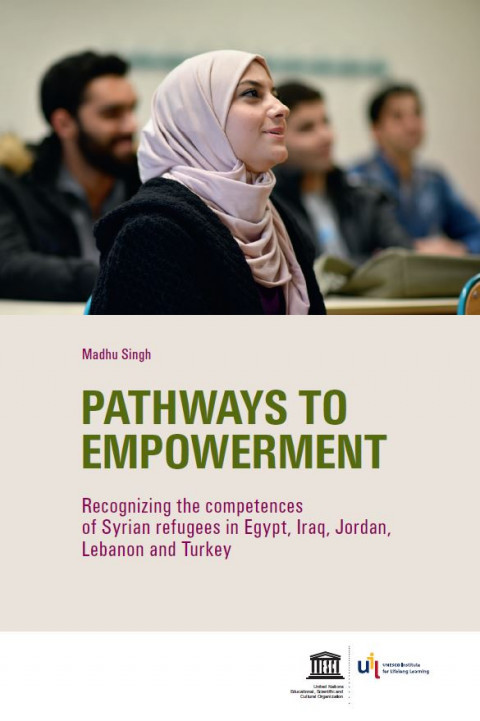 Pathways to Empowerment: Recognizing the Competences of Syrian Refugees in Egypt, Iraq, Jordan, Lebanon and Turkey Año de publicación: 2018 Autor: Madhu Singh Autor corporativo: UNESCO Institute for Lifelong Learning (UIL) For Syrian refugees living in Egypt, Iraq, Jordan, Lebanon and Turkey, recognition is a transformative mechanism that can help them enter or re-enter education, integrate into the world of work and participate fully in their host communities. However, while policy-makers in the region have prioritized the recognition, validation and accreditation of non-formal and informal learning, it remains a major challenge to develop systems that do this effectively. Pathways to Empowerment lays the essential groundwork for such a system, urging governments to develop comprehensive national strategies rather than ad hoc projects to recognize the competences of Syrian refugees. Its recommendations will contribute to dialogue between national authorities and social partners, and guide policy actions and RVA practices both in the region and in other parts of the world where recognition of refugees’ learning is a critical issue.
  Teachers’ Toolkit: UNESCO Schools Network in Canada Año de publicación: 2020 Autor corporativo: Canadian Commission for UNESCO This toolkit draws on a variety of resources to give educators a range of activities and best practices for students of all ages. Students will learn about human rights and global citizenship, sustainable development, climate action and reconciliation with Indigenous peoples.
  Arts for Transformative Education: A Guide for Teachers from the UNESCO Associated Schools Network Año de publicación: 2024 Autor: Benjamin Bolden | Sean Corcoran | Tiina Kukkonen | Jeffrey Newberry | Nathan Rickey Autor corporativo: UNESCO | Canadian Commission for UNESCO UNESCO’s vision of transformative education involves building learners’ capacities and empowering them to take action for a more peaceful and sustainable world. The arts offer tremendous potential for supporting learning that transforms individuals and communities. To fully realize that potential, teachers need to structure and support educational experiences that optimize what students will take away from them. This guide presents the research-informed Arts for Transformative Education model, a pioneering approach and thinking tool for teachers. The model was developed from data provided by over 600 teachers of the UNESCO Associated Schools network from 39 countries. The publication presents Learning Experience Descriptions and Snapshots illustrating how the model functions in real-world projects from around the globe, as well as Guidelines for Teachers outlining a step-by-step process for activating arts learning to empower transformative education.
  Global Citizenship Education in ASPnet Schools: An Ethical Framework for Action Año de publicación: 2018 Autor: Lynette Shultz | Maren Elfert Autor corporativo: Canadian Commission for UNESCO This report proposes global citizenship not so much as a curriculum subject or a pedagogical approach, but as an ethical position, a worldview that emphasizes human rights and earth rights, the interconnectedness of all human beings with each other, the animals and the planet, and an awareness of our global responsibilities in the face of the key challenges that we are facing today on our planet.This document is structured into three sections: It starts by introducing the UNESCO Associated Schools Network and the UNESCO perspective on global citizenship. In the second section, it shows the framework to implement GCED in schools, which will serve as the foundation for a whole school approach to the integration of a GCED perspective in curricula, lesson plans and broader school and community activities. It also gives some selected resources and examples in section three.
  Media and Information Literacy: Challenges and Opportunities for the World of Education Año de publicación: 2019 Autor: Carolyn Wilson Autor corporativo: Canadian Commission for UNESCO This paper explores media and information literacy and its importance to understanding democratic rights, active citizenship, and technological literacy. Filled with key concepts, sample questions, and additional resources, it is essential reading for both educators and the wider public.
  Greening Communities Guidance: Lifelong Learning for Climate and Sustainability Action Año de publicación: 2025 Autor corporativo: UNESCO Institute for Lifelong Learning (UIL) | World Organization of the Scout Movement Climate change poses a serious threat to communities around the world, compelling us to protect vulnerable lives and shape resilient futures. By nurturing lifelong learning and empowering local initiatives, communities can drive transformative change – amplifying local efforts into global impact.Green communities are municipalities of any size that embrace lifelong learning to empower individuals to take meaningful climate and sustainability action. This is achieved by extending climate education beyond the classroom and offering learning opportunities in non-formal and informal settings – rooted in and responsive to local culture and context. By engaging learners of all ages across a variety of learning environments, residents of green communities are equipped to take informed, proactive and responsible action for the climate and environment, contributing to more sustainable living.The sections of this document provide an overview of the diverse learners, learning spaces and educational approaches that can contribute to greening communities. It outlines practical steps for developing a comprehensive green learning strategy and action plan that mobilizes learners of all generations in climate and sustainability efforts.Municipal governments, along with a wide range of local stakeholders and change agents in both urban and rural areas, are invited to use this guidance to foster green communities through a lifelong learning lens.Together, let’s green our communities!
  SDG4 - 교육 2030: 포용성과 교육에 관한 연구 Año de publicación: 2019 Autor: 임후남 | 이대식 | 류방란 | 박성호 | 김혜자 | 윤선애 | 조혜승 Autor corporativo: 한국교육개발원 이 연구는 한국 교육의 포용성 실태 및 수준을 분석하고, 포용적 교육의 목표를 실현하기 위해 정책적 개선이 필요한 과제가 무엇인지를 제안하는 것을 목적으로 하였다.포용적 교육 관련 이론들을 탐구하는 한편, 포용적 교육의 개념과 요소, 유사 개념들에 대한 논의를 고찰하였다. 논의를 종합하면, 포용적 교육은 모든 학생이 처한 상황과 조건, 특성과 요구를 반영한 동등한 양질의 교육 기회와 권리를 보장하고, 이를 통해 공동체의 지속가능한 발전 또한 보장하는 교육을 지향한다. 이는 기존의 공정성 및 형평성 교육을 계승한 것이며, 그 대상 및 가치와 지향을 확장한 것이다. 포용적 교육은 “누구도 소외(배제)되지 않고, 다양한 개인의 요구와 특성(차이)을 고려한 유연한 교육과정을 통해 성, 민족(인종), 경제력 등에 따라 차별받지 않고, 공동체의 지속가능한 발전과 웰빙에 기여할 수 있는 개인으로 성장할 수 있도록 하는 교육”이라고 정의될 수 있다. 포용적 교육은 취약계층 중심의 정책목표를 전체(누구나)로 확대하고, 교육의 접근, 참여를 넘어서 성취의 격차와 차별의 철폐를 강조한다.