
Recursos
Exploren una amplia gama de recursos valiosos en GCED para profundizar su comprensión y promover su búsqueda, incidencia, enseñanza y aprendizaje.
3,500 resultados encontrados
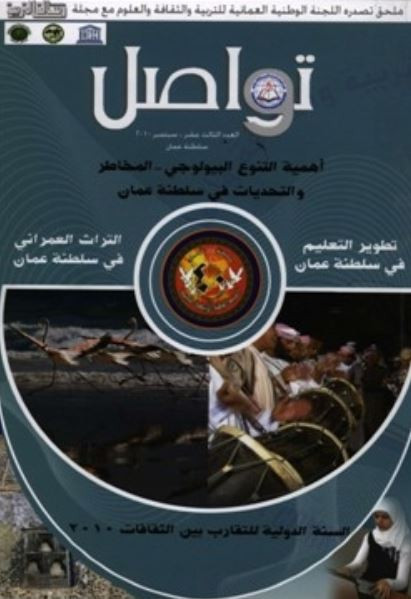 Education for Sustainable Development Conference in Support of Cultural and Biological Diversity, 24-26 January 2011 Año de publicación: 2011 Autor: Salem bin Hilal Al-Habsi | Mahmoud bin Abdullah Al-Abri Autor corporativo: Oman National Commission for Education, Culture and Science The text talks about a conference held in the Omani capital, Muscat. The conference focuses on sustainable development to support cultural and biological diversity. This conference comes to support international efforts and help educational systems understand diversity and its importance in the renaissance of peoples. مؤتمر التربية من أجل التنمية المستدامة لدعم التنوع الثقافي والبيولوجي 24 - 26 يناير 2011م Año de publicación: 2011 Autor: Salem bin Hilal Al-Habsi | Mahmoud bin Abdullah Al-Abri Autor corporativo: Oman National Commission for Education, Culture and Science يتحدث النص عن مؤتمر تم إقامته في العاصمة العمانية مسقط، ويركز المؤتمر على التنمية المستدامة لدعم التنوع الثقافي والبيولوجي. ويأتي هذا المؤتمر لدعم الجهود الدولية ومساعدة الانظمة التعليمية في فهم التنوع وأهميته في نهضة الشعوب.
 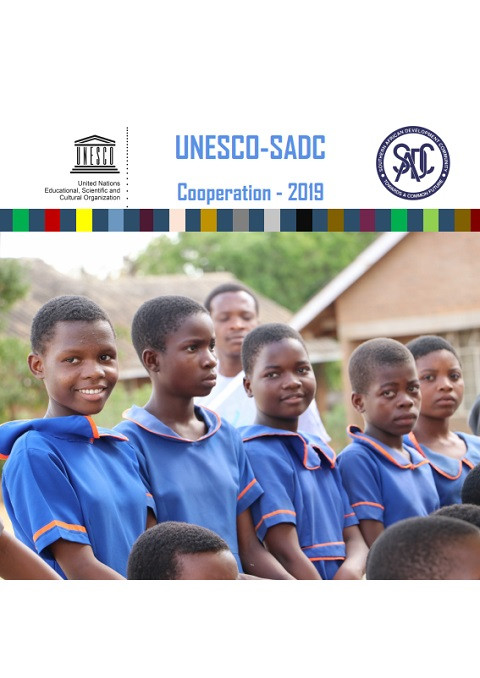 UNESCO-SADC: Cooperation 2019 Año de publicación: 2020 Autor corporativo: UNESCO Harare UNESCO and SADC have a long standing history that culminated in the signing of a Memorandum of Understanding (MOU) in 1996. In 2017, UNESCO and SADC developed a Joint Programme of Action (JPA) which identifies concrete area of cooperation. These include education; technical and vocational education and training (TVET); youth; HIV and health education; science, technology and innovation (STI); water security, renewable energy and disaster risk management; culture; communication and information (including media for SDGs); and data for development.The purpose of this magazine is to highlight UNESCO’ work to improve education quality in the southern Africa region in partnership with SADC.
 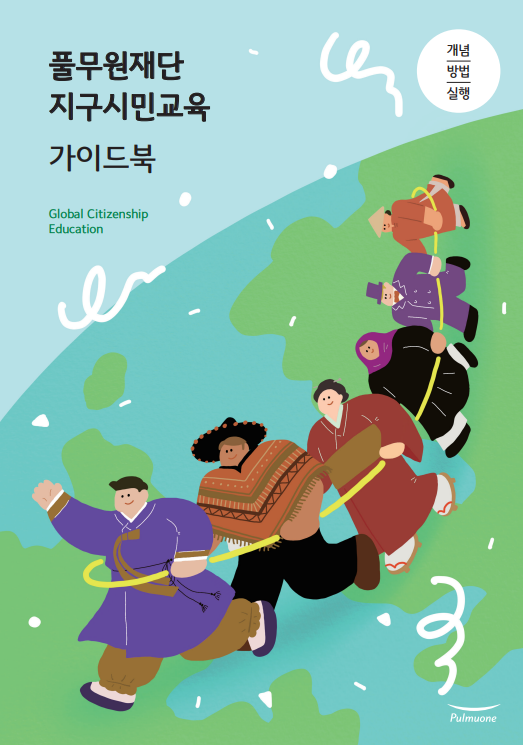 풀무원재단 지구시민교육 가이드북 Año de publicación: 2022 Autor corporativo: 풀무원재단 사무국 이 가이드북은 인류의 갈등과 공동의 문제를 지혜롭게 해결하고 지속가능한 삶으로 나아갈 수 있는 지구시민의 자질을 길러줄 세계시민교육을 위한 안내서 입니다.
 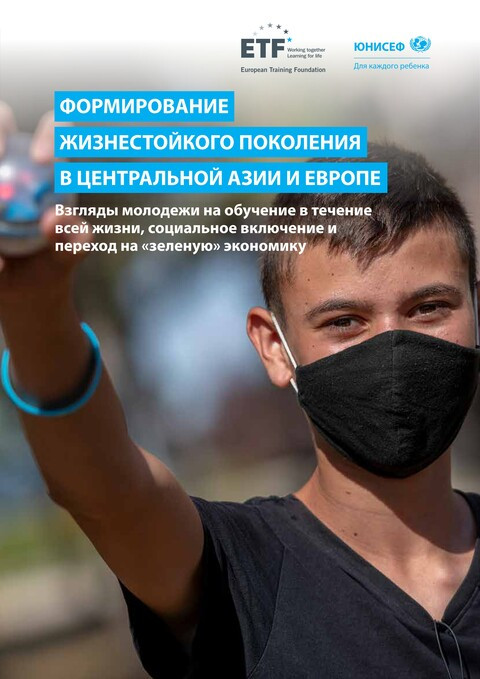 Formation of a Resilient Generation in Central Asia and Europe Año de publicación: 2021 Autor corporativo: ЮНИСЕФ | Европейский фонд образования In this joint report of the United Nations Children's Fund (UNICEF) and the European Education Foundation (ETF) reflect the views, views and sentiments of young people in Central Asia and Europe, which will be taken into account in regional and international discussions on options for creating more effective lifelong learning systems, more inclusive communities and a more "green" society. Формирование жизнестойкого поколения в Центральной Азии и Европе Año de publicación: 2021 Autor corporativo: ЮНИСЕФ | Европейский фонд образования В этом совместном отчете Детского фонда ООН (ЮНИСЕФ) и Европейского фонда образования (ЕФО) отражены точки зрения, взгляды и настроения молодежи в регионе ЕЦА, которые будут учитываться в региональных и международных обсуждениях вариантов создания более эффективных систем обучения в течение всей жизни, более инклюзивных сообществ и более «зеленого» общества.
  Embracing Peace through UNESCO World Heritage Año de publicación: 2024 Autor: 장정아 | 김민성 | 김수진 | 김원호 | 안치영 | 오성희 | 오창현 | 이성영 | 이현경 | 전원희 Autor corporativo: Korean National Commission for UNESCO This resource kit is the product of long labor by 10 researchers consisting of scholars on UNESCO heritage and teachers working in schools that belong to the UNESCO Associated Schools Network (ASPnet). It is distinct from existing educational resources in several ways. First, this kit goes beyond introducing the variously inscribed World Heritage properties one after another, to explain the rich significance of the heritage properties through keywords such as peace, cultural diversity, and sustainability. We also sought to overcome misconceptions about World Heritage and presented the content through various interesting cases for easy, hands-on application in classroom settings. In 2024, KNCU has pilot-tested the teaching materials presented in this resource kit in Korean middle and high schools belonging to UNESCO ASPnet. An online teacher training course based on this book has also been provided in June this year. 유네스코 유산, 평화를 품다 Año de publicación: 2024 Autor: 장정아 | 김민성 | 김수진 | 김원호 | 안치영 | 오성희 | 오창현 | 이성영 | 이현경 | 전원희 Autor corporativo: 유네스코한국위원회 이 책은 유네스코 등재유산을 연구해온 학자, 유네스코학교 담당 교사 등 10명의 연구진이 오랜 기간동안 고심해서 만들어낸 결과물로 각종 유네스코 등재유산에 대한 정보를 '평화, 문화다양성, 지속가능성' 등의 키워드를 중심으로 이들 유산이 갖는 의미들을 담아내고자 하였다. 또한 다양한 사례를 중심으로 학교 현장에서 참여형 수업을 통해 손쉽게 활용할 수 있도록 내용을 구성했으며 이 책을 기반으로 국내 중/고등 유네스코학교에서 시범수업을 실시하는 한편 2024년부터는 교사들이 활용할 수 있도록 교원연수용 온라인 콘텐츠를 제공할 예정이다.
  Calendrier des événements du développement durable 2023-2024 Año de publicación: 2023 Autor: Matthieu Remblière Autor corporativo: Académie de Versailles Ce calendrier met en lumières les dates et les journées nationales, européennes et mondiales en rapport avec le développement durable. This calendar highlights national, European and international dates and days related to sustainable development.
  Comprehensive Sex Education Año de publicación: 2021 Autor corporativo: Ministry of Education, Argentina What are we talking about when we say Comprehensive Sex Education? What challenges does integrality take on? In this issue of the Human Rights, Gender and CSE at school collection you will find a series of activities to work in the classroom and a theoretical framework to think about CSE.