
Recursos
Exploren una amplia gama de recursos valiosos en GCED para profundizar su comprensión y promover su búsqueda, incidencia, enseñanza y aprendizaje.
2,813 resultados encontrados
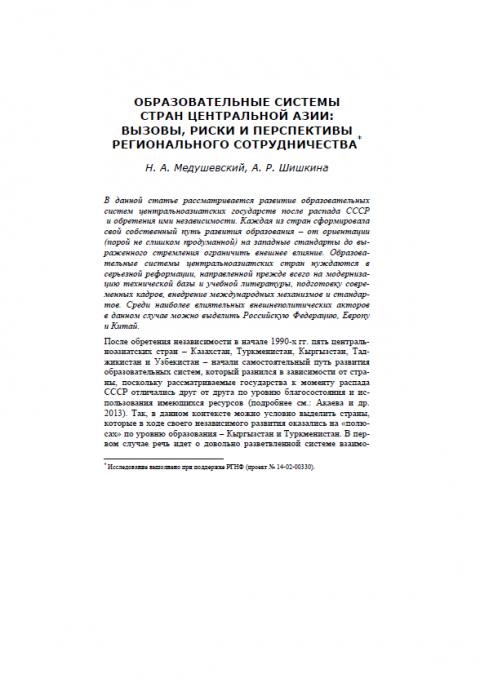 Educational systems of Central Asian countries: challenges, risks and prospects for regional cooperation Año de publicación: 2014 Autor: Nikolay A. Medushevskiy | Alisa R. Shishkina This article discusses the development of educational systems of Central Asian states after the collapse of the USSR and their independence. Each country has formed their own path of development of education - from orientation (sometimes not too thoughtful) on Western standards to a pronounced desire to limit external influence. The educational systems of the Central Asian countries need a serious reformation, aimed primarily at modernizing the technical base and textbooks, training modern personnel, introducing international mechanisms and standards. Образовательные системы стран Центральной Азии: вызовы, риски и перспективы регионального сотрудничества Año de publicación: 2014 Autor: Nikolay A. Medushevskiy | Alisa R. Shishkina В данной статье рассматривается развитие образовательных систем центральноазиатских государств после распада СССР и обретения ими независимости. Каждая из стран сформироваласвой собственный путь развития образования – от ориентации(порой не слишком продуманной) на западные стандарты до выраженного стремления ограничить внешнее влияние. Образовательные системы центральноазиатских стран нуждаются в серьезной реформации, направленной прежде всего на модернизацию технической базы и учебной литературы, подготовку современных кадров, внедрение международных механизмов и стандартов
  Central Asia: struggle for the new future Año de publicación: 2018 Autor: A. Dankov The article discusses the social, economic and political prospects of Central Asia (2019-2024). Prognosis also covers the ethnic changes, migration, cultural and language diversity, urbanization, quality of life. Центральная Азия: борьба за новое будущее Año de publicación: 2018 Autor: A. Dankov В статье рассматриваются социальные, экономические и политические перспективы Центральной Азии (2019-2024). Прогноз также охватывает этнические изменения, миграцию, культурное и языковое разнообразие, урбанизацию, качество жизни.
 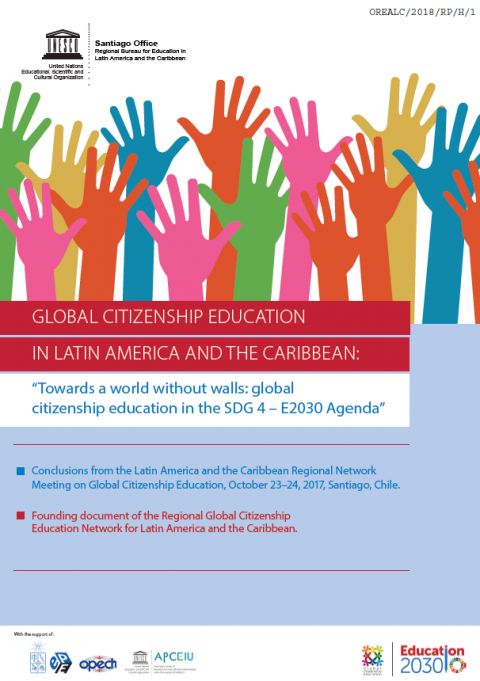 Global Citizenship Education in Latin America and the Caribbean: Towards a World without Walls: Global Citizenship Education in the SDG 4 - E2030 Agenda Año de publicación: 2018 Autor corporativo: UNESCO Santiago The Latin America and the Caribbean Regional Network Meeting on Global Citizenship Education “Towards a World without Walls: Global Citizenship Education in SDG 4 – Agenda E2030”, was organized by the UNESCO Regional Bureau for Education in Latin America and the Caribbean (OREALC / UNESCO Santiago) and the Asia – Pacific Centre of Education for International Understanding (APCEIU), in collaboration with the Chilean Observatory of Educational Policies (OPECH) of the University of Chile. The event, held on October 23 and 24, 2017, in Santiago, Chile, brought together regional researchers, members of civil society organizations and activists, educational communities, social movements, government educational authorities and universities. The objective of the meeting was to promote dialogue on the concept of Global Citizenship Education (GCED), deepen the regional perspective on the topic and create a network that helps strengthen the implementation of GCED in the context of the Latin America and the Caribbean region. This document summarizes the main topics addressed and issues discussed at the meeting. Subsequently, the founding document of the Regional Global Citizenship Education Network for Latin America and the Caribbean, which was elaborated in light of the meeting’s discussions, is presented. Educación para la Ciudadanía Mundial en América Latina y el Caribe: Hacia un mundo sin muros: educación para la ciudadanía mundial en el ODS4 - Agenda E2030 Año de publicación: 2018 Autor corporativo: UNESCO Santiago La Reunión Regional para América Latina y el Caribe de la Red de Educación para la Ciudadanía Mundial “Hacia un mundo sin muros: educación para la ciudadanía mundial en el ODS 4 – Agenda E2030”, fue organizada por la Oficina Regional de Educación para América Latina y el Caribe (OREALC / UNESCO Santiago) y el Centro de Educación para la Comprensión Internacional de Asia-Pacífico (APCEIU), en colaboración con el Observatorio Chileno de Políticas Educativas de la Universidad de Chile (OPECH). La cita se desarrolló el 23 y 24 de octubre de 2017 en Santiago de Chile, y a ella fueron convocados pensadores y activistas de la región, provenientes de organizaciones de la sociedad civil, comunidades educativas, movimientos sociales, organismos gubernamentales y universidades. El objetivo de la reunión fue promover el diálogo sobre el concepto de Educación para la Ciudadanía Mundial (ECM) y profundizar en una mirada regional para propiciar la conformación de una red que permita fortalecer la implementación de la ECM, situada en el contexto de América Latina y el Caribe. Se presenta este documento como síntesis de las principales temáticas que fueron abordadas y discutidas en el encuentro. A continuación, se presenta el documento fundacional que establece la Red Regional de Educación para la Ciudadanía Mundial para América Latina y el Caribe, que fue elaborada a raíz de las discusiones.
 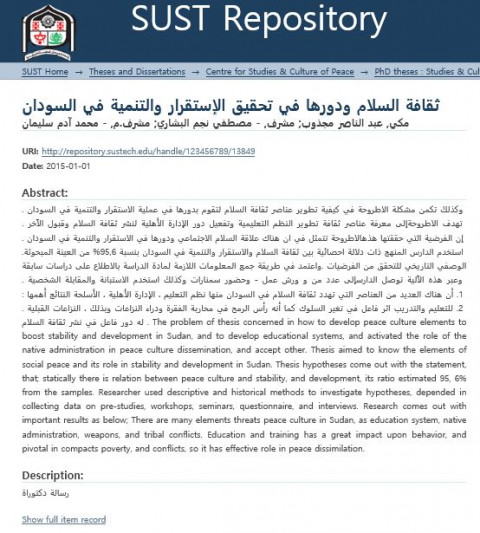 ثقافة السلام ودورها في تحقيق الإستقرار والتنمية في السودان Año de publicación: 2015 Autor: Abdel Nasser Majzoub Makki Autor corporativo: Sudan University of Science and Technology تكمن مشكلة الاطروحة في كيفية تطوير عناصر ثقافة السلام لتقوم بدورها في عملية الاستقرار والتنمية في السودان . وكذلك تطوير النظم التعليمية وتفعيل دور الإدارة الأهلية لنشر ثقافة السلام وقبول الآخر . تهدف الاطروحةإلى معرفة عناصر ثقافة السلام الاجتماعي ودورها في الاستقرار والتنمية في السودان . إن الفرضية التي حققتها هذهالاطروحة تتمثل في ان هناك علاقة ذات دلالة احصائية بين ثقافة السلام والاستقرار والتنمية في السودان بنسبة 95,6% من العينة المبحوثة. استخدم الدارس المنهج الوصفي التاريخي للتحقق من الفرضيات .واعتمد في طريقة جمع المعلومات اللازمة لمادة الدراسة بالاطلاع على دراسات سابقة و ورش عمل - وحضور سمنارات وكذلك استخدم الاستبانة والمقابلة الشخصية . وعبر هذه الآلية توصل الدارسإلى عدد من النتائج أهمها : 1. أن هناك العديد من العناصر التي تهدد ثقافة السلام في السودان منها نظم التعليم ، الإدارة الأهلية ، الأسلحة ، النزاعات القبلية . 2. للتعليم والتدريب اثر فاعل في تغير السلوك كما أنه رأس الرمح في محاربة الفقرة ودراء النزاعات وبذلك له دور فاعل في نشر ثقافة السلام . A Culture of Peace and Its Role in Achieving Stability and Development in Sudan Año de publicación: 2015 Autor: Abdel Nasser Majzoub Makki Autor corporativo: Sudan University of Science and Technology The problem of thesis concerned in how to develop peace culture elements to boost stability and development in Sudan, and to develop educational systems, and activated the role of the native administration in peace culture dissemination, and accept other. Thesis aimed to know the elements of social peace and its role in stability and development in Sudan. Thesis hypotheses come out with the statement, that; statically there is relation between peace culture and stability, and development, its ratio estimated 95, 6% from the samples. Researcher used descriptive and historical methods to investigate hypotheses, depended in collecting data on pre-studies, workshops, seminars, questionnaire, and interviews. Research comes out with important results as below; There are many elements threats peace culture in Sudan, as education system, native administration, weapons, and tribal conflicts. Education and training has a great impact upon behavior, and pivotal in compacts poverty, and conflicts, so it has effective role in peace dissimilation.
 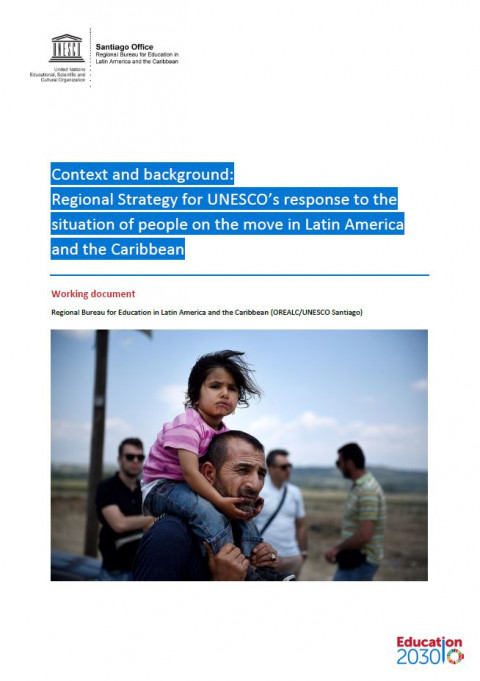 Context and Background: Regional Strategy for UNESCO’s Response to the Situation of People on the Move in Latin America and the Caribbean Año de publicación: 2019 Autor corporativo: UNESCO Santiago The UNESCO offices in Latin America and the Caribbean, under the coordination of the Regional Bureau for Education in Latin America and the Caribbean OREALC/UNESCO Santiago, have proposed the development of a regional strategy that provides a response from UNESCO based on the needs of the region’s countries for guaranteeing the right to education of migrants, refugees, asylum seekers and returnees. The purpose of this document is to present key information for the development of the regional strategy. It reviews a set of information that contextualizes human mobility in Latin America and the Caribbean, recognizing contemporary trends, identifying their driving factors and describing the main demographic qualities that characterize them.The authors then address the needs for protection of individuals in the context of mobility in the region, particularly those associated with the exercise of their fundamental rights and processes of inclusion in social protection systems in the destination society. They then present the right to education as a multiplier right in contexts of human mobility, reviewing the main obstacles faced by migrants, refugees, asylum seekers and returnees. Finally, the text presents a discussion of UNESCO’s role in this context based on the review of international regulatory instruments and frameworks, institutional frameworks, the work agenda at the regional level and the migratory institutional structure in Latin America and the Caribbean. Antecedentes para una estrategia regional de respuesta de la UNESCO a la situación de personas en contexto de movilidad en América Latina y el Caribe: documento de trabajo Año de publicación: 2019 Autor corporativo: UNESCO Santiago Las oficinas de la UNESCO en América Latina y el Caribe, bajo la coordinación de la Oficina Regional de Educación OREALC/UNESCO Santiago, se han propuesto el desarrollo de una estrategia regional que estructure una respuesta de la UNESCO en función de las necesidades de los países de la región para garantizar el derecho a la educación de personas migrantes, refugiados, solicitantes de asilo y retornados. El presente documento tiene como objetivo presentar antecedentes relevantes para la elaboración de la estrategia regional. En él, se revisa un conjunto de antecedentes que contextualizan la movilidad humana en América Latina y el Caribe, reconociendo tendencias contemporáneas, identificando los factores que la impulsan y revisando las principales cualidades demográficas que la caracterizan. Posteriormente, se abordan las necesidades de protección de las personas en contexto de movilidad en la región, especialmente aquellas asociadas al ejercicio de sus derechos fundamentales y a los procesos de inclusión a los sistemas de protección social en la sociedad receptora. Luego, se presenta el derecho a la educación como derecho multiplicador en los contextos de movilidad humana, revisando los principales obstáculos para su realización que deben enfrentar las personas migrantes, refugiadas, solicitantes de asilo y retornadas. Finalmente, se discute el rol de la UNESCO en este escenario a partir de la revisión de los instrumentos y marcos normativos a nivel internacional, marcos institucionales, la agenda de trabajo a nivel regional y la institucionalidad migratoria de América Latina y el Caribe.