
Recursos
Exploren una amplia gama de recursos valiosos en GCED para profundizar su comprensión y promover su búsqueda, incidencia, enseñanza y aprendizaje.
2,813 resultados encontrados
 Bilingual education as the basis of humanitarian space and integration processes in the EAEU Año de publicación: 2017 Autor: M. Tagaev, B. Borchieva This article focuses on conducting a situational analysis and the prospects for introducing bilingual education in Kyrgyzstan as the basis for integration processes in the post-Soviet space. Билингвальное образование как основа гуманитарного пространства и интеграционных процессов в ЕАЭС Año de publicación: 2017 Autor: M. Tagaev, B. Borchieva В данной статье ставится задача провести ситуационный анализ и перспективы внедрения билингвального образования в Кыргызстане как основы интеграционных процессов на постсоветском пространстве.
  مكافحة التطرف العنيف: كتيب تمهيدي للمفاهيم والبرامج وأفضل الممارسات Año de publicación: 2019 Autor corporativo: Search for Common Ground ان مجال مكافحة التطرف العنيف يتطور وينمو سريعاً ونحن نتعلم من الممارسة والبحث. لذلك ، فإن هذه التغييرات السريعة جعلت من الصعب على الممارسين والعاملين في هذا المجال في الحكومة أو المجتمع المدني فهم أحدث الممارسات الجيدة والدروس المستفادة.هذا المنهج / الرزمة التدريبية هي محاولة للتغلب على هذه التحديات. لذا تم إعداد هذا المنهج لتدريب العاملين في مجال مكافحة التطرف العنيف في الحكومة والمجتمع المدني ، سواء كانت لديهم خبرة سابقة ام لا. تم تصميمه في عشر وحدات تعليمية مترافقة مع مواد تدريبية بما في ذلك دليل الميسرين ، وعروض الشرائح ، ومنشورات أخرى ، بالإضافة إلى ندوات مسجلة مسبقاً عبر الإنترنت للسماح للراغبين بالحصول على هذا التدريب. هذه المواد تشمل مجموعة من الأنشطة والروابط لمقاطع من الفيديوهات التوضيحية توفر مساحة للمناقشة والتفكير.يقدم هذا المنهاج برنامجًا تدريبيًا في سياق مكافحة التطرف العنيف ورفع الوعي ذات الصلة بسياقك بطريقة يمكن الوصول إليها. فهو يسلط الضوء على فوائد النهج التشاركي التي يتجاوز استخدام التدخل والاستجابة العسكرية في سياق التطرف العنيف، بالارتكاز على الممارسات الجيدة ، ويوفر الأدوات والإرشادات للتكيف بسهولة مع السياق والثقافات المحلية. أخيرًا ، يشجع هذا البرنامج على التحديد والإكتشاف المبكر للمخاطر وتخفيفها، فضلاً عن ضمان اتباع نهج عدم الإضرار.تم إنتاج هذا المنهج التدريبي من قبل منظمة البحث عن أرضية مشتركة بالتعاون مع هداية وبتمويل من قبل الاتحاد الأوروبي من خلال البرنامج العالمي STRIVE. Countering Violent Extremism: An Introductory Guide to Concepts, Programming, and Best Practices Año de publicación: 2019 Autor corporativo: Search for Common Ground This curriculum aims to update the best practices and experience gained in the process of countering violent extremism. The anti-violent extremism program, adapted for Central Asia, is designed to train civil servants and civil society organizations. This curriculum delivers a contextually literate countering violent extremism and awareness-raising training program that is relevant to your context in an accessible way. It highlights the benefits of collaborative approaches beyond the use of military or securitized responses to violent extremism, drawing on good practices, and offers tools and guidance for easy adaptation to your local context and cultures. Finally, it encourages the early identification and mitigation of risks with programming, as well as ensuring a Do No Harm approach.While this curriculum will offer guidance around how to design, implement, and monitor constructive responses to violent extremism, an understanding of project management is assumed. Therefore, it is not a training program on general project management skills, monitoring and evaluation, or on fundraising.Since the problem of violent extremism is complex and highly context-specific, it is also not a guide to the drivers of violent radicalization in your local context, nor does it proscribe the programs and policies that would be most effective. Instead, it introduces you to the guiding questions and tools necessary to make informed and effective choices in your own efforts to counter violent extremism.
  How to Hit a Moving Target: 35 Years of Gender and Sexual Diversity in Teacher Education Año de publicación: 2019 Autor: Lee Airton | Austen Koecher This essay shares findings from an exhaustive review of the English-language published scholarship on integrating gender and sexual diversity in teacher education (GSDTE) since 1982. The 158 sources substantiate a largely USA-based field with an array of studied pedagogies and a citational reliance on statistics that reveal the school-sited suffering of gender and sexual minority youth. Implications for the field are shared, including: critical questions about the field's construction, objects and beneficiaries; the importance of citing GSDTE and teacher education research and not only youth outcome research; and preparing teachers for gender and sexual diversities that are presently unimaginable. Highlights • A review of the literature on integrating gender and sexual diversity in teacher education.• There is a citational reliance on the school-sited suffering of gender and sexual minority youth.• It is important to cite GSDTE and teacher education research and not only youth outcome research.• This will help prepare teachers for gender and sexual diversities that are presently unimaginable.
 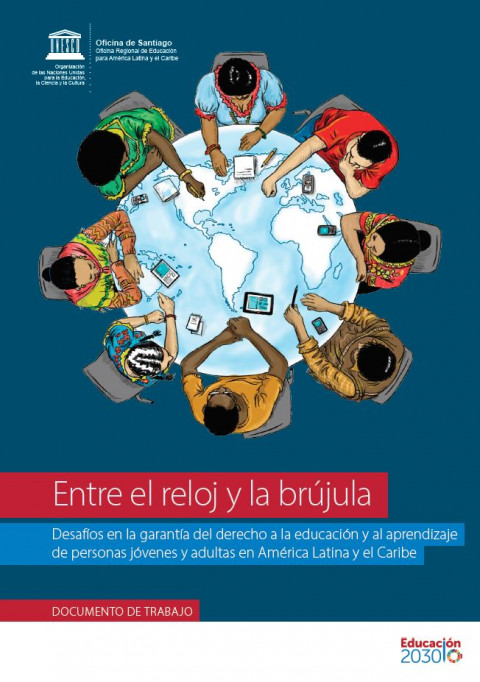 Entre el reloj y la brújula: desafíos en la garantía del derecho a la educación y al aprendizajede personas jóvenes y adultas en América Latina y el Caribe; documento de trabajo Año de publicación: 2019 Autor: Henry Renna Autor corporativo: UNESCO Santiago Este documento tiene por objetivo proporcionar una visión general de la educación y del aprendizaje de personas jóvenes y adultas como derecho humano y social. Los instrumentos de derecho vinculante y no vinculante que la sustentan son históricos y de larga data, como también contingentes, amplios y extensos en su alcance, con presencia regional e internacional. El documento muestra —sobre la base de los Indicadores del Objetivo de Desarrollo Sostenible 4 (ODS 4 Agenda 2030)— que los principales desafíos para los países de América Latina y el Caribe tienen relación con la lentitud de los progresos (el desafío del reloj) dejando a muchas y muchos jóvenes y adultos al margen de oportunidades educativas, de conocimientos, habilidades y aptitudes, y privados de alcanzar el bienestar integral. Este informe también sostiene —basado en los informes nacionales del Tercer Reporte Global de Educación y Aprendizaje de Adultos— que muchos desafíos están vinculados con la dirección de las políticas (el desafío de la brújula), con sentidos reduccionistas y homogeneizadores detrás de las instituciones y de la acción pública, lo que precariza y fragiliza la garantía del derecho a la educación y al aprendizaje de las personas jóvenes y adultas. Este documento es consistente con el llamado de la UNESCO a «repensar la educación» e invita a reconstruir en el siglo XXI un mundo y una educación sin muros, donde se difuminen las fronteras mentales e institucionales que reducen, dividen y aislan los sistemas educativos, con el fin de liberar su poder transformador para todos y todas.
 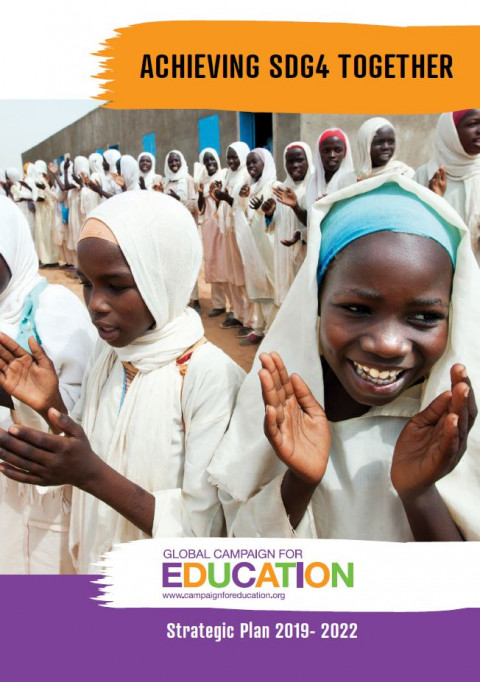 Achieving SDG 4 Together: Strategic Plan 2019 - 2022 Año de publicación: 2018 Autor corporativo: Global Campaign for Education (GCE) The 2019-2022 strategic plan of the Global Campaign for Education was adopted during the 6th World Assembly of the movement in November 2018, Kathmandu. The plan identifies 4 priority strategic areas: Inclusivity and non-discrimination, Transformative education, Education in emergencies and Financing education. The plan also focus on strengthening the global movement and integrating youth voices.On the eve of celebrating its 20th anniversary, the Global Campaign for Education (GCE) is the largest civil society organisation movement working to promote the human right to education and to put pressure on governments and the international community to fulfil their commitments to provide free, inclusive, quality public education and lifelong learning for all, particularly for children. Our regional and national coalitions encompass many thousands of civil society organisations and represent millions of individuals across the world. Each is independent, and all are united by the commitment to the human right to education, and to achieving change through the mobilisation of citizens and civil society.
  Transforming Systems in Times of Adversity: Education and Resilience; White Paper Año de publicación: 2019 Autor: Ritesh Shah Autor corporativo: United States Agency for International Development (USAID) This white paper was commissioned to provide USAID, including Missions, Regional Bureaus, Pillar Bureaus, and the Office of U.S. Foreign Disaster Assistance (OFDA), with an overview of global and Agency thinking and practice on education and resilience and a foundation and justification for positioning USAID education efforts more concretely within a resilience frame.The white paper is organized into three key sections. The first section outlines the business case for resilience, explaining how and why resilience is an important consideration for education programs to consider in contexts of crisis and conflict and how education is well poised as a sector to contribute to strengthening resilience. The second section presents a conceptual framework for understanding how resilience operates through and within the education sector and program interventions. The third section provides a series of key considerations for developing and supporting USAID education programs with a resilience lens or focus.
  Innovative Educational Reforms in Uzbekistan Año de publicación: 2019 Autor: Kh. Khakimjonova The article reveals the most important stages of reforming the education system of the Republic of Uzbekistan. The structure of the education system and the basic principles on which state reforms in the educational sphere are based are revealed. Describes the changes taking place in the education system of Uzbekistan in the light of recent government decrees and the challenges facing ministries and departments whose activities are directly or partially related to the education system of the Republic of Uzbekistan. Инновационные образовательные реформы в Узбекистане Año de publicación: 2019 Autor: Kh. Khakimjonova В статье раскрываются важнейшие этапы реформирования системы образования Республики Узбекистан. Раскрывается структура системы образования и основные принципы, на которых основываются государственные реформы в образовательной сфере. Описываются изменения, происходящие в системе образования Узбекистана в свете последних правительственных указов и задачи, стоящие перед министерствами и ведомствами, деятельность которых связана непосредственно или частично соприкасается с системой образования Республики Узбекистан.