
Recursos
Exploren una amplia gama de recursos valiosos en GCED para profundizar su comprensión y promover su búsqueda, incidencia, enseñanza y aprendizaje.
2,813 resultados encontrados
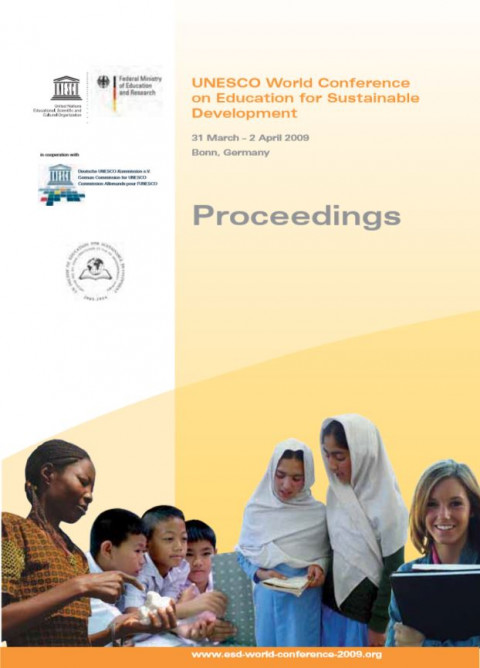 UNESCO World Conference on Education for Sustainable Development Año de publicación: 2009 Autor corporativo: German Commission for UNESCO | Germany. Federal Ministry of Education and Research UNESCO held its Conference on Education for Sustainable Development, which highlighted the main contribution of education to sustainable development in education and its quality . This booklet contains a detailed overview of the meetings and proceedings of the International Conference. مؤتمر اليونيسكو العالمي للتعليم من اجل التنمية المستدامة Año de publicación: 2009 Autor corporativo: German Commission for UNESCO | Germany. Federal Ministry of Education and Research عقدت المنظمة الدولية اليونيسكو مؤتمرها الخاص بالتعليم من أجل التنمية المستدامة والذ سلط الضوء على المساهمة الرئيسية للتعليم في التنمية المستدامة في التعليم وجودته ، ويتضمن هذا الكتيب عرضا مفصلا للجلسات ووقائع المؤتمر الدولي
  Identity, DNA Typing and Citizenship: Philosophical Reflections Año de publicación: 2010 Autor: Marie-Hélène Parizeau Autor corporativo: Sociologie et sociétés In a context of globalization, migratory flows and the hunt for terrorists, how are biometrics, and, more specifically, the notion of the human DNA Typing, changing the individual’s relationship to his or her citizenship ?To try to answer this question, we review some of the theoretical aspects of citizenship and briefly outline the history of identification measures linked to the advent of citizenship. We then examine the current context of the use of biometrics for identification purposes and the reasons for its use as cited by the European Community and the United States. We more particularly look at the case of the human DNA Typing, using examples from Canada and the United States. The genetic footprint is related to personal identity based on Paul Ricoeur’s concept of narrative identity. We show how the ethno-racial criteria used by biometrics, together with the ideology of multiculturalism, are constructing, in the West, a new narration of the Other, of foreigners, which excludes them from the sphere of citizenship. Identité, empreinte génétique et citoyenneté: réflexions philosophiques Año de publicación: 2010 Autor: Marie-Hélène Parizeau Autor corporativo: Sociologie et sociétés Dans quelle mesure la biométrie, et plus spécifiquement l’empreinte génétique, dans un contexte de globalisation, de flux migratoires, et de chasse au terrorisme, vient-elle modifier le rapport de l’individu à sa citoyenneté ?Pour tenter de répondre à cette question, nous rappellerons quelques aspects théoriques de la citoyenneté. L’historique des mesures d’encartement liées à l’avènement de la citoyenneté y sera aussi rapidement présenté. Nous évoquerons ensuite le contexte actuel de l’usage de la biométrie à des fins d’identification et les motifs invoqués par la Communauté européenne et les États-Unis. Nous examinerons plus attentivement le cas précis de l’empreinte génétique avec les exemples du Canada et des États-Unis. Finalement, l’empreinte génétique et l’identité personnelle seront mises en relation à partir du concept d’identité narrative de Paul Ricoeur. Nous montrerons comment les critères ethno-raciaux utilisés par la biométrie ; concomitamment avec l’idéologie du multiculturalisme ; construisent une nouvelle narration occidentale de l’Autre, qui l’exclut de la sphère de la citoyenneté.
  Connections Between Environmental Justice, Popular Ecologism and Eco-citizenship Año de publicación: 2006 Autor: Nayla Naoufal Autor corporativo: Université du Québec à Montréal (UQAM) | Éditions en environnement VertigO Citizen movements connected to socio-ecological issues are increasing around the world : In the global North and South, people and communities are struggling against mining projects, against mega-projects, for the development of responsible and urban agriculture, against the inequities engendered by climate change, etc. This article examines historic and contemporary citizen movements linked to socio-ecological issues and underscores the evolution in their claims : Initially, environmental justice was exclusively reactive and focused on local cases of disproportional exposure to environmental problems ; today, it is also proactive, increasingly transnational and, in some cases, holistic. I also address the current of popular environmentalism and its links with environmental justice. Then, I probe environmental justice theoretical discourses and identify a framework that is relevant in light of contemporary struggles. Last, I present the concept of ecocitizenship, as well as a typology pertaining to this term, based on an exhaustive review of the scientific literature and on the study of ecocitizenships developed by young community gardeners. It appears that the ecocitizenship that is both critical and participative is of particular interest for environmental justice. Connexions entre la justice environnementale, l’écologisme populaire et l’écocitoyenneté Año de publicación: 2006 Autor: Nayla Naoufal Autor corporativo: Université du Québec à Montréal (UQAM) | Éditions en environnement VertigO Les mouvements citoyens liés à des problématiques socio-écologiques prennent de plus en plus d’ampleur à travers le monde : dans les « Nords » et dans les « Suds », des personnes et des communautés luttent contre des projets miniers, contre la construction de mégaprojets, pour le développement d’une agriculture urbaine et responsable, contre les inégalités générées par les changements climatiques, etc. Qu’ils soient historiques ou contemporains, cet article examine ces mouvements en s’attardant à l’évolution de leurs revendications. De réactive et basée sur des cas locaux d’exposition disproportionnelle aux problèmes environnementaux, la justice environnementale est devenue également proactive, de plus en plus transnationale et, dans certains cas, holistique. Je me penche également sur le courant de l’écologisme populaire et sur ses liens avec la justice environnementale. J’explore ensuite les fondements théoriques de la justice environnementale, ce qui permet d’identifier un cadre pertinent en la matière au regard des mobilisations contemporaine. J’analyse enfin le concept d’écocitoyenneté, présentant une typologie en la matière, en me basant sur une recension exhaustive de la littérature scientifique et sur l’étude des écocitoyennetés construites par des apprentis jardiniers en contexte communautaire. Il apparaît que la forme d’écocitoyenneté à la fois participative et critique contribue particulièrement à la justice environnementale.
  Intercultural and Inclusive Teacher Training: The Conceptualization and Operationalization of Professional Skills Año de publicación: 2016 Autor: Julie Larochelle-Audet | Corina Borri-Anadon | Maryse Potvin Autor corporativo: Éducation et francophonie In the context of globalization, educational systems, from elementary to university, must take into account the increasingly complex realities they face, especially in terms of skills that teachers need to develop. In this respect, on both political and scientific levels, the importance of training on ethnocultural, religious and linguistic diversity comes up regularly. However, a portrait of teacher training in Québec universities has revealed an overall deficiency in this area (Larochelle-Audet, Borri-Anadon, McAndrew and Potvin, 2013). While a competency-based approach has prevailed since 2001 in teacher training, an inter-university work group has begun to address this gap by enriching the Department of Education’s professional frame of reference on teacher competencies. The work of the group, presented in this article, is based on a critical analysis of the department’s frame of reference, which reveals an absence of tangible considerations on ethnocultural diversity and the objectives of intercultural and inclusive teacher training. The members of the group developed two methods aiming to add intercultural and inclusive competencies to the reference framework: the first proposes the integration of 21 components into the 12 existing professional competencies, and the second favours the addition of a new intercultural and inclusive competency. Their operationalization entails some limitations and risks, which are the subject of a discussion in this article. La formación intercultural e incluyente del personal docente: conceptualización y operacionalización de competencias Año de publicación: 2016 Autor: Julie Larochelle-Audet | Corina Borri-Anadon | Maryse Potvin Autor corporativo: Éducation et francophonie En el contexto de la globalización, los sistemas educativos, desde la primaria hasta la universidad, deben tomar en cuenta las realidades cada vez más complejas que les interpelan, sobre todo en lo referente a las competencias que deben desarrollar los docentes. Al respecto, con frecuencia se recuerda la importancia de una formación relacionada con la diversidad etnocultural, religiosa y lingüística, tanto sobre el plano político que científico. Sin embargo, una evocación de dicha formación en las universidades quebequenses muestra que aun es, en su conjunto, incompleta (Larochelle-Audet, Borri-Anadon, Mc Andrew et Potvin, 2013). Si bien desde 2001 prevalece un enfoque por competencias profesionales en la formación magisterial, un grupo de trabajo interuniversitario se dedicó a corregir esa falta enriqueciendo el referencial ministerial de competencias profesionales del personal docente. Los trabajos del grupo, que presentamos en este artículo, se fundan en un análisis crítico de dicho referencial, el cual muestra la ausencia de consideraciones concretas en lo referente a la diversidad etnocultural y a las finalidades de una formación intercultural incluyente en enseñanza. Los miembros del grupo elaboraron dos modalidades con el objetivo de insertar en el referencial las competencias culturales y incluyentes: la primera propone integrar 21 competencias directamente en las 12 competencias profesionales ya existentes y la segunda privilegia la adjunción de una nueva competencia denominada intercultural e incluyente. Su operacionalización comporta algunos límites y ciertos riesgos que constituyen el tema que aquí se discute.
 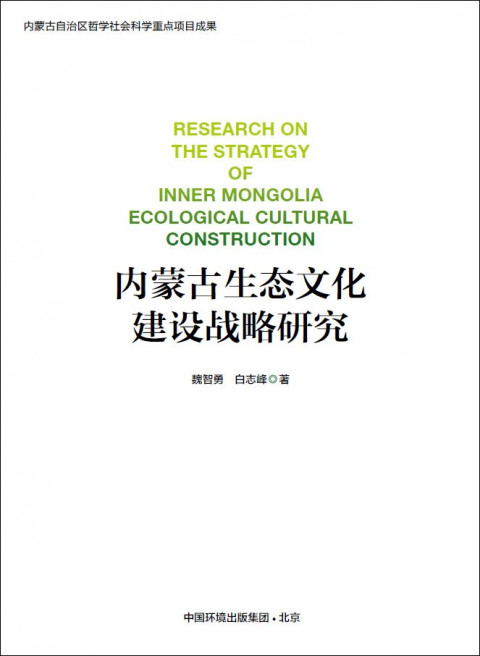 内蒙古生态文化建设战略研究 Año de publicación: 2019 Autor: WEI Zhiyong | BAI Zhifeng Autor corporativo: China Environment Publishing Group 《内蒙古生态文化建设战略研究》是由魏智勇教授和白志峰主任主持完成的内蒙 古哲学社会科学重点项目的最终研究成果。在认真分析研究国内外生态文化建设文献资料的基础上,深入系统地论证了内蒙古加强生态文化的必要性和重要性,较为全面地分析了内蒙古生态文化建设的现 状,明确了内蒙古生态文化建设的优劣条件、机遇和挑战,提出了内蒙古生态文化建 设的指导思想、目标、原则、重点任务,探索了一些切实可行的保障措施,希望对于 推动内蒙古生态文明和生态文化建设起到重要的理论指导作用。
  Activism, the SDGs and Youth: Development Education & Global Citizenship Education; Resource Pack Año de publicación: 2018 Autor: Valerie Duffy | Dermot O’Brien Autor corporativo: National Youth Council of Ireland (NYCI) | Irish Aid This resource explores the issue of Activism and the Sustainable Development Goals and represents an important contribution at this moment in time where activism and action within the Global Citizenship movement is gaining momentum. It is aimed at Global Educators, Youth Workers, Development Education practitioners, trainers, activists, changemakers of all shapes and sizes but in particular those working with the current generation of young people.