
Recursos
Exploren una amplia gama de recursos valiosos en GCED para profundizar su comprensión y promover su búsqueda, incidencia, enseñanza y aprendizaje.
2,813 resultados encontrados
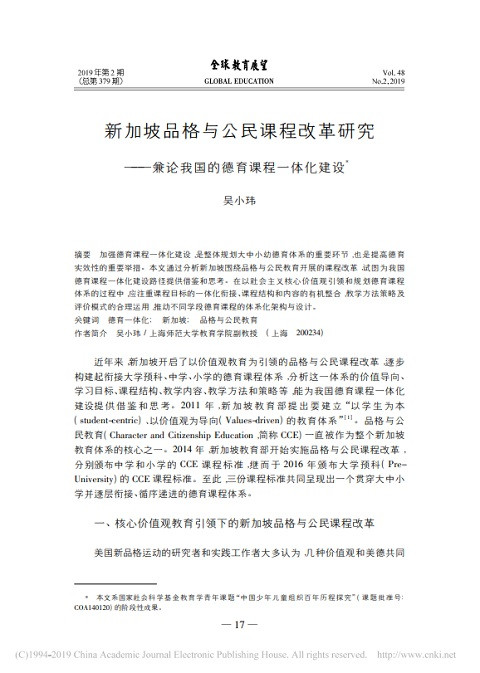 新加坡品格与公民课程改革研究: —兼论我国的德育课程一体化建设 (全球教育展望; Vol. 48, No. 2) Año de publicación: 2019 Autor: Wu Xiaowei Autor corporativo: East China Normal University 加强德育课程一体化建设,是整体规划大中小幼德育体系的重要环节,也是提高德育实效性的重要举措。本文通过分析新加坡围绕品格与公民教育开展的课程改革,试图为我国德育课程一体化建设路径提供借鉴和思考。在以社会主义核心价值观引领和规划德育课程体系的过程中,应注重课程目标的一体化衔接、课程结构和内容的有机整合,教学方法策略及评价模式的合理运用,推动不同学段德育课程的体系化架构与设计。
 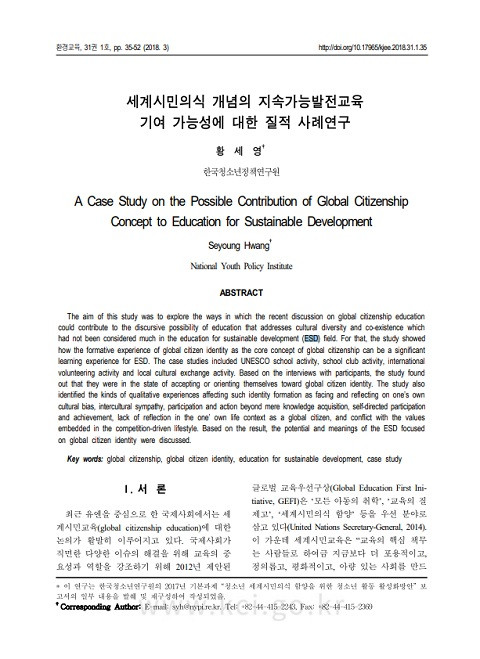 A Case Study on the Possible Contribution of Global Citizenship Concept to Education for Sustainable Development (Environmental Education; Vol. 31, No.1) Año de publicación: 2018 Autor: Seyoung Hwang Autor corporativo: Korean Society for Environmental Education The aim of this study was to explore the ways in which the recent discussion on global citizenship education could contribute to the discursive possibility of education that addresses cultural diversity and co-existence which had not been considered much in the education for sustainable development (ESD) field. For that, the study showed how the formative experience of global citizen identity as the core concept of global citizenship can be a significant learning experience for ESD. The case studies included UNESCO school activity, school club activity, international volunteering activity and local cultural exchange activity. Based on the interviews with participants, the study found out that they were in the state of accepting or orienting themselves toward global citizen identity. The study also identified the kinds of qualitative experiences affecting such identity formation as facing and reflecting on one’s own cultural bias, intercultural sympathy, participation and action beyond mere knowledge acquisition, self-directed participation and achievement, lack of reflection in the one’ own life context as a global citizen, and conflict with the values embedded in the competition-driven lifestyle. Based on the result, the potential and meanings of the ESD focused on global citizen identity were discussed. 세계시민의식 개념의 지속가능발전교육 기여 가능성에 대한 질적 사례연구 (환경교육; Vol. 31, No. 1) Año de publicación: 2018 Autor: Seyoung Hwang Autor corporativo: Korean Society for Environmental Education 본 연구의 목적은 최근 세계시민교육에 대한 활발한 논의와 실천이 그간 지속가능발전교육에서 간과되어왔던 문화 다양성 존중과 공존과 관련된 교육적 논의를 확산하는데 어떻게 기여할 수 있는지를 탐색하는 데 있다. 이를 위해 본 연구에서는 세계시민의식의 핵심 개념인 세계시민 정체성(global citizen identity)의 형성이 지속가능발전교육의 중요한 학습 경험이 될 수 있다는 것을 연구 사례를 통해 보여주고자 하였다. 이를 위해 유네스코학교활동, 동아리, 해외자원봉사활동, 지역문화교류활동 등의 4가지프로그램 사례에 대한 질적 연구를 수행하였다. 연구 결과, 참여자들은 세계시민 정체성을 수용 또는 지향하는 과정에 있었으며, 이에 영향을 주는 질적 경험에는 문화적 편견에 대한 직시와 성찰, 타문화권 사람들과의 정서적 교감, 지식만이 아닌 참여와 실천, 자기 주도적 참여와 성취, 개인 관심사와 연결, 내 삶 안에서 세계시민으로서의 성찰 부족, 경쟁위주의 삶의 양식과의 가치 충돌 등이 있음을 파악하였다. 이러한 분석 결과를 바탕으로, 지속가능발전교육에서 세계시민의식의 형성을 핵심 목표로 삼는 교육적 접근의 가능성과 의미를 논의하였다.
 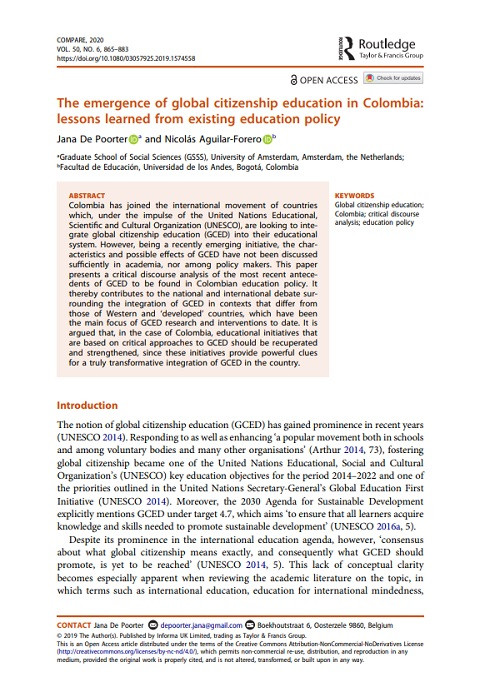 The Emergence of Global Citizenship Education in Colombia: Lessons Learned From Existing Education Policy (Compare: A Journal of Comparative and International Education; Vol. 50, No. 6) Año de publicación: 2019 Autor: Jana De Poorter | Nicolás Aguilar-Forero Autor corporativo: Taylor & Francis Colombia has joined the international movement of countries which, under the impulse of the United Nations Educational, Scientific and Cultural Organization (UNESCO), are looking to integrate global citizenship education (GCED) into their educational system. However, being a recently emerging initiative, the characteristics and possible effects of GCED have not been discussed sufficiently in academia, nor among policy makers. This paper presents a critical discourse analysis of the most recent antecedents of GCED to be found in Colombian education policy. It thereby contributes to the national and international debate surrounding the integration of GCED in contexts that differ from those of Western and ‘developed’ countries, which have been the main focus of GCED research and interventions to date. It is argued that, in the case of Colombia, educational initiatives that are based on critical approaches to GCED should be recuperated and strengthened, since these initiatives provide powerful clues for a truly transformative integration of GCED in the country.
 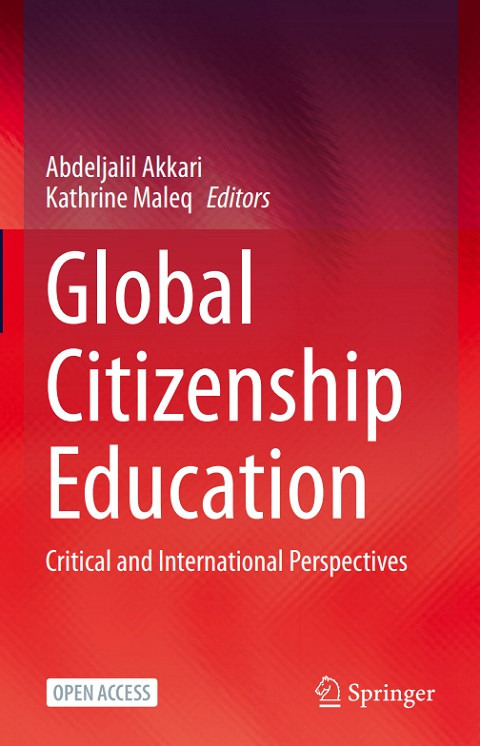 Global Citizenship Education: Critical and International Perspectives Año de publicación: 2020 Autor: Abdeljalil Akkari | Kathrine Maleq Autor corporativo: Springer Nature | Swiss National Science Foundation This open access book takes a critical and international perspective to the mainstreaming of the Global Citizenship Concept and analyses the key issues regarding global citizenship education across the world. In that respect, it addresses a pressing need to provide further conceptual input and to open global citizenship agendas to diversity and indigeneity.Social and political changes brought by globalisation, migration and technological advances of the 21st century have generated a rise in the popularity of the utopian and philosophical idea of global citizenship. In response to the challenges of today’s globalised and interconnected world, such as inequality, human rights violations and poverty, global citizenship education has been invoked as a means of preparing youth for an inclusive and sustainable world.In recent years, the development of global citizenship education and the building of students’ global citizenship competencies have become a focal point in global agendas for education, international educational assessments and international organisations. However, the concept of global citizenship education still remains highly contested and subject to multiple interpretations, and its operationalisation in national educational policies proves to be challenging.This volume aims to contribute to the debate, question the relevancy of global citizenship education’s policy objectives and to enhance understanding of local perspectives, ideologies, conceptions and issues related to citizenship education on a local, national and global level. To this end, the book provides a comprehensive and geographically based overview of the challenges citizenship education faces in a rapidly changing global world through the lens of diversity and inclusiveness.
  Basic Elements of Forgiveness and Reconciliation Theory Año de publicación: 2018 Autor: Leonel Narváez Gómez Autor corporativo: Fundación para la Reconciliación This text presents the theoretical bases for forgiveness and reconciliation that support the pedagogy and actions of the Foundation for Reconcilation. Elementos básicos de la teoría del Perdón y la Reconciliación Año de publicación: 2018 Autor: Leonel Narváez Gómez Autor corporativo: Fundación para la Reconciliación En este texto se presentan las bases teóricas para el perdón y la reconciliación que sustentan la pedagogía y acciones de la Fundación para la Reconcliación.
  Initial Teacher Education in Citizenship in Latin America: A Comparative Analysis of Six Countries Año de publicación: 2017 Autor corporativo: UNESCO Santiago This document reports on a study of initial teacher education in citizenship education in Latin America undertaken as an initiative of the OREALC-UNESCO Regional Strategy on Teacher Policies. Its purpose is to examine citizenship education in the teacher education curricula of six countries in the region –Argentina, Chile, Colombia, Guatemala, Mexico and Peru – researching the general contents of the programs, their organization, and the topics covered, and analyzing teacher preparation in this crucial dimension of the formative experience provided. La formación inicial docente en educación para la ciudadanía en América Latina: Análisis comparado de seis casos nacionales Año de publicación: 2017 Autor corporativo: UNESCO Santiago El presente informe da cuenta de un estudio impulsado por la Estrategia Regional sobre Políticas Docentes de OREALC-UNESCO, acerca de la Formación Inicial Docente en educación para la ciudadanía en América Latina. Su propósito es examinar la presencia de la educación ciudadana en el currículum de la formación de docentes de seis países de la Región –Argentina, Chile, Colombia, Guatemala, México y Perú-, interrogando acerca de qué contenidos, organizados en qué forma, y cubriendo qué temáticas, caracterizan la preparación de maestros y maestras en esta crucial dimensión de la experiencia formativa que provee la escolaridad.
 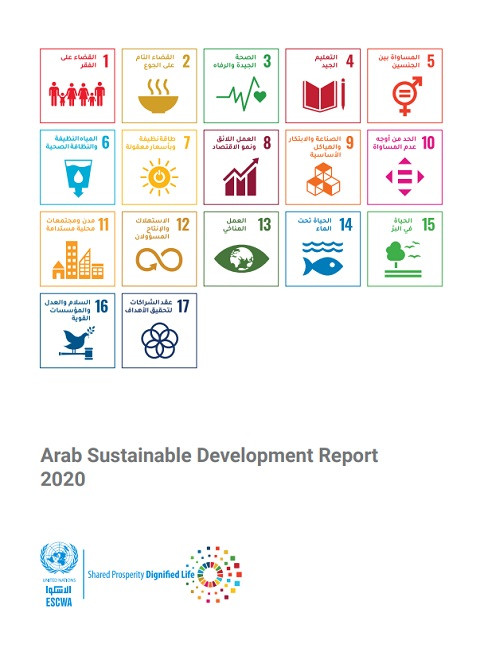 Arab Sustainable Development Report 2020 Año de publicación: 2020 Autor corporativo: United Nations Economic and Social Commission for Western Asia (ESCWA) The 2030 Agenda calls for transformative change and paradigm shifts. Mobilizing domestic and external resources is a pressing challenge in the Arab region, and the pace of efforts on the SDGs must accelerate. However, transformative change not only requires financial resources and an acceleration of efforts but, above all, demands a shift in orientation and approach towards policy integration, environmental sustainability, and universal human rights with their emphasis on equality, justice, inclusion, fundamental freedoms and participatory politics.The story of the SDGs in the Arab region, therefore, is also a story of human rights, gender equality, sustainability and integrated development. The gravity of the task, and the scale of the ambition, are greater than measuring progress at goal, target and indicator level. Five years into the era of the 2030 Agenda and the SDGs, the present report is a reminder that the starting point for implementation and the horizon for achievement must be aligned for change to be transformative. It is only through the alignment of policies and other interventions with the overarching framework of the 2030 Agenda that the region, and the world, can hope to achieve the 2030 Agenda. How close, or how far, the Arab region is from this alignment is the story the present report aims to tell.