
Recursos
Exploren una amplia gama de recursos valiosos en GCED para profundizar su comprensión y promover su búsqueda, incidencia, enseñanza y aprendizaje.
2,768 resultados encontrados
 Opportunities for Media and Information Literacy in the Middle East and North Africa: Yearbook 2016 Año de publicación: 2016 Autor: Magda Abu-Fadil | Jordi Torrent | Alton Grizzle Autor corporativo: International Clearinghouse on Children, Youth and Media (Sweden) Opportunities for Media and Information Literacy in the Middle East and North Africa is the seventeenth Yearbook published by the Clearinghouse and fills a gap in the existing body of literature about the progress of media and information literacy work in different parts of the world. This book also helps educators in the Middle East and North Africa region looking for opportunities to bring to their classrooms elements of MIL education.
 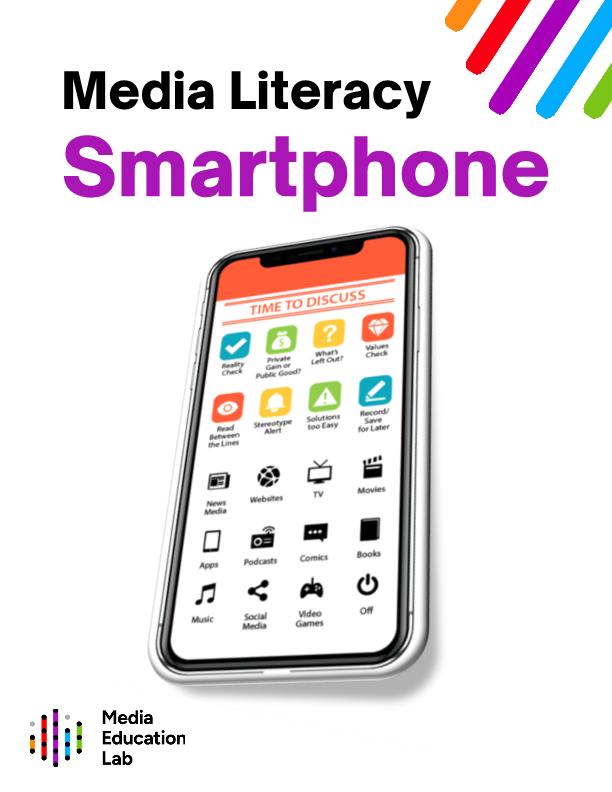 Media Literacy Smartphone Año de publicación: 2020 Autor: Renee Hobbs | Pam Steager Autor corporativo: Media Education Lab Learn how to use the Media Literacy Smartphone with learners of all ages! Download the free Learning Guide to bring the power of media literacy analysis to your learners!These easy-to-use cards, shaped exactly in the size of a smartphone, are available to educators for classroom use. You can use these simple paper cards to introduce a structured approach that helps students learn to critically analyze any media text --- web sites, books, advertising, news, TV shows, movies, video games, magazines and music. One side of the smartphone displays the various "apps" for analyzing a media text and the other side displays the "five critical questions" of media literacy developed by Renee Hobbs.Pair the smart phone with the LOVE IT OR HATE IT cards for a dynamic and fun learning experience.
  How to Understand Misinformation, Disinformation and Malinformation Año de publicación: 2020 Autor corporativo: Shout Out UK | U.S. Embassy London | Association for Citizenship Teaching (ACT) We live in a world where information is very easy to fabricate. Now more than ever, media literacy (the ability to critically analyse information) is critical for us as citizens and for our democracy to function. This video explains the difference between Misinformation, Disinformation and Malinformation and presents you with some examples! This video is part of a resource pack created and designed by Shout Out UK, supported by the US Embassy in London and in collaboration with the Association For Citizenship Teaching.For more info: https://www.shoutoutuk.org/media-literacy/
  UNESCO Arab Regional Education Support Strategy: 2016-2021 Año de publicación: 2016 Autor corporativo: UNESCO Beirut Covering the period of 2016-2021, this strategy document aims to provide tangible support for each Member State in the Arab Region, taking into account national needs and priorities and thus employing nationally relevant approaches based on the Agenda 2030 for Sustainable Development.
  Continental Overview: Bridging CESA and SDG 4 in Africa; Africa Regional Report Año de publicación: 2021 Autor corporativo: UNESCO Institute for Statistics (UIS) Monitoring progress toward Sustainable Development Goal 4 for education (SDG 4) is crucial to ensuring that children around the world have access to a quality education where they can learn and gain the skills they need to meet their full potential. SDG 4 indicators are organized with a view to global, thematic, regional and national targets.This report by the UNESCO Institute for Statistics (UIS) is the first in a series intended to bring a regional focus to SDG 4 monitoring, highlight the work being done in the regions and compare SDG 4 targets with those established by regional bodies.This new series of regional reports serve two purposes. Firstly, to map regional and SDG 4 targets to provide an overview of the symmetries between the two. Continental Overview: Bridging CESA and SDG 4 in Africa looks at how the strategic objectives of the Continental Education Strategy for Africa (CESA) compares with SDG 4 targets. Secondly, it analyses progress towards these objectives by African sub-regions.
 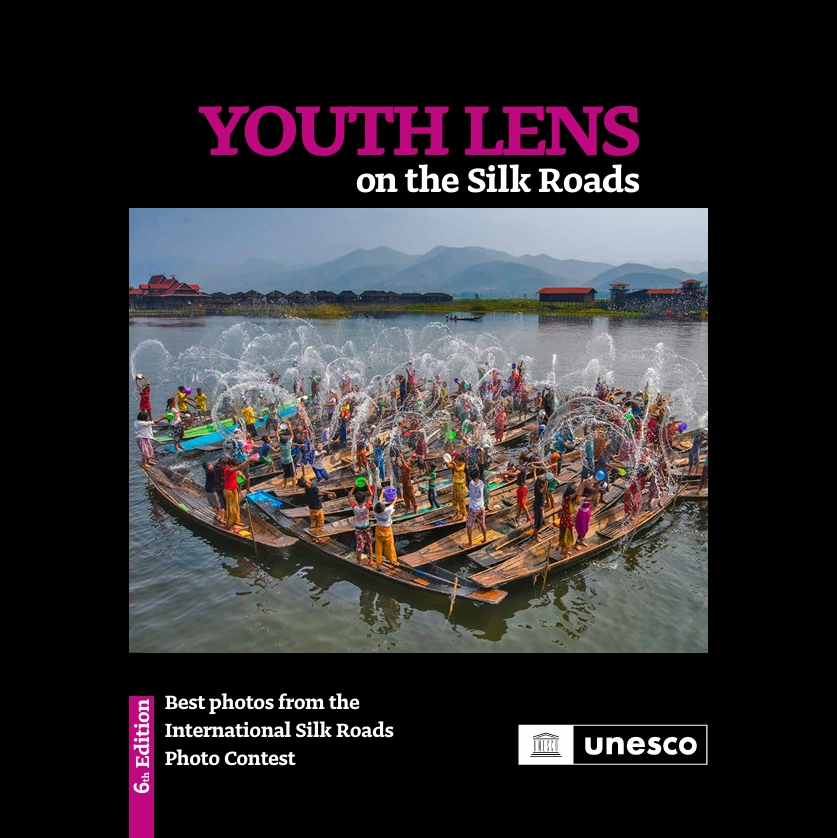 Youth Lens on the Silk Roads: Best Photos from the International Silk Roads Photo Contest; 6th Edition Año de publicación: 2026 Autor corporativo: UNESCO This album presents the sixth edition of UNESCO’s Youth Eyes on the Silk Roads international photo contest. Organized by the UNESCO Silk Roads Programme, with the support of the Beijing International Peace Culture Foundation, this annual initiative invites talented young photographers from across the globe to explore the vibrant cultural heritage and diversity that thrive along these historic routes.The term “Silk Roads” symbolizes the vast network of historical trade routes linking East, South, and Southeast Asia with Central Asia, the Russian Steppes, the Indian Subcontinent, the Iranian and Anatolian Plateaus, and the Arabian Peninsula. These routes also extended into North and Northeast Africa and Europe, eventually reaching Western Europe and the Iberian Peninsula. Over centuries, these routes served as pathways for trade and vital corridors for cultural exchange, the dissemination of knowledge, and the blending of diverse traditions and practices. This intercultural exchange has significantly shaped contemporary societies, enriched identities, and fostered dialogue and mutual understanding among cultures.In this sixth edition, held under the theme ‘Life Celebrations’, young photographers have vividly documented festivities and cultural moments that highlight joy, unity, and shared heritage along the Silk Roads. Their powerful images capture how these celebrations and rituals continue to reflect and strengthen centuries-old connections between communities.The Youth Lens on the Silk Roads album presents 66 striking photographs from two age categories (14-17 and 18-25), illustrating the vibrant mosaic of cultural celebrations that unite communities across landscapes. Each image reveals the energy, resilience, and profound cultural richness of contemporary Silk Road societies. Together, these photographs celebrate the enduring legacy and dynamic spirit of the Silk Roads today.
  ‘Hate Speech’ Explained: A Toolkit Año de publicación: 2015 Autor corporativo: ARTICLE 19 In this toolkit, ARTICLE 19 provides a guide to identifying ’hate speech‘ and how effectively counter it, while protecting the rights to freedom of expression and equality. It responds to a growing demand for clear guidance on identifying “hate speech,” and for responding to the challenges ‘hate speech’ poses within a human rights framework.The toolkit is guided by the principle that coordinated and focused action taken to promote the rights to freedom of expression and equality is essential for fostering a tolerant, pluralistic and diverse democratic society in which all human rights can be realised for all people.As such, it addresses three key questions: How do we identify ‘hate speech’ that can be restricted, and distinguish it from protected speech?What positive measures can States and others take to counter ‘hate speech’? Which types of ‘hate speech’ should be prohibited by States, and under which circumstances? The toolkit is guided by the principle that coordinated and focused action taken to promote the rights to freedom of expression and equality is essential for fostering a tolerant, pluralistic and diverse democratic society in which all human rights can be realised for all people. It is informed by, and builds upon, ARTICLE 19’s existing policy work in this field.In Part I, we outline that there is no uniform definition of ‘hate speech’ under international human rights law, rather, it is a broad concept which captures a wide range of expression. The toolkit advances a typology for identifying and distinguishing different forms of ‘hate speech’ according to their severity, guided by states’ international human rights law obligations. In Part II, we provide guidance on what policy measures State and non-state actors can undertake to create an enabling environment for freedom of expression and equality that addresses the underlying causes of ‘hate speech’ while maximising opportunities to counter it.Finally, in Part III, we outline the exceptional circumstances in which the State is obliged by international law to prohibit the most severe forms of ‘hate speech’, and where also States may under international law place other restrictions on ‘hate speech’. This includes guidance on ensuring that such prohibitions are not abused, and to ensure that where sanctions are imposed they are appropriate and proportionate, as well as ensuring support and redress for victims.ARTICLE 19 believes that ensuring that responses to ‘hate speech’ comply with international human rights law is crucial. Prohibitions that censor offensive viewpoints are often counter-productive to the aim of promoting equality, as they fail to address the underlying social roots of the kinds of prejudice that drive ‘hate speech’. In most instances, equality is better-promoted through positive measures which increase understanding and tolerance, rather than through censorship.This toolkit is not a definitive version, and will be continuously updated to reflect the developing case law and best practices in this area.
  Glocal Education in Practice: Teaching, Researching, and Citizenship (BCES Conference Books; Vol. 17) Año de publicación: 2019 Autor: Nikolay Popov | Charl Wolhuter | Louw de Beer | Gillian Hilton | James Ogunleye | Elizabeth Achinewhu-Nworgu | Ewelina Niemczyk Autor corporativo: Bulgarian Comparative Education Society (BCES) This volume contains selected papers submitted to the XVII Annual International Conference of the Bulgarian Comparative Education Society (BCES) held in June 2019 in Pomorie, Bulgaria. The XVII BCES Conference theme is Glocal Education in Practice: Teaching, Researching, and Citizenship. The book includes 34 papers written by 69 authors from 20 countries.
  Mapping of Media Literacy Practices and Actions in EU-28 Año de publicación: 2016 Autor corporativo: European Audiovisual Observatory | Council of Europe A project conducted by the European Audiovisual Observatory and financed by the European Commission This study aims at analysing the various media literacy initiatives on a national or regional level in order to provide an overview of what is currently being undertaken. This is the first major mapping exercise to survey the field in Europe. Although this study does not aim at covering the entire media literacy initiatives, it provides a detailed overview of the main trends, coming out of a selection of 547 featured projects involving 939 stakeholders across the European Union, which were identified through a questionnaire addressed at national experts from the different EU-28 member states. So what is Europe doing to encourage our media literacy? What measures are being taken at national and European levels to foster our critical appreciation and understanding of the mass media? The results of this study can be found in a general report accompanied by 4 annexes: Annex 1 provides national summaries showing the findings of the responses concerning each of the 28 EU member states; Annex 2 contains the list of the 547 featured projects; Annex 3 summarises the 145 case-study projects; Annex 4 contains the original responses from the 29 national experts, which are accessible in separate files available on the website of the European Commission.
 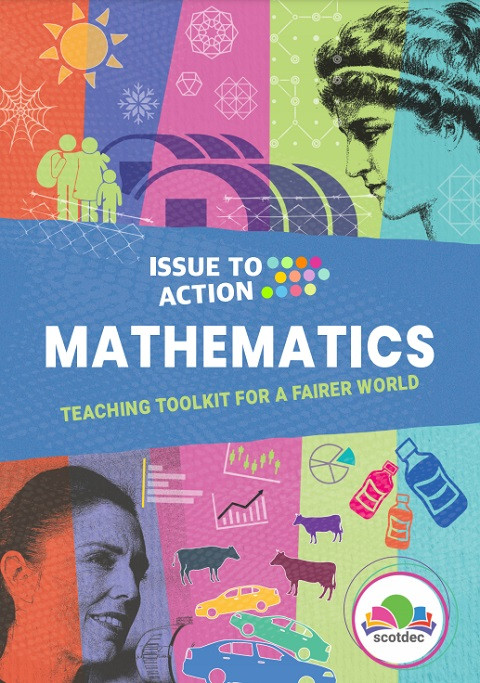 Issue to Action: Mathematics; Teaching Toolkit for a Fairer World Año de publicación: 2021 Autor: Corinne Angier Autor corporativo: Scotdec These resources offer maths teams an opportunity to take an applications approach within the BGE phase. You might want to make connections to the UN Sustainable Development Goals and you can find some introductory activities to the goals here.The materials explore 3 broad themes – climate change, gender equality and migration – with 2 sets of activities for each theme supported with a PowerPoint presentation.The lessons and worksheets in the booklet and accompanying PowerPoints are all free to download below. All activities are mapped to ‘Experiences and Outcomes’, benchmarks and core maths skills are highlighter.