
Recursos
Exploren una amplia gama de recursos valiosos en GCED para profundizar su comprensión y promover su búsqueda, incidencia, enseñanza y aprendizaje.
2,771 resultados encontrados
 التعليم متعدد الثقافات بين النمذجة التنظيرية وإشكالية الممارسات : دراسة مقارنة بين مصر وفرنسا واليابان Año de publicación: 2006 Autor: Ahmed Aidrous | Mohammed Awad Autor corporativo: Zagazig University تركز هذه الورقة على دراسة التعددية الثقافية كمفهوم والنظريات والأطر والنماذج التطبيقية المرتبطة بها. وتستعرض الدراسة خبرة كلا من فرنسا واليابان ومصر، وتضع مقارنات بينها. تنتهي الدراسة بوضع تصور مقترح للتعليم متعدد الثقافات في ضوء الخبرات المعروضة.
 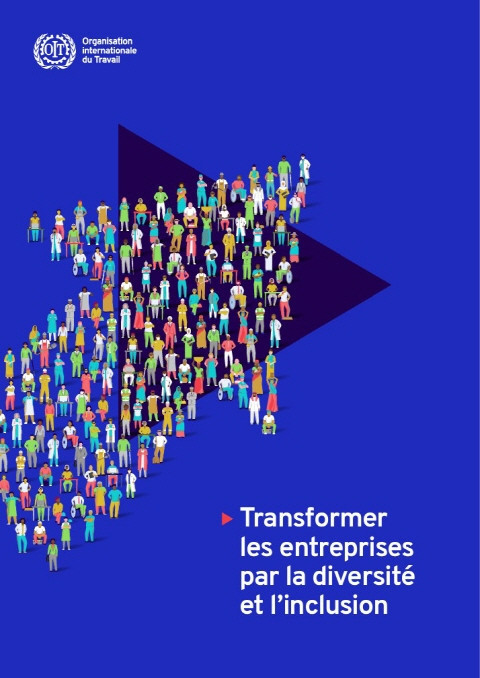 Transformer les entreprises par la diversité et l’inclusion Año de publicación: 2022 Autor corporativo: Organisation Internationale du Travail Depuis plus de cent ans, l’Organisation internationale du Travail (OIT) promeut le travail productif et décent des hommes et des femmes dans des conditions de liberté, de dignité, de sécurité économique et d’égalité des chances. L’OIT s’efforce de promouvoir des lieux de travail plus inclusifs et de lutter contre les discriminations pour tous les motifs, notamment le sexe, l’origine ethnique, la race, le statut d’autochtone, le handicap, la séropositivité, l’orientation sexuelle et l’identité de genre, en garantissant l’égalité des chances et de traitement au travail. L’action de l’OIT dans ce domaine participe à la réalisation du Programme de développement durable à l’horizon 2030 et de l’engagement de ne laisser personne de côté. En établissant des normes internationales du travail, en fournissant des conseils techniques et en renforçant les capacités de ses mandants, l’OIT a contribué à l’élaboration et à l’application d’une législation, de politiques et de bonnes pratiques d’entreprise inclusives et à la promotion de l’égalité et de la non-discrimination sur le lieu de travail. For over a hundred years, the International Labour Organization (ILO) has promoted productive and decent work for men and women in conditions of freedom, dignity, economic security and equal opportunity. The ILO strives to promote more inclusive workplaces and to combat discrimination on all grounds, including gender, ethnic origin, race, indigenous status, disability, HIV status, sexual orientation and gender identity, guaranteeing equality of opportunity and treatment at work. The ILO's action in this field contributes to the achievement of the 2030 Agenda for Sustainable Development and the commitment to leave no one behind. By setting international labor standards, providing technical advice and building the capacity of its constituents, the ILO has contributed to the development and application of inclusive legislation, policies and good corporate practices, and to the promotion of equality and non-discrimination in the workplace.
  Cultural Diversity and Interculturality in Higher Education. Experiences in Latin America Año de publicación: 2008 Autor: Daniel Mato Autor corporativo: UNESCO International Institute for Higher Education in Latin America and the Caribbean (IESALC) The work that we present below under the title Cultural Diversity and Interculturality in Higher Education. Experiences in Latin America offers a documented and novel analysis on the subject, accompanied by more than thirty studies on concrete experiences that allow to appreciate the richness and vitality that this field exhibits in Latin America, as well as the problems and challenges it faces. The volume brings together thirty-six studies of experiences of the types mentioned, each of which identifies achievements, obstacles and learning, and culminates in offering recommendations. This collection of texts is preceded by a study of regional scope that analyzes significant contextual elements, as well as salient aspects of the studied experiences, evaluates problems, challenges and opportunities, and offers a set of recommendations. Diversidad Cultural e Interculturalidad en Educación Superior. Experiencias en América Latina Año de publicación: 2008 Autor: Daniel Mato Autor corporativo: UNESCO International Institute for Higher Education in Latin America and the Caribbean (IESALC) La obra que a continuación presentamos bajo el título Diversidad Cultural e Interculturalidad en Educación Superior. Experiencias en América Latina ofrece un documentado y novedoso análisis sobre el tema, acompañado de más de treinta estudios sobre experiencias concretas que permiten apreciar la riqueza y vitalidad que este campo exhibe en América Latina, así como los problemas y desafíos que enfrenta. El volumen reúne treinta y seis estudios de experiencias de los tipos mencionados, cada uno de los cuales identifica logros, obstáculos y aprendizajes, y culmina ofreciendo recomendaciones. Esa colección de textos es precedida por un estudio de alcance regional que analiza elementos contextuales significativos, así como aspectos salientes de las experiencias estudiadas, evalúa problemas, retos y oportunidades, y ofrece un conjunto de recomendaciones.
  The Game as a Fun Strategy for the Inclusive Education of Good Living Año de publicación: 2017 Autor: Evelyn Fernanda Córdoba Pillajo | Fernando Lara Lara | Andrés García Umaña The discussion on the implementation of the educational political project of sumak kawsay in Ecuador demands resources and proposals that contribute to its development. In this sense it is proposed the game as a possible didactic resource that can offer spaces of educational inclusion of the different facets of the human being that demand good living demands as long as the constitutionally conceptualized the right to education in the holistic formation of the human being, the formation of consciousness, the identifycation of the ego as a barrier to dialogue and the possibilities of interculturality, humility through self-criticism among others. This paper aims to present a reflection and an idea about the game as a playful strategy in the learning of inclusive practices as well as justify the promotion as Formative medium of an educative culture of sumak kawsay. El Juego como Estrategia Lúdica para la Educación Inclusiva del Buen Vivir Año de publicación: 2017 Autor: Evelyn Fernanda Córdoba Pillajo | Fernando Lara Lara | Andrés García Umaña La discusión sobre la implementación del proyecto político educativo del sumak kawsay en Ecuador demanda de recursos y propuestas que puedan contribuir a su desarrollo. En este sentido se propone lo lúdico como un posible recurso didáctico que permita ofrecer espacios de inclusión educativa de las distintas facetas del ser humano que demanda el buen vivir tanto en cuanto se conceptualiza constitucionalmente el derecho a la educación en su formación holística, de la conciencia, identificación del ego como barrera para el diálogo y las posibilidades de la interculturalidad, o la humildad mediante la autocrítica, entre otras. En este trabajo se persigue plantear una sucinta reflexión y propuesta concerniente al juego como estrategia lúdica favorecedora de prácticas inclusivas, así como justificar su promoción como medio formativo de una cultura educativa del sumak kawsay.
 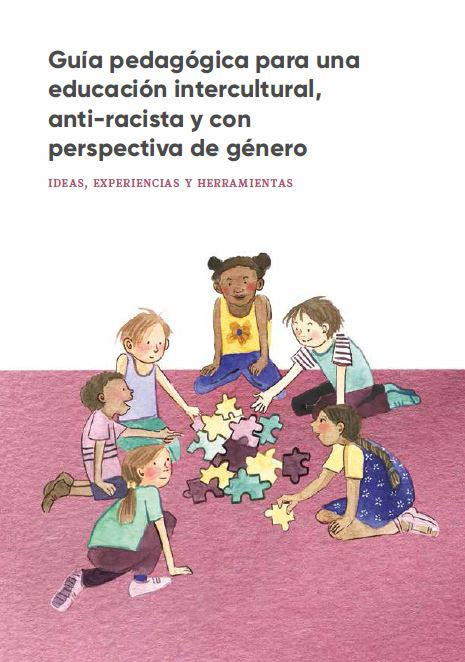 Pedagogical Guide for an Intercultural, Anti-racist and Gender Perspective Education: Ideas, Experiences and Tools Año de publicación: 2017 Autor: Carolina Stefoni | Andrea Riedemann | Fernanda Stang | Andrea Guerrero | Antonia Garcés | Marta Camarena Autor corporativo: Programa Interdisciplinario de Estudios Migratorios (PRIEM) | Universidad Alberto Hurtado | Fundación para la Superación de la Pobreza (FUSUPO) The main purpose of this Guide is, then, to share some ideas, tools and experiences that can help build and walk the path towards an intercultural, anti-racist and gender perspective education in various educational spaces. It is directed primarily - though not exclusively, of course - to all those people who are part of formal and informal teaching-learning processes. It is important to emphasize that the Guide does not pretend to be a recipe for a mechanical application, but a tool box that each educational community can use considering its specific context, its particular needs and its potentialities. Guía pedagógica para una educación intercultural, anti-racista y con perspectiva de género: ideas, experiencias y herramientas Año de publicación: 2017 Autor: Carolina Stefoni | Andrea Riedemann | Fernanda Stang | Andrea Guerrero | Antonia Garcés | Marta Camarena Autor corporativo: Programa Interdisciplinario de Estudios Migratorios (PRIEM) | Universidad Alberto Hurtado | Fundación para la Superación de la Pobreza (FUSUPO) El propósito principal de esta Guía es, entonces, compartir algunas ideas, herramientas y experiencias que puedan ayudar a construir y andar el camino hacia una educación intercultural, anti-racista y con perspectiva de género en diversos espacios educativos. Está dirigida principalmente -aunque no de manera exclusiva, por supuesto- a todas aquellas personas que sean parte de procesos de enseñanza-aprendizaje formales e informales. Es importante enfatizar que la Guía no pretende ser un recetario para una aplicación mecánica, sino una caja de herramientas que cada comunidad educativa puede usar considerando su contexto específico, sus necesidades particulares y sus potencialidades. Multicultural Education between Theoretical Modeling and Problematic Practices: A Comparative Study between Egypt, France, and Japan Año de publicación: 2006 Autor: Ahmed Aidrous | Mohammed Awad Autor corporativo: Zagazig University This paper focuses on studying multiculturalism as a concept, theories, frameworks and associated applied models. The study reviews the experience of France, Japan and Egypt, and makes comparisons between them. The study ends with a proposed vision for multicultural education in light of the experiences presented.
 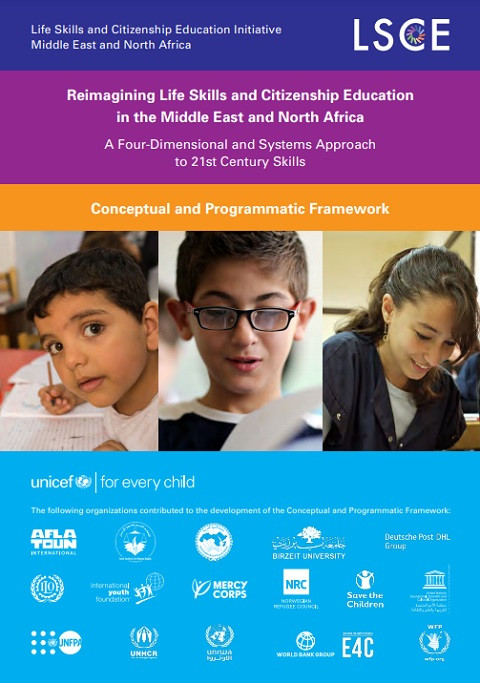 Reimagining Life Skills and Citizenship Education in the Middle East and North Africa: A Four-Dimensional and Systems Approach to 21st Century Skills; Conceptual and Programmatic Framework Año de publicación: 2017 Autor corporativo: UNICEF Middle East and North Africa The situation of learning in MENA calls for a holistic, lifelong and rights-based vision of education that maximizes the potential of all children and youth in the region and better equips them to create meaning out of knowledge and to face the transitions from childhood to adulthood, from education to work, and from unreflective development to responsible and active citizenship. This is what drives the MENA Life Skills and Citizenship Education (LSCE) Initiative, kicked off in 2015 with the aim of supporting the countries of the region – conceptually, programmatically and technically – to improve learning and to better invest such learning in individual, social and economic development.The LSCE Conceptual and Programmatic Framework (CPF) puts forth a roadmap to guide policies, strategies and programmes on life skills and citizenship education supporting the region-wide efforts to provide children and youth with opportunities to learn, transition from childhood to adulthood, move from school to work settings, and become responsible and active citizens of their communities.A set of twelve core life skills for MENA has been identified using the four-dimensional learning model: ‘Learning to Know’ (Cognitive Dimension), ‘Learning to Do’ (Instrumental Dimension), ‘Learning to Be’ (Individual Dimension), and ‘Learning to Live Together’ (Social Dimension). The twelve core life skills are life-long, and they build on evidence that underlines the importance of skills acquisition from an early age. Furthermore, the twelve core life skills are acquired and sustained through all forms of learning in a systems approach that recognizes multiple pathways of learning, formal, non-formal and informal.