
Recursos
Exploren una amplia gama de recursos valiosos en GCED para profundizar su comprensión y promover su búsqueda, incidencia, enseñanza y aprendizaje.
2,770 resultados encontrados
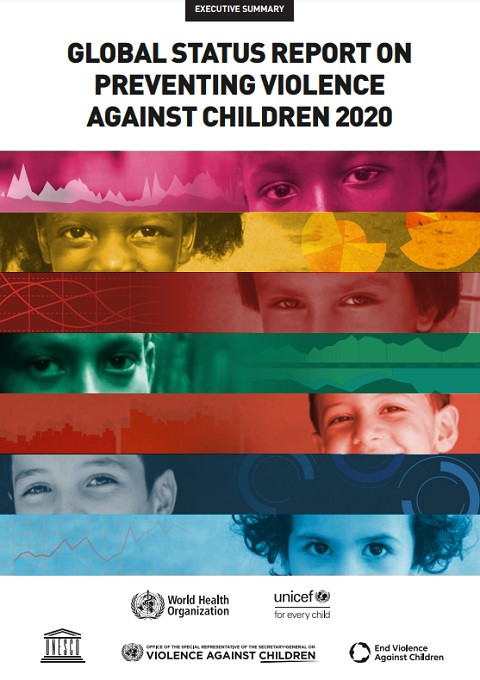 [Resumen] Informe sobre la situación mundial de la prevención de la violencia contra los niños de 2020 Año de publicación: 2020 Autor corporativo: World Health Organization (WHO) En el Informe sobre la situación mundial de la prevención de la violencia contra los niños de 2020 se recogen los progresos realizados por los países en la aplicación de los Objetivos de Desarrollo Sostenible (ODS) en esta esfera. El documento, que publican conjuntamente la OMS, el UNICEF, la UNESCO, el Representante Especial del Secretario General de las Naciones Unidas sobre la violencia contra los niños y la Alianza Mundial para poner fin a la violencia contra los niños, reúne las aportaciones de más de 1000 instancias normativas procedentes de 155 países que evaluaron la situación nacional comparándola con los enfoques basados en datos probatorios que se presentan en las siete estrategias INSPIRE que tratan sobre este tema. El informe muestra que, si bien muchos de los países participantes están adoptando algunas medidas, sus propios funcionarios reconocen que son claramente insuficientes para alcanzar las metas de los ODS. En la parte final del documento se formulan recomendaciones para que los países potencien la aplicación de las estrategias INSPIRE y avancen más rápidamente hacia su consecución. [الملخص] تقرير الحالة العالمية بشأن منع العنف ضد الأطفال لعام 2020 Año de publicación: 2020 Autor corporativo: World Health Organization (WHO) يتناول تقرير الحالة العالمي عن الوقاية من العنف ضد الأطفال لعام 2020 ما أحرزته البلدان من تقدّم في تحقيق أهداف التنمية المستدامة الرامية إلى وضع حدّ للعنف ضد الأطفال. ويستند هذا التقرير الصادر بشكل مشترك عن منظمة الصحة العالمية واليونسيف واليونسكو والممثلة الخاصة للأمين العام للأمم المتحدة المعنية بالعنف ضد الأطفال والشراكة العالمية من أجل إنهاء العنف ضد الأطفال، إلى مدخلات تم تجميعها مما يزيد على 1000 من صنّاع القرار في 155 بلداً، استناداً إلى تقييم حالة الوقاية من العنف في بلدانهم من خلال تطبيق النُهج المسندة بالبيّنات المحددة في حزمة إنسباير: الاستراتيجيات السبع لإنهاء العنف ضد الأطفال. ويُظهر التقرير أنه في حين اتخذت العديد من البلدان المشاركة إجراءات بالفعل في هذا الصدد، فإن المسؤولين الحكوميين من هذه البلدان نفسها يعترفون بأن جهودهم لا تكفي بكل وضوح لبلوغ غايات أهداف التنمية المستدامة ذات الصلة.ويخلص التقرير إلى توصيات ترمي إلى تعزيز الجهود الرامية إلى تطبيق إجراءات حزمة إنسباير وتسريع وتيرة التقدم المحرز على المستوى الوطني. [摘要] 2020年关于预防暴力侵害儿童行为的全球状况报告 Año de publicación: 2020 Autor corporativo: World Health Organization (WHO) 《2020年预防暴力侵害儿童行为全球状况报告》列出了各国在实现旨在终止暴力侵害儿童行为方面的可持续发展目标进展。报告由世卫组织、儿基会、教科文组织、联合国秘书长暴力侵害儿童问题特别代表和全球终止暴力侵害儿童行为伙伴关系联合出版,汇集了来自155个国家的1000多名决策者的意见,他们根据《INSPIRE:消除针对儿童的暴力行为的七项策略》中提出的基于证据的方法评估了预防暴力行为状况。报告显示,许多参与国正在采取一些行动,而这些国家的政府官员承认,他们做出的努力显然不足以实现可持续发展目标。报告最后提出了努力促进INSPIRE的实施以及加快国家进展的建议。
 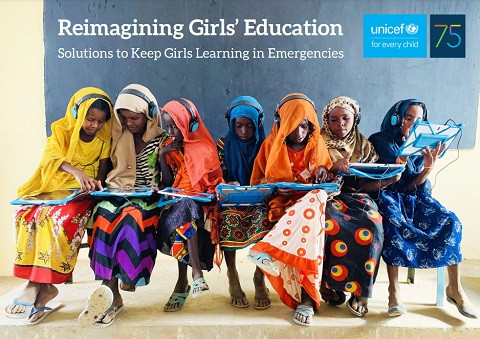 Reimagining Girls’ Education: Solutions to Keep Girls Learning in Emergencies Año de publicación: 2021 Autor corporativo: United Nations Children's Fund (UNICEF) Reimagining Girls’ Education: Solutions to Keep Girls Learning in Emergencies presents an empirical overview of what works to support learning outcomes for girls in emergencies. Research shows that girls in emergencies are disadvantaged at all stages of education and are more likely to be out-of-school than in non-emergency settings. Girls are also struggling to learn.This solutions book seeks to highlight promising evidence-based actions in education for decision makers who are designing and implementing interventions to support girls’ education in low and middle-income country humanitarian settings and settings where education has been interrupted by the COVID‑19 pandemic. It documents practical examples of approaches that have been or are being tested, and from which lessons can be drawn.The overarching aim is that this evidence be used to inform programming in crises and support diverse stakeholders in mitigating the impact of emergencies on girls’ education.
 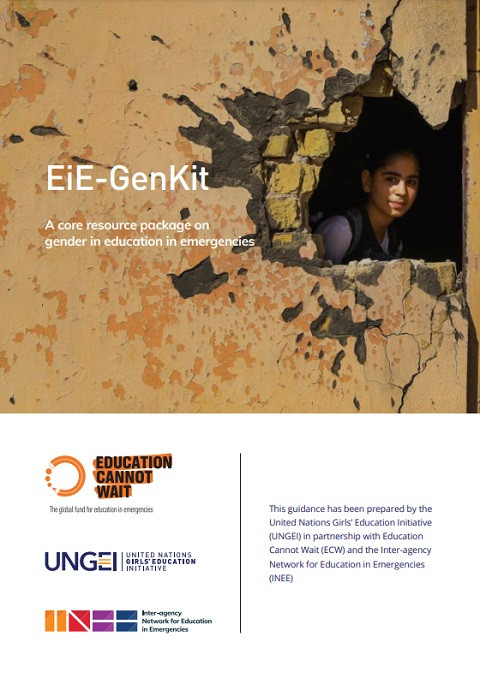 EiE-GenKit: A Core Resource Package on Gender in Education in Emergencies Año de publicación: 2021 Autor corporativo: Education Cannot Wait (ECW) | Inter-agency Network for Education in Emergencies (INEE) | United Nations Girls' Education Initiative (UNGEI) When gender-responsive, quality education is available to all it has the potential to transform societies and build sustainable peace. A joint initiative from the Inter-agency Network for Education in Emergencies (INEE), Education Cannot Wait (ECW) and the UN Girls’ Education Initiative (UNGEI), the EiE-GenKit is a core resource package for gender in education in emergencies. The EiE-GenKit is the first resource of its kind, providing education practitioners with practical tools to promote gender-responsive programming from crisis to peace and sustainable development.The EiE-GenKit is based on extensive research and consultation with the latest resources, evidence, new tools and good practice available in one easy-to-use package. The EiE-GenKit builds on existing humanitarian processes for a streamlined approach to gender-responsive EiE. The EiE-GenKit offers tools for practical and immediate use including checklists, tipsheets and assessment templates supporting practitioners to ensure that each phase of an EiE intervention is gender-responsive. Bridging the gap between what we know about gender-responsive EiE and the tools we need to make it happen, the EiE-GenKit aims to promote improved gender and education outcomes of learners living in crises.
 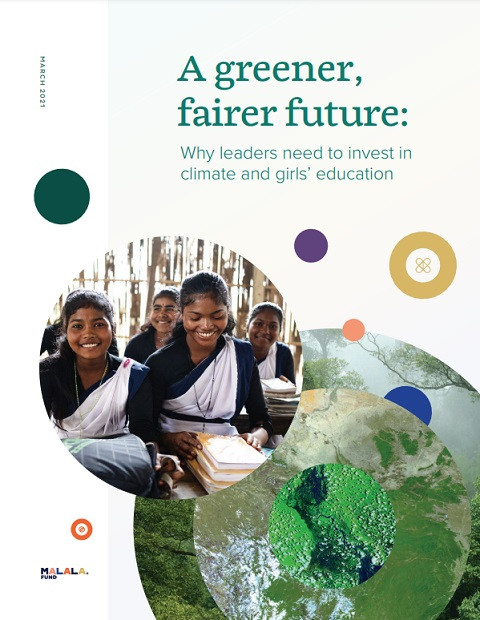 A Greener, Fairer Future: Why Leaders Need to Invest in Climate and Girls’ Education Año de publicación: 2021 Autor: Lucia Fry | Philippa Lei Autor corporativo: Malala Fund The world is on the brink of a climate catastrophe — and girls are disproportionately bearing the impact. Climate-related events like flooding, droughts and increased exposure to zoonotic diseases amplify the inequalities girls face and further limit their ability to access and complete their education. Malala Fund’s new report, A greener, fairer future: Why leaders need to invest in climate and girls' education, estimates that in 2021 climate-related events will prevent at least four million girls in low- and lower-middle-income countries from completing their education. If current trends continue, by 2025 climate change will be a contributing factor in preventing at least 12.5 million girls from completing their education each year.Yet evidence shows that closing gender gaps in education can help countries better adapt to the effects of climate change and decrease the rate and impact of global warming.“Girls in lower-income countries are the least responsible for the climate crisis, so it’s a travesty that it now threatens their very lifeline to a brighter future: quality education,” said Lucia Fry, Director of Research and Policy at Malala Fund. “Malala Fund wants leaders at COP26 to hear young people’s demands around education. They know that climate action helps girls stay in school, which in turn helps countries tackle the climate crisis. Young people are demanding an education that will prepare them to adapt to the effects of climate change and challenge the root causes of the crisis.”A greener, fairer future outlines the origins of the climate emergency and explains how confronting issues like the legacy of colonialism, racial discrimination and gender inequality through education is key to finding a sustainable solution to the crisis. The paper introduces the Gender-Equal Green Learning Agenda, a new framework to help leaders address the climate crisis through education.In this report, Malala Fund recommends how leaders can take urgent climate action at meetings this year, like COP26. This includes reducing carbon emissions, improving girls’ access to education, helping communities adapt to the realities of climate change and transforming education systems to provide all students with the knowledge, skills and values needed to challenge the social and economic inequalities fuelling the climate crisis.For more about the links between climate change and girls’ education, read the full paper below.
 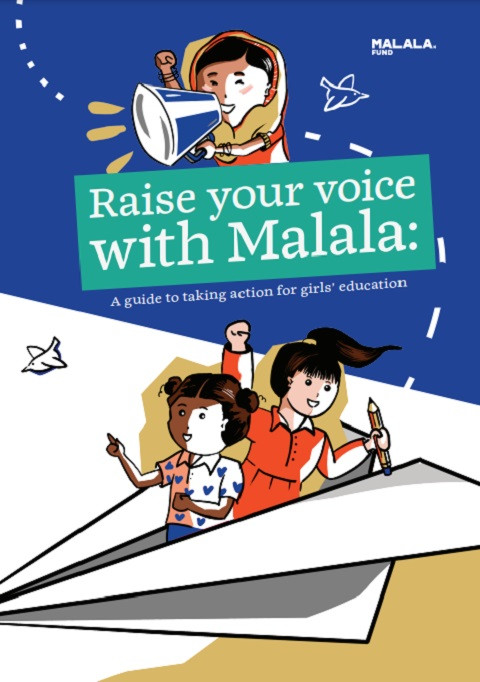 Raise Your Voice With Malala: A Guide to Taking Action for Girls’ Education Año de publicación: 2018 Autor: Emily Laurie | Eleanor Gall Autor corporativo: Malala Fund This guide gives young activists the tools to raise their voices and make change happen. Girls around the world are standing up in support of their out-of-school sisters and fighting to see every girl complete 12 years of free, safe, quality education. By taking action in their communities, girls can contribute to the peace and prosperity of our entire world. The guide includes real stories about girls around the world working to make sure all girls have the opportunity to go to school.
 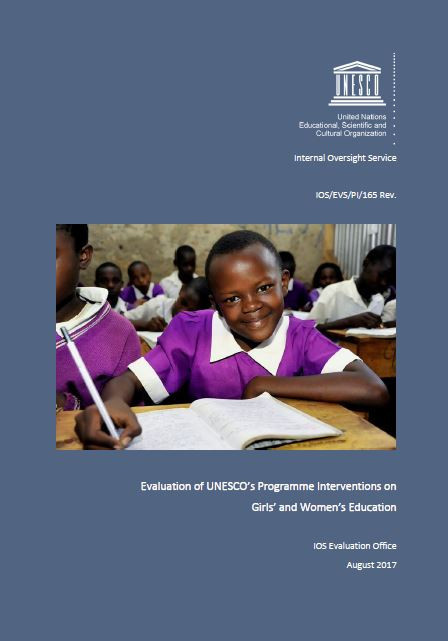 Evaluation of UNESCO's Programme Interventions on Girls' and Women's Education Año de publicación: 2017 Autor: Michael Reynolds, Martina Rathner, Estelle Loiseau Autor corporativo: UNESCO Internal Oversight Service (IOS) Since 2008, Gender Equality has been one of two global priorities for UNESCO. In May 2011, UNESCO launched the Global Partnership for Girls’ and Women’s Education, also known as “Better Life, Better Future”, which aims to increase learning opportunities for adolescent girls and women and to find solutions to some of the biggest obstacles to their education. To further advance the global priority of Gender Equality, since 2015 a dedicated Section of Education for Inclusion and Gender Equality specifically addresses the gender dimensions in education that contribute to differential access, participation, completion, and learning outcomes by boys and girls, and men and women. The evaluation examines UNESCO’s programme interventions in girls’ and women’s education during the period 2015 to 2017, in particular to ascertain the relevance, effectiveness, efficiency and sustainability of initiatives, and to clarify the strategic role and positioning of the Organization in supporting girls’ and women’s education at regional and country levels.The evaluation found that although UNESCO’s efforts for enhancing girls’ and women’s education are clearly aligned to SDG 4 and SDG 5 and also broadly in line with the overall principle of leaving no one behind, there is at times a trade-off between targeting the hardest to reach and other donor priorities, and UNESCO needs to more clearly position its efforts in support of girls’ and women’s education and its niche in the 2030 Agenda. Furthermore, continued efforts are required to scale up and/or replicate small-scale interventions, to better ensure sustainability and to consolidate mechanisms for coordination and information sharing among different interventions to seize synergies and enhance organizational learning.
  Securitising Education to Prevent Terrorism or Losing Direction? Año de publicación: 2016 Autor: Bill Durodie Autor corporativo: Society for Educational Studies | Taylor & Francis This article examines the growing relationship between security and education, particularly in the light of the UK government’s Prevent Duty that seeks to tackle radicalization in a variety of milieus, including universities. However, rather than seeing this process as being merely one-way, through a so-called securitization of education, what is explored here is the dialectic between these two spheres. It is suggested that a heightened sensitivity to the supposed consequences of inflammatory rhetoric on the well-being of supposedly suggestible or vulnerable students has been in existence within education for quite some time. Securitising Education to Prevent Terrorism or Losing Direction? Año de publicación: 2016 Autor: Bill Durodie Autor corporativo: Society for Educational Studies | Taylor & Francis Cet article examine le lien grandissant entre la sécurité et l'éducation, à la lumière, en particulier, du programme « Prevent Duty » du gouvernement britannique, qui vise à lutter contre la radicalisation dans différents milieux, tels que les universités. Cependant, plutôt que de voir un simple processus de sécurisation de l'éducation, il s’agit ici d’explorer la dialectique entre ces deux éléments. On pose comme hypothèse qu'une sensibilité accrue aux soi-disant conséquences d’un discours enflammé sur le bien-être des élèves prétendus influençables ou vulnérables existe au sein de l'éducation depuis un certain temps.