
Recursos
Exploren una amplia gama de recursos valiosos en GCED para profundizar su comprensión y promover su búsqueda, incidencia, enseñanza y aprendizaje.
2,769 resultados encontrados
 Developing Holocaust Curricula: The Content Decision-Making Process The content decision-making process involved in developing Holocaust curricula is unusually complex and problematic. Educators must consider factors such as historical accuracy, selection of topics covered, potential teaching materials (such as textbooks and literary texts), and graphic materials (such as films and photographs) as they plan their Holocaust units. Judiciously considered decisions regarding these factors allow teachers to present accurate, appropriate and meaningful units on the subject, thus conveying the story of the Holocaust in ways that are pedagogically sound and historically viable. Accordingly, the author does not focus on the content to be included in a Holocaust unit but rather considers several factors important to selecting that content. (By the author)
  Sharing Malaysian experience in participation of girls in STEM education Año de publicación: 2016 Autor corporativo: UNESCO International Bureau of Education (IBE) The Malaysia government has placed STEM as a focus in developing the country towards achieving the status of a developed nation. The government acknowledges the role of women as equal partners in nation building. Thus, various policies ranging from economy, education, women’s welfare and human resources have been formulated through the years. These policies have resulted in among others, the increase in women researchers from 35.8% in 2004 to 49.9% in 2012 as well as more women’s participation in selected STEM courses at the tertiary level. A total of 84 girls’ day schools with 6 of them as residential STEM Girls’ schools have been built since 1939. There are many female role models in STEM for the girls to emulate. This has been made possible by the successful implementation of the various policies related to women in STEM as well as innovative measures in facing the continuing challenges in STEM education.
  Ten Clues for Rethinking Curriculum (In-Progress Reflection; No. 42, 2021) Año de publicación: 2021 Autor: Renato Opertti Autor corporativo: UNESCO International Bureau of Education (IBE) This discussion document highlights the urgency of rethinking curriculum in light of reinforcing the commitments of the Education 2030 Agenda on learning, disruptive systemic worldwide societal changes, and crucially, the profound transformation of education and education systems post Covid-19. Curriculum is always at the core of giving effect to social aspirations and ideals on the why, what, how, when, and where of teaching, learning, and assessing. We propose a series of 10 interconnected clues to deepen on the systemic and holistic understanding of curriculum as contributing to lay foundations for a better, sustainable and fair future. These clues are: understanding the new generations; combatting factors related to vulnerability; reinforcing understanding between school and families; deepening glo-local education; enhancing the focus on the person; promoting synergies among values; valuing diversity; focusing on education that enhances freedom; moving toward hybrid modes of education; and inspiring affection for educators.
  The Course: Citizenship Education Año de publicación: 2021 Autor: Bader Abdul Qadir Autor corporativo: University of Jordan This file is a blueprint for the Citizenship education course at the University of Jordan. The course outline shows the course objectives, plan, and topics covered. At the end of the chart is a list of references. مقرر التربية الوطنية Año de publicación: 2021 Autor: Bader Abdul Qadir Autor corporativo: University of Jordan الملف هو مخطط لمقرر "التربية الوطنية" بالجامعة الأردنية. يوضح مخطط المقرر أهداف المقرر والخطة والمواضيع التي يغطيها. ويوجد في نهاية المخطط قائمة من المراجع.
 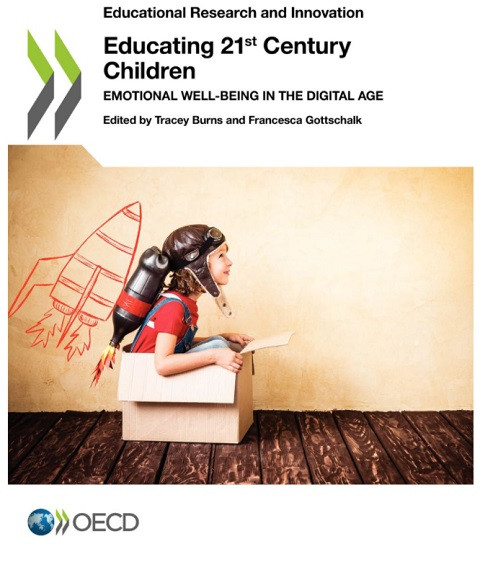 Education 21st Century Children: Emotional Well-being in the Digital Age (Educational Research and Innovation) Año de publicación: 2019 Autor corporativo: Organisation for Economic Co-operation and Development (OECD) This report examines modern childhood, looking specifically at the intersection between emotional well-being and new technologies. It explores how parenting and friendships have changed in the digital age. It examines children as digital citizens, and how best to take advantage of online opportunities while minimising the risks. The volume ends with a look at how to foster digital literacy and resilience, highlighting the role of partnerships, policy and protection.
 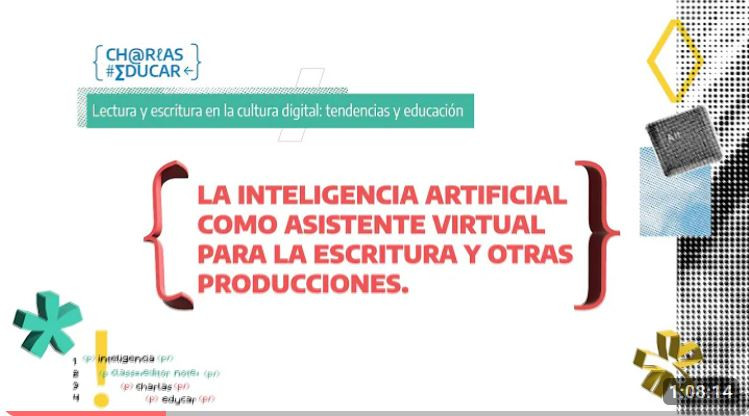 Reading and Writing in Digital Culture: Trends and Education Año de publicación: 2023 Autor: Carina Maguregui Autor corporativo: Educ.ar This video presents an expanded talk whose central theme or narrative thread, «Reading and writing in digital culture: trends and education», provides a contextual framework for three possible itineraries or expansions: a.) Artificial intelligence as a virtual assistant for writing and other productions; b) Ecosystem of screens and platforms, and c) The right to digital disconnection.Each expansion—itinerary or talk—is self-contained, has a presentation, development and closure. However, the three complement each other and, in some way, dialogue with each other. The most important thing is that they provide a much richer overview. Lectura y escritura en la cultura digital: tendencias y educación Año de publicación: 2023 Autor: Carina Maguregui Autor corporativo: Educ.ar Este video presenta una charla expandida cuyo tema central o hilo narrativo, «Lectura y escritura en la cultura digital: tendencias y educación», da marco contextual a tres itinerarios posibles o expansiones: a.) La inteligencia artificial como asistente virtual para la escritura y otras producciones; b) Ecosistema de pantallas y plataformas, y c) El derecho a la desconexión digital.Cada expansión —itinerario o charla— es autoconclusiva, tiene presentación, desarrollo y cierre. Sin embargo, las tres se complementan y, de algún modo, dialogan entre sí. Lo más importante es que brindan una visión de conjunto mucho más rica.
  Media and Information Literacy: A Practical Guidebook for Trainers; Media Development Año de publicación: 2018 Autor: Sylvia Braesel | Thorsten Karg Autor corporativo: DW Academy The Media and Information Literacy (MIL) guide provides trainers with background information, ideas, methodology and practical exercises for training. Literacy is the ability to read and write. Media and Information Literacy (MIL) is the ability to understand how the media works and how it can be used to participate in public debate. MIL includes social media such as Facebook as well as traditional media such as books, newspapers, radio and television. This practical guide provides MIL trainers with background information, ideas, methodology and practical exercises for training. Alfabetización mediática e informacional: Una guía práctica para capacitadores; Desarrollo de medios Año de publicación: 2018 Autor: Sylvia Braesel | Thorsten Karg Autor corporativo: DW Academy La guía en Alfabetización Mediática e Informacional (AMI) brinda a los capacitadores información de trasfondo, ideas, metodología y ejercicios prácticos para la capacitación. Alfabetización es la capacidad de leer y escribir. Alfabetización Mediática e Informacional (AMI) es la capacidad para comprender cómo funcionan los medios de comunicación y cómo se pueden utilizar para participar en el debate público. AMI incluye redes sociales como Facebook, así como a los medios de comunicación tradicionales como libros, periódicos, radio y televisión. Esta guía práctica brinda a los capacitadores en AMI información de trasfondo, ideas, metodología y ejercicios prácticos para la capacitación.