
Recursos
Exploren una amplia gama de recursos valiosos en GCED para profundizar su comprensión y promover su búsqueda, incidencia, enseñanza y aprendizaje.
2,769 resultados encontrados
 Gender and Rural Development in Eastern Europe and Central Asia: Key Issues Año de publicación: 2016 Autor corporativo: Food and Agriculture Organization of the United Nations (FAO) This report provides a brief overview and description of the critical issues affecting the situation of rural women in the region. This overview has been compiled with the aim of informing all stakeholders and using this information in public campaigns and to achieve greater impact of interventions for development.
  Гендер и развитие сельских районов в Восточной Европе и Центральной Азии: Основные проблемы Año de publicación: 2016 Autor corporativo: Продовольственная и сельскохозяйственная организация Объединённых Наций (ФАО) В данном отчете представлен краткий обзор и описание важнейших вопросов, оказывающих влияние на положение женщин в сельских районах в регионе. Данный обзор составлен с целью информирования всех заинтересованных сторон и использования этой информации в общественных кампаниях и для достижения большей результативности интервенций по развитию.
 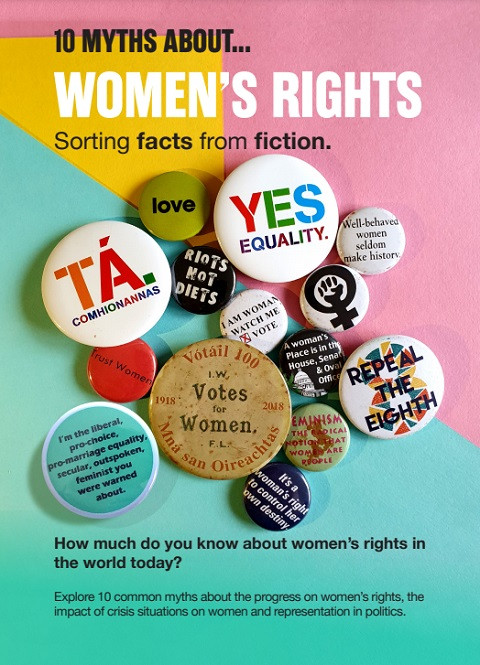 10 Myths About Women’s Rights: Sorting Facts From Fiction Año de publicación: 2020 Autor: Toni Pyke | Colm Regan Autor corporativo: DevelopmentEducation.ie Gender-based inequality is one of the most enduring and deep-seated discriminations. It affects all regions, classes and sectors. In most countries, it is maintained and defended in most of the same ways. One key component of that maintenance is a set of myths that are repeated time and time again.This pocket-size booklet includes:Why thinking about women’s rights matters10 short myths about progress on equality, who benefits from feminism, the realities of women’s health and the impact of COVID-19.Links to the Sustainable Development GoalsReferences per each myth following a fact or fiction approach and an explainerThe 10 Myths About…. series looks to sort facts from fiction on key global development, human rights and justice issues.Download 10 Myths About Women’s Rights PDFTest your knowledge and take the 10 Myths About Women’s Rights quiz or share with your group / class / friends For the latest fact checks and factsheets more on the fact checking project and development ideas, issues and debates, visit our What The Fact? project.
  Gender-Based Hate Crime Año de publicación: 2021 Autor corporativo: Organization for Security and Co-operation in Europe (OSCE) Gender-based hate crimes are a consequence of gender inequalities and disproportionately affect women, as well as anyone perceived as not complying with prevailing gender norms. Gender-based hate crimes often seek to intimidate and suppress ways of life or expressions of identity that are perceived as not complying with traditional gender norms. They have a significant, long-lasting impact on the victims, and undermine security and social cohesion by perpetuating gender inequalities. The existence of such crimes also underscores wider trends of intolerance towards other groups. Everyone has a role to play in countering this and all forms of intolerance.
 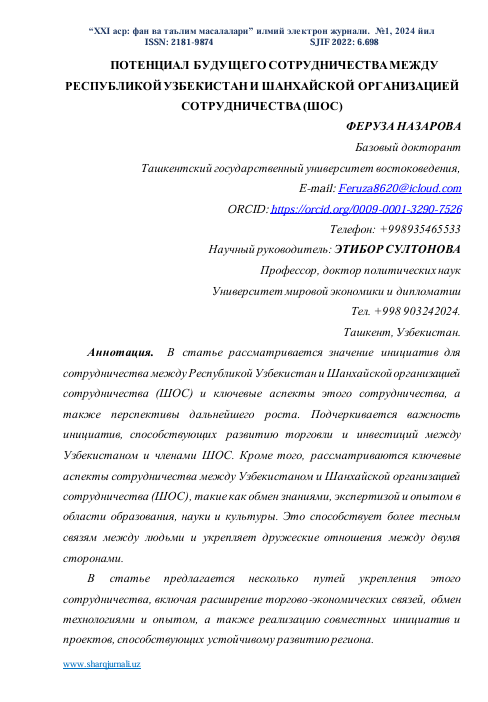 Потенциал будущего сотрудничества между республикой Узбекистан и Шанхайской организацией сотрудничества (ШОС) (XXI Век: Наука и образование; Том1; №1, 2024) Año de publicación: 2024 Autor: Феруза Назарова | Этибор Султонова Autor corporativo: Ташкентский государственный институт востоковедения В статье рассматривается значение инициатив для сотрудничества между Республикой Узбекистан и Шанхайской организацией сотрудничества (ШОС) и ключевые аспекты этого сотрудничества, а также перспективы дальнейшего роста. В статье предлагается несколько путей укрепления этого сотрудничества, включая расширение торгово-экономических связей, обмен технологиями и опытом, а также реализацию совместных инициатив и проектов, способствующих устойчивому развитию региона.
 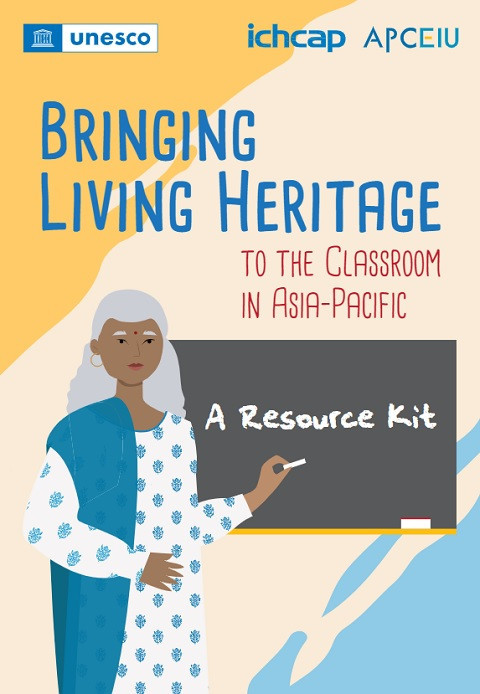 Bringing Living Heritage to the Classroom in Asia-Pacific: A Resource Kit Año de publicación: 2022 Autor corporativo: UNESCO Bangkok | APCEIU | International Information and Networking Centre for Intangible Cultural Heritage in the Asia-Pacific Region (ICHCAP) Integrating living heritage in school teaching and learning can enhance education quality, enliven the experiences of students and teachers, and contribute to keeping this heritage alive for current and future generations. In addition, as the ongoing COVID-19 pandemic has also demonstrated, living heritage can play an important role in ensuring the well-being and resilience of communities. UNESCO encourages countries to safeguard living heritage through formal and non-formal education. From the end of 2019 to early 2022, UNESCO has been working with partners to implement a pilot project “Teaching and Learning with Living Heritage in Schools” in six countries in Asia and the Pacific - including Cambodia, Kazakhstan, Kyrgyzstan, Nepal, Republic of Korea and Thailand. Over 1900 students from 21 schools had the opportunity to participate in these innovative classes. Throughout the process, 86 teachers, with more than two thirds being women, have developed and tested 101 lesson plans and activities. This Resource Kit provides step-by-step guidance and key resources on why and how to integrate living heritage in lessons and extracurricular activities in schools. Whoever you are – policy-maker, school director, teacher, student, parent, heritage practitioner – you have a vital role to play in this process.
 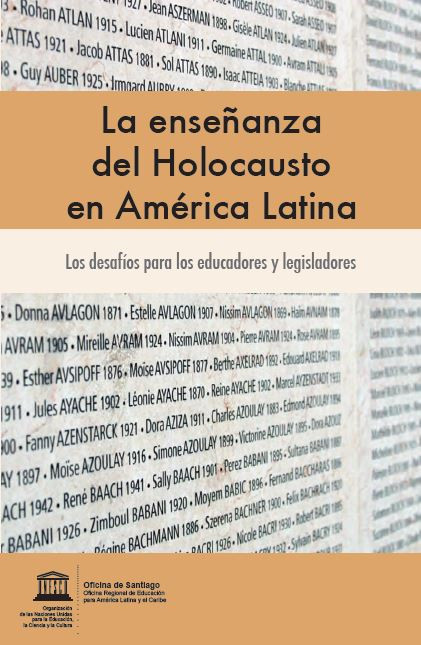 The Teaching of the Holocaust in Latin America the Challenges for Educators and Legislators Año de publicación: 2017 Autor: María Celeste Adamoli | Emmanuel Kahan, Pablo Luzuriaga | Ministerio de Educación Autor corporativo: UNESCO Santiago This book provides an overview of opportunities that may arise from educating about the Holocaust in diverse cultural contexts and educational situations, with a special focus on Latin American countries. We can actually be away from the places where the genocide against the Jewish people was perpetrated, but Latin America is still taking charge of its own past of violence and crimes against humanity. With this publication, Latin American educators will have at their fingertips an updated account of the most outstanding topics that are discussed on pedagogy and policy making. You can also explore how, even today in Europe, education about the Holocaust shapes a culture of memory. On the other hand, you can see how in other places the memory of the Holocaust can be a starting point to relate to other difficult pasts. UNESCO is convinced that the prevention of genocide begins at school. In a world where mass violence is possible, this publication will show the importance of teaching young people about the Holocaust and about other genocides in history. It is a condition to prevent similar crimes from happening in the future. La Enseñanza del Holocausto en América Latina: los desafíos para los educadores y legisladores Año de publicación: 2017 Autor: María Celeste Adamoli | Emmanuel Kahan, Pablo Luzuriaga | Ministerio de Educación Autor corporativo: UNESCO Santiago Este libro proporciona un panorama de oportunidades que pueden surgir de educar sobre el Holocausto en diversos contextos culturales y situaciones educativas, con un foco especial en los países latinoamericanos. Podemos en realidad estar lejos de los lugares donde el genocidio contra el pueblo judío fue perpetrado, pero también América Latina está todavía haciéndose cargo de su propio pasado de violencia y crímenes contra la humanidad. Con esta publicación, los educadores latinoamericanos van a tener al alcance de la mano un recuento actualizado de los temas más destacados que se discuten sobre pedagogía y construcción de políticas. También podrán explorar cómo, todavía hoy en Europa, la educación sobre el Holocausto da forma a una cultura de la memoria. Por otra parte, pueden ver cómo en otros lugares la memoria del Holocausto puede ser un punto de partida para relacionarse con otros pasados difíciles. La UNESCO está convencida de que la prevención del genocidio comienza en la escuela. En un mundo en donde la violencia masiva es posible, esta publicación mostrará lo importante de enseñar a los jóvenes sobre el Holocausto y sobre otros genocidios en la historia. Es una condición para prevenir que crímenes similares sucedan en el futuro.
  Religion and Belief Issues in the Countries of Central Asia (Kyrgyzstan, Kazakhstan, Uzbekistan, Tajikistan) and Russia in the Media; April 2016 - April 2017 Año de publicación: 2017 Autor: Evgeny Zavyalov Autor corporativo: Open Position (Kyrgyzstan) This publication is a review of news on religion and belief issues that appeared in the media from April 2016 to April 2017, in Central Asia (Kyrgyzstan, Kazakhstan, Uzbekistan, Tajikistan) and Russia. The materials included in the publication were distributed monthly on a newsletter including members of religious communities and experts working on issues of religion and belief. Вопросы религии и убеждений в странах Центральной Азии (Кыргызстан, Казахстан, Узбекистан, Таджикистан) и России в материалах СМИ. Апрель 2016 г. - апрель 2017 г. Año de publicación: 2017 Autor: Evgeny Zavyalov Autor corporativo: Open Position (Kyrgyzstan) Настоящее издание представляет собой обзор новостей по вопросам религии и убеждений, вышедших в СМИ в период с апреля 2016 по апрель 2017 года, по странам Центральной Азии (Кыргызстан, Казахстан, Узбекистан, Таджикистан) и России. Вошедшие в публикацию материалы ежемесячно рассылались по рассылке, включающей членов религиозных общин и экспертов, занимающихся вопросами религии и убеждений.