
Recursos
Exploren una amplia gama de recursos valiosos en GCED para profundizar su comprensión y promover su búsqueda, incidencia, enseñanza y aprendizaje.
2,768 resultados encontrados
 Global Media and Information Literacy Assessment Framework: Country Readiness and Competencies Año de publicación: 2013 Autor corporativo: UNESCO The MIL Assessment Framework can foster lifelong learning initiatives by building on the relationship between information, media, digital, and ICT literacies, along with societal transformations, education, workforce, policy and decision making processes, economic growth and democracy. The overall goal of the publication is to guide UNESCO’s Member States throughout the assessment of country readiness and competencies regarding the media and information literacy of citizens, in particular teachers in service and in training. The document is particularly aimed at the following stakeholders: policy makers and decision makers; national officers responsible for statistical data collection and analysis; educational policy makers and planners working in formal and informal education settings; teacher training institutions and teachers. It is also of relevance to the professional information and communication community, and has wide applicability for civil society at large.
  Humanistic Futures of Learning: Perspectives from UNESCO Chairs and UNITWIN Networks Año de publicación: 2020 Autor corporativo: UNESCO UNESCO’s Futures of Education initiative aims to rethink education and shape the future. The initiative is catalyzing a global debate on how knowledge, education and learning need to be reimagined in a world of increasing complexity, uncertainty and precarity. This publication presents the first curated input to the Futures of Education initiative from the UNITWIN/UNESCO Chairs Programme, which now represents an extensive global network of more than 800 higher education institutions in over 115 countries. It features think pieces that highlight key dimensions to be considered in re-visioning and re-purposing education for the future of humanity and the planet. The collection of the pieces calls for greater focus on a number of critical areas such as: The role of culture in strengthening social and environmental sustainability; the values and attitudes that are needed to shape future generations; the importance of both robust public education, as well as of other learning spaces; the need to strengthen human creativity and capability in the digital era, as well as the role of higher education in generating the knowledge and driving the innovation required to transform our world. Les futurs humanistes de l’apprentissage: Perspectives des chaires UNESCO et des réseaux UNITWIN Año de publicación: 2020 Autor corporativo: UNESCO L’initiative de l’UNESCO intitulée Les futurs de l’éducation vise à repenser l’éducation et à façonner l’avenir, en lançant un débat mondial sur la manière de réinventer le savoir, l’éducation et l’apprentissage dans un monde de plus en plus complexe, incertain et précaire. Le présent volume constitue la première collection de contributions soumises à l’initiative Les Futurs de l’éducation de l’UNESCO par le Programme des chaires UNESCO/UNITWIN, un vaste réseau mondial regroupant plus de 800 établissements d’enseignement supérieur dans plus de 115 pays. Les documents de réflexion qu’il contient mettent en évidence les dimensions essentielles à prendre en compte pour ré-imaginer et redéfinir l’éducation dans l’intérêt de l’avenir de l’humanité et de la planète. Cette collection appelle à insister davantage sur un certain nombre de domaines critiques tels que le rôle de la culture dans le renforcement de la durabilité sociale et environnementale, les valeurs et les attitudes nécessaires pour préparer les générations futures, l’importance d’une éducation publique et robuste, ainsi que d’autres espaces d’apprentissage, la nécessité de renforcer la créativité et les capacités humaines à l’ère numérique, ainsi que le rôle de l’enseignement supérieur concernant la génération des savoirs et la conduite de l’innovation nécessaire pour transformer notre monde. 학습의 인본주의적 미래: 유네스코 석좌와 유니트윈의 시각에서 Año de publicación: 2020 Autor corporativo: 유네스코 유네스코의 ‘교육의 미래’(Futures of Education) 이니셔티브는 교육을 다시 생각해보고 교육의 미래를 만들어가는 것을 목표로 한다. 이 이니셔티브는 복잡성, 불확실성, 불안정성이 증가하는 세계에서 지식, 교육, 학습은 어떻게 재구상되어야 하는가라는 문제에 대한 전세계적 논의를 촉진하고 있다. 이 책은 현재 115개 이상의 국가의 800개 이상의 고등교육기관으로 구성된 광범위한 글로벌 네트워크를 대표하는 유니트윈/유네스코 석좌프로그램(UNITWIN/UNESCO Chairs Programme)이 교육의 미래 이니셔티브에 제출한 글들을 일차적으로 정리해 엮은 것이다. 이 책은 인류와 지구의 미래를 위해 교육의 비전과 목적을 재설정할 때 고려해야 할 핵심적 차원들을 조명하는 글들을 담고 있다. 이 글들은 사회적·환경적 지속가능성 강화에 있어 문화의 역할; 미래 세대 육성에 필요한 가치와 태도; 건실한 공교육 및 기타 학습공간의 중요성; 디지털 시대에 인간의 창의력과 역량을 강화할 필요성과 지식을 창출하고 세상을 변화시키는 데 필요한 혁신을 주도하는 고등교육의 역할 등 중요 영역에 더욱 초점을 맞출 것을 촉구한다.
 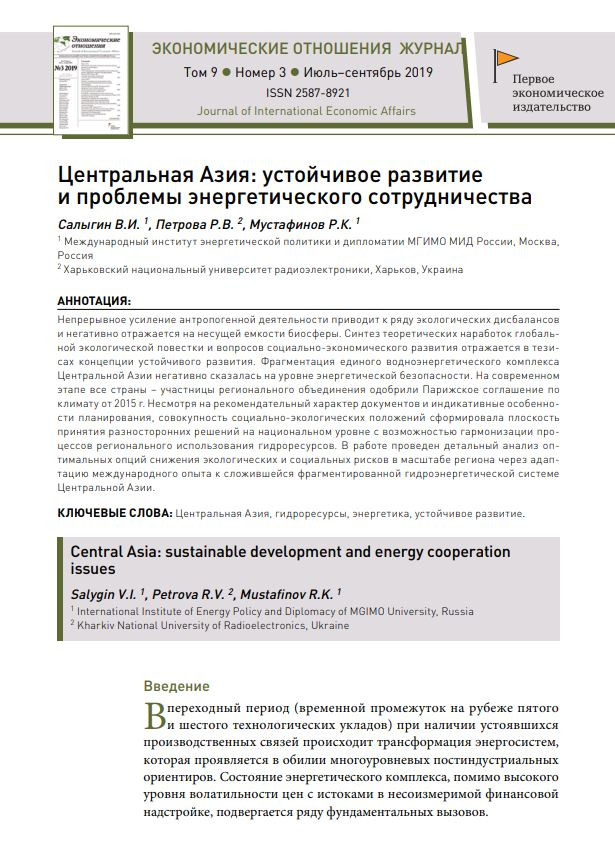 Central Asia: Sustainable Development and Energy Cooperation Issues Año de publicación: 2019 Autor: Salygin V.I. | Petrova R.V. | Mustafinov R.K. The continuous intensification of anthropogenic activities leads to a number of ecological imbalances and negatively affects the carrying capacity of the biosphere. Synthesis of theoretical developments of the global environmental agenda and issues of socio-economic development is reflected in the theses of the concept of sustainable development. The paper provides a detailed analysis of optimal options for reducing environmental and social risks on a regional scale by adapting international experience to the existing fragmented hydro-energy system Central Asia.
  Leveraging Artificial Intelligence to Enhance Early Action towards the Kunming-Montreal Global Biodiversity Framework Año de publicación: 2024 Autor: Nicole DeSantis | Lea Phillips | Christina Supples | Julien Pigot | Jamison Ervin | Doley Tshering | Juan Calles Lopez | Dharshani Seneviratne | Enrique Paniagua | Monica Mora Autor corporativo: United Nations Development Programme (UNDP) This publication releases the methodology behind the National Biodiversity Strategies and Action Plans (NBSAP) Target Similarity Assessments and identifies key lessons learned and opportunities for future applications.
  Guidance Note on Uzbekistan Green Taxonomy Año de publicación: 2023 Autor corporativo: World Bank This Guidance Note serves to support the government of Uzbekistan in the design of a national Green Taxonomy. A green taxonomy sets out rules for classifying environmentally sustainable activities and can be instrumental inthe transition to a Green Economy by guiding policies and public resource flows, and influencing the private sector’s investment response. The Guidance Note discusses methodological choices for the taxonomy and their policy implications, reviews existing international practices, and recommends a model taxonomy and roadmap for further development of the taxonomy. A key message in the note is the importance of setting clear strategic goals that will inform the selection of the taxonomy’s environmental objectives and its other features. Also discussed are theinstitutional arrangements to coordinate the actions and inputs of multiple stakeholders during the development process of the taxonomy, and the importance of strong oversight and consistent enforcement of taxonomy rules by a competent regulatory body. Методические рекомендации по «зеленой» таксономии для Узбекистана Año de publicación: 2023 Autor corporativo: World Bank Настоящие Методические рекомендации призваны оказать содействие правительству Узбекистана в разработке национальной «зеленой» таксономии. «Зеленая» таксономия устанавливает правила классификации экологически устойчивых видов деятельности и может сыграть важную роль в переходе к «зеленой» экономике, определяя политику и потоки государственных ресурсов, а также влияя на инвестиционную активность частного сектора. В Методических рекомендациях обсуждаются методологические варианты таксономии и их политические последствия, рассматривается существующая международная практика, а также даются рекомендации по модельной таксономии и «дорожной карте» ее дальнейшей разработки. Одним из ключевыхтезисов Рекомендаций является важность постановки четких стратегических целей, на основе которых будут определяться экологические цели таксономии и другие ее характеристики. Кроме того, рассматриваются институциональные механизмы координации действий и участия многочисленных заинтересованных сторон в процессе разработки таксономии, а также отмечается важность обеспечения компетентным регулирующиморганом надежного надзора и последовательного соблюдения правил таксономии.
  Основные направления воздействия изменения климата в Центральной Азии (Oriental Renaissance; № 4(2) Año de publicación: 2024 Autor: Нарзуллаев Комилжон Собиржонович В настоящей статье анализируется глобальная проблема - изменения климата в Центрально-Азиатском регионе. В перспективе данная глобальная проблема найдет свое отражение в повышении температуры, экстремальных погодных явлениях, опустынивании, оползнях и нехватке водных ресурсов. Наряду с этим, в статье указываются основные направления воздействия изменения климата в регионе в целом.
  Prepare to Act!: Practical Tips for Climate Advocacy and Action; Climate Glossary for Young People Año de publicación: 2024 Autor corporativo: UNICEF Uzbekistan The Toolkit for Young Climate Activists in Uzbekistan was created by young people who, like you, are concerned about our planet's situation and who, as activists, have faced many challenges when advocating and taking action. Main goal is to share clear, concise, easily understandable information that describes the course of global, regional and national climate action, in order to prepare you for full and informed participation.