
Recursos
Exploren una amplia gama de recursos valiosos en GCED para profundizar su comprensión y promover su búsqueda, incidencia, enseñanza y aprendizaje.
2,768 resultados encontrados
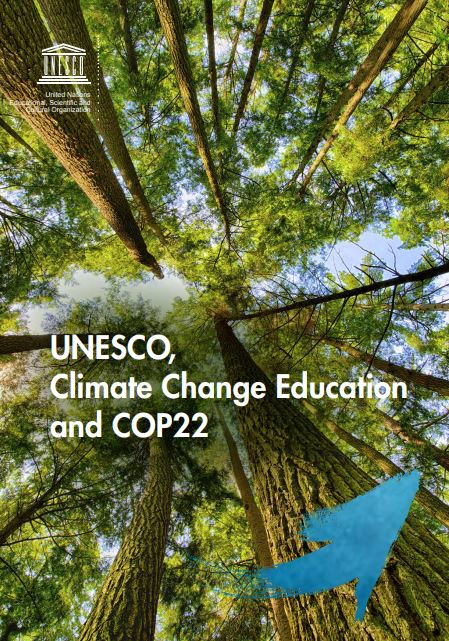 UNESCO, Climate Change Education and COP22 Año de publicación: 2016 Autor corporativo: UNESCO Education is a key vector to prepare societies for global changes. It plays a critical role in achieving sustainable development goals and putting into practice a global agreement on climate change. Education plays a paramount role in raising awareness and promoting behavioural change for climate change mitigation and adaption. It helps increase the climate change mitigation and adaptation capacity of communities by enabling individuals to make informed decisions. L'UNESCO, l'éducation au changement climatique et la COP22 Año de publicación: 2016 Autor corporativo: UNESCO L’éducation est un vecteur clé pour préparer les sociétés à faire face aux changements globaux. Elle joue un rôle essentiel dans la réalisation des objectifs de développement durable et de mettre en pratique un accord mondial sur le changement climatique.L’éducation joue un rôle primordial dans la promotion de la sensibilisation et le changement de comportement concernant l’atténuation et l’adaptation en matière de changement climatique.Elle aide à accroitre l’atténuation du changement climatique et la capacité d’adaptation des collectivités en permettant aux individus de prendre des décisions informées.
 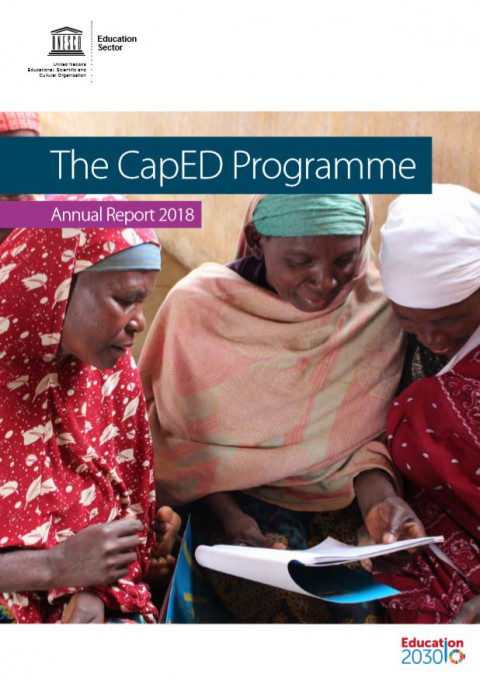 The CapED Programme: annual report 2018 Año de publicación: 2019 Autor corporativo: UNESCO UNESCO is the United Nation’s specialized agency for education and is mandated to lead and coordinate progress towards Sustainable Development Goal 4 – “Ensure inclusive and equitable quality education and promote lifelong learning opportunities for all”. The CapED Programme is central to delivering on this mandate through capacity development. It mobilizes UNESCO’s worldwide network of specialized Institutes and offices and works with partners to assist countries as they develop and implement national plans to deliver on SDG4 commitments. The Annual Report 2018 provides information on achievements and progress made in the 25 countries where CapED is operational.
 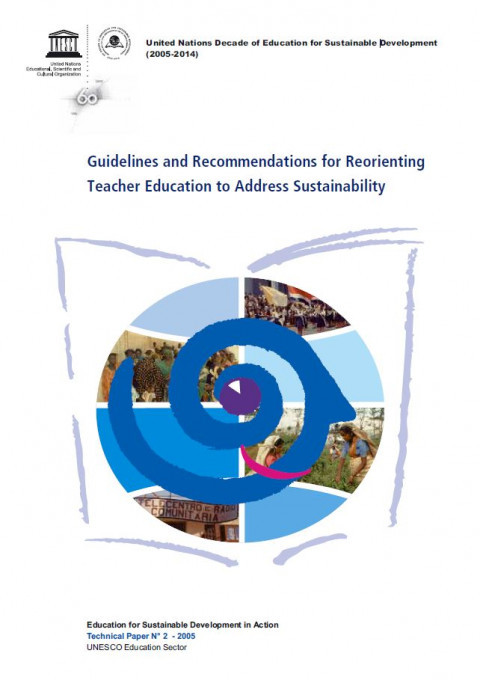 Руководство и рекомендации по переориентации педагогического образования на решение задач устойчивого развития Año de publicación: 2005 Autor corporativo: Организация Объединенных Наций по вопросам образования, науки и культуры (UNESCO) Члены международной сети разработали рекомендации, касающиеся переориентации педагогического образования на решение задач устойчивого развития. Эти рекомендации основаны на результатах проведенных экспериментов и большой работы, проделанной специалистами в области педагогического образования. Рекомендации предназначены для учреждений министерского и национального уровня, а также для местных учреждений. Они касаются учебных планов, педагогики, политики, практической деятельности, программ, вознаграждений, научных исследований, информации и компьютерной технологии, партнерских отношений, создания сетей, коммуникации и тд.
 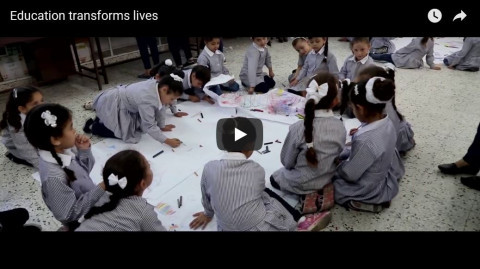 [Video] Education Transforms Lives Año de publicación: 2017 Autor corporativo: UNESCO Education transforms lives every day and in every corner of society. This video explores the power of education and UNESCO’s role in leading and coordinating the Education 2030 Agenda, which is part of a global movement to eradicate poverty through 17 Sustainable Development Goals by 2030.Education is the right of every woman, man and child. Together, we are shaping the global citizens of tomorrow, empowered on the path of education to build a more sustainable future.UNESCO's campaign "Education transforms lives" supports the effort to build peace in the minds of men and women. [Видео] Образование меняет жизни Año de publicación: 2017 Autor corporativo: Организация Объединенных Наций по вопросам образования, науки и культуры (UNESCO) Образование преображает жизнь людей каждый день во всех слоях общества. Ролик повествует о важности образования и роли ЮНЕСКО в ведении и координации Повестки дня «Образование-2030», которая является частью глобального движения для искоренения бедности посредством достижения 17 Целей устойчивого развития до 2030 года.Каждая женщина, каждый мужчина и каждый ребенок имеют право на образование. Вместе мы создаем мировых сограждан завтрашнего дня и даем им силу образования для построения более устойчивого будущего.Кампания ЮНЕСКО "Образование преображает жизнь людей" направлена на то, чтобы нести мир в сознание мужчин и женщин.
 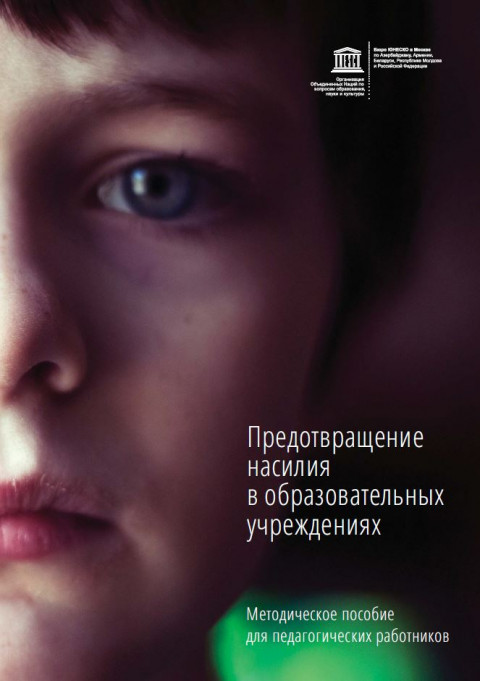 A Guide on Violence Prevention in Educational Settings in Eastern Europe and Central Asia Año de publicación: 2015 Autor corporativo: UNESCO The emphasis is given to gender-based violence. This guide offers practical advice and proposes organizational and educational measures, as well as response schemes for the management and staff of education institutions in order to address acts of violence and provide assistance to the victims. The guide is advisory in nature: it can be used as a background material for developing a national recommendation on the prevention of violence in an education institution.Experts from the ministries of education, education institutions and public organizations of Eastern Europe and Central Asia, as well as the United Nations Educational, Scientific and Cultural Organization (UNESCO) and the United Nations Children's Fund (UNICEF) took part in discussions throughout the process of publication-writing. Предотвращение насилия в образовательных учреждениях: Методическое пособие для педагогических работников Año de publicación: 2015 Autor corporativo: Организация Объединенных Наций по вопросам образования, науки и культуры (UNESCO) Методическое пособие предназначено для руководителей и сотрудников (учителей, психологов, социальных педагогов и др.), общеобразовательных школ и учреждений среднего профессионального образования. В нем представлена информация о природе и причинах насилия в образовательном учреждении, его видах и последствиях, вовлеченных сторонах.Особое внимание уделяется гендерному насилию. Пособие носит практический характер и предлагает организационные и воспитательные меры, а также алгоритмы действий руководства и персонала образовательного учреждения по реагированию на факты насилия и оказанию помощи пострадавшим. Пособие носит рекомендательный характер: на его основе могут быть разработаны национальные методические рекомендации по предотвращению насилия в образовательном учреждении.В обсуждении пособия в ходе его разработки приняли участие специалисты министерств образования, образовательных учреждений и общественных организаций стран Восточной Европы и Центральной Азии, а также Организации Объединенных Наций по вопросам образования, науки и культуры (ЮНЕСКО) и Детского фонда ООН (ЮНИСЕФ).
 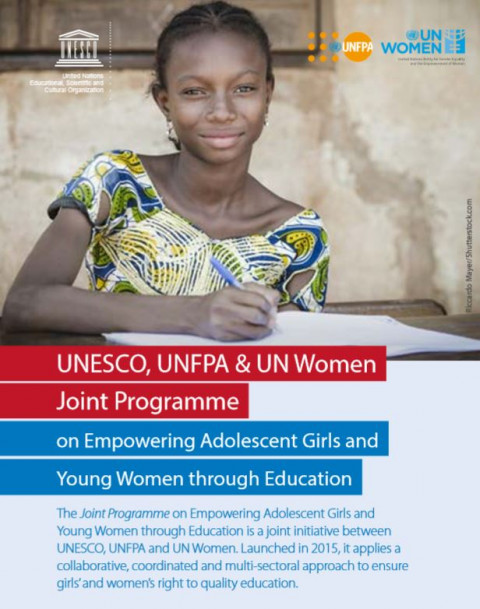 UNESCO, UNFPA & UN Women Joint Programme: on Empowering Adolescent Girls and Young Women through Education Año de publicación: 2019 Autor corporativo: UNESCO | United Nations Population Fund (UNFPA) The Joint Programme on Empowering Adolescent Girls and Young Women through Education leverages the collective expertise, experience and networks of three United Nations agencies – UNESCO, UNFPA and UN Women.It aims to empower adolescent girls and young women aged 10 to 24 to make successful and healthy transitions into adulthood, in and through quality education.Taking a lifecycle perspective and a holistic approach, the Joint Programme strengthens the links between education, health and gender equality.
 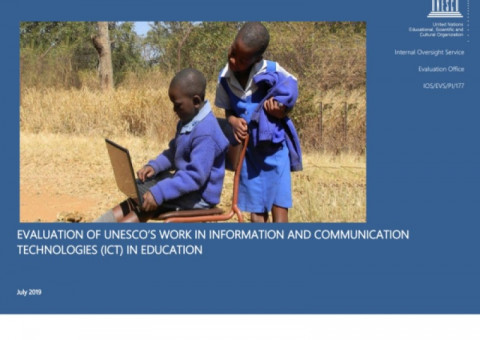 Evaluation of UNESCO's work in information and communication technologies (ICT) in education Año de publicación: 2019 Autor: Seán Ó Siochru and Graham Attwell Autor corporativo: UNESCO ICT in Education is a fast-growing area globally that offers many strategic opportunities. As the leader and coordinator of the SDG 4 – Education 2030 with the aim to “Ensure inclusive and equitable quality education and promote lifelong learning opportunities for all”, UNESCO has the mandate and expertise needed to strategically position itself as a world leader in this field. UNESCO’s work in ICT in Education aims at enhancing the quality and relevance of learning and at strengthening inclusion. While technology can facilitate wider access to education and bridge learning divides, can advance gender equality and inclusion as well as digital skills development, the rapidly changing technologies and work processes require the development of new pedagogies, both for the use of ICT for teaching and learning in the classroom and through open access and distance learning. Compared to other players, UNESCO leverages its comparative strengths in its ICT in Education interventions - especially its impartiality, convening power, and policy expertise - through an inclusive and humanistic approach to achieving quality education in coherence with Sustainable Development Agenda 2030. Its expertise across all levels of Education and its multidisciplinary potential of working across its Programme Sectors are also considered among UNESCO’s specific strengths. The evaluation revealed that UNESCO achieved important results, at the level of the learning environment, at the policy level and in institutional capacity building, but it also showed that UNESCO still needs to strengthen its positioning and visibility within the wider landscape of ICT in Education. For example, UNESCO has to continue positioning itself for producing forward-looking knowledge on ICT in Education and as a laboratory of ideas for future-oriented thinking. While the evaluation came across various specific interventions successfully addressing the needs of disadvantaged groups, the evaluation found that considerations of inclusion and gender equality were not consistently mainstreamed into policy-related and capacity building interventions. Other challenges are mainly linked to the current dispersion of resources and fragmentation of expertise across different entities within the Organization, which also leads to reduced visibility. While the key entities active in this area recognize that they are working within a common theme, collaboration and coordination still needs to be improved. The strategic measures proposed by the evaluation towards an overall organizational framework for ICT in Education aim at establishing an enabling environment for inter- and multidisciplinary approaches and greater coherence and collaboration.