
Recursos
Exploren una amplia gama de recursos valiosos en GCED para profundizar su comprensión y promover su búsqueda, incidencia, enseñanza y aprendizaje.
2,768 resultados encontrados
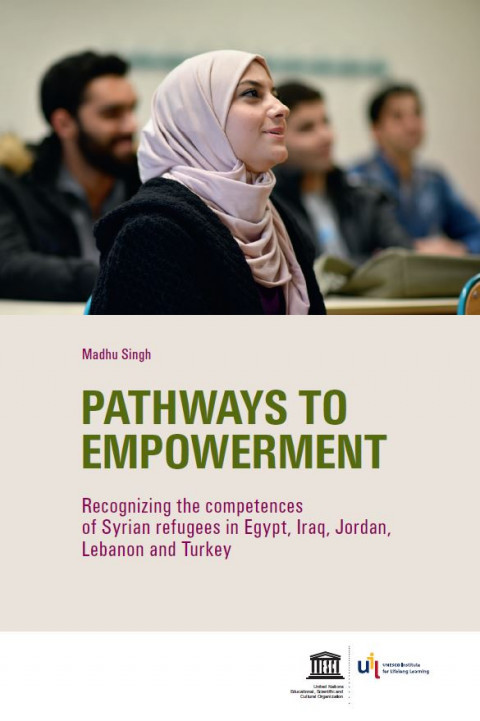 Pathways to Empowerment: Recognizing the Competences of Syrian Refugees in Egypt, Iraq, Jordan, Lebanon and Turkey Año de publicación: 2018 Autor: Madhu Singh Autor corporativo: UNESCO Institute for Lifelong Learning (UIL) For Syrian refugees living in Egypt, Iraq, Jordan, Lebanon and Turkey, recognition is a transformative mechanism that can help them enter or re-enter education, integrate into the world of work and participate fully in their host communities. However, while policy-makers in the region have prioritized the recognition, validation and accreditation of non-formal and informal learning, it remains a major challenge to develop systems that do this effectively. Pathways to Empowerment lays the essential groundwork for such a system, urging governments to develop comprehensive national strategies rather than ad hoc projects to recognize the competences of Syrian refugees. Its recommendations will contribute to dialogue between national authorities and social partners, and guide policy actions and RVA practices both in the region and in other parts of the world where recognition of refugees’ learning is a critical issue.
 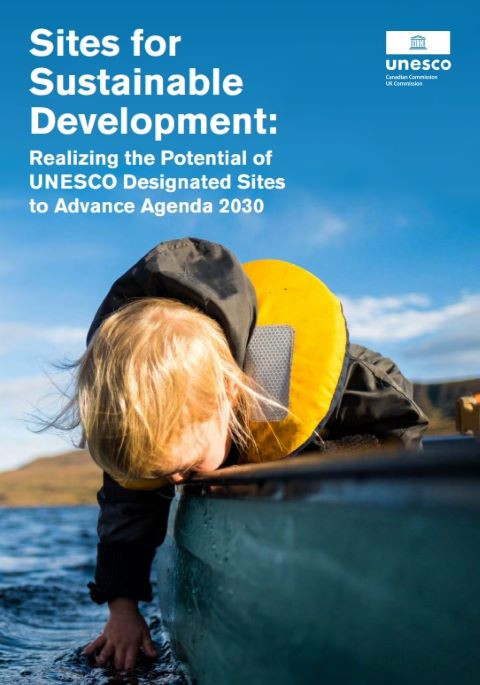 Sites for Sustainable Development: Realizing the Potential of UNESCO Designated Sites to Advance Agenda 2030 Año de publicación: 2022 Autor: Tim Carter | Eleanor R. Haine | Alexander J. Kent | Matthew Rabagliati Autor corporativo: Canadian Commission for UNESCO | United Kingdom National Commission for UNESCO This report outlines the role that UNESCO’s global network of designated sites — World Heritage Sites, global geoparks and biosphere reserves — can play in helping stakeholders (including businesses, communities, government agencies and their local organizations, Indigenous Peoples, traditional authorities, councils of elected representatives, and heritage and nature groups) carry out sustainable development approaches to tackle, mitigate and adapt to challenges like these.The ideas contained in this report emerge from a study designed to explore the merits of UNESCO’s increasing tendency to refer to biosphere reserves, global geoparks and World Heritage Sites as “sites for sustainable development.”
 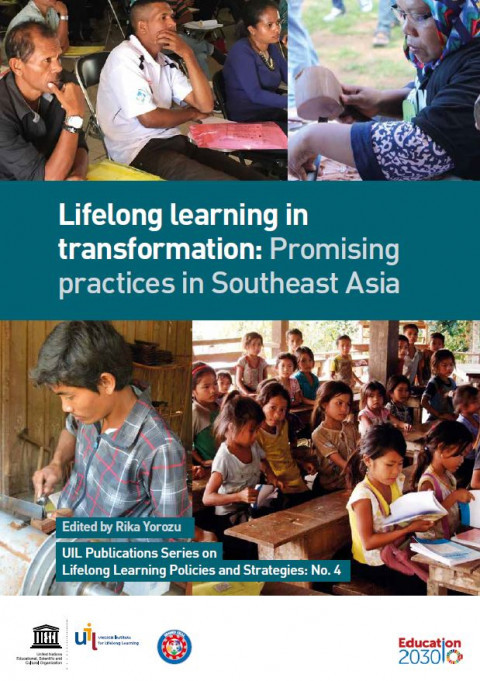 Lifelong Learning in Transformation: Promising Practices in Southeast Asia Año de publicación: 2017 Autor: Rika Yorozu Autor corporativo: UNESCO Institute for Lifelong Learning (UIL) This report is an outcome of a project on building a lifelong learning agenda in Southeast Asian countries, which aims to address the region’s remaining educational challenges in ensuring ‘inclusive and equitable quality education and promot[ing] lifelong learning opportunities for all’ (Goal 4 of the 2030 Agenda for Sustainable Development). By sharing promising policies and practices in implementing integrated lifelong learning from different perspectives, countries can learn from one another and move their visions for lifelong learning fully into practice. The publication documents a variety of promising practices from 11 countries, focusing particularly on the features critical to the promotion of lifelong learning for all; namely, inclusive and gender-responsive teaching and learning practices, recognition of learning outcomes from non-formal and informal learning, collaboration between social and economic development sectors and coherent national government policies and strategies. The report comprises three main sections: a reflection on lifelong learning in international and national documents, a collection of good practice drawn from their national reports, and a set of recommendations for policies and programmes promoting lifelong learning. It is hoped that these recommendations will stimulate discussion and new developments, in both policy and practice, in the region.
 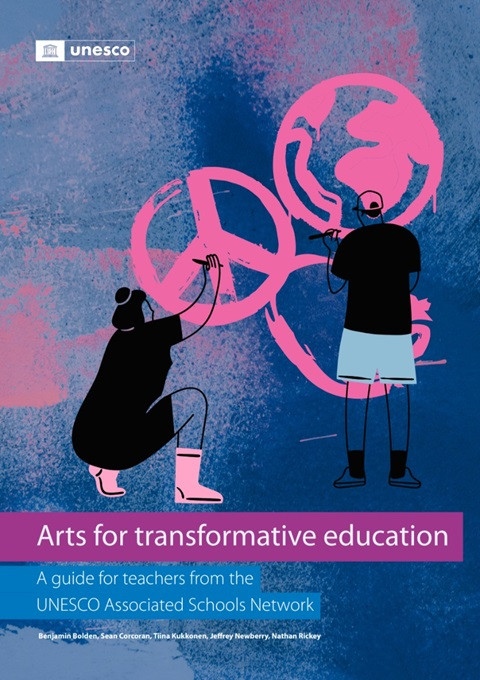 Arts for Transformative Education: A Guide for Teachers from the UNESCO Associated Schools Network Año de publicación: 2024 Autor: Benjamin Bolden | Sean Corcoran | Tiina Kukkonen | Jeffrey Newberry | Nathan Rickey Autor corporativo: UNESCO | Canadian Commission for UNESCO UNESCO’s vision of transformative education involves building learners’ capacities and empowering them to take action for a more peaceful and sustainable world. The arts offer tremendous potential for supporting learning that transforms individuals and communities. To fully realize that potential, teachers need to structure and support educational experiences that optimize what students will take away from them. This guide presents the research-informed Arts for Transformative Education model, a pioneering approach and thinking tool for teachers. The model was developed from data provided by over 600 teachers of the UNESCO Associated Schools network from 39 countries. The publication presents Learning Experience Descriptions and Snapshots illustrating how the model functions in real-world projects from around the globe, as well as Guidelines for Teachers outlining a step-by-step process for activating arts learning to empower transformative education.
  Global Inventory of Regional and National Qualifications Frameworks 2017, Vol. I: Thematic Chapters Año de publicación: 2017 Autor corporativo: European Centre for the Development of Vocational Training (CEDEFOP) | European Training Foundation (ETF) | UNESCO | UNESCO Institute for Lifelong Learning (UIL) The global inventory 2017 further strengthens the knowledge base on developments in national and regional qualifications frameworks, as implemented by countries and regions, by end of 2016. It acts as an observatory of progress in establishing NQFs, as well as the challenges and success factors in implementation. The thematic chapters (Volume I) discuss key trends and policy issues emerging from qualifications frameworks and learning outcomes reforms and developments. Volume II consists of NQF case studies of 100 countries from all continents and seven regional qualifications frameworks (RQF). The case studies look at the educational, social, economic and political context in which an NQF is embedded, main policy objectives, implementation of learning outcomes, stakeholder involvement and institutional arrangements. They also show how NQFs open for and link to validation arrangements, support recognition and learning pathways. They conclude with important lessons and future plans.The global inventory draws on inventories from four agencies: the European Centre for the Development of Vocational Training (Cedefop), the European Training Foundation (ETF), the United Nations Educational, Scientific and Cultural Organisation (UNESCO) and the UNESCO Institute for Lifelong Learning (UIL), working and communicating with country officials and experts. It also draws on extensive international research in qualifications reforms, comparability of qualifications, and use of learning outcomes.
  Global Inventory of Regional and National Qualifications Frameworks 2017, Vol. II: National and Regional Cases Año de publicación: 2017 Autor corporativo: European Centre for the Development of Vocational Training (CEDEFOP) | European Training Foundation (ETF) | UNESCO | UNESCO Institute for Lifelong Learning (UIL) The global inventory 2017 further strengthens the knowledge base on developments in national and regional qualifications frameworks, as implemented by countries and regions, by end of 2016. It acts as an observatory of progress in establishing NQFs, as well as the challenges and success factors in implementation. The thematic chapters (Volume I) discuss key trends and policy issues emerging from qualifications frameworks and learning outcomes reforms and developments. Volume II consists of NQF case studies of 100 countries from all continents and seven regional qualifications frameworks (RQF). The case studies look at the educational, social, economic and political context in which an NQF is embedded, main policy objectives, implementation of learning outcomes, stakeholder involvement and institutional arrangements. They also show how NQFs open for and link to validation arrangements, support recognition and learning pathways. They conclude with important lessons and future plans.The global inventory draws on inventories from four agencies: the European Centre for the Development of Vocational Training (Cedefop), the European Training Foundation (ETF), the United Nations Educational, Scientific and Cultural Organisation (UNESCO) and the UNESCO Institute for Lifelong Learning (UIL), working and communicating with country officials and experts. It also draws on extensive international research in qualifications reforms, comparability of qualifications, and use of learning outcomes.
  International Trends of Lifelong Learning in Higher Education: Research Report Año de publicación: 2023 Autor corporativo: UNESCO Institute for Lifelong Learning (UIL) | Shanghai Open University Against the background of a global education crisis and a growing recognition of the importance of lifelong learning, the UNESCO Institute for Lifelong Learning (UIL) and the Shanghai Open University (SOU) conducted a comprehensive research project from 2020 to 2022 that included, among other components, an international survey on the contribution of higher education institutions to lifelong learning, the results of which are presented in this report. Based on the comprehensive sets of quantitative and qualitative data collected across all world regions, this research constitutes a major step forward in building an international knowledge base on the role of HEIs in establishing lifelong learning opportunities for all. 高等教育机构实施终身学习的国际趋势 : 研究报告 Año de publicación: 2023 Autor corporativo: UNESCO Institute for Lifelong Learning (UIL) | Shanghai Open University 《高等教育机构实施终身学习的国际趋势》这份研究 报告全面概述了全球高等教育领域终身学习的发展 状况。报告研究了高等教育机构如何为终身学习做出 贡献,并展示了不同实施领域的进展情况。报告基于 2020年开展的一项国际调查的结果,该调查由联合国 教科文组织终身学习研究所(UIL)牵头,国际大学协会 (IAU)和上海开放大学(SOU)予以合作。调查收到了来自世界各地区96个国家的399个机构的 有效答复。报告分析了高等教育终身学习(LLL)制度 化的三个主要方面,分别是促进高等教育终身学习的 支持性政策环境;机构治理与实施;高等教育机构通过 多样化和灵活性增加终身学习机会的方法和程度。
  Institutional practices of implementing lifelong learning in higher education: research report Año de publicación: 2023 Autor corporativo: UNESCO Institute for Lifelong Learning (UIL) | Shanghai Open University In many countries, higher education is gaining prominence as a means for the general population to engage in lifelong learning (LLL), whether for personal or professional development, or to participate in broader societal change. In some cases, national governments have introduced policies or funding instruments that create incentives for higher education institutions (HEIs) to align their offerings more closely with changing labour market demands and societal needs, and to expand access for groups previously underrepresented in higher education. Key trends in the higher education sector and the associated global socio-economic transformations were discussed in detail in the international survey report, which was published as part of the research project on the contribution of higher education institutions to LLL (UIL and SOU, 2023). This case study report moves from an international overview of the policies, structures and mechanisms that support LLL in higher education to the close study of institutional practices. It explores the interrelations between national policy environments and institutional strategies. It examines different approaches taken by universities to develop, implement and monitor LLL activities, and further provides practical examples of how universities engage with diverse groups of learners through their LLL mission. As such, this report’s value lies in offering both general insights into the implementation of LLL in HEIs, and case-specific descriptions and analyses of institutional policies and practices. 高等教育机构实施终身学习的实践: 研究报告 Año de publicación: 2023 Autor corporativo: UNESCO Institute for Lifelong Learning (UIL) | Shanghai Open University 在许多国家,高等教育作为大众参与终身学习以获得个 人或职业发展或参与更广泛社会变革的一种手段,日益 受到重视。在某些情况下,国家政府推出了政策或资助 工具,为高等教育机构提供激励,使其提供的服务更紧 密地贴合不断变化的劳动力市场需求和社会需求,并为 以前在高等教育中代表性不足的群体提供更多学习机 会。国际调查报告详细介绍了高等教育部门的主要趋势 以及相关的全球社会经济转型,该报告作为高等教育机 构对终身学习贡献的研究项目一部分发布(终身学习研 究所和上海开放大学,2023年)。本案例研究报告提供了对支持高等教育终身学习的政 策、结构和机制的国际性概述,介绍了对机构实践的深 入研究,探讨了国家政策环境与机构性战略之间的相互 关系,研究了大学为开发、实施和监测终身学习活动而采 取的不同方法,进一步提供了大学如何通过其终身学习 任务与不同群体学习者互动的实例。因此,本报告价值 在于既提供了高等教育机构实施终身学习的一般见解, 也提供了对机构政策和实践具体案例的描述和分析。