
Recursos
Exploren una amplia gama de recursos valiosos en GCED para profundizar su comprensión y promover su búsqueda, incidencia, enseñanza y aprendizaje.
2,768 resultados encontrados
 COVID 19, Technology-Based Education and Disability: The Case of Bangladesh; Emerging Practices in Inclusive Digital Learning for Students With Disabilities Año de publicación: 2021 Autor: Vashkar Bhattacharjee | Shahriar Mohammad Shiblee Autor corporativo: UNESCO This study sheds light on Bangladesh’s initiatives in the area of disability-inclusive education. The particu- lar focus is on the role of its Accessible Reading Materials (ARM) initiative and how this has contributed to ensuring disability-inclusive and accessible education during the COVID-19 pandemic in Bangladesh. ARM is a government-led initiative that was launched in 2014 by the then Access to Information (a2i) programme of the Prime Minister’s Office, now the Aspire to Innovate Programme of the Information and Communica- tion Technology (ICT) Division of the Government of Bangladesh. It was launched in recognition of the need for solutions to ensure virtual, as well as regular reading access for all students, including children and young people with barriers to reading. ARM is aimed at satisfying the educational needs of all students including students with print and learning disabilities.
  Women in Higher Education: Has the Female Advantage Put an End to Gender Inequalities? Año de publicación: 2021 Autor: Daniele Vieira do Nascimento | Takudzwa Mutize | Jaime Felix Roser Chinchilla Autor corporativo: UNESCO Regardless of encouraging statistics on women access to higher education, women still encounter obstacles when seeking to occupy key academic positions in universities, to be involved with relevant research, and to take leadership roles.Women are overrepresented among teaching staff at lower education levels, while their presence is markedly lower in tertiary education (vertical segregation). The same is true in school management and education policymaking. Women are also still underrepresented as senior faculty and in higher education decision-making bodies in many countries.In the area of research, men publish on average more articles than women showing there is a gender publication gap. Differences in men ́s and women ́s academic publication persist and are most pronounced for publications in top journals.STEM (science, technology, engineering, and mathematics) areas of study show a heavy underrepresentation of female students in most countries. This underrepresentation of female students is closely linked to the underrepresentation of female researchers in those areas. Globally, the percentage of females studying engineering, manufacturing and construction or ICT (information and communications technology) is below 25% in over two- thirds of countries.During the first wave of the COVID-19 pandemic, although submission of academic papers for publication increased in all months during the lockdown period, the rate of increase in submissions by female researchers was significantly less than those by male researchers. This deficit was also found to be especially pronounced among younger cohorts of female academics. Mujeres en la educación superior: ¿la ventaja femenina ha puesto fin a las desigualdades de género? Año de publicación: 2021 Autor: Daniele Vieira do Nascimento | Takudzwa Mutize | Jaime Felix Roser Chinchilla Autor corporativo: UNESCO Aunque son alentadoras las estadísticas sobre el acceso de las mujeres a la enseñanza superior, las mujeres siguen topándose con obstáculos cuando intentan ejercer puestos académicos clave en las universidades, participar en investigaciones relevantes y asumir funciones de liderazgo.Las mujeres están sobrerrepresentadas entre el personal docente de los niveles educativos inferiores, mientras que su presencia es notablemente menor en la enseñanza superior (segregación vertical). Lo mismo ocurre en los puestos de dirección de centros educativos y en la elaboración de las políticas educativas. En muchos países, las mujeres siguen estando infrarrepresentadas en los niveles superiores del profesorado y en los órganos de decisión de la enseñanza superior.En el ámbito de la investigación, los hombres publican en promedio más artículos que las mujeres, lo que demuestra que existe una brecha de publicación entre ambos sexos. Las diferencias entre la cantidad de publicaciones académicas de hombres y la de mujeres persisten y son más acentuadas cuando se trata de publicaciones en las revistas más destacadas. En las áreas de estudio STEM (ciencia, tecnología, ingeniería y matemáticas) se observa una fuerte infrarrepresentación de las estudiantes en la mayoría de los países. Esta infrarrepresentación de las estudiantes guarda estrecha relación con la infrarrepresentación de las investigadoras en esas áreas. A escala mundial, el porcentaje de mujeres que estudian ingeniería, industria y construcción o tecnologías de la información y la comunicación (TIC) se ubica por debajo del 25 % en más de dos tercios de los países.
 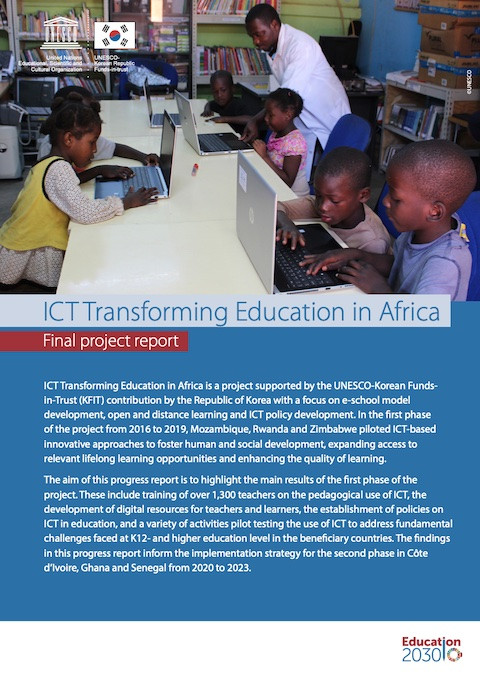 ICT Transforming Education in Africa: Final Project Report Año de publicación: 2020 Autor corporativo: UNESCO ICT Transforming Education in Africa is a project supported by the UNESCO-Korean Funds- in-Trust (KFIT) contribution by the Republic of Korea with a focus on e-school model development, open and distance learning and ICT policy development. In the first phase of the project from 2016 to 2019, Mozambique, Rwanda and Zimbabwe piloted ICT-based innovative approaches to foster human and social development, expanding access to relevant lifelong learning opportunities and enhancing the quality of learning.The aim of this progress report is to highlight the main results of the first phase of the project. These include training of over 1,300 teachers on the pedagogical use of ICT, the development of digital resources for teachers and learners, the establishment of policies on ICT in education, and a variety of activities pilot testing the use of ICT to address fundamental challenges faced at K12- and higher education level in the beneficiary countries. The findings in this progress report inform the implementation strategy for the second phase in Côte d’Ivoire, Ghana and Senegal from 2020 to 2023.
 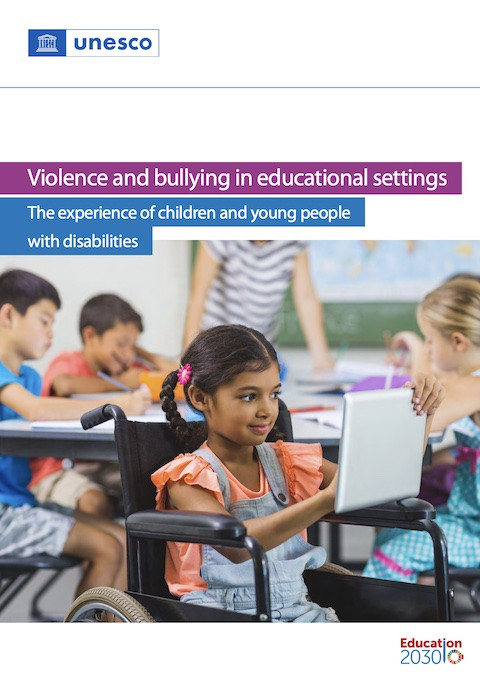 教育环境中的暴力和欺凌 : 残障儿童和青年的经历 Año de publicación: 2021 Autor corporativo: 联合国教科文组织 (UNESCO) 本文是联合国教科文组织关于校园暴力和欺凌的系列技术简报之一,重点关注残障学生的经历。本文首次汇集了关于教育环境中残障学生遭受暴力和欺凌的规模和性质的证据,旨在提高对该问题的认识,鼓励采取行动确保残障儿童和青年能够获得安全的学习环境。本文主要面向教育政策制定者和规划者、学校管理者、校长、教师和其他学校工作人员。
 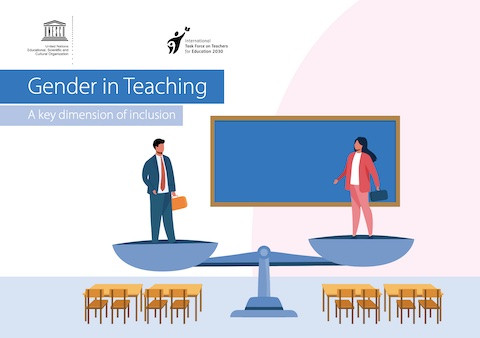 Gender in Teaching: A Key Dimension of Inclusion Año de publicación: 2020 Autor corporativo: UNESCO | International Task Force on Teachers for Education 2030 Without teachers, Sustainable Development Goal 4 to ensure inclusive and equitable, quality education for all by 2030 will not be achieved.Since teachers act as role models for students, inclusion in education means that the teaching workforce mirror the diversity of the classroom. As countries look to recruit more teachers to meet SDGs, one significant factor important to creating inclusive classrooms is gender.This document has been prepared for the 2020 World Teachers’ Day celebrated by UNESCO and the Teacher Task Force with the theme Teachers: Leading in crisis, reimagining the future. Le genre dans l’enseignement: Un élément essentiel de l’inclusion Año de publicación: 2020 Autor corporativo: Organisation des Nations Unies pour l'éducation, la science et la culture (UNESCO) | International Task Force on Teachers for Education 2030 Sans enseignant(e)s, il sera impossible d’atteindre l’objectif de développement durable 4 qui vise à assurer l’accès de tous à une éducation inclusive de qualité, sur un pied d’égalité, d’ici à 2030.Les enseignant(e)s sont des exemples pour les élèves ; à ce titre, l’inclusion dans l’éducation signifie que la composition ducorps enseignant doit refléter la diversité des élèves. À l’heure où les pays cherchent à recruter davantage d’enseignant(e)s pour atteindre les ODD, le genre constitue l’un des facteurs les plus importants pour créer des classes inclusives.Le présent document a été préparé en vue de la Journée mondiale des enseignant(e)s 2020, célébrée par l’UNESCO et l’Équipe spéciale sur les enseignants autour du thème Enseignants : leaders en temps de crise et façonneurs d’avenir.
  Communication and Information Programme Año de publicación: 2021 Autor corporativo: UNESCO UNESCO is the UN specialized agency building peace in the minds of people through education, the sciences, culture, communication and information. Our mission is to foster intercultural dialogue and sustainable development, by promoting the free flow of ideas.By adopting a multi-disciplinary and inclusive approach, UNESCO works with both duty-bearers and rights-holders across the world to develop and implement targeted actions that are born out of local needs, which ensures a holistic and results-based approach for sustainable change.In the field of communication and information, UNESCO defends and promotes freedom of expression, media independence and pluralism, and the building of inclusive knowledge societies underpinned by universal access to information and the innovative use of digital technologies.Through capacity-building, policy advice, international cooperation, monitoring and foresight in the fields of freedom of expression, access to information, and digital transformation, UNESCO will continue to empower key actors with a view to ensuring that fundamental freedoms are guaranteed online and offline, in line with international standards.This is all the more relevant to ensure the ethical development and use of emerging technologies, which have a growing impact on all aspects of the world’s societies. Citizens will also be empowered to enjoy these fundamental freedoms through the development of 21st century skills and the fostering of enabling environments for media pluralism and diversity.
 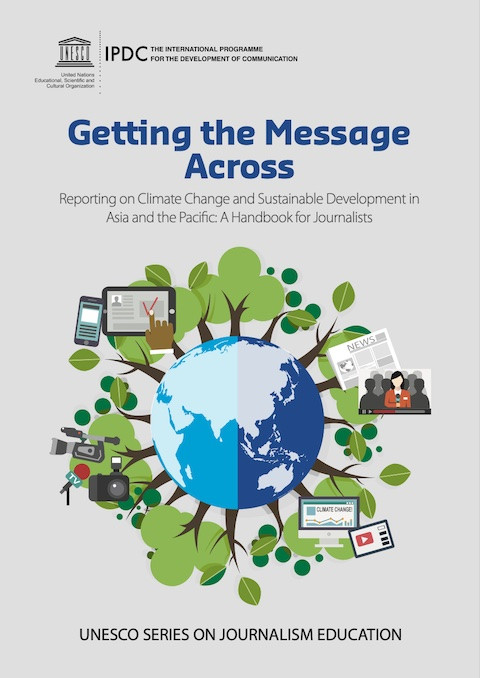 Getting the Message Across: Reporting on Climate Change and Sustainable Development in Asia and the Pacific; A Handbook for Journalists Año de publicación: 2018 Autor corporativo: UNESCO Getting the Message Across, Reporting on Climate Change and Sustainable Development in Asia and the Pacific: A Handbook for Journalists has been customized for journalists to tell the climate change story specific to the region. It explores the essential aspects of climate change, including its injustices to vulnerable communities, especially women and girls and least developed countries, and provides examples of best practices and stories of hope unique to the region. It can be used as a resource for journalists to understand the science of climate change, as well as helping journalists to improve their reporting of the environmental, social, economic ̧ political, technological and other angles of the story. Донесение сути темы Освещение темы: об изменении климата и устойчивом развитии в Азиатско-Тихоокеанском регионе; Пособие для журналистов Año de publicación: 2018 Autor corporativo: Организация Объединенных Наций по вопросам образования, науки и культуры (UNESCO) Пособие для журналистов "Донесение сути темы Освещение темы об изменении климата и устойчивом развитии в Азиатско-Тихоокеанском регионе" было разработано для журналистов, так чтобы рассказать историю изменения климата, характерную для региона. В нем рассматриваются основные аспекты изменения климата, в том числе его несправедливость по отношению к уязвимым общинам, особенно женщинам и девочкам и наименее развитым странам, и приводятся примеры передовой практики и истории надежды, уникальные для региона. Он может быть использован в качестве ресурса для журналистов, чтобы понять науку об изменении климата, а также помочь журналистам улучшить свои репортажи об экологических, социальных, экономических, политических, технологических и других аспектах истории.