
Recursos
Exploren una amplia gama de recursos valiosos en GCED para profundizar su comprensión y promover su búsqueda, incidencia, enseñanza y aprendizaje.
2,768 resultados encontrados
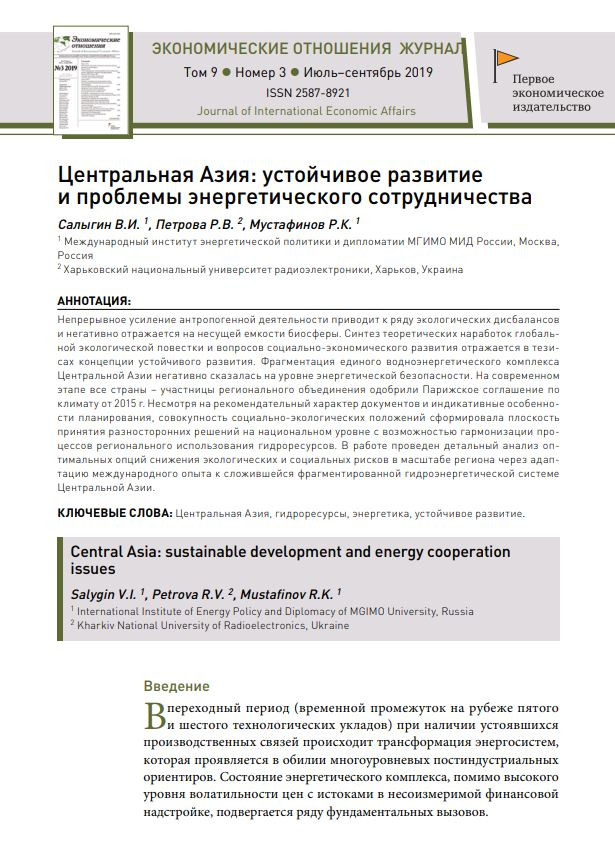 Центральная Азия: устойчивое развитие и проблемы энергетического сотрудничества Año de publicación: 2019 Autor: Salygin V.I. | Petrova R.V. | Mustafinov R.K. Непрерывное усиление антропогенной деятельности приводит к ряду экологических дисбалансов и негативно отражается на несущей емкости биосферы. Синтез теоретических наработок глобальной экологической повестки и вопросов социально-экономического развития отражается в тезисах концепции устойчивого развития. В работе проведен детальный анализ оптимальных опций снижения экологических и социальных рисков в масштабе региона через адаптацию международного опыта к сложившейся фрагментированной гидроэнергетической системе Центральной Азии.
  Green Pack Año de publicación: 2013 Autor corporativo: Regional Environmental Center for Central and Eastern Europe Inspired by the political process “Environment for Europe”, in 2000 the Regional Environmental Center for Central and Eastern Europe (REC) launched a programme on education for sustainable development (ESD), sponsored by Toyota. This included the development and introduction of an innovative multimedia educational kit, the Green Pack, for school teachers and their students in Central and EasternEurope. Other ESD tools similar to the Green Pack have been developed and introduced in recent years to address different target groups. Currently, the main group of REC ESD tools includes:Green Pack, aimed at children aged between 11 and 15 and their teachersGreen Pack Junior, aimed at children aged between 7 and 10 and their teachersGreen Steps, aimed at citizens and families After 14 years of project implementation, REC ESD materials have been introduced in 19 countries in Europe and Asia. Since the Green Pack launch in 2001, around 40,000 teachers and over 4.5 million students have been educated, fundamentally changing the way in which the teaching of sustainability is approached. Each project has been developed in cooperation with businesses, governments, professional organisations and NGOs in order to foster community support across a broad spectrum of society. Many donors from the international, governmental, business and private communities have supported this process. URL:http://www.greenpackonline.org/english/menu.html Проект Зеленый покет Año de publicación: 2013 Autor corporativo: Regional Environmental Center for Central and Eastern Europe Регионaльный экологический центр для Центрaльной и Восточной Европы при поддержке Прогрaммы грaнтов в облaсти окружaющей среды «Тойоты» и Министерствa окружaющей среды Финляндии в 2000 году запустили программу по образованию в интересах устойчивого развития (ОУР), спонсируемой Toyota. Это включало разработку и внедрение инновационного мультимедийного образовательного набора «Зеленый пакет» для школьных учителей и их учеников в Центральной и Восточной Европе. В последние годы были разработаны и внедрены другие инструменты ОУР, аналогичные Green Pack, для охвата различных целевых групп. После 14 лет реализации проекта материалы ОЭЗ РЭЦ были внедрены в 19 странах Европы и Азии. Со времени запуска Green Pack в 2001 году было обучено около 40 000 учителей и более 4,5 миллионов студентов, что коренным образом изменило подход к обучению устойчивости. Каждый проект был разработан в сотрудничестве с предприятиями, правительствами, профессиональными организациями и НПО в целях содействия поддержке общин в широком спектре общества. Многие доноры из международных, правительственных, деловых и частных сообществ поддержали этот процесс. URL:http://education.rec.org/ru/main.php?lang=ru
 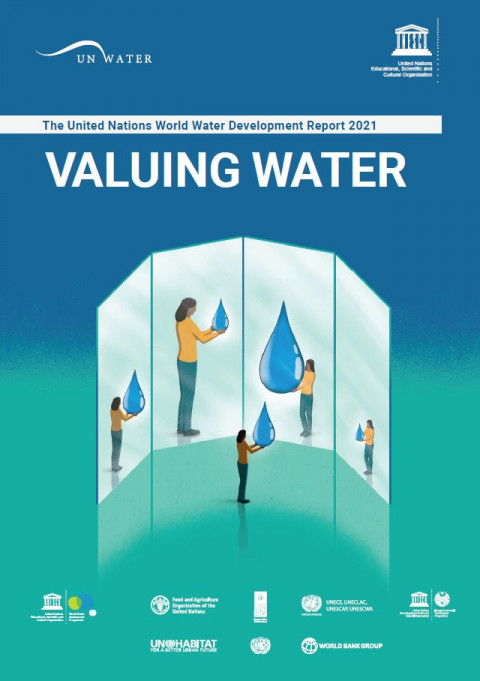 The United Nations World Water Development Report 2021: Valuing Water Año de publicación: 2021 Autor corporativo: UNESCO World Water Assessment Programme (WWAP) The 2021 edition of the United Nations World Water Development Report focuses on valuing water. There is enough water for all provided we use and manage it efficiently. But we don’t. We invest too little, and ineffectively. We use too much water, creating scarcities. Quality is suffering and so is the environment.The value we place on water varies, depending upon who is using it, and why. Value can be a guide to what our goals should be, what actions are needed, and where we should invest. Many of our problems arise because we don’t value water highly enough; all too often water is not valued at all.This report explains various approaches to valuing water for environmental considerations, water-related infrastructure, drinking water, sanitation and hygiene. It looks at valuation issues in food and agriculture, business, industry, energy and financing. And it highlights the perspectives of different value systems and cultures, and associated social and gender-based considerations.
  Educación Integral de la Sexualidad: Conceptos, Enfoques y Competencias Año de publicación: 2014 Autor corporativo: UNESCO Santiago El objetivo de este documento es comprender que la sexualidad es parte integral de la vida de las personas (en sus diferentes etapas o edades, y en toda su diversidad), y que contribuye al desarrollo de su identidad y por lo tanto, a su desarrollo social. Se trata de capacidades más que de contenidos, las que deben desarrollarse en forma interdisciplinaria y de manera progresiva para que las personas actúen de forma responsable respecto a ellas mismas y con los demás. El documento explica que la educación de la sexualidad está íntimamente relacionada con la comprensión, la reflexión y el discernimiento, y fortalece las bases para el aprendizaje a lo largo de la vida, preparando a los jóvenes para la vida adulta. Es así que el enfoque se centra en alcanzar un desarrollo y bienestar humano sostenible.
  Address by Irina Bokova, Director-General of UNESCO, on the occasion of the conference: Creating Sustainable Society of Peace: A Legacy of King Bhumibol Adulyadej of Thailand Año de publicación: 2017 Autor corporativo: UNESCO. Director-General, 2009-2017 (Bokova, I.G.) This address was delivered by Irina Bokova, Director-General of UNESCO, on the occasion of the conference: Creating Sustainable Society of Peace: A Legacy of King Bhumibol Adulyadej of Thailand; UNESCO, 26 September 2017.
 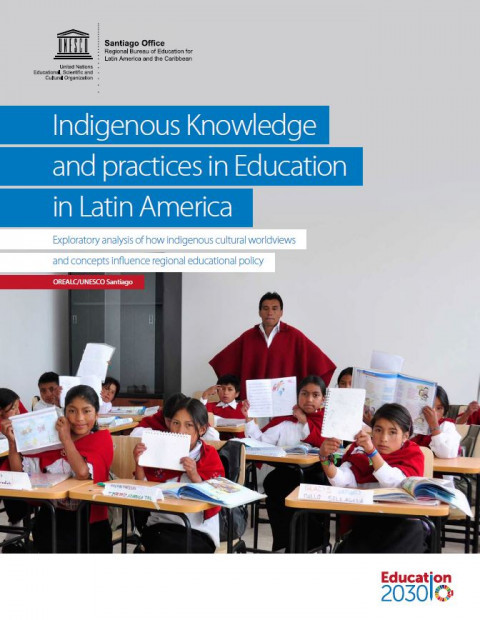 Indigenous Knowledge and practices in Education in Latin America: Exploratory Analysis of How Indigenous Cultural Worldviews and Concepts Influence Regional Educational Policy Año de publicación: 2017 Autor corporativo: UNESCO Santiago This study presents a preliminary exploration of the approaches, processes and tools through which indigenous worldviews and concepts of knowledge and well-being can and have influenced education policies in Latin America. First, it addresses the principal theoretical approaches used in the area of indigenous knowledge and education policies, taking into account the persistence of an “epistemic otherness” and the need for a dialogue between the predominant approaches. Second, it addresses the normative framework and intercultural educational policies, emphasizing how and to what extent the countries in the region take indigenous knowledge into consideration and include it in their education policies and practices. Third, it presents a number of “relevant practices” in terms of dialogue with indigenous knowledge in education policies, taking into account the factors that favour the relevance of education to indigenous views and cultural practices, facilitating their replicability and sustainability. Furthermore, these practices respond to key criteria like recognizing learners as ‘carriers’ and producers of culture, valuing the use of schools as centres of social and cultural activities and favouring the inclusive learning of indigenous and non-indigenous students. Finally, the study unveils challenges for the advancement of the dialogue between indigenous knowledge and education policies, at the same time proposing key concepts to be approached in depth. Conocimiento Indígena y Políticas Educativas en América Latina: Análisis exploratorio de cómo las cosmovisiones y conceptos culturales indígenas de conocimiento inciden, y pueden incidir, en la política educativa en la región Año de publicación: 2017 Autor corporativo: UNESCO Santiago El presente estudio explora la idea de una ‘alternativa epistémica’, construyendo desde el conocimiento y los valores que sustentan las prácticas sociales y educacionales indígenas de la región. En particular, explora cómo estos valores y formas de conocimiento han sido adoptados en las políticas educacionales de tres países de la región andina: Bolivia, Ecuador y Perú, que hace poco atravesaron reformas políticas y constitucionales con el fin de reconocer la composición de sus poblaciones multiculturales, multiétnicas y multilingüísticas. Esta publicación es una invitación a considerar el conocimiento indígena como una fuente legítima de inspiración para las políticas educacionales que puedan contribuir al bienestar de todos y a la sostenibilidad del planeta.
  Artificial intelligence in education: challenges and opportunities for sustainable development Año de publicación: 2019 Autor: Pedró, Francesc | Subosa, Miguel | Rivas, Axel | Valverde, Paula Artificial Intelligence is a booming technological domain capable of altering every aspect of our social interactions. Ineducation, AI has begun producing new teaching and learning solutions that are now undergoing testing in differentcontexts. This working paper, written for education policymakers, anticipates the extent to which AI affects the education sector to allow for informed and appropriate policy responses. This paper gathers examples of the introduction of AI in education worldwide, particularly in developing countries, discussions in the context of the 2019 Mobile Learning Week and beyond, as part of the multiple ways to accomplish Sustainable Development Goal 4, which strives for equitable, quality education for all. First, this paper analyses how AI can be used to improve learning outcomes, presenting examples of how AI technology can help education systems use data to improve educational equity and quality in the developing world. Next, thepaper explores the different means by which governments and educational institutions are rethinking and reworking educational programmes to prepare learners for the increasing presence of AI in all aspects of human activity. Thepaper then addresses the challenges and policy implications that should be part of the global and local conversations regarding the possibilities and risks of introducing AI in education and preparing students for an AI-powered context. Finally, this paper reflects on future directions for AI in education, ending with an open invitation to create new discussions around the uses, possibilities and risks of AI in education for sustainable development.
  Integrating education for sustainable development (ESD) in teacher education in South-East Asia: a guide for teacher educators Año de publicación: 2018 Autor corporativo: UNESCO Bangkok This publication is a cumulative output of the project Sustainability Begins with Teachers in South-East Asia, implemented by UNESCO Bangkok, in cooperation with SEAMEO from 2017 to 2018, with the generous support of the Government of Japan. The initial content was developed together with the representatives of the universities and teacher education institutions who participated in the South-East Asia Sub-Regional Workshop on Education for Sustainable Development for Teacher Education Institutions, held from 5 to 9 June 2017 in Chiang Rai, Thailand. Content has since been enhanced through the sharing of knowledge and experiences gathered from a series of in-country workshops held in Cebu, Philippines; Luang Prabang, Lao PDR; Kampot, Cambodia; Bangkok, Thailand; and Yogyakarta, Indonesia. This culminated in a project review workshop in Bangkok from 24 to 26 April 2018 in which different in-country experiences were shared and comments on the guidebook collected. Twenty-six universities and teacher education institutions have taken part in the project process in total. This guidebook is a result of this collaborative journey.