
Recursos
Exploren una amplia gama de recursos valiosos en GCED para profundizar su comprensión y promover su búsqueda, incidencia, enseñanza y aprendizaje.
2,768 resultados encontrados
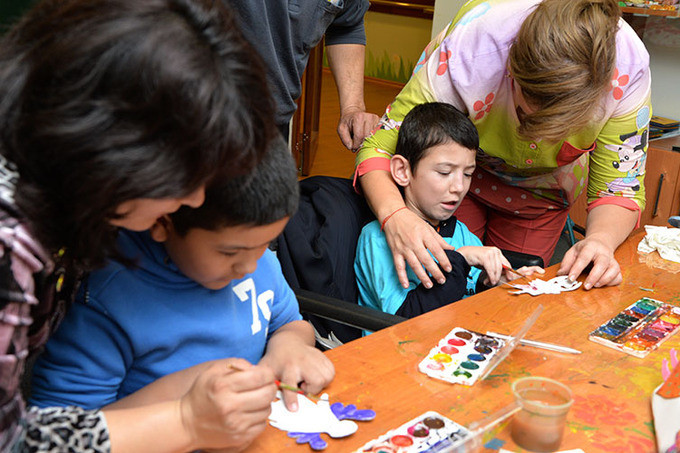 Новый закон «Об образовании» и инклюзия: как должно быть Año de publicación: 2020 Autor: Дильмурад Юсупов 19 мая 2020 года Законодательная палата Олий Мажлиса приняла закон «Об образовании» в новой редакции, в который впервые было внесено понятие инклюзивного образования. Ассоциация инвалидов Узбекистана совместно с экспертами провела анализ документа на его соответствие принципам инклюзивного образования. Анализ документа показал, что несмотря на включение инклюзивного образования как одной из форм получения образования, исключающего дискриминацию детей с инвалидностью, законопроект не соответствует принципам инклюзии.
  Stepping Forward: Parliaments in the Fight Against Hate Speech Año de publicación: 2023 Autor: Kevin Deveaux | Tim Baker | Mary O’Hagan | David Ennis Autor corporativo: United Nations Development Programme (UNDP) This brief provides an overview of the background, drivers, enablers and the impact of hate speech and identifies strategies to counter it, with a focus on the role of parliaments as a positive force for change. Of particular relevance are the concrete actions parliaments can take to address and mitigate the prevalence and impact of hate speech on those who are most vulnerable in society, including women, minorities and other underrepresented groups. The objective of this brief is to provide meaningful and practical guidance for parliaments and parliamentarians, as well as those who programmatically support them, on steps they can take to reduce and counter hate speech while fostering peace, constructive dialogue and trust.
  AntiClash Año de publicación: 2023 Autor: Rafael Tyszblat | Olivier Fournout Autor corporativo: AntiClash AntiClash est un concept d’émission qui va contre la culture du c"lash" en mettant en avant l’esprit et la méthode du dialogue. Lors des émissions thématiques, facilitées par des professionnels du dialogue, les intervenants – connus ou non, experts ou pas, mais en désaccord sur un sujet à potentiel polémique – sont invités à aller au fond de leurs divergences, avec authenticité et respect.Il ne s’agit pas d’une émission d’information. Les animateurs ne sont ni journalistes, ni experts dans les domaines abordés par les personnes invitées. Ainsi, ils ne font pas de « fact checking », ni de « debunking » mais invitent leurs auditeurs à vérifier eux-mêmes les faits avancés par les intervenants.L’objectif d’AntiClash est de montrer de quoi a l’air un véritable dialogue en permettant une meilleure compréhension des discours antagonistes, que la culture du clash dans les médias et les réseaux ne permet pas.Il ne s’agit pas de créer une société où tout le monde est d’accord, mais nos différences, si elles font l’objet d’une conversation constructive, doivent enrichir notre compréhension des lignes de fracture politique et nous permettre de nous rapprocher d’une vérité partagée en rétablissant des liens de confiance et une communication éthique entre citoyens.AntiClash, c’est la tentative de montrer une alternative à l’affrontement sur les sujets qui comptent. AntiClash is a program concept that goes against the culture of c "lash" by emphasizing the spirit and method of dialogue. During themed programs, facilitated by dialogue professionals, speakers - well-known or not, experts or not, but disagreeing on a potentially controversial subject - are invited to get to the bottom of their differences, with authenticity and respect.This is not a news program. The hosts are neither journalists nor experts in the fields covered by the guests. As such, they do not engage in "fact checking" or "debunking", but invite their listeners to verify for themselves the facts put forward by the speakers. The aim of AntiClash is to show what real dialogue looks like, by enabling a better understanding of antagonistic discourses, which the culture of clash in the media and networks does not allow. It's not about creating a society where everyone agrees, but our differences, if the subject of constructive conversation, should enrich our understanding of political fault lines and enable us to move closer to a shared truth by re-establishing bonds of trust and ethical communication between citizens. AntiClash is an attempt to show an alternative to confrontation on the issues that matter.
  Asia and the Pacific SDG Progress Report 2025: Engaging Communities to Close the Evidence Gap Año de publicación: 2025 Autor corporativo: UN. Economic and Social Commission for Asia and the Pacific (UN. ESCAP) The SDG progress report 2025 presents the latest data and insights on progress toward the Sustainable Development Goals (SDGs) in the Asia-Pacific region. While celebrating regional achievements, it also highlights persistent challenges—such as climate change, natural disasters, and critical data gaps—that risk leaving marginalized communities behind. By showcasing innovative community-level partnerships, the report explores how local efforts can help bridge the evidence gap, ensuring that progress toward the SDGs is inclusive and leaves no one behind.
  Диалог между правительствами и молодежью стран Центральной Азии 2021-2022 Año de publicación: 2023 Autor corporativo: РЦПДЦА Данная публикация представляет собой сборник посланий молодых в ходе третьего (8 декабря 2021 года, г. Душанбе, Республика Таджикистан) и четвертого (11 декабря 2022 года, г. Ашхабад, Туркменистан) Диалогов между правительствами и молодежью стран Центральной Азии, а также сборник истории успехов участников программы «Академия превентивной дипломатии» Регионального Центра ООН по превентивной дипломатии для Центральной Азии (РЦПДЦА).
  Young People of Central Asia: Uzbekistan Año de publicación: 2016 Autor: Bakhtiyor Ergashev | Azamat Seitov Autor corporativo: Friedrich-Ebert-Stiftung Kazakhstan Office The Friedrich Ebert Foundation initiated the Youth of Central Asia project. It aims to study the values and attitudes of young Uzbeks, lifestyles, identities, political views and foreign policy orientations. Political scientist Bakhtiyor Ergashev and sociologist Azamat Seitov prepared a research analytical report based on the results of their work. Молодежь Центральной Азии. Узбекистан Año de publicación: 2016 Autor: Bakhtiyor Ergashev | Azamat Seitov Autor corporativo: Фонд имени Фридриха Эберта в Казахстане Фондом им. Фридриха Эберта был инициирован проект «Молодежь Центральной Азии». Его цель – изучение ценностей и взглядов молодых узбекистанцев, образа жизни, идентификации, политических взглядов и внешнеполитических ориентаций. По итогам проведенной работы политологом Бахтиером Эргашевым и кандидатом социологических наук Азаматом Сеитовым был подготовлен исследовательский аналитический отчет.
  Declaration on a Culture of Peace Año de publicación: 1999 Autor corporativo: United Nations (UN) Solemnly proclaims the present Declaration on a Culture of Peace to the end that Governments, international organizations and civil society may be guided in their activity by its provisions to promote and strengthen a culture of peace in the new millennium.
 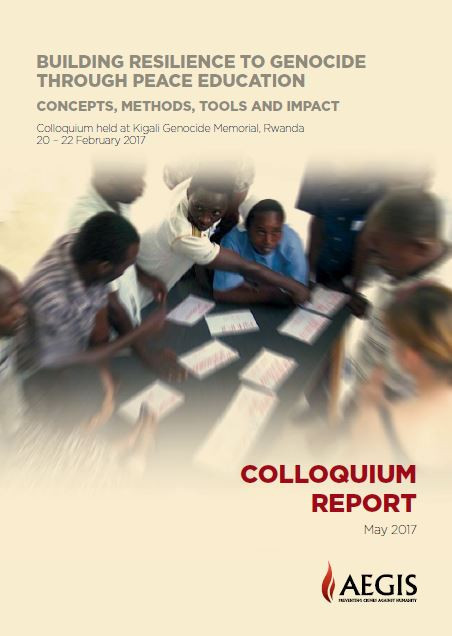 Colloquium Report: Building Resilience to Genocide through Peace Education: Concepts, Methods, Tools and Impact Año de publicación: 2017 Autor: Jonathan Bower, Mariana Goetz Autor corporativo: Aegis Trust A three-day Colloquium in Kigali in February brought together academics and practitioners in and around the field of peace education to share concepts, methods and means of measuring impact, contributing to a stronger evidence base for the effectiveness of peace education. Three interesting takeaways from the Colloquium: 1. Building resilience against genocide requires critical thinking about the process of identity-based violence and its reversal.2. The content of peace education programmes matters: interactive role-play type activities have been shown to have a longer lasting impact.3. Unhealed wounds need to be addressed to prevent a repeat of violence; psychosocial support must accompany peace education to reduce anxiety, which can be an obstacle when accessing empathy. A major achievement resulting from the consortium’s advocacy has been that the Government of Rwanda through the Ministry of Education has integrated Peace and Values education into the school curriculum. In a new phase of work Aegis is now supporting the implementation of the revised national curriculum that has integrated peace and values education (2016-19).
 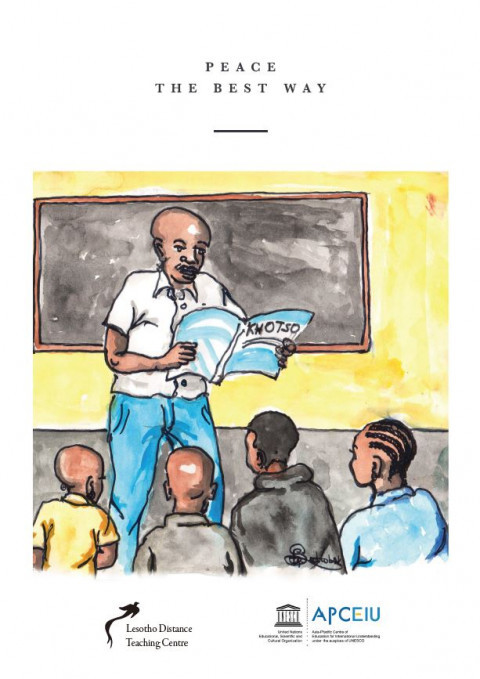 Peace the Best Way Año de publicación: 2017 Autor corporativo: Lesotho Distance Teaching Centre (LDTC) The storybook titled “Peace, the Best Way (Ngoan’a Khotso Ha a Lebale Tsa Khotso)” is an end-product of Workshop in Lesotho on GCED: Teacher Training on Peace Education & GCED Learning Material Development held between 12 and 14 of July 2017. During the workshop, participants created learning materials on peace and conflict transformation based on what they have learned throughout the sessions.The authors share their stories of conflicts that they encounter in their everyday lives and further identify ways of managing and resolving the conflicts in a peaceful manner to let everyone live in harmony. They hope to instill the importance of peace not only to the adults reading the book, but also to the younger generation who learn from their parents and adults of the community.The book published in English as well as Sesotho, will be used as teaching and learning resources for learners and also be disseminated to public locations including schools, community centers and libraries.For more information on the Workshop, Please click here.