
Recursos
Exploren una amplia gama de recursos valiosos en GCED para profundizar su comprensión y promover su búsqueda, incidencia, enseñanza y aprendizaje.
2,769 resultados encontrados
 L'éducation au service du développement: La vision de la Banque mondiale, de l'OCDE et de l'UNESCO (L’Education en débats: analyse comparée; no. 8) Año de publicación: 2016 Autor: Thibaut Lauwerier Autor corporativo: Université de Genève Dans ce présent article, nous nous intéressons aux liens entre éducation et développement du point de vue de la Banque mondiale, l’OCDE et l’UNESCO, organisations internationales majeures dans le secteur éducatif au niveau mondial. Après avoir présenté le contexte de la recherche, à savoir les caractéristiques majeures des trois organisations étudiées et la méthodologie utilisée, nous montrons comment le concept du développement est perçu par ces institutions. Ensuite, nous traitons des implications de ces visions du développement pour l’éducation. En conclusion, tout en analysant les récentes évolutions des discours des organisations internationales, nous discutons de la nécessité d’aller au-delà d’une vision étriquée du développement et donc de l’éducation.
 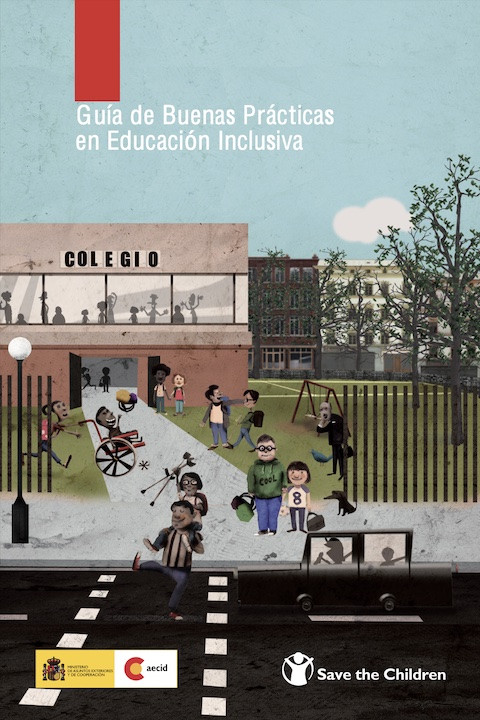 Guide of Good Practices in Inclusive Education Año de publicación: 2013 Autor: Carmen Solla Salvador Autor corporativo: Save the Children | Spanish Agency for International Development Cooperation (AECID) In this document, Save the Children expresses its commitment to an educational model in which all boys and girls learn together, regardless of their personal, social or cultural conditions; being able to opt for the same learning and development opportunities. To achieve this, the actors in the different educational fields (competent administrations, those responsible for the centers, other educational entities and the rest of the community), must establish the necessary conditions to identify the existing barriers to the participation and learning of children, girls and adolescents; and implement the necessary measures to overcome them. Guía de buenas prácticas en educación inclusiva Año de publicación: 2013 Autor: Carmen Solla Salvador Autor corporativo: Save the Children | Spanish Agency for International Development Cooperation (AECID) En este documento, Save the Children manifiesta su apuesta por un modelo educativo en el que todos los niños y las niñas aprendan juntos, independientemente de sus condiciones personales, sociales o culturales; pudiendo optar a las mismas oportunidades de aprendizaje y desarrollo. Para lograrlo, los actores en los distintos ámbitos educativos (administraciones competentes, responsables de los centros, de otras entidades educativas y resto de la comunidad), deben establecer las condiciones necesarias para identificar las barreras existentes para la participación y el aprendizaje de los niños, niñas y adolescentes; e implementar las medidas necesarias para superarlas.
  Human Dignity: Contemporary Pattern and Traditional Patterns (Revista Brasileira de Direito; vol. 11, no. 2) Año de publicación: 2015 Autor: Antonio Pelé Autor corporativo: Faculdade Meridional-IMED The concept of human dignity refers to the intrinsic and absolute value of human beings and repre- sents the grounding human rights. Those features are usually studied as if they were the results, in the history of Western thought, of the progressive recognition of the human moral value. Our work aims to show precisely the contrary, showing some clear differencies between the current paradigm of human dignity and the previous and traditional patterns of dignity. Thus, the basic features of each (current and previous) pattern are analyzed in order to show that the contemporary paradigm of human dignity as little in common with the previous paradigms of dignity. A dignidade humana: Modelo contemporaneo e modelos tradicionais (Revista Brasileira de Direito; vol. 11, no. 2) Año de publicación: 2015 Autor: Antonio Pelé Autor corporativo: Faculdade Meridional-IMED El concepto de dignidad humana se refiere al valor intrínseco y absoluto del ser humano y sería el fundamento de los derechos humanos. Estas características suelen ser estudiadas como si fuesen las consequencias de un lento desarrollo del reconocimiento progressivo del valor moral del ser humano en la historia del pensamiento occidental. Nuestro estudio pretende, al contrario, establecer unas claras diferencias entre el modelo contemporáneo de dignidad humana y los modelos anteriores (tradicionales) de dignidad. Para llegar a este fin, realizamos y destacamos las características principales de estos modelos, mostrando que el modelo contemporáneo de dignidad humana tiene poco en común con sus aproximaciones anteriores. Palabras-clave: dignidad humana, derechos humanos, filosofía clásica, humanismo, Pufendorf, Kant.
  On the Origins of the Globalization Process (Methaodos.revista de ciencias sociales; vol. 1, no. 1) Año de publicación: 2013 Autor: Antonio Martín-Cabello Autor corporativo: Rey Juan Carlos University This paper tries to define the origins of the globalization process. In order to do this, it has proceeded to review the abundant and scattered scientific literature. The analysis concludes that there are four usual answers about the origins of globalization. Firstly, place it alongside the emergence of the earliest human civilizations. Secondly, link the globalization process with the emergence of the European modernity during the fifteenth century. Thirdly, connect it to the consolidation of the industrial revolution in the nineteenth century. And finally, consider it the last stage of the expansion of global capitalism in the late twentieth century. Afterwards, the paper will attempt to make a critical assessment of these approaches. The article concludes that the latter is the more plausible answer, because it is closer to the available empirical facts and it avoids the pitfalls of teleology. Sobre los orígenes del proceso de globalización (Methaodos.revista de ciencias sociales; vol. 1, no. 1) Año de publicación: 2013 Autor: Antonio Martín-Cabello Autor corporativo: Rey Juan Carlos University Este artículo intenta delimitar los orígenes del proceso de globalización. Para ello, se ha procedido a revisar la abundante y dispersa literatura científica disponible. Del análisis realizado se concluye que existen cuatro respuestas habituales sobre los orígenes de la globalización. En primer lugar, situarla junto la aparición de las primeras civilizaciones humanas. En segundo, ligar el proceso de globalización con la aparición de la modernidad europea durante el siglo XV. En tercer lugar, unirla a la consolidación de la revolución industrial en el siglo XIX. Y, por último, considerarla la última etapa de la expansión del capitalismo a escala mundial a finales del siglo XX. Después, se intentará realizar una valoración crítica de estas aproximaciones. El artículo concluye afirmando que la última respuesta es la más plausible, pues se encuentra más cerca de los datos empíricos disponibles y evita las trampas de la teleología.
 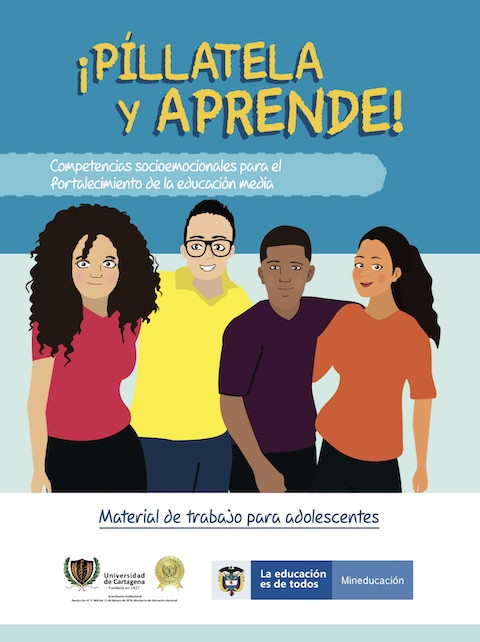 ¡Píllatela y aprende! : Competencias socioemocionales para el fortalecimiento de la educación media Año de publicación: 2019 Autor corporativo: Universidad de Cartagena Este documento contiene 12 talleres de desarrollo socioemocional diseñados para jóvenes. Incluye dinamicas que permiten reflexionar sobre su vida, las relaciones que tienen con los demás y los planes que tienen a corto, mediano y largo plazo.
 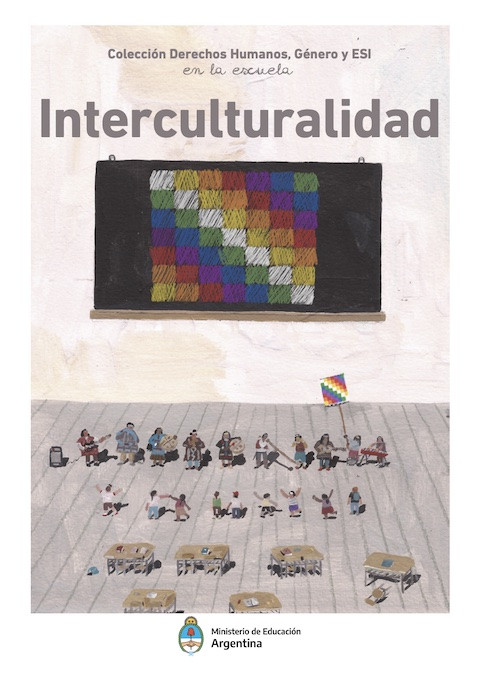 Interculturality Año de publicación: 2021 Autor corporativo: Argentina. Ministry of Education This document addresses the issue of interculturality in the framework of the Human Rights, Gender and ESI at School Collection. It brings together a set of theoretical reflections and guidelines for teachers from different dimensions and senses, on issues that it is essential to continually revisit between different generations. Interculturalidad Año de publicación: 2021 Autor corporativo: Argentina. Ministry of Education En este documento se aborda el tema de la interculturalidad en el marco de la Colección Derechos Humanos, Género y ESI en la escuela. Reúne un conjunto de reflexiones teóricas y orientaciones para las y los docentes desde diferentes dimensiones y sentidos, sobre temas que resulta imprescindible revisitar continuamente entre las distintas generaciones.