
Recursos
Exploren una amplia gama de recursos valiosos en GCED para profundizar su comprensión y promover su búsqueda, incidencia, enseñanza y aprendizaje.
2,813 resultados encontrados
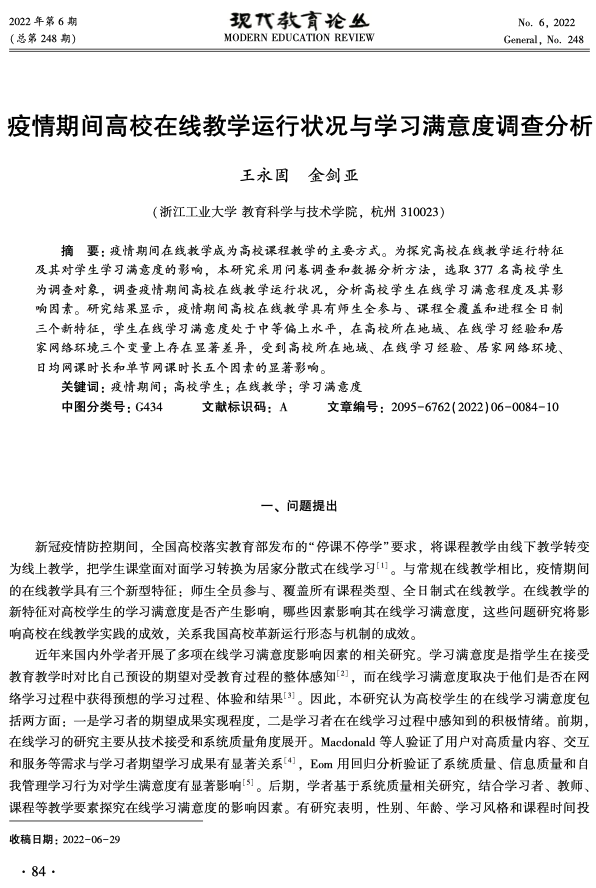 疫情期间高校在线教学运行状况与学习满意度调查分析 Año de publicación: 2022 Autor: 王永固 | 金剑亚 疫情期间在线教学成为高校课程教学的主要方式。为探究高校在线教学运行特征及其对学生学习满意度的影响,本研究采用问卷调查和数据分析方法,选取377名高校学生为调查对象,调查疫情期间高校在线教学运行状况,分析高校学生在线学习满意程度及其影响因素。研究结果显示,疫情期间高校在线教学具有师生全参与、课程全覆盖和进程全日制三个新特征,学生在线学习满意度处于中等偏上水平,在高校所在地域、在线学习经验和居家网络环境三个变量上存在显著差异,受到高校所在地域、在线学习经验、居家网络环境、日均网课时长和单节网课时长五个因素的显著影响。
  Manuel – Education aux Objectifs de développement durable Año de publicación: 2022 Autor corporativo: Institut international des droits de l’Homme et de la paix (2IDHP) Ce manuel accompagne les enseignants et professionnels de jeunesse qui souhaitent sensibiliser leur public aux Objectifs de développement durable. Les activités proposées dans ce manuel ont été réalisées dans le cadre du programme pédagogique européen Walk the Global Walk mis en œuvre de 2017 à 2021 et du programme pédagogique normand ecHo mis en œuvre depuis 2021.Sous le prisme des trois piliers du développement durable et des droits de l’Homme, les ODD sont au cœur de ce manuel qui, grâce à des activités d’éducation aux droits de l’Homme et à la citoyenneté démocratique participatives et centrées sur l’apprenant, permet de comprendre l’importance d’atteindre les ODD afin de répondre aux enjeux du monde actuel. Migrations, égalité entre les genres, discriminations, discours de haine, participation à la vie citoyenne, inclusion, santé… Une pluralité de thématiques qui feront écho à vos objectifs pédagogiques avec votre groupe et qui s’inscriront parfaitement dans leur éducation citoyenne. This manual accompanies teachers and youth professionals who wish to raise awareness of the Sustainable Development Goals. Activities proposed in this manual were carried out as part of the European educational program Walk the Global Walk implemented from 2017 to 2021 and the Normandy educational program ecHo implemented since 2021.Under the prism of the three pillars of sustainable development and human rights, the SDGs are at the heart of this manual which, through participatory, learner-centered human rights and democratic citizenship education activities, helps to understand the importance of achieving the SDGs in order to meet the challenges of today's world. Migration, gender equality, discrimination, hate speech, civic participation, inclusion, health... A wide range of themes that will echo your pedagogical objectives with your group and fit perfectly into their civic education.
  Cartoonothèque Autor corporativo: Cartooning for Peace Grâce à la contribution quotidienne de ses 280 membres dessinateurs de presse, originaires de 74 pays à travers le monde, Cartooning for Peace dispose d’une remarquable collection de dessins de presse qui offre une pluralité de perspectives sur les événements internationaux au fil des années.Les 10 galeries thématiques présentent un petit échantillon de cette « cartoonothèque » qui permet à l’association de créer ses expositions, ses outils pédagogiques et de fournir ses partenaires médias, mettant ainsi le dessin de presse à la disposition d’une diversité de publics (grand public, institutions, élèves et étudiants, jeunes sous main de justice, prisonniers, professionnels de l’éducation, journalistes, dessinateurs, etc). Thanks to the daily contribution of its 280 member press cartoonists, from 74 countries around the world, Cartooning for Peace has a remarkable collection of press cartoons that offers a plurality of perspectives on international events over the years.The 10 thematic galleries below present a small sample of this “cartoon library” which allows the organisation to create its exhibitions, its educational tools and to provide its media partners, making press cartoons available for a diversity of audiences (general public, institutions, pupils and students, young people in custody, prisoners, education professionals, journalists, cartoonists etc).
  Parents dans un monde d'écrans. Petit guide à destination des parents pour accompagner leurs enfants sur les écrans Año de publicación: 2022 Autor: Guillaume Jegousse | Sylvain Bedouet-Lallour | Laurent Pommereuil Autor corporativo: Associations Douar Nevez et Défis Difficile de gérer les écrans à la maison !Surtout quand ils sont portables etque la chambre est le lieu privilégié de l’enfantou de l’adolescent !A travers ce petit guide, les associations Douar Nevez et DéfiS donnent quelques conseils qui permettrontà chaque parent d’accompagner ses enfantspour un usage responsable des nouvellestechnologies numériques. It's hard to manage screens at home!Especially when they're portable and the bedroom is the place where the child's or teenager's spends most of his/her time.With this little guide, the Douar Nevez and DéfiS ngo's give a few tips to help parents help their children for responsible use of new digital technologies.
 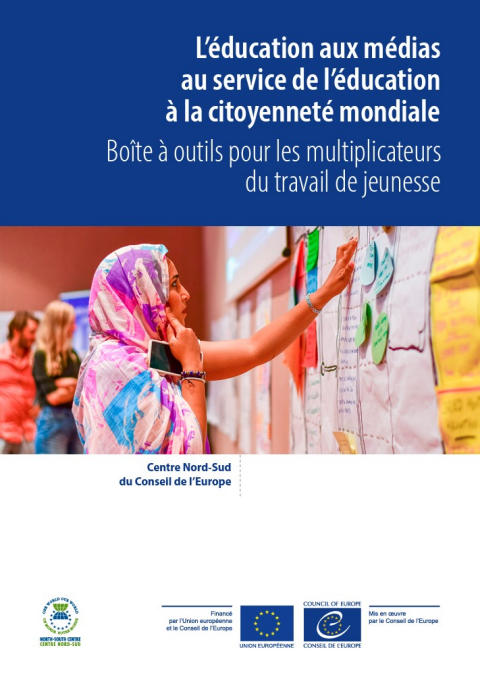 L’éducation aux médias au service de l’éducation à la citoyenneté mondiale Boîte à outils pour les multiplicateurs du travail de jeunesse Año de publicación: 2022 Autor corporativo: Conseil de l’Europe Ce kit à outils propose une approche intégrée de l’éducation aux médias dans le contexte de l’éducation à la citoyenneté mondiale. Il explore un ensemble d’activités axées sur l’analyse critique et la production de messages médiatiques, l’analyse des algorithmes, la participation active dans les sociétés, le maintien de la vie privée, le maintien du bien-être et la gestion de l’e-identité. cette boîte à outils s’adresse aux éducateurs et aux multiplicateurs du travail de jeunesse. Les activités et fiches d’information proposées, conçues pour des contextes d’apprentissage non formel, peuvent également se prêter à une exploitation dans les environnements scolaires. En effet, la boîte à outils intègre les avancées les plus récentes en matière d’éducation à la citoyenneté mondiale, d’éducation aux médias et d’éducation à la citoyenneté numérique, qui sont susceptibles d’enrichir de façon fort utile les programmes scolaires officiels. Les activités pratiques ici réunies s’inscrivent dans le Cadre des compétences pour une culture de la démocratie et de l’approche des droits humains que défend le Conseil de l’Europe. En élargissant la portée de l’éducation à la citoyenneté mondiale avec des éléments d’éducation aux médias, l’éducation à la citoyenneté mondiale devient un outil plus efficace contribuant à la réalisation des objectifs de développement durable de l’Agenda 2030 des Nations Unies. This toolkit offers an integrated approach to media literacy in the context of global citizenship education. It explores a range of activities focusing on critical analysis and production of media messages, analysis of algorithms, active participation in societies, maintaining privacy, maintaining well-being and managing e-identity. This toolbox is aimed at educators and youth work multipliers. The proposed activities and information sheets, designed for non-formal learning contexts, can also be used in school environments. Indeed, the toolbox incorporates the most recent advances in global citizenship education, Media Literacy and digital citizenship education, which are likely to enrich official school curricula in very useful ways. The practical activities presented here are in line with the Council of Europe's framework of competencies for a culture of democracy and human rights. By broadening the scope of global citizenship education with elements of Media Literacy, global citizenship education becomes a more effective tool contributing to the achievement of the sustainable development goals of the United Nations Agenda 2030.
  برامج الأطفال التليفزيونية بين راهن المتعة وعامل التثقيف Año de publicación: 2022 Autor: Issa Abdi Nouria تطرقنا في هذه الدراسة التحليلية إلى التعرف على العلاقة التي تجمع فئة الأطفال بجهاز التليفزيون، فحاولنا من خلالها الوقوف على مدى اعتماد برامج الأطفال التلفزيونية على بعد المتعة على حساب المواد التثقيفية والكشف عن التأثيرات الناتجة لتعرض الأطفال لبرامج تعتمد على بعد المتعة أكثر من بعد التثقيف، وتوصلنا في الأخير إلى أن برامج أطفال التلفزيونية تعتمد أكثر على المتعة لاستمالة جمهور الأطفال، كما تأثر برامج الأطفال التليفزيونية التي تعتمد على بعد المتعة أكثر من بعد التثقيف على سلوكيات الأطفال ،حيث تمس هذه السلوكيات الجانب النفسي، القيمي، الاجتماعي، التعليمي للأطفال. Children's Television Programs are between Entertainment and Education Año de publicación: 2022 Autor: Issa Abdi Nouria In this analytical study, we explored the relationship between children and television; we tried to determine the extent of the adoption of television programs by children where entertainment is superior to educational use, revealing the effects of children's exposure to programs that rely on having more entertainment than educational aspect we concluded that television programs directed to children rely more on entertainment aspect to attract children’s audience. Children's television programs that rely on the entertainment dimension have been affected more than educational programs on their behaviors and effects more their psychological, social and educational aspects.
  اتجاهات المعلمين نحو دمج ذوي الاحتياجات الخاصة مع الطلبة العاديين (علم النفس ، العدد 27). Año de publicación: 2018 Autor: Ahmed Ismail Autor corporativo: Algeria. Ministry of Higher Education and Scientific Research هدفت الدراسة الى معرفة اتجاهات واراء معلمي المرحلة الابتدائية حول دمج الأطفال ذوي الأحتياجات الخاصة في المدارس الابتدائية في مديرية تربية بغداد ـ الكرخ / 2 حيث تكونت عينة الدراسة من (100) معلما ومعلمة ، وقد استخدمت الدراسة اداة الاستبانة والتي شملت (30) فقرة ، و كانت تدرس الهدف الأول هو اتجاهات المعلمين نحو دمج ذوي الاحتياجات الخاصة في المدارس الاعتيادية وقد توصلت الدراسة الى ان المعلمين كانت لديهم إتجاهات نحو الدمج ، كما أظهرت دلالة الفروق في اتجاهات المعلمين نحو الدمج على وفق متغيري الجنس (ذكور ، إناث ) و سنوات الخدمة (15 سنة فأقل ) و ( 16 سنة فأكثر ) الى وجود فروق تعزى لجنس الأناث في الاتجاه نحو الدمج، كذلك أشارت النتائج إلى وجود فروق تعزى لسنوات الخبرة حيث تبين انه كلما ازدادت سنوات الخبرة زادت عملية التقبل. Teachers' Attitudes Towards Integrating People with Special Needs with Ordinary Students (Psychological Science; issue 27) Año de publicación: 2018 Autor: Ahmed Ismail Autor corporativo: Algeria. Ministry of Higher Education and Scientific Research The study aimed to know the attitudes and opinions of primary school teachers about the integration of children with special needs in primary schools in the Baghdad Education Directorate - Karkh/2. The study sample consisted of (100) male and female teachers. The study used the questionnaire tool, which included (30) items. In terms of the first objective, which is teachers' attitudes towards integrating people with special needs in regular schools, the study concluded that teachers had attitudes towards inclusion, and it also showed the significance of differences in teachers' attitudes toward inclusion according to gender variables (males, females) and years of service (15), One year and less) and (16 years and over). Also, it indicated that there are differences due to female gender in the trend towards integration.
  Environmental Education And Its Relationship to Sustainable Development for High School Students (Journal of College of Education; vol. 2, no. 41) Año de publicación: 2020 Autor: Ahmed Hassan | Batool Salman Autor corporativo: Wasit University The aim of this research is to identify the relationship between environmental education and sustainable development for students of the Fourth Scientific in secondary schools and high schools in Baghdad day schools. To achieve this, the researchers sought to answer the following questions:- There is no statistically significant difference between the average scores for the sample and the hypothetical average of the sustainable development scale that includes the environmental, economic and social dimensions.- There is no statistically significant difference between the mean scores for the sampleand the hypothetical mean for the scale of environmental education In order to answer the study questions, (6) schools were chosen with (3) schools, including the Baghdad College for Boys Secondary School and (3) schools for girls in the random class method from the research community, and then the sample was approved in the random manner, as one division was chosen from the people The fourth scientific grade in each of these schools is random, after which the students from the people were randomly chosen, so that the number of the members of the research sample reached (218) male and female distributed equally between boys and girls. The researchers have prepared a scale for sustainable development with its three dimensions, the economic dimension, which consists of (30) paragraphs, the environmental dimension has reached (25) paragraphs, and the social dimension has reached (25) paragraphs. After extracting the results, it was found that there is a positive relationship between the variable of sustainable development with its three dimensions and the variable of environmental education. The study included a number of statistical tables to clarify the procedures of the study and its results. The study concluded with a number of recommendations and proposals