
Recursos
Exploren una amplia gama de recursos valiosos en GCED para profundizar su comprensión y promover su búsqueda, incidencia, enseñanza y aprendizaje.
1,951 resultados encontrados
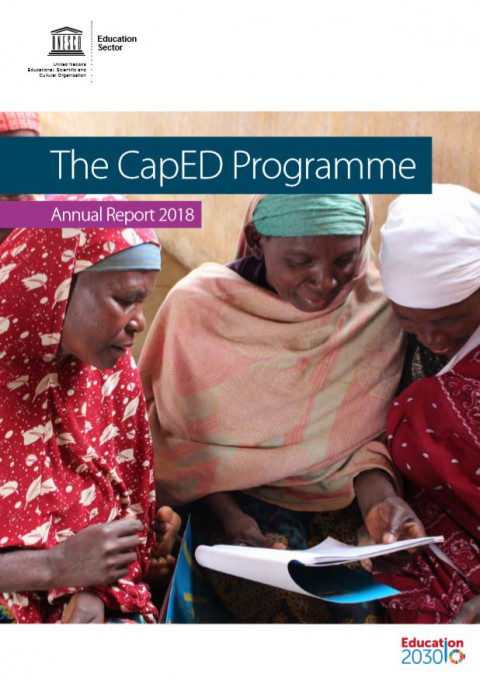 The CapED Programme: annual report 2018 Año de publicación: 2019 Autor corporativo: UNESCO UNESCO is the United Nation’s specialized agency for education and is mandated to lead and coordinate progress towards Sustainable Development Goal 4 – “Ensure inclusive and equitable quality education and promote lifelong learning opportunities for all”. The CapED Programme is central to delivering on this mandate through capacity development. It mobilizes UNESCO’s worldwide network of specialized Institutes and offices and works with partners to assist countries as they develop and implement national plans to deliver on SDG4 commitments. The Annual Report 2018 provides information on achievements and progress made in the 25 countries where CapED is operational.
  [Video] Education Transforms Lives Año de publicación: 2017 Autor corporativo: UNESCO Education transforms lives every day and in every corner of society. This video explores the power of education and UNESCO’s role in leading and coordinating the Education 2030 Agenda, which is part of a global movement to eradicate poverty through 17 Sustainable Development Goals by 2030.Education is the right of every woman, man and child. Together, we are shaping the global citizens of tomorrow, empowered on the path of education to build a more sustainable future.UNESCO's campaign "Education transforms lives" supports the effort to build peace in the minds of men and women. [Видео] Образование меняет жизни Año de publicación: 2017 Autor corporativo: Организация Объединенных Наций по вопросам образования, науки и культуры (UNESCO) Образование преображает жизнь людей каждый день во всех слоях общества. Ролик повествует о важности образования и роли ЮНЕСКО в ведении и координации Повестки дня «Образование-2030», которая является частью глобального движения для искоренения бедности посредством достижения 17 Целей устойчивого развития до 2030 года.Каждая женщина, каждый мужчина и каждый ребенок имеют право на образование. Вместе мы создаем мировых сограждан завтрашнего дня и даем им силу образования для построения более устойчивого будущего.Кампания ЮНЕСКО "Образование преображает жизнь людей" направлена на то, чтобы нести мир в сознание мужчин и женщин.
  Intercultural dialogue and cultural diversity Año de publicación: 2007 Autor corporativo: UNESCO The collection of materials of the Central Asian round table is devoted to sharing best practices in intercultural dialogue and to the UNESCO Universal Declaration on Cultural Diversity.The work highlights issues on the exchange of best practices in the field of intercultural dialogue, popularization of the UNESCO Universal Declaration on cultural diversity, the creation of a “Central Asian platform to strengthen cultural cooperation and dialogue ”, to strengthen UNESCO Chairs in Central Asia. Межкультурный диалог и культурное разнообразие Año de publicación: 2007 Autor corporativo: Организация Объединенных Наций по вопросам образования, науки и культуры (UNESCO) Сборник материалов Центральноазиатского круглого стола посвящен обмену передовым опытом в области межкультурного диалога и попу- ляризации Всеобщей декларации ЮНЕСКО о культурном разнообразии.В работе освещаются вопросы по обмену передовым опытом в области межкультурного диалога, популяризации Всеобщей декларации ЮНЕСКО о культурном разнообразии, созданию “Центральноазиатской платформы для укрепления культурного сотрудничества и диалога”, укреплению сотрудничества кафедр ЮНЕСКО в Центральной Азии.
 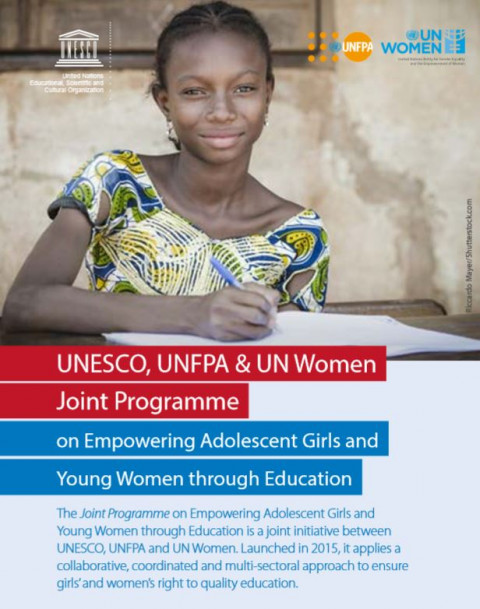 UNESCO, UNFPA & UN Women Joint Programme: on Empowering Adolescent Girls and Young Women through Education Año de publicación: 2019 Autor corporativo: UNESCO | United Nations Population Fund (UNFPA) The Joint Programme on Empowering Adolescent Girls and Young Women through Education leverages the collective expertise, experience and networks of three United Nations agencies – UNESCO, UNFPA and UN Women.It aims to empower adolescent girls and young women aged 10 to 24 to make successful and healthy transitions into adulthood, in and through quality education.Taking a lifecycle perspective and a holistic approach, the Joint Programme strengthens the links between education, health and gender equality.
 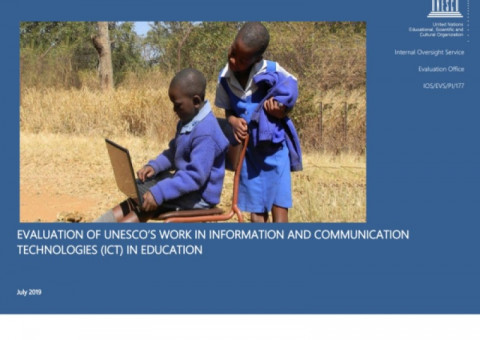 Evaluation of UNESCO's work in information and communication technologies (ICT) in education Año de publicación: 2019 Autor: Seán Ó Siochru and Graham Attwell Autor corporativo: UNESCO ICT in Education is a fast-growing area globally that offers many strategic opportunities. As the leader and coordinator of the SDG 4 – Education 2030 with the aim to “Ensure inclusive and equitable quality education and promote lifelong learning opportunities for all”, UNESCO has the mandate and expertise needed to strategically position itself as a world leader in this field. UNESCO’s work in ICT in Education aims at enhancing the quality and relevance of learning and at strengthening inclusion. While technology can facilitate wider access to education and bridge learning divides, can advance gender equality and inclusion as well as digital skills development, the rapidly changing technologies and work processes require the development of new pedagogies, both for the use of ICT for teaching and learning in the classroom and through open access and distance learning. Compared to other players, UNESCO leverages its comparative strengths in its ICT in Education interventions - especially its impartiality, convening power, and policy expertise - through an inclusive and humanistic approach to achieving quality education in coherence with Sustainable Development Agenda 2030. Its expertise across all levels of Education and its multidisciplinary potential of working across its Programme Sectors are also considered among UNESCO’s specific strengths. The evaluation revealed that UNESCO achieved important results, at the level of the learning environment, at the policy level and in institutional capacity building, but it also showed that UNESCO still needs to strengthen its positioning and visibility within the wider landscape of ICT in Education. For example, UNESCO has to continue positioning itself for producing forward-looking knowledge on ICT in Education and as a laboratory of ideas for future-oriented thinking. While the evaluation came across various specific interventions successfully addressing the needs of disadvantaged groups, the evaluation found that considerations of inclusion and gender equality were not consistently mainstreamed into policy-related and capacity building interventions. Other challenges are mainly linked to the current dispersion of resources and fragmentation of expertise across different entities within the Organization, which also leads to reduced visibility. While the key entities active in this area recognize that they are working within a common theme, collaboration and coordination still needs to be improved. The strategic measures proposed by the evaluation towards an overall organizational framework for ICT in Education aim at establishing an enabling environment for inter- and multidisciplinary approaches and greater coherence and collaboration.
  Her education, our future: snapshots of UNESCO's work Año de publicación: 2019 Autor corporativo: UNESCO This collection provides snapshots of some of UNESCO’s efforts to empower women and girls through education. It highlights core areas of work undertaken, as profiled on the next page. The aim is to give the reader a flavour of what it is that UNESCO, including its 53 field offices and specialized institutes, is doing to transform her education and our future.
 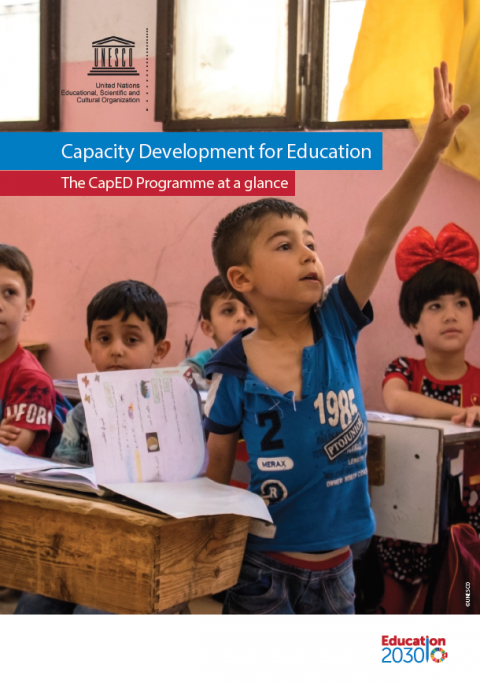 Capacity Develoment for Education: the CapED Programme at a glance Año de publicación: 2019 Autor corporativo: UNESCO Education has the power to transform lives and is at the heart of UNESCO’s mission to build peace, eradicate poverty and drive sustainable development. Right now, 750 million adults – two-thirds women – still lack basic literacy skills. Around 264 million children and youth are out of school and the international community must have almost 69 million new teachers to reach the 2030 education goals. These challenges can be tackled effectively through education reforms. However, these can only take place when countries have the capacities to put this change into action. As well as trained staff, countries need efficient organizational processes, functioning institutions and the tools and resources to design, implement and manage tailored education policies and plans. This is where the CapED Programme steps in. By mobilizing UNESCO’s global network, the Programme provides selected countries with a cohesive package of support. It works alongside stakeholders to reinforce national capacities to undertake evidence-based education reforms that fit into their national priorities and respond to SDG4 commitments, in order to offer quality education opportunities to all.
 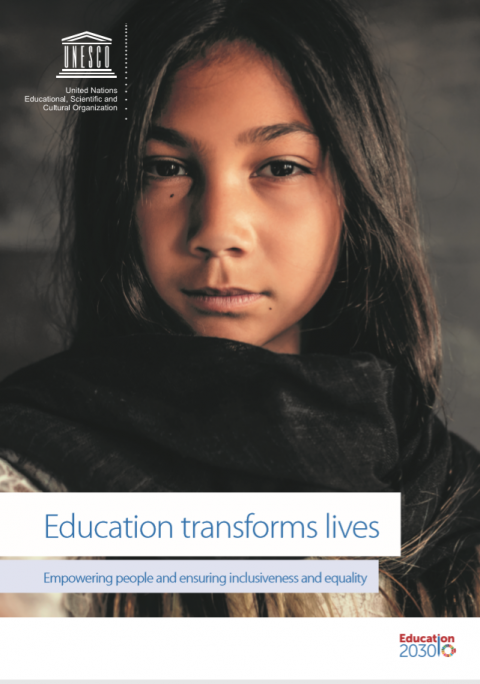 Education transforms lives: empowering people and ensuring inclusiveness and equality Año de publicación: 2019 Autor corporativo: UNESCO This brochure compiles the main elements of progress on Sustainable Development Goal 4 (SDG 4) highlighted in the submission by UNESCO, on behalf of the SDG-Education 2030 Steering Committee, to the Office of the Under-Secretary-General, Department of Economic and Social Affairs (DESA) on the occasion of the High-level Political Forum (HLPF) 2019 - Empowering people and ensuring inclusiveness and equality.