
Recursos
Exploren una amplia gama de recursos valiosos en GCED para profundizar su comprensión y promover su búsqueda, incidencia, enseñanza y aprendizaje.
1,951 resultados encontrados
 高等教育机构实施终身学习的国际趋势 : 研究报告 Año de publicación: 2023 Autor corporativo: UNESCO Institute for Lifelong Learning (UIL) | Shanghai Open University 《高等教育机构实施终身学习的国际趋势》这份研究 报告全面概述了全球高等教育领域终身学习的发展 状况。报告研究了高等教育机构如何为终身学习做出 贡献,并展示了不同实施领域的进展情况。报告基于 2020年开展的一项国际调查的结果,该调查由联合国 教科文组织终身学习研究所(UIL)牵头,国际大学协会 (IAU)和上海开放大学(SOU)予以合作。调查收到了来自世界各地区96个国家的399个机构的 有效答复。报告分析了高等教育终身学习(LLL)制度 化的三个主要方面,分别是促进高等教育终身学习的 支持性政策环境;机构治理与实施;高等教育机构通过 多样化和灵活性增加终身学习机会的方法和程度。
  Institutional practices of implementing lifelong learning in higher education: research report Año de publicación: 2023 Autor corporativo: UNESCO Institute for Lifelong Learning (UIL) | Shanghai Open University In many countries, higher education is gaining prominence as a means for the general population to engage in lifelong learning (LLL), whether for personal or professional development, or to participate in broader societal change. In some cases, national governments have introduced policies or funding instruments that create incentives for higher education institutions (HEIs) to align their offerings more closely with changing labour market demands and societal needs, and to expand access for groups previously underrepresented in higher education. Key trends in the higher education sector and the associated global socio-economic transformations were discussed in detail in the international survey report, which was published as part of the research project on the contribution of higher education institutions to LLL (UIL and SOU, 2023). This case study report moves from an international overview of the policies, structures and mechanisms that support LLL in higher education to the close study of institutional practices. It explores the interrelations between national policy environments and institutional strategies. It examines different approaches taken by universities to develop, implement and monitor LLL activities, and further provides practical examples of how universities engage with diverse groups of learners through their LLL mission. As such, this report’s value lies in offering both general insights into the implementation of LLL in HEIs, and case-specific descriptions and analyses of institutional policies and practices. 高等教育机构实施终身学习的实践: 研究报告 Año de publicación: 2023 Autor corporativo: UNESCO Institute for Lifelong Learning (UIL) | Shanghai Open University 在许多国家,高等教育作为大众参与终身学习以获得个 人或职业发展或参与更广泛社会变革的一种手段,日益 受到重视。在某些情况下,国家政府推出了政策或资助 工具,为高等教育机构提供激励,使其提供的服务更紧 密地贴合不断变化的劳动力市场需求和社会需求,并为 以前在高等教育中代表性不足的群体提供更多学习机 会。国际调查报告详细介绍了高等教育部门的主要趋势 以及相关的全球社会经济转型,该报告作为高等教育机 构对终身学习贡献的研究项目一部分发布(终身学习研 究所和上海开放大学,2023年)。本案例研究报告提供了对支持高等教育终身学习的政 策、结构和机制的国际性概述,介绍了对机构实践的深 入研究,探讨了国家政策环境与机构性战略之间的相互 关系,研究了大学为开发、实施和监测终身学习活动而采 取的不同方法,进一步提供了大学如何通过其终身学习 任务与不同群体学习者互动的实例。因此,本报告价值 在于既提供了高等教育机构实施终身学习的一般见解, 也提供了对机构政策和实践具体案例的描述和分析。
  Global Alliance for Literacy within the Framework of Lifelong Learning (GAL): Strategy 2020–2025 Año de publicación: 2020 Autor corporativo: UNESCO Institute for Lifelong Learning (UIL) This strategy presents GAL’s vision, mission, goals and objectives for the period from 2020 to 2025. It builds upon GAL’s achievements from 2016 and 2019, and upon UNESCO’s previous initiatives supporting youth and adult literacy, including the UN Literacy Decade (2003–2012), Literacy Initiative for Empowerment (LIFE) from 2006 to 2015, and the 2015 Recommendation on Adult Learning and Education (RALE).
  Think Tank Report: Empowering Communities through Citizenship Education and Lifelong Learning Año de publicación: 2025 Autor corporativo: UNESCO Institute for Lifelong Learning (UIL) This short, explorator y repor t from the UNESCO Institute for Lifelong Learning (UIL) is the outcome of ‘Placing citizenship education within a lifelong learning perspective: From research to action’, a think tank meeting held in Hamburg in 2023. The meeting brought together experts from international organizations and academia and was organized by UIL in collaboration with the Asia-Pacific Centre of Education for International Understanding. The report reflects the inputs of participants while also drawing on the proposals of the International Commission on the Futures of Education (ICFE, 2021); the findings of the Fifth Global Report on Adult Learning and Education (GRALE 5) (UIL, 2022a); the Marrakech Framework for Action (UIL, 2022b); and the outcomes of the United Nations Transforming Education Summit of September 2022 (UN, 2023a; UN 2023b); as well as UNESCO’s Revised Recommendation concerning Education for International Understanding, Co-operation and Peace (UNESCO, 2023). It makes a case for putting citizenship education, interpreted not as a means of reproducing the status quo but as a catalyst for civic and social empowerment, at the heart of efforts to create more equitable, tolerant and just societies for all. It argues that citizenship, so construed, should be woven into the fabric of education, throughout and across the life course, recognizing its role in narrowing social and economic inequalities, overcoming social fragmentation, addressing the climate crisis and tackling the backlash against human rights and gender equality. This report calls for citizenship education and lifelong learning to be core pillars of a systems-level transformation in education, and provides recommendations for policy-makers, national and local governments, educators and civil society organizations to make citizenship education a priority in their policies and practices.
  Greening Communities Guidance: Lifelong Learning for Climate and Sustainability Action Año de publicación: 2025 Autor corporativo: UNESCO Institute for Lifelong Learning (UIL) | World Organization of the Scout Movement Climate change poses a serious threat to communities around the world, compelling us to protect vulnerable lives and shape resilient futures. By nurturing lifelong learning and empowering local initiatives, communities can drive transformative change – amplifying local efforts into global impact.Green communities are municipalities of any size that embrace lifelong learning to empower individuals to take meaningful climate and sustainability action. This is achieved by extending climate education beyond the classroom and offering learning opportunities in non-formal and informal settings – rooted in and responsive to local culture and context. By engaging learners of all ages across a variety of learning environments, residents of green communities are equipped to take informed, proactive and responsible action for the climate and environment, contributing to more sustainable living.The sections of this document provide an overview of the diverse learners, learning spaces and educational approaches that can contribute to greening communities. It outlines practical steps for developing a comprehensive green learning strategy and action plan that mobilizes learners of all generations in climate and sustainability efforts.Municipal governments, along with a wide range of local stakeholders and change agents in both urban and rural areas, are invited to use this guidance to foster green communities through a lifelong learning lens.Together, let’s green our communities!
 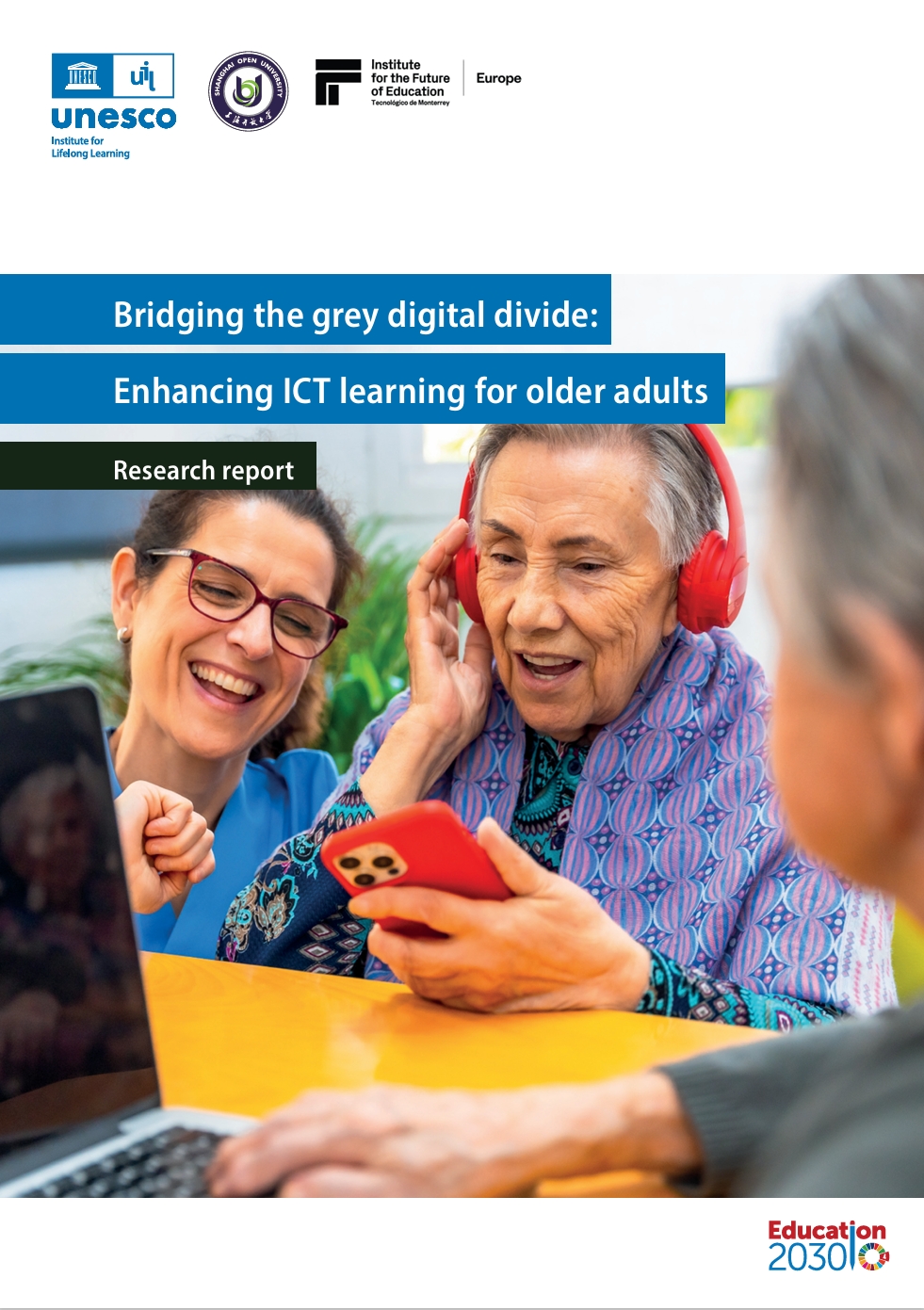 Bridging the Grey Digital Divide: Enhancing ICT Learning for Older Adults; Research Report Año de publicación: 2025 Autor corporativo: UNESCO Institute for Lifelong Learning (UIL) | Shanghai Open University (SOU) | Institute for the Future of Education This research report, Bridging the Grey Digital Divide: Enhancing ICT Learning for Older Adults, explores how organizations across diverse national and regional contexts are supporting digital learning opportunities for older adults. Through six case studies from across five UNESCO regions, it presents a rich array of practices and strategies adopted by independently funded non-profit organizations, community learning centres operating under the auspices of national and local governments, foundations and adult education institutions drawing on a combination of private and public funding sources while maintaining links with universities, and other stakeholders working to close the digital gap for older learners. These examples demonstrate that with the right support structures and pedagogical methods – such as tailored learning programmes, age-friendly technology environments, and intergenerational collaboration – older adults can, and do, engage meaningfully with digital technologies..
  Digital Empowerment for Lifelong Learning and Transformative Andragogy (DELTA) for Adult Educators: Introduction to the DELTA Framework and Resources Año de publicación: 2025 Autor corporativo: UNESCO Institute for Lifelong Learning (UIL) | Shanghai Open University (SOU) The UNESCO Institute for Lifelong Learning (UIL), in partnership with Shanghai Open University (SOU), has unveiled the DELTA Framework — Digital Empowerment for Lifelong Learning and Transformative Andragogy. This global initiative aims to enhance adult educators’ digital competencies and foster inclusive, lifelong learning opportunities for all.
 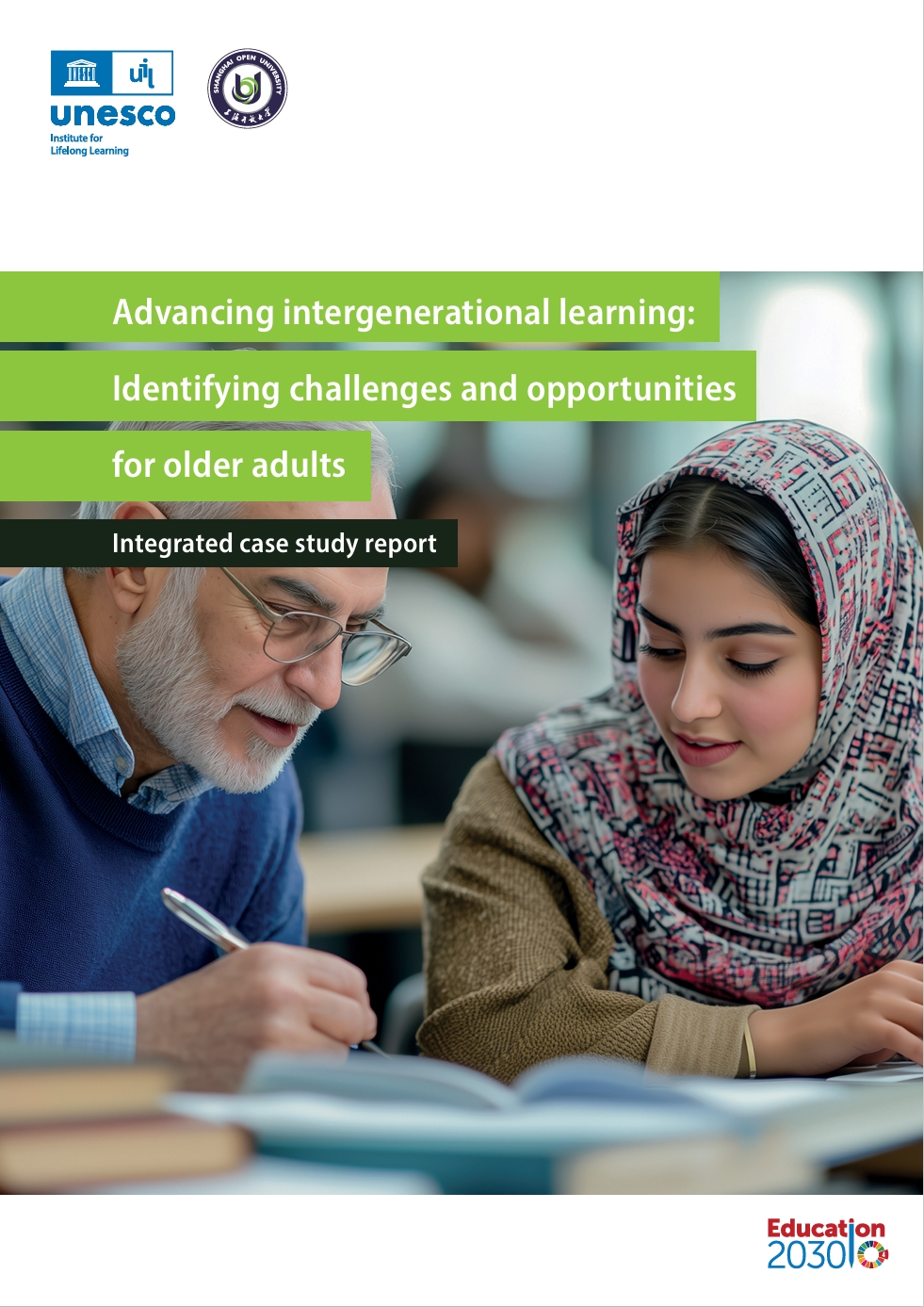 Advancing Intergenerational Learning: Identifying Challenges and Opportunities for Older Adults; Integrated Case Study Report Año de publicación: 2025 Autor corporativo: UNESCO Institute for Lifelong Learning (UIL) | Shanghai Open University (SOU) This research report presents case studies from the UNESCO regions Europe and North America, Africa, and Asia and the Pacific, showcasing various strategies for designing intergenerational learning initiatives. It highlights the diverse policy frameworks and implementation contexts within which these global programmes operate.Using an exploratory multiple case study approach, the report examines the dynamics and potential of intergenerational learning as a catalyst for cultivating a culture of lifelong learning. It assesses the value of such learning in promoting age-friendly environments and addressing ageism. Additionally, the report offers insights into generational learning motivations and identifies barriers to effective intergenerational programming.Finally, the report provides a set of evidence-based guidelines to inform and enhance future efforts in intergenerational learning. The findings and recommendations serve as a valuable resource for educators, policy-makers, and community leaders.These case studies were developed as part of the broader UNESCO Institute for Lifelong Learning research project, Higher Education Institutions – Responses to the Learning Needs of Ageing Societies.
  학습도시와 지속가능발전목표: 실행을 위한 가이드 Año de publicación: 2017 Autor corporativo: UNESCO Institute for Lifelong Learning (UIL) 학습도시의 핵심 특징(Key Features of Learning Cities)에 맞추어 이 실행 가이드는 환경 친화적이며 건강한 학습도시(환경적 지속가능발전), 평등하고 포용적인 학습도시(개인 권한 부여, 상호문화적 대화, 사회적 통합), 학습도시 내에서의 고용 및 기업가정신(경제 발전 및 문화적 번영)이라는 세 가지 주제영역으로 구성되어 있다. 지속가능발전의 이 세 가지 영역은 근본적으로 서로 연계되어 있으며, 도시에서의 평생학습 활동이 언제나 여기에 영향을 미칠 것임을 인식하는 것은 중요하다. 지속가능발전목표의 다른 영역과 마찬가지로 중요한 네 번째 영역은 문화(문화적 표현, 유산, 그리고 다양성) 영역이며, 이는 다음 장에서 공통 주제로 포함시켰다.