
Recursos
Exploren una amplia gama de recursos valiosos en GCED para profundizar su comprensión y promover su búsqueda, incidencia, enseñanza y aprendizaje.
948 resultados encontrados
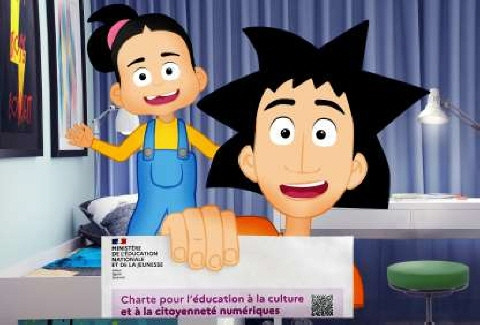 être citoyen numérique, ça te dit ? Año de publicación: 2022 Autor corporativo: TRALALERE Vinz est très excité, il a été sélectionné pour participer au concours du meilleur citoyen numérique ! En effet, dans les vidéos qu’il a déjà réalisées, il respecte, sans le savoir, la Charte pour l’éducation à la culture et à la citoyenneté numériques. Une belle occasion pour Vinz de nous expliquer les notions de charte et de citoyenneté numérique. Vinz is very excited - he's been selected to take part in the best digital citizen competition! In fact, in the videos he's already made, he unknowingly respects the Charter for Education in Digital Culture and Citizenship. This is a great opportunity for Vinz to explain the concepts of the Charter and of digital citizenship.
 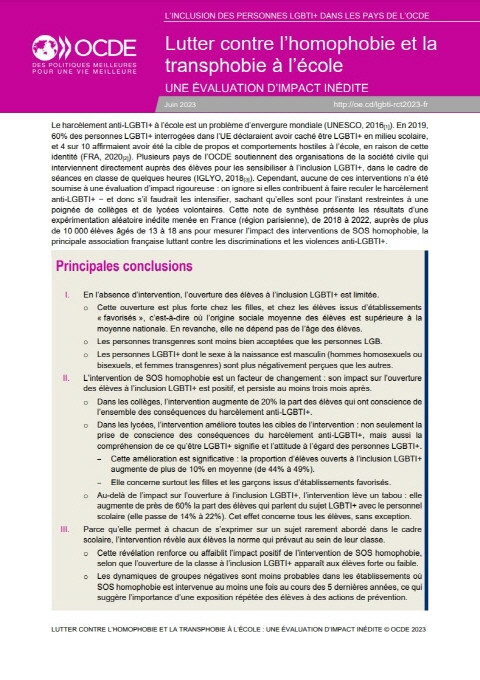 Lutter contre l’homophobie et la transphobie à l’école Año de publicación: 2023 Autor corporativo: Organisation de coopération et de développement économiques (OCDE) Cette note de synthèse présente les résultats d’une expérimentation inédite que l’OCDE a menée en France (région parisienne), de 2018 à 2022, auprès de plus de 10 000 élèves âgés de 13 à 18 ans pour mesurer l’impact des interventions de SOS homophobie, la principale association française luttant contre les discriminations et les violences anti-LGBTI+. This briefing note presents the results of an unprecedented experiment that the OECD conducted in France (Paris region), from 2018 to 2022, with more than 10,000 pupils aged 13 to 18, to measure the impact of interventions by SOS homophobie, the leading French association fighting anti-LGBTI+ discrimination and violence.
  Research Report: A Comparative Study on Hybrid Learning in Schools Año de publicación: 2024 Autor corporativo: UNESCO International Bureau of Education (IBE) During the COVID-19 lockdown, policymakers and educators faced an unprecedented challenge disrupting all levels of education. The initial optimism about replacing physical classes with virtual lessons diminished as complex interconnected issues emerged. To address the need for continuous and sustainable learning, school systems implemented variations of hybrid learning during the pandemic, seeking to integrate physical and virtual classes. These approaches prompted this comparative study led by UNESCO-IBE. The initial phase of this study involved collecting and analysing data on hybrid strategies from six countries. The research aimed to examine factors influencing hybrid learning implementation during the lockdown, with a subsequent focus on developing and validating a practical Hybrid Learning Framework for Schools. The cross-case analysis was designed not to rank or compare, but to understand and connect different scenarios and contexts. Phase I focuses on current hybrid learning practices and influencing factors, while Phases II and III will concentrate on using the information gathered to create and validate a Hybrid Learning Framework for Schools. Aligned with UNESCO-IBE’s overarching vision of a comprehensive, personalized, and democratized curriculum accessible to all, hybrid learning facilitates inclusive education across diverse regions, overcoming geographical and temporal limitations. The approach aims to unlock the unique potential of every learner, fostering a more flexible educational environment.
  مدخل التربية على المواطنة في اإلصالح التربوي الجديد (vol 3 , no.1 مسالك التربية والتكوين) Año de publicación: 2020 Autor: Seddik Sadiki Amari Autor corporativo: Sidi Mohammed Ben Abdellah University. Faculty of Arts and Humanities تعتبر هذه المقالة بمثابة مدخل نظري لموضوع التربية على المواطنة من خالل اإلصالح التربوي الجديد، الذي دشنه الميثاق الوطني للتربية والتكوين﴿2000 ﴾.وقد ركزت المقالة على تثمين وتعزيز إدماج ثقافة المواطنة في الحقل التعليمي، وترسيخ تلك الثقافة عبر التربية الشاملة، مع تأطير ذلك كله داخل فضاء ثقافي مجتمعي عقالني. لكن هذا الهدف لن يتحقق إال باعتماد فلسفة تربوية تقوم على برامج ومناهج حية تستهدف ترسيخ أخالقيات وسلوكيات المواطنة الحقة، يكون لها آثار إيجابية على الفرد والمجتمع. Introduction to Education on Citizenship in the New Educational Reform (vol.3 , no.1; Education and training courses) Año de publicación: 2020 Autor: Seddik Sadiki Amari Autor corporativo: Sidi Mohammed Ben Abdellah University. Faculty of Arts and Humanities This article serves as a theoretical introduction to citizenship education within the framework of the new educational reform initiated by the National Charter for Education and Training in 2000. It primarily focuses on strengthening and embedding the culture of citizenship within the educational realm, promoting its integration through inclusive education initiatives, all within a coherent societal and cultural context. However, achieving this goal necessitates the adoption of an educational philosophy centered on curricula and programs aimed at instilling the ethics and behaviors characteristic of genuine citizenship, thereby fostering positive impacts on both individuals and society.
 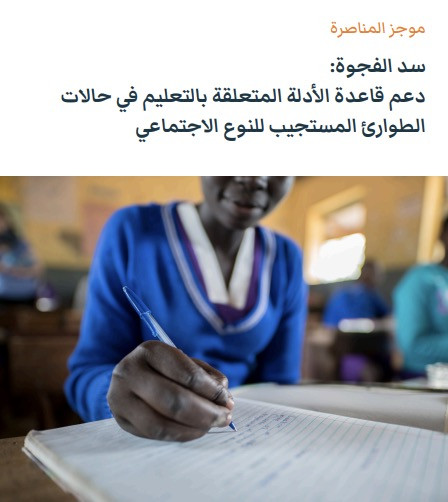 سد الفجوة: دعم قاعدة الأدلة المتعلقة بالتعليم في حالات الطوارئ المستجيب للنوع الاجتماعي Año de publicación: 2022 Autor: Lauren Gerken | Sumbal Bashir Autor corporativo: The Inter-agency Network for Education in Emergencies (INEE) يسلّط هذا الملخص الضوء على الثغرات الرئيسية في قاعدة الأدلة حول النوع الاجتماعي والتعليم في حالات الطوارئ، ويقدم التوجيه الاستراتيجي والمحتوى المواضيعي لمبادرات الأبحاث الجديدة. يتضمن توصيات لإجراء أبحاث تعليمية مستجيبة للنوع الاجتماعي والمناصرة للعمل التعاوني وتبادل المعرفة بين النوع الاجتماعي والجهات الفاعلة الرئيسية في مجال التعليم في حالات الطوارئ. يمكن استخدام الملخص لتحديد المجالات ذات الأولوية للبحث وأسئلة البحث للمضي قدمًا، وفرص التعاون، ومجالات البحث ذات الأولوية للتمويل. Bridging the Gap: Strengthening the Evidence Base for Gender Responsive Education in Emergencies Año de publicación: 2022 Autor: Lauren Gerken | Sumbal Bashir Autor corporativo: The Inter-agency Network for Education in Emergencies (INEE) This brief was developed by the INEE Gender Task Team in response to global calls for more and better data and evidence on gender-responsive EiE. The brief draws from findings of the 2021 and 2022 editions of the INEE Mind the Gap report on the state of girls’ education in emergencies, and from consultations with gender and education experts.
  The ABCs of Artificial Intelligence: A Lesson in Geopolitics Año de publicación: 2024 Autor: Angèle Le Névé Autor corporativo: Association Relative à la Télévision Européenne (ARTE) As artificial intelligence becomes more and more a part of our daily lives, what are its political and geopolitical repercussions? Asma Mhalla, a specialist in political issues surrounding technology, explains the basics of AI and how it is used by industry and governments to promote their ideas. Le B.A.-BA de l'intelligence artificielle: Une leçon de géopolitique Año de publicación: 2024 Autor: Angèle Le Névé Autor corporativo: Association Relative à la Télévision Européenne (ARTE) Alors que l'intelligence artificielle prend de plus en plus de place dans notre quotidien, quelles sont ses répercussions politiques et géopolitiques ? Asma Mhalla, spécialiste des enjeux politiques de la Tech explique les bases de l'IA et comment elle est utilisée par les industriels et les États pour véhiculer leurs idées.
 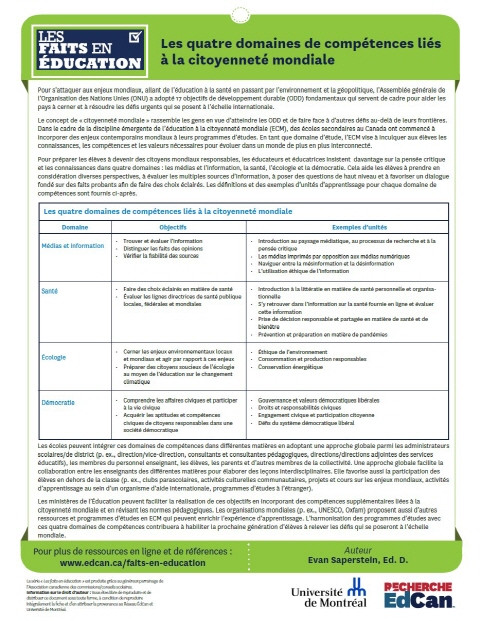 The Four Areas of Competence Linked to Global Citizenship Año de publicación: 2023 Autor: Evan Saperstein Autor corporativo: Université de Montréal | Association Canadienne d'Education Ce document présente les quatre domaines de compétences liées à la citoyenneté, et comment les intégrer à l'éducation des élèves. Pour préparer les élèves à devenir des citoyens mondiaux responsables, les éducateurs et éducatrices insistent davantage sur la pensée critique et les connaissances dans quatre domaines : les médias et l’information, la santé, l’écologie et la démocratie. This document presents the four areas of competency linked to citizenship, and how to integrate them into pupils' education. To prepare students to become responsible global citizens, educators are placing greater emphasis on critical thinking and knowledge in four areas: media and information, health, ecology and democracy.