
Recursos
Exploren una amplia gama de recursos valiosos en GCED para profundizar su comprensión y promover su búsqueda, incidencia, enseñanza y aprendizaje.
948 resultados encontrados
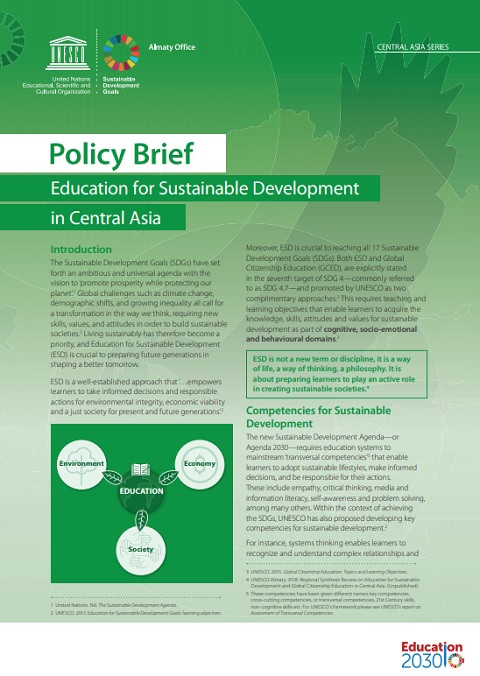 Аналитическая записка: Образование в интересах устойчивого развития в Центральной Азии Año de publicación: 2019 Autor corporativo: UNESCO Almaty ОУР имеет решающее значение для достижения всех установленных 17 ЦУР. Как ОУР, так и Образование в духе глобальной гражданственности (ОГГ) непосредственно указаны в седьмой задаче ЦУР 4 как два взаимодополняющих подхода. Для этого перед преподаванием и обучением необходимо ставить задачи, которые позволяют учащимся приобретать знания, навыки, подходы и ценности для устойчивого развития в рамках когнитивных, социальноэмоциональных и поведенческих аспектов. В настоящей аналитической записке излагаются проблемы, примеры применения многообещающих практик и рекомендации по внедрению ОУР в системы образования стран Центральной Азии.
 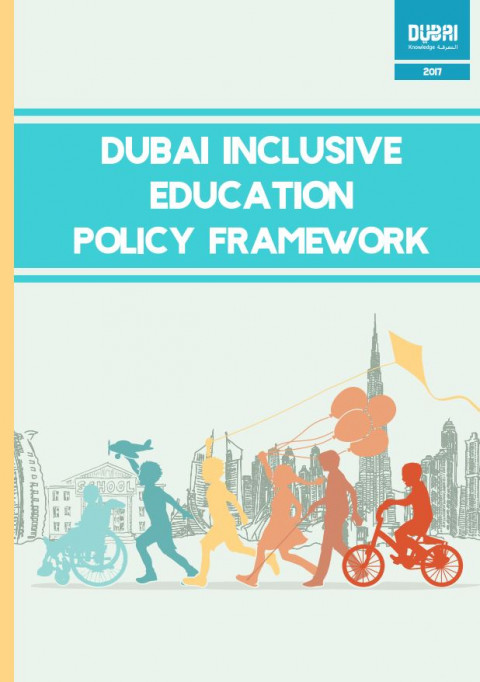 إطار سياسة التعليم الدامج في دبي Año de publicación: 2017 Autor corporativo: Knowledge and Human Development Authority هذا الاطار لسياسة التعليم الدامج في إمارة دبي بهدف توفير كافة المعلومات المطلوبة عن الاجراءات والمعايير اللازمة لتحسين مقومات التعليم الدامج على مستوى الامارة، ولتعميم توجيهات وإرشادات محددة الى جميع المنشآت التعليمية في دبي، على النحو الذي يضمن تحقيق رؤية الامارة. Dubai Inclusive Education Policy Framework Año de publicación: 2017 Autor corporativo: Knowledge and Human Development Authority The policy framework has been developed in partnership with a diverse range of stakeholders. It is based on international evidence of successful inclusive practices in education. It is also the culmination of an international benchmarking literature review, a participatory research process, based on extensive consultation with many stakeholders and an environmental scan of the enablers and barriers to inclusive education.Based on international best-practice and research, the policy framework purposefully offers definitions of key terms with the intention of informing a clear, common language and approach. This policy framework also takes into account the complexity and the uniqueness of the education landscape of Dubai, which hosts schools from all over the world, collectively delivering over 17 different curricula. This landscape is characterised by a diverse range of different education settings including schools, early learning centres, higher education providers and special education centres.
  Call Me When He Tries to Kill You: State Response to Domestic Violence in Kyrgyzstan Año de publicación: 2015 Autor corporativo: Human Rights Watch This report documents the government of Kyrgyzstan’s failure to provide survivors of domestic violence with adequate services, protection, and legal remedies. It is based on Human Rights Watch research conducted in November and December 2014 in three cities in Kyrgyzstan: Bishkek and Naryn in the north and Osh in the south. Additional meetings and interviews were conducted in Bishkek in May 2015. The report also contains a number of recommendations to the government of Kyrgyzstan. Вызывайте, когда будет убивать: Реагирование государства на семейное насилие в Кыргызстане Año de publicación: 2015 Autor corporativo: Human Rights Watch В этом докладе документировано необеспечение правительством Кыргызстана надлежащих услуг, защиты и средств правовой защиты пережившим семейное насилие. Доклад основан на материалах исследований, проводившихся Хьюман Райтс Вотч в ноябре – декабре 2014 г. в трех городах: Бишкеке и Нарыне на севере и Оше на юге страны. Дополнительные встречи и интервью проводились в Бишкеке в мае 2015 г. Отчет также содержит ряд рекомендаций правительству Кыргызстана.
 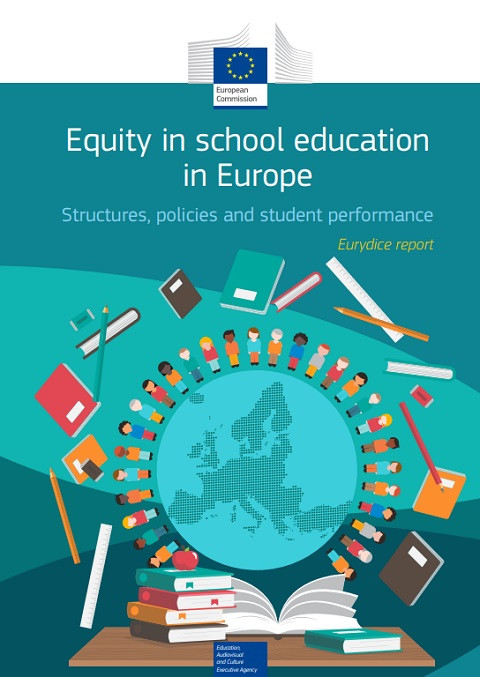 Equity in School Education in Europe: Structures, Policies and Student Performance; Eurydice Report Año de publicación: 2020 Autor: Teodora Parveva | Anna Horváth | Anita Krémó | Emmanuel Sigalas | Christian Monseur Autor corporativo: European Commission | Education, Audiovisual and Culture Executive Agency (EACEA) | Eurydice This report provides an overview of education structures and policies that influence equity in school education. It connects these system-level features to student performance in international student assessment surveys (PISA, PIRLS and TIMSS). Looking at 42 European education systems, the report identifies which policies and structures are associated with higher levels of equity in student performance. The report examines the following education system features: participation in early childhood education and care, school funding, differentiation and school types, school choice, admissions policies, tracking systems, grade repetition, school autonomy, school accountability, support for disadvantaged schools, support for low-achieving students and the opportunity to learn.
  Reviews of National Policies for Education: Kazakhstan, Kyrgyz Republic and Tajikistan 2009; Students With Special Needs and Disabilities Año de publicación: 2009 Autor corporativo: Organisation for Economic Co-operation and Development (OECD) This OECD publication provides an overview of current education policies for children with special educational needs and disabilities in Kazakhstan, the Kyrgyz Republic and Tajikistan. Provides an idea of the socio-historical context, education systems and the corresponding legislation, critically analyzes the adopted views on access to education for the most vulnerable group of children in these countries. Particular attention is paid to political measures, aimed at ensuring inclusive education, procedures identification and assessment, overall coordination of educational service delivery, integration into the general education system, as well as best practices and the role of NGOs and community donors. Oбзор национальной политики в области образования: Казахстан, Кыргызская Pеспублика и Таджикистан 2009; Учащиеся с особыми потребностями и ограниченными возможностями Año de publicación: 2009 Autor corporativo: Organisation for Economic Co-operation and Development (OECD) В данной публикации ОЭСР предлагается обзор текущей образовательной политики в отношении детей с с особыми образовательными потребностями и ограниченными возможностями в Казахстане, Кыргызской Республике и Таджикистане. Дается представление о социальноисторическом контексте, системах образования и соответствующего законодательства, критически анализируются принятые взгляды на доступ к образованию для самой уязвимой группы детского населения в данных странах. Особое внимание уделяется политическим мерам, направленным на обеспечения инклюзивности образования, процедурам идентификации и оценки, общей координации предоставления образовательных услуг, интеграции в общеобразовательную систему, а также наиболее успешным практикам и роли НПO и общественных доноров.
  Global Citizenship Education: How to Measure and Improve the Impact Año de publicación: 2020 Autor: Jan Van Ongevalle Autor corporativo: Frame Voice Report! Project | Civil Society in Development (CISU) | European Union (EU) This guide presents 4 methods and tools that can help organisations set up an easy-to-use monitoring system for learning about the effects of global citizenship education (GCE) projects. The methods can be used for planning as well as monitoring and evaluating the changes a project has contributed to. At best the methods can keep on strengthening the project in the implementation phase thereby contributing to greater change.
  Climate Crisis: The Need for Global Citizenship Education Año de publicación: 2020 Autor corporativo: Bridge 47 This video talks about the climate crisis which is also a human rights crisis, a political crisis, and an economic crisis. And it calls for the fundamental transformation of how we live our lives. To face these global challenges, it emphasizes that we need education that enables us to think critically, connect our actions with their impacts, and act as empowered active global citizens to face.