
Recursos
Exploren una amplia gama de recursos valiosos en GCED para profundizar su comprensión y promover su búsqueda, incidencia, enseñanza y aprendizaje.
2,275 resultados encontrados
 Multiculturalism and the Concept of Multi-Dimensional Identity Año de publicación: 2009 Autor: Mohamed Ben Jemaa Autor corporativo: King Saud University A conference paper discussing multiculturalism and contains two parts, where the first part discusses multiculturalism policies in 6 countries. While the second part shows the multi-dimensional identity.
  A Case Study on the Possible Contribution of Global Citizenship Concept to Education for Sustainable Development (Environmental Education; Vol. 31, No.1) Año de publicación: 2018 Autor: Seyoung Hwang Autor corporativo: Korean Society for Environmental Education The aim of this study was to explore the ways in which the recent discussion on global citizenship education could contribute to the discursive possibility of education that addresses cultural diversity and co-existence which had not been considered much in the education for sustainable development (ESD) field. For that, the study showed how the formative experience of global citizen identity as the core concept of global citizenship can be a significant learning experience for ESD. The case studies included UNESCO school activity, school club activity, international volunteering activity and local cultural exchange activity. Based on the interviews with participants, the study found out that they were in the state of accepting or orienting themselves toward global citizen identity. The study also identified the kinds of qualitative experiences affecting such identity formation as facing and reflecting on one’s own cultural bias, intercultural sympathy, participation and action beyond mere knowledge acquisition, self-directed participation and achievement, lack of reflection in the one’ own life context as a global citizen, and conflict with the values embedded in the competition-driven lifestyle. Based on the result, the potential and meanings of the ESD focused on global citizen identity were discussed. 세계시민의식 개념의 지속가능발전교육 기여 가능성에 대한 질적 사례연구 (환경교육; Vol. 31, No. 1) Año de publicación: 2018 Autor: Seyoung Hwang Autor corporativo: Korean Society for Environmental Education 본 연구의 목적은 최근 세계시민교육에 대한 활발한 논의와 실천이 그간 지속가능발전교육에서 간과되어왔던 문화 다양성 존중과 공존과 관련된 교육적 논의를 확산하는데 어떻게 기여할 수 있는지를 탐색하는 데 있다. 이를 위해 본 연구에서는 세계시민의식의 핵심 개념인 세계시민 정체성(global citizen identity)의 형성이 지속가능발전교육의 중요한 학습 경험이 될 수 있다는 것을 연구 사례를 통해 보여주고자 하였다. 이를 위해 유네스코학교활동, 동아리, 해외자원봉사활동, 지역문화교류활동 등의 4가지프로그램 사례에 대한 질적 연구를 수행하였다. 연구 결과, 참여자들은 세계시민 정체성을 수용 또는 지향하는 과정에 있었으며, 이에 영향을 주는 질적 경험에는 문화적 편견에 대한 직시와 성찰, 타문화권 사람들과의 정서적 교감, 지식만이 아닌 참여와 실천, 자기 주도적 참여와 성취, 개인 관심사와 연결, 내 삶 안에서 세계시민으로서의 성찰 부족, 경쟁위주의 삶의 양식과의 가치 충돌 등이 있음을 파악하였다. 이러한 분석 결과를 바탕으로, 지속가능발전교육에서 세계시민의식의 형성을 핵심 목표로 삼는 교육적 접근의 가능성과 의미를 논의하였다.
  Global Citizenship Education: Critical and International Perspectives Año de publicación: 2020 Autor: Abdeljalil Akkari | Kathrine Maleq Autor corporativo: Springer Nature | Swiss National Science Foundation This open access book takes a critical and international perspective to the mainstreaming of the Global Citizenship Concept and analyses the key issues regarding global citizenship education across the world. In that respect, it addresses a pressing need to provide further conceptual input and to open global citizenship agendas to diversity and indigeneity.Social and political changes brought by globalisation, migration and technological advances of the 21st century have generated a rise in the popularity of the utopian and philosophical idea of global citizenship. In response to the challenges of today’s globalised and interconnected world, such as inequality, human rights violations and poverty, global citizenship education has been invoked as a means of preparing youth for an inclusive and sustainable world.In recent years, the development of global citizenship education and the building of students’ global citizenship competencies have become a focal point in global agendas for education, international educational assessments and international organisations. However, the concept of global citizenship education still remains highly contested and subject to multiple interpretations, and its operationalisation in national educational policies proves to be challenging.This volume aims to contribute to the debate, question the relevancy of global citizenship education’s policy objectives and to enhance understanding of local perspectives, ideologies, conceptions and issues related to citizenship education on a local, national and global level. To this end, the book provides a comprehensive and geographically based overview of the challenges citizenship education faces in a rapidly changing global world through the lens of diversity and inclusiveness.
 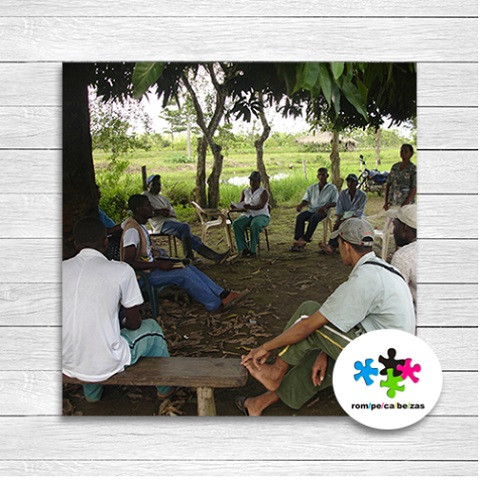 What Does Peace Sound Like? Education for Coexistence Año de publicación: 2015 Autor: María Del Carmen Muñoz | Marco Fidel Vargas Autor corporativo: Center for Research and Popular Education / Program for Peace (CINEP/PPP) This podcast discusses education for peace in Colombia and how it contributes to overcoming violence and promoting coexistence. ¿A qué suena la paz? Educación para la convivencia Año de publicación: 2015 Autor: María Del Carmen Muñoz | Marco Fidel Vargas Autor corporativo: Center for Research and Popular Education / Program for Peace (CINEP/PPP) En este podcast se discute acerca de la educación para la paz en Colombia y cómo contribuye a la superación de la violencia y a a promoción de la convivencia.
  What Does Peace Sound Like? Reconciliation, an Exercise for Everyone Año de publicación: 2015 Autor: Leonel Narváez | Magda López | María Angéliza Bueno Autor corporativo: Center for Research and Popular Education / Program for Peace (CINEP/PPP) This podcast analyzes the concept of reconciliation and the challenges that Colombia faces in a possible post-agreement scenario with the FARC guerrilla. What contributions should be made from public policy to continue seeking paths for reconciliation? What is the role of citizens to carry out this process successfully? Are we ready to reconcile? ¿A qué suena la paz? La reconciliación, un ejercicio de todos Año de publicación: 2015 Autor: Leonel Narváez | Magda López | María Angéliza Bueno Autor corporativo: Center for Research and Popular Education / Program for Peace (CINEP/PPP) En este podcast se analiza el concepto de reconciliación y los retos que enfrenta Colombia de cara a un posible escenario de posacuerdo con las FARC. ¿Qué aportes se deben hacer desde la política pública para continuar procurando caminos para la reconciliación? ¿Cuál es el papel de los ciudadanos y las ciudadanas para llevar a cabo este proceso satisfactoriamente? ¿Estamos listos para reconciliarnos?
  Human Rights Defense in Colombia: A Bet in the Midst of Adversity Año de publicación: 2015 Autor: Petrit Baquero | Nancy Arévalo | Claudia Erazo Autor corporativo: Center for Research and Popular Education / Program for Peace (CINEP/PPP) This podcast analyzes the panorama of human rights in Colombia and the protection of its defenders, in a context full of challenges and threats to their lives. Defensa de los DD. HH. en Colombia: Una apuesta en medio de la adversidad Año de publicación: 2015 Autor: Petrit Baquero | Nancy Arévalo | Claudia Erazo Autor corporativo: Center for Research and Popular Education / Program for Peace (CINEP/PPP) This podcast analyzes the panorama of human rights in Colombia and the protection of its defenders, in a context full of challenges and threats to their lives.