
Recursos
Exploren una amplia gama de recursos valiosos en GCED para profundizar su comprensión y promover su búsqueda, incidencia, enseñanza y aprendizaje.
2,275 resultados encontrados
 평화교육 사례 분석 및 실행방안 연구 Año de publicación: 2017 Autor: 김영철 | 김성오 | 박숙영 | 정주진 Autor corporativo: 경기도교육연구원 우리 사회와 학교 현장의 다양한 차별과 폭력 문제는 평화교육이 절실함을 보여준다. 민주시민을 키워야 할 학교에서는 평화교육을 접목시켜 민주시민교육을 강화하면서, 평화적 감수성과 태도, 능력을 고르게 함양토록 할 필요가 있다. 본 연구에서는 다양한 평화교육의 국내외 사례를 분석하여 창의적이고 포괄적인 실행 방안을 모색하였다.
 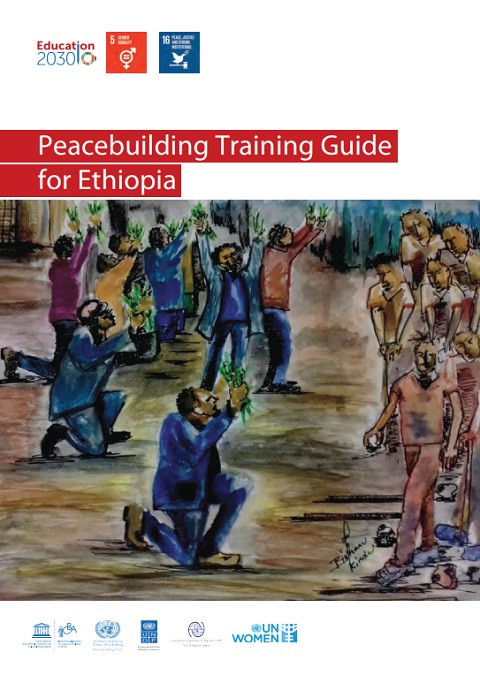 Peacebuilding Training Guide for Ethiopia Año de publicación: 2020 Autor corporativo: UNESCO International Institute for Capacity-Building in Africa (IICBA) This publication is a training guide for a variety of stakeholders, both inside and outside the education system, in Ethiopia on peace and resilience building. It is an adapted and updated guide for the Ethiopian context. The training guide aims to inform and empower the reader in why and how to educate others for peacebuilding. It provides a foundation of con¬ict analysis and peacebuilding and describes a learner-centered approach to peace education and community engagement. The goal of the training guide is for the reader to become a facilitator with the disposition, knowledge, skills and commitment to support others in developing their full potential as peace-builders.
 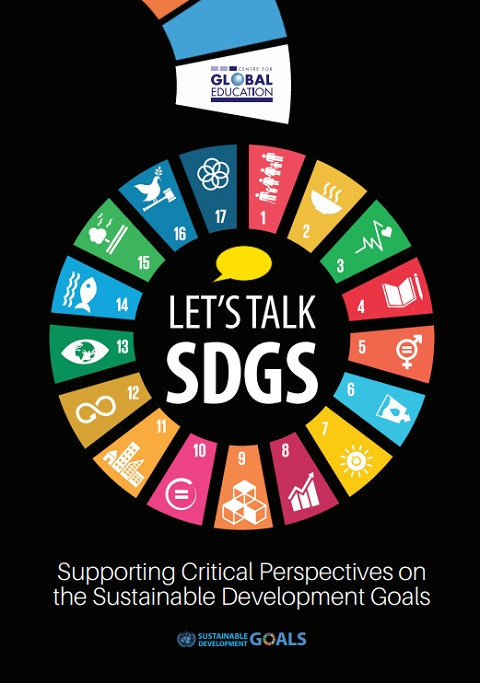 Let’s Talk SDGs: Supporting Critical Perspectives on the Sustainable Development Goals Año de publicación: 2020 Autor: Caroline Murphy Autor corporativo: Centre for Global Education (CGE) This resource is an invitation to development educators to critically interrogate the Sustainable Development Goals and discuss their capacity to deliver upon their intended outcomes. It invites users to ask if the SDGs can support effective global learning and represent a sound critique of the international system. The resource is a useful starting point for a critical discussion on the Goals' capacity for effective advocacy and education toward the eradication of poverty and inequality.
  Putting the Voice of Young People at the Heart of Global Citizenship Education Año de publicación: 2014 Autor: Douglas Bourn Autor corporativo: UCL Institute of Education | Erasmus+ This briefing is aimed at policy-makers across Europe who are engaged with, or interested in ensuring that education and international development programmes give consideration to the voices of young people. It also aims to contribute to policy-makers responses to how they are implementing the Sustainable Development Goals.
 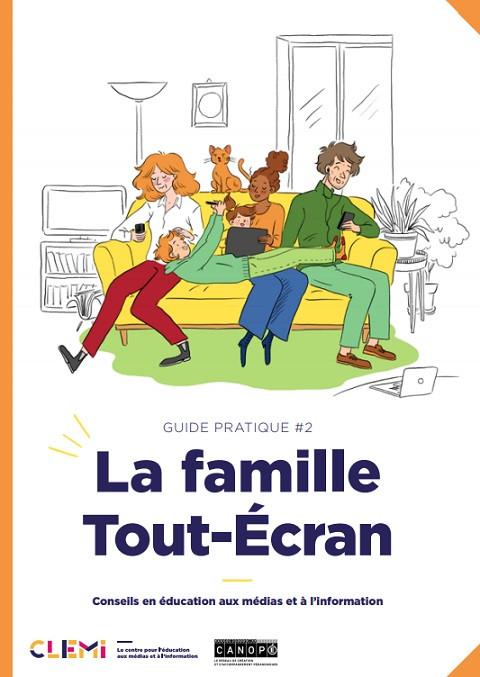 La famille Tout-Écran: Conseils en éducation aux médias et à l’information Año de publicación: 2019 Autor corporativo: Centre pour l’éducation aux médias et à l’information (CLEMI) | Réseau Canopé L’Éducation aux Médias et à l'Information (EMI) devient une exigence républicaine au cœur du Parcours citoyen, un enjeu éducatif et sociétal incontournable dans un environnement où le numérique est omniprésent.Dans un monde globalisé et complexifié, la définition et la compréhension de la source de l’information constituent une priorité pour déjouer les tentatives de manipulation et de désinformation.Les enjeux sociétaux de l’EMI dépassent les murs de l’école et doivent mobiliser tous les acteurs pour renforcer le continuum entre temps scolaire et hors temps scolaire.Ce guide bénéficie de l’expertise des professionnels du CLEMI et de son réseau de pédagogues, de partenaires institutionnels, associatifs et médiatiques. Issu de cette mobilisation, cet ouvrage est le produit d’un groupe de travail dédié aux pratiques informationnelles des jeunes, composé de membres représentant du ministère de l’Éducation nationale et de la Jeunesse, du ministère de la Culture, France Télévisions, Radio France, le CSA, CNRS Images, Ceméa, la Ligue de l’enseignement, la CNAF, Jets d’encre et l’Icem-Pédagogie Freinet.
  Research in Teaching and Learning About the Holocaust: A Dialogue Beyond Borders Año de publicación: 2017 Autor: Monique Eckmann | Doyle Stevick | Jolanta Ambrosewicz-Jacobs Autor corporativo: International Holocaust Remembrance Alliance (IHRA) | Metropol A multilingual expert team of the International Holocaust Remembrance Alliance (IHRA) collected and reviewed research on teaching and learning about the Holocaust in fifteen languages identified nearly 400 studies resulting in more than 600 publications.This systematic review includes research conducted in most IHRA Member Countries as well as several non-member countries. The multilingual focus of the project enables cross-cultural analyses and the transfer of knowledge between various regions and countries. The book’s two parts present the research first by language and then by selected themes. This innovative transnational, trans-lingual study reflects IHRA’s core mission: to shape and advance teaching and learning about the Holocaust worldwide.The second outcome is a set of bibliographies in fifteen languages. These bibliographies comprise references to empirical research on teaching and learning about the Holocaust. They also include abstracts or summaries of most of publications. Each bibliography includes research from a single language or related group of languages.
 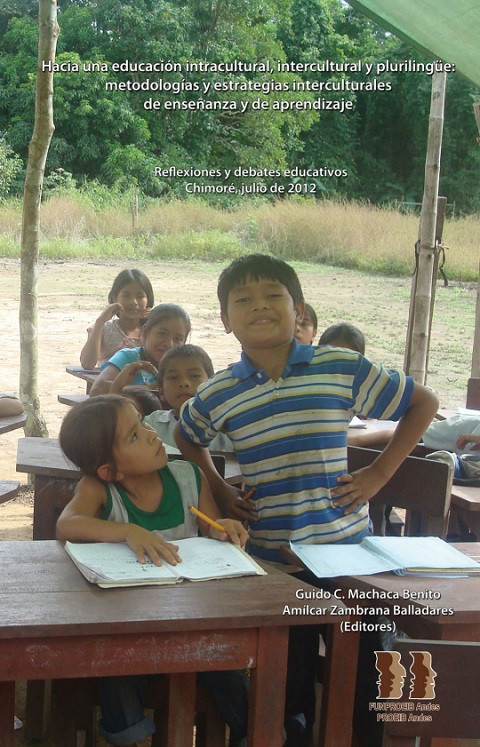 Towards an Intracultural, Intercultural and Multilingual Education: Intercultural Teaching and Learning Methodologies and Strategies Año de publicación: 2013 Autor: Guido C. Machaca Benito | Amílcar Zambrana Balladares Autor corporativo: FUNPROEIB Andes This document presents the memories of the seminar - workshop "Towards an intracultural, intercultural and multilingual education: intercultural teaching and learning methodologies and strategies" held in Chimoré, Cochabamba in July 2012. Hacia una educación intracultural, intercultural y plurilingüe: metodologías y estrategias interculturales de enseñanza y de aprendizaje Año de publicación: 2013 Autor: Guido C. Machaca Benito | Amílcar Zambrana Balladares Autor corporativo: FUNPROEIB Andes Este documento presenta las memorias del seminario - taller con el "Hacia una educación intracultural, intercultural y plurilingüe: metodologías y estrategias interculturales de enseñanza y de aprendizaje" realizado en Chimoré, Cochabamba en julio de 2012.
  The Effect of Integration in Kindergarten in Improving Verbal and Non-Verbal Communication among Children with Autism spectrum Disorder Año de publicación: 2023 Autor: Bin Fatima Maryam Autor corporativo: University of Blida 2 This study aimed to identify the effect of integration in kindergartens on improving verbal and non-verbal communication among children with autism spectrum disorder by presenting the development of a group of seven children (3-4) years old who were diagnosed with autism spectrum disorder and then integrating them for a full year in kindergartens. The study, based on the Cars scale for estimating childhood autism, the verbal and non-verbal communication test, and the Brunet-Lèzine test, found that there are statistically significant differences between integration in kindergarten and both verbal and non-verbal communication, the degree of estimation of childhood autism, and the coefficient of the growth. أثر الدمج في رياض الأطفال في تحسين التواصل اللفظي و غير اللفظي لدى الأطفال المصابين باضطراب طيف التوحد Año de publicación: 2023 Autor: Bin Fatima Maryam Autor corporativo: University of Blida 2 هدفت هذه الدراسة إلى التعرف على أثر الدمج في رياض الأطفال على تحسين التواصل اللفظي وغير اللفظي لدى الأطفال المصابين باضطراب طيف التوحد بتقديم تطوُر لمجموعة من سبعة أطفال( 3- 4) سنوات تم تشخيصهم باضطراب طيف التوحد ثم دمجهم لمدة عام كامل في رياض الأطفال. و توصلت الدراسة بالاعتماد على مقياس كارز لتقدير التوحد الطفولي ، و اختبار التواصل اللفظي وغير اللفظي ، و اختبار بروني ليزين إلى وجود فروق دالة إحصائيا بين الدمج في رياض الأطفال و كل من التواصل اللفظي وغير اللفظي و درجة تقدير التوحد الطفولي و معامل النمو.